SEIM & the WESTERN BALKANS
Ex-Yugoslavia: Serbia (incl. Kosovo), Croatia, Slovenia, Bosnia-Herzegovina, Montenegro, North Macedonia
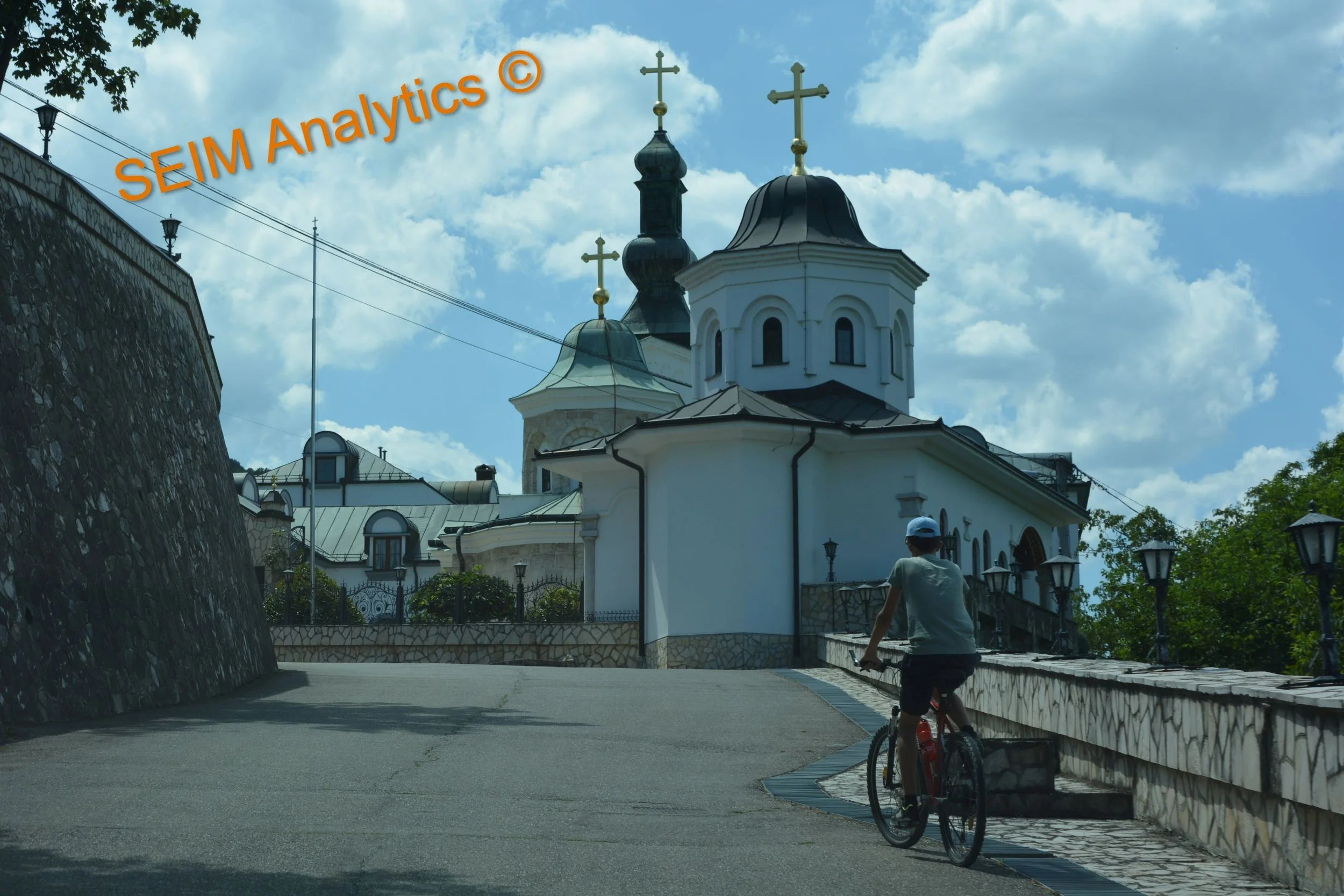
Republika Srpska, Tavna Orthodox Monastery by Ugljevik
The primary focus of the consultancy SEIM Analytics is the territory that once formed Yugoslavia, which today is Serbia (incl. Kosovo-Metohija), Croatia, Slovenia, Montenegro, North Macedonia, and Bosnia-Herzegovina (since 1995 split into the Federation of BiH and Republika Srpska). This has been the core region of professional interest of Dr. Seim since the early 1990s, with the first newspaper commentary in 1992, and first field trip in January 1995 to Serbia. Studies, research, travel, and professional work have been conducted on a regular basis in all these ex-Yugoslav states the last 30 years, amounting to several years of physical presence in all these countries.
This region (mostly but not fully encompassed by the notion Western Balkans) has been monitored through the challenging 1990s, a decade of state dissolution and separatism, political conflict, wars, and international interventions in the region. Its post-conflict period and ongoing political and economic transformation afterwards has been observed with regular visits. While Slovenia, and later Croatia, could join the European Union, despite progress the remaining other states are still in the waiting room.
SERVICES:
SEIM Analytics offers political briefings and assessments, historical research, and business-related evaluations to clients related to this region. This includes analyzing the slow or stalled EU integration process on the Western Balkans since the 2003 Tessaloniki summit when the accession perspective was “promised.”
As a PhD microhistorian, and democratization and election consultant, great interest is on political dynamics on the local level, including both intra-ethnic and inter-ethnic political competition. Interviews with politicians is a key methodology. This interest is compatible with the role as political analyst and any consultancy role.
Dr. Seim is certified translator and interpreter of Serbian, Croatian, and Bosnian with years of work experiences from Oslo Municipality, Department for Foreigners. This language fluency enables direct engagement with interlocutors and clients on the ground in any capacity.
Work with OSCE has given extensive experience in meeting politicians, including European parliamentarians, government officials, ministers, but also NGOs, journalists, and civil society. This includes the ability to unite an academic background with a diplomatic approach in sensitive political environments.
A dedicated focus on Bosnia and Herzegovina since the outbreak of war in 1992 has contributed to a comprehensive knowledge of its history, political landscape, and security challenges, but also socioeconomic trends and human rights issues. Seim Analytics conducts research on Bosnia’s past and follows its difficult post-war period with tailored analysis for institutions and clients.
Travels to all parts of Bosnia and Herzegovina from 1996 to 2025 has contributed to intimate knowledge of Bosnia and of every single Bosnian municipality, including the 1991 population composition of each, its wartime trajectory, and current population and political status. See Photo Sale Bosnia for places of visits.
SEIM Analytics offers the presentations:
1. Tito’s Yugoslavia: From decentralization and disintegration to dissolution and destruction.
2. Nation- and state building on the Western Balkans to 1918.
3. The war in Croatia 1991-95. Focus on the political background and military events.
4. The political destabilization in Bosnia and Herzegovina 1990-92.
5. The war in Bosnia and Herzegovina 1992-95, military history.
6. The post-war period on the Western Balkans (with special focus on Bosnia): Democratization, elections, state building, human rights, minority rights, reconciliation, EU integration.
7. Methodological seminar: Oral history and micro history.
8. Presentation of the conflict focused doctoral dissertation “The Road to War in the Bosnian Municipality of Kotor Varoš in 1992: A Microhistory.” Research tasks, methodology, challenges, and conclusions.
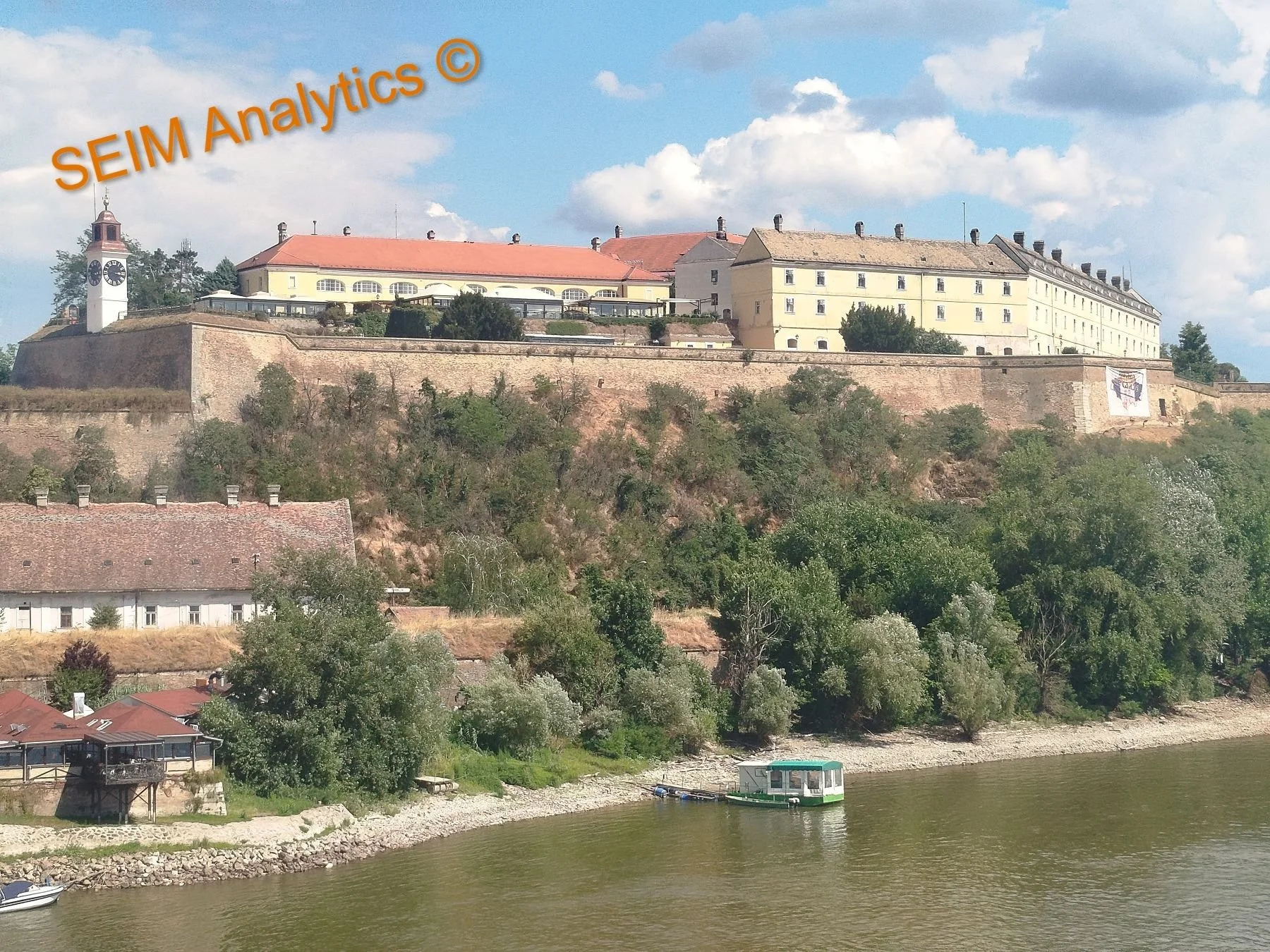
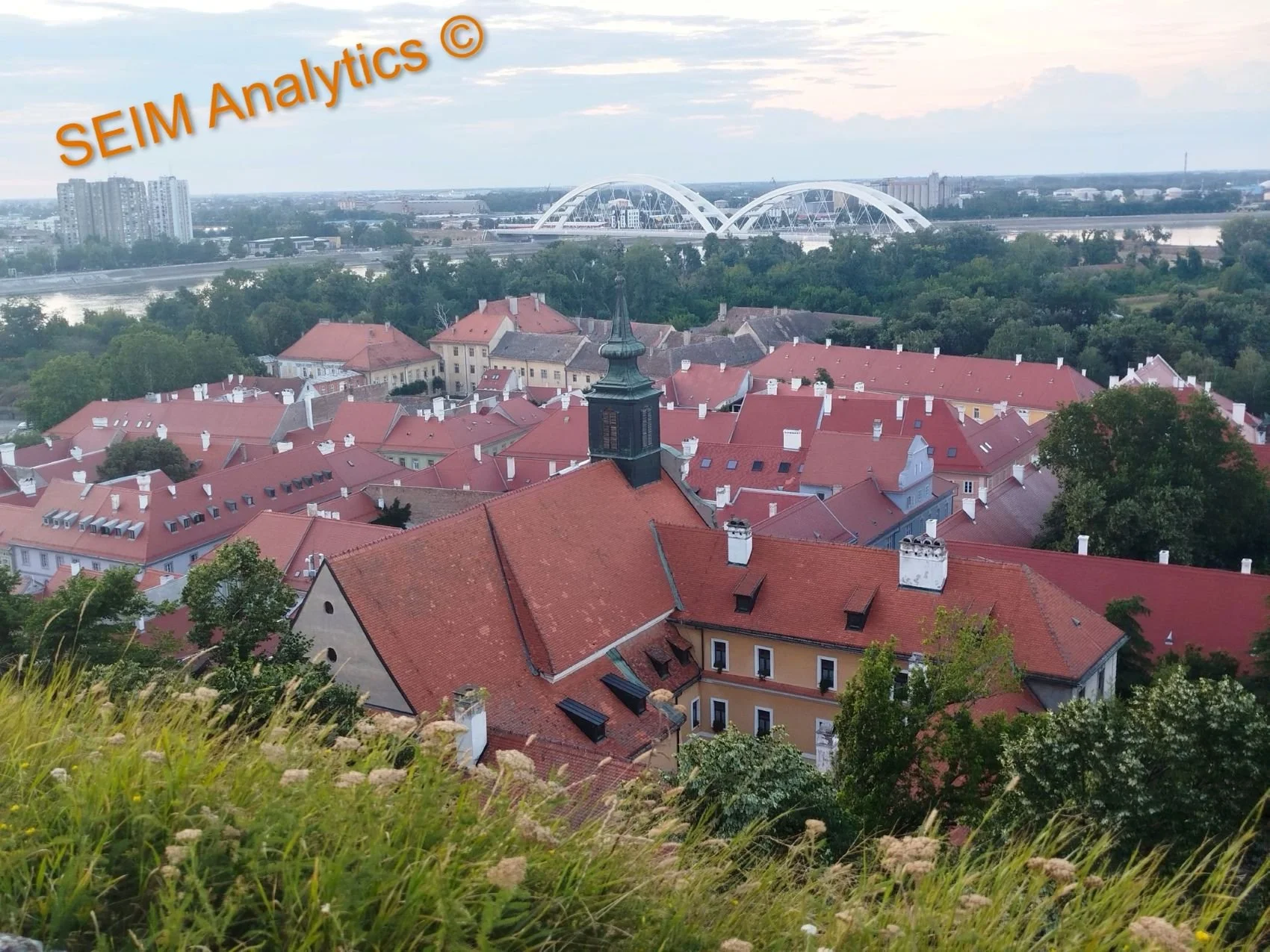
Petrovaradin Castle, Novi Sad, Serbia
Examples of engagements with the region:
1995: Interviewing Srdja Popović, later head of Canvas, in 2011 proclaimed one of the 100 most influential persons of the world in Forbes Magazine.
1995: Interview (December) with the commissioner for refugees of Republika Srpska. In 1995-2000 the biggest refugee group in the Western Balkans were Serbs from Republika Srpska Krajina/Croatia, Bosnia & Herzegovina, and Kosovo-Metohija (from 1999).
1996-97: Months of volunteer humanitarian work in Bosnia and Croatia for the aid organization Network for Peace.
Following the Kosovo conflict from the ground from Belgrade (1998-2002) with several trips to Kosovo (1999).
Observing the velvet revolution on spot in Belgrade on 5 October 2000, later following the DOS-decade until Tomislav Nikolić and later Aleksandar Vučić took and stayed in power (2012-2025). Currently observing the Serbian student demonstrations (2024-25).
Some 40 reportages and political/election commentary in Norwegian, Danish, and Serbian newspapers from or about Serbia, North Macedonia, Montenegro, Republika Srpska / Bosnia. Go to overview in media section here!
PhD study fieldwork in Sarajevo, Kotor Varoš, Petrovo, Brod, Banja Luka.
Work for OSCE/ODIHR in Bosnia-Herzegovina as long-term election observer (six weeks) in Sarajevo (2010), covering Sarajevo Center & (Serbian) Sarajevo East, Vogošća, Trnovo, Pale, Sokolac, Han Pijesak. In 2022, based in Mostar (2022), covering all municipalities in West-Herzegovina Canton and Herzegovina-Neretva Canton.
Work for OSCE/ODIHR in Montenegro as long-term election observer (eight weeks) in Nikšić, Danilovgrad, and Plužine (2023). A good opportunity to gain in-depth knowledge of Montenegrin politics and society at the election when Milo Djukanović finally lost the grip on power.
Short term OSCE/ODIHR assignments to observe elections in Serbia (2007, 2021) and twice in North Macedonia (2024).
Visiting some 100 cities, towns, and landscapes all over the Western Balkans. Go to geographically-specialized Photo Sale pages HERE!
The core professional competence and interest of SEIM Academics is the former communist Yugoslavia, its dissolutions processes in the 1980s and 1990, the history of Bosnia and Herzegovina, the formation of Republika Srpska in 1991-92, and post-war developments.
Academic production examples related to the territory of the former Yugoslavia:
The fresh doctoral dissertation The Road to War in the Bosnian Municipality of Kotor Varoš in 1992 – A Microhistory (University of Vienna). Read more about this dissertation HERE!
Academic works on ethnic cleaning of Serbs in the Herzegovina/Neretva valley in 1992 (Konjic municipality)Bosnian Muslim nation buildingHistory writing and school textbooks in Croatia19th century Habsburg and Croatian history
Go to Academic Publication page to learn more about past and ongoing/future research projects. (-temp. inactive page-)Educational-academic studies and relations to Southeast and Eastern Europe:
University of Bergen: Institute of History and following lectures at the Institute of Comparative Politics.
University of Copenhagen: Department for Philosophy, Department for History, Department for Eastern European Area Studies, Studies of Serbo-Croatian language.
University of Stockholm: Center for Baltic and Eastern European Studies (CBEES).
University of Vienna: Department for East European history.
Post-graduate Interdisciplinary Balkan program - Organised by the IDM (Institute for the Danube Region and Central Europe) at the Diplomatic Academy in Vienna. Certificate diploma.
University of Graz: Center for Southeast European Studies (CSEES).
Visiting periods at the Universities of Jerusalem, Belgrade, Banja Luka.
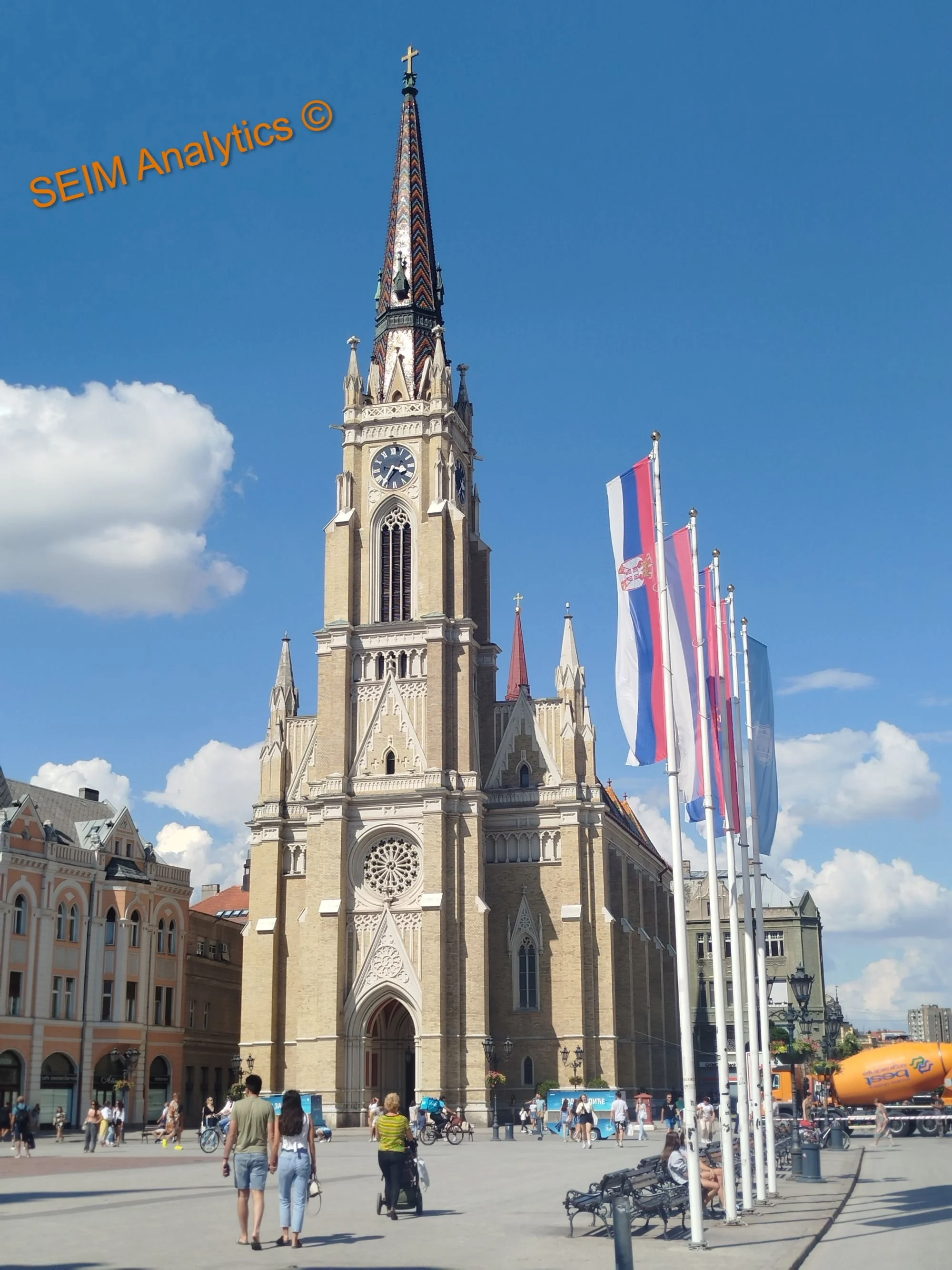
The neo-gothic Roman Catholic Name of Mary church at the Freedom Square (Trg Slobode), Novi Sad, Serbia
From SEIM Analytics News/Blog: newest assignments, reports, and engagements related to the Western Balkans (from 2023) >
Montenegro: Milo Djukanović Election Defeat from the Perspective of Nikšič & Danilovgrad (19 April 2024, in retrospect)
Bosnia’s 2022 General Election - Continued Ethnification of Political Competition (7 August 2024, in retrospect)
The Yugoslav National Army (JNA) – Studying the Culture of Remembrance (21 December 2024)
EU and the Western Balkans (2 February 2025)
Research Cooperation with University of Graz, Center for Southeast European Studies (CSEES) (27 March 2025)
War Museum conference in Vienna / Bosnian Memory politics: “The Bosniak and OHR attempt at delegitimization of Republika Srpska will also mean the end of Bosnia” (10 October 2025)
Time to Decide Europe Summit 2025: Notes on Ukraine, Bosnia, Kosovo, Trump, and EU’s future (8 December 2025)
Jesenice in the Slovenian Alps (12 July 2026)