“The Road to War in the Bosnian Municipality of Kotor Varoš in 1992: A Microhistory” (2022)
Abstract: See also in German in phaidra.univie.ac.at/detail/o:1602839 > The road to war in the Bosnian municipality of Kotor Varoš in 1992 : a microhistory (PHAIDRA - o:1602839) - Der Weg zum Krieg in der bosnischen Gemeinde Kotor Varoš in 1992 - eine Mikrogeschichte
This PhD project explores the local political-military contest over the municipality of Kotor Varoš in north-central Bosnia that evolved from the fall of communism in 1990 to the spread of war during 1992 following the divisive Bosnian independence quest and regional autonomy demands. Bosnia’s three constitutive nations were fairly equally present in this municipality before the war and their respective nationalist parties all made claims for political-territorial control here. Having resemblance to the overarching Bosnian trilateral conflict constellation, Kotor Varoš municipality is given the initial explorative function as a microcosmos of Bosnia, or a “Bosnia in miniature.”
Amidst the many studies focused on the larger cities, elite actors, political macro developments, and on foreign responses to the Bosnian crisis, this microhistorical study seeks insights “from below” through fieldwork and oral history interviewing. This novel socio-historical approach can assist a research field in need of more studies of small-scale contexts and provincial-rural Bosnia.
The main research aim is exploring how the war in Bosnia came to Kotor Varoš on 11 June 1992, which comparatively was relatively late, but also to identify ground-level agents both as escalatory factors and/or as peacemakers. To assess internal preconditions and susceptibility for localized inter-ethnic and communal conflict, also three micro-locations (villages/small towns) are explored comparatively. Patterns of pre-war inter-ethnic cohabitation, ethnic segregation, and ethnic boundaries are traced at the micro level of villages, hamlets, and neighborhoods. Also in focus are demographic structures and deeper socio-cultural patterns and trajectories. In that regard, the work discusses the multiple temporalities of memories and historical trauma, among other with reference to violent legacies from World War II.
The source base is a synergy of conventional historiography and secondary sources with microhistorical input, oral history interviewing, pre-war and wartime newspapers, post-war internet sources, local academic-style monographies, ICTY-testimony, and statistical data. Apart from bringing out ethnographically rich empirical evidence from a local case study, this thesis discusses the potential of oral history and experiments with shifting different analytical scales and interpretative lenses to advance hypotheses and come to fresh analyses and original conclusions.
Keywords: Bosnia, Herzegovina, Serbia, Croatia, Yugoslavia, nationalism, state dissolution, civil war, ethnic conflict, post-communist transition, oral history, memory studies, microhistory, historical anthropology, political history, ICTY.
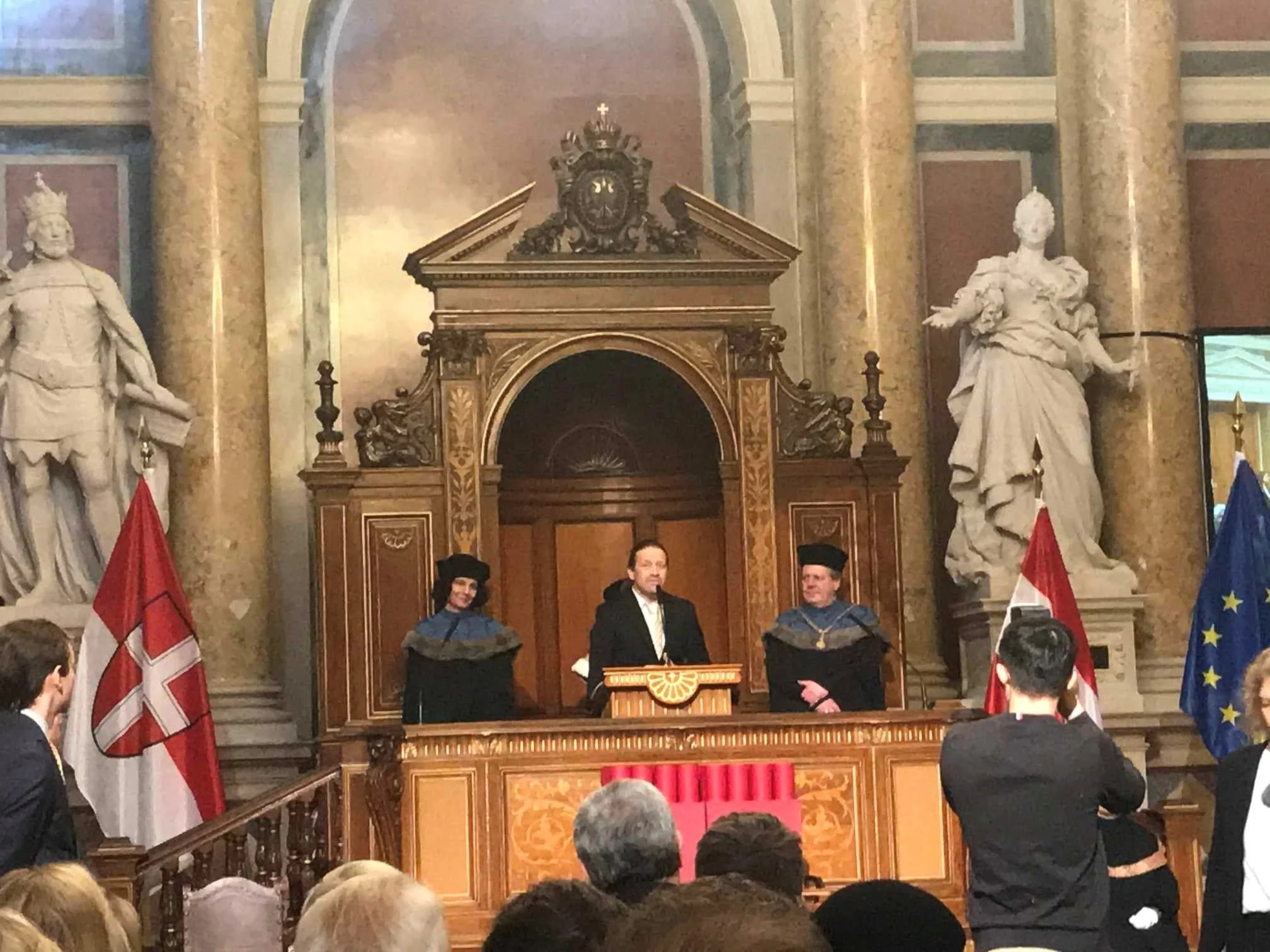
Peer review quotes about the doctoral dissertation - defended 9 May 2023 at the University of Vienna
• “Seim’s critical review of the literatures being exceptionally thorough and illuminative, (…) its encyclopaedic critical review of the existing literatures, in Bosnian/Croatian/Serbian, English and German. In thirty years I have not seen such a thorough presentation.” (Dr. Robert Hayden, 2023)
• “The thesis not only challenges some of the theoretical formulations that have driven recent historical work on Bosnia, but have pretty much demolished them.” (...) “The dissertation is very well written. Publication of it or parts of it would need only normal copy editing.” (Dr. Robert Hayden, 2023)
• “...a correction to tendencies of romantization of interethnic relations in pre-war Bosnia” or “for holding the criteria ethnicity for irrelevant.” (Dr. Ulf Brunnbauer, 2023, translated from German)
• “I enjoyed your careful scrutiny of the demographic situation, (…) showing the practice on the ground. Also, the highlander thesis, and these overgeneralizations about urban virtue and rural primitiveness and violence.” (authorized by Dr. Maria Todorova on 30 November 2024)
• “I am so much for microhistorical approaches, if they are conducted in a sophisticated manner, with an eye to the macro-framework, and you have marvelously succeeded in this. Equally, your thoughts on scale (…) So, sincere congratulations.” (authorized by Dr. Maria Todorova on 30 November 2024)
Forthcoming as: Microhistorical Reflections on the Road to War in Bosnia in 1992: Case Study Kotor Varoš (Revised doctoral dissertation, scheduled for publication in 2026-27)