
Vienna War Museum conference commentary: “The Bosniak and OHR attempt at delegitimization of Republika Srpska will also mean the end of Bosnia”
11 October 2025
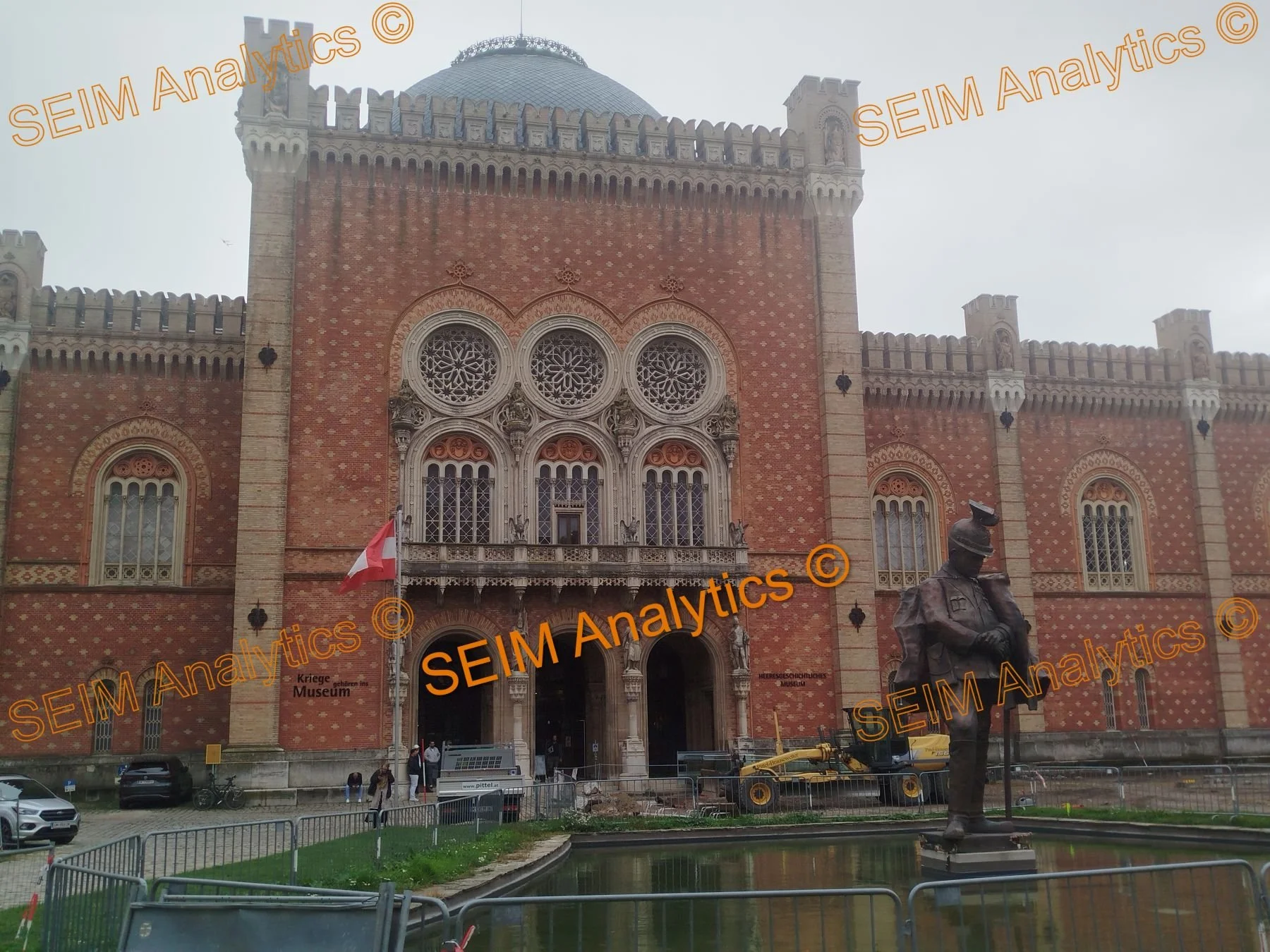
In cooperation with the University of Vienna and the association for military studies (Arbeitskreis Militärgeschichte, AMG) based in Chemnitz in Germany, the War Museum in Vienna 8-10 October arranged the three-day conference Krieg und Erinnerung (War and Memory). The topics of the conference was wars in memory culture in the form of monumentalisations, museum representations, historical narratives, and other forms of remembrance.
As the conference program stated, (translated) “When armed conflicts end, many traces of war remain in societies and on a material level, which in one way or another shape the (collective) memory. (...) Why give war a memory, when to remember it, and how? The complexity of war contributes to the fact that it serves as a cultural reference for memory in very different and often contradictory ways. (...) Traces of war can be inscribed in space and material or read in them; they can be expressed and rehearsed performatively. (...) Against this backdrop, the aim of this conference is to examine the diverse manifestations and forms of negotiation within the network of relationships between memory, war, and the military, while also establishing a connection between research and practice.”
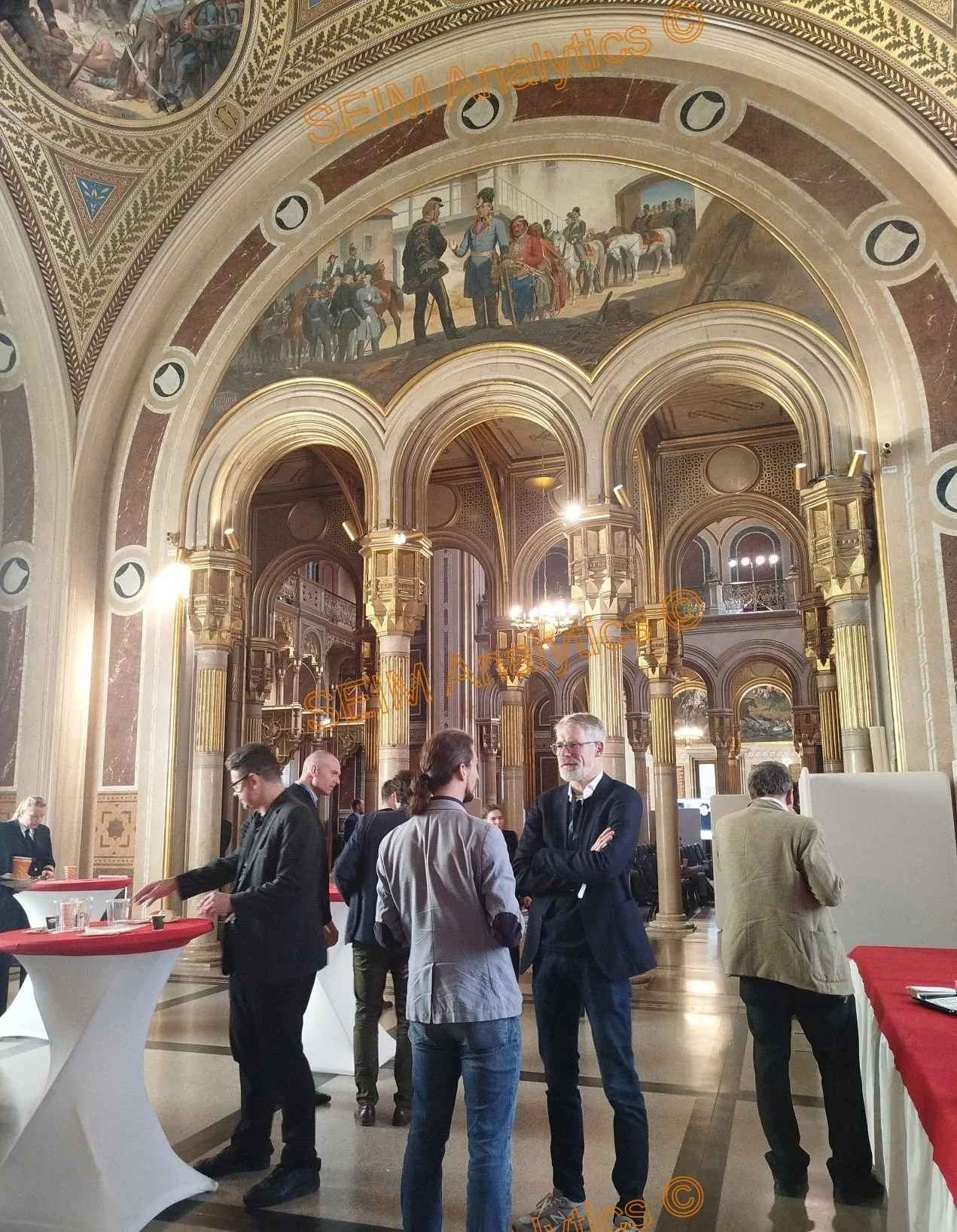
The conference showcased that this research field is in change. New studies of sociocultural practices are emerging to show new aspects of the aftermaths of war, in museums, among others. History tourism (Gallipoli 1915 in Turkey) and history discourses were discussed. Didactic approaches were debated, such as multiperspectivity and proper contextualization, or the creating of “awareness houses”, as in Canada. This blog post commentary will use one conference contribution to discuss memory policies in Bosnia but also the German role.
Memory policies in Bosnia and failed state building:
One contribution was from Dr Ljiljana Radonić at the Austrian Academy of Sciences (OEAW), who in her presentation The Musealization of the Croatian and Bosnian Wars 30 Years after Operation “Storm,” Srebrenica, and Dayton gave examples and offered her analysis of how the war in the 1990s in Croatia and Bosnia-Herzegovina has been treated in regional museums. Cases mentioned were the war museums and memorials in Vukovar, Karlovac, Srebrenica, and Sarajevo. Donji Gradina in Republika Srpska which is related to the KZ Jasenovac in Croatia that served as the worst concentration camp for Serbs during World War II was mentioned too.
Seim used the opportunity to ask (translated from German), “Dr. Øyvind Hvenekilde Seim, I have a recent doctoral dissertation about the road to war in the North/Central-Bosnian municipality of Kotor Varoš in 1992. As this conference is in German, I will try to ask Dr. Radonić a few questions in German. Thank you for your lecture on museums and memory politics in Bosnia and how the Serbs are being portrayed as “the new Nazis“, and Bosniaks as “the Jews“. This is obviously a strong instrumentalization of history and the war that is not exactly contributing to state building in Bosnia. I would like to ask what you think about that, that Bosnia is a failed state, among other because of memory politics and the attempt of delegitimation of Republika Srpska, but Republika Srpska is one part of Bosnia, so without it there is no Bosnia.
Furthermore, locations and examples were made, but in Republika Srpska, you only mentioned Gradina by the Jasenovac concentration camp in World War II. Are there other ones? Or something related to Oluja, as we know that 200.000 Serbs were expelled from Croatia in 1995.
You mentioned in the start, „genocide in Rwanda and in Bosnia“. Well, a direct and clarifying question; was it a genocide in Bosnia, or was it only one in Srebrenica? As we know, only in the disputed Krstić verdict from 2004 the term genocide was used, but with the term „in part“, not the term „in whole“. This is of course a very politicized question, but in general there is the attempt of politicians in Bosnia to widen the genocide term to all of Bosnia.
Indeed, there were massacres in Prijedor, there were also concentration camps for Serbs in Konjic, in Čelebići, but no genocide elsewhere. Only Srebrenica has been labelled as genocide in this disputed ICTY verdict. Yet, somehow this shows that the war is being continued afterwards, but on the political battle field, an inversion of the doctrine ["Der Krieg ist eine bloße Fortsetzung der Politik mit anderen Mitteln"] of Von Clausewitz. Thanks!”
(Dr Radonić mentioned in her answer that she did not intend to widen the genocide notion to all of Bosnia. Also, the Serbian memorial to Serbian victims in and around Srebrenica was mentioned. The abstract of Dr. Radonić’s conference contribution can be read in this conference folder.) This blog post is not about that contribution but is an entry to discuss two further issues,
1. Memory politics in Bosnia and the role of the international community, in particular the illegitimate OHR-representative in Bosnia, Christian Schmidt, and the memory law imposed by the outgoing OHR-representative Valentin Inzko in 2021.
2. The German approach to genocide and Vergangenheitsbewältigung (dealing with the past).
Dr. Hvenekilde Seim is currently developing a research project labelled Memory Politics in Post-War Bosnia and Herzegovina - “a continuation of war by other means”. It discusses the failed post-war state building of Bosnia in relation to post-war identity and memory politics. As Dr. Hvenekilde Seim wrote in the doctoral dissertation The Road to War in the Bosnian Municipality of Kotor Varoš in 1992 – A Microhistory (2022), “In Tito’s communist Yugoslavia, all victims of the Nazis, Ustasha, and collaborationist movements were treated even-handed and symmetrically and labeled “victims of fascist terror” (Žrtve fašističkog terora)” (Hvenekilde Seim 2022: 211). After the end of the war in Bosnia and Herzegovina in 1995, the opposite as after World War 2 transpired. Instead of celebrating national heroes (narodni heroji) independent of ethnicity as during Tito, from 1995 all conflict parties in Bosnia followed a strategy of actively revoking memories of the war and war crimes of the other ethnic groups and their armed forces. In this victimization strategy, inflated casualty figures were propagated and an active usage of the genocide accusation was pursued. Especially Bosniak political leaders and diplomats have been supporting a discourse of victimization and an inflationary use of the genocide notion as a strategy to attract international attention and sympathy to secure “political advantages” and in an attempt to achieve political aims not realized during the war, so “a continuation of war by other means”.
“A consensus was established after the Historikerstreit (1985-86) in Germany about the unique character of the Nazi crimes [Kuljić 2010: 101. Macdonald 2013: ch. 8]. As the term genocide invokes a special condemnation and an obligation to act, the rhetoric of genocide is inevitably political. The inflated use of the term in the 1990s, being used interchangeably during the Bosnian civil war as a euphemism or synonym for human suffering and for ethnic cleansing and other results of war, unleashed in Western media, by politicians, and among some scholars the application of the (…) noxious Hitler and Nazi analogies and violent metaphors also in relation to Bosnia, Kosovo, Serbs, and Milošević. (…) Such framings (…) had treacherous implications by creating a conceptual fog that obstructed understanding of the Bosnian and other Yugoslav conflicts in the 1990s in a manner that generated policy mistakes when addressing these various crises. NATO’s bombing campaign against FRY in 1999, (…) was likely impacted by the general demonization of Serbs and Serbia during the 1990s, and by Srebrenica, an abysmal event that will continue to haunt Serbs. However, pushing the whole Bosnian ethnic conflict into the framework of genocide seems to have been counterproductive and hindered post-war local reconciliation...” (Hvenekilde Seim 2022: 306).
“If the term genocide is diluted and watered down, instead of being reserved for exceptional cases, it can indulge negatively by obscuring and weakening the understanding of the gravity of genocide and of the Holocaust. It risks leaving the Holocaust undefined, as Dulić [2005: 18-19] pinpoints (...) For the case of the Bosnian war and post-war politics and nation-building, invoking the symbolically loaded concept of genocide clearly served and still serves political strategies and goals. Due to its association with genocide, “Srebrenica” was transformed into a commodity and a politically colored “signifier” or metaphor for the whole Bosnian war, but in a manner that does not reflect the complexity and heterogeneity of that war, nor adequately spreads the responsibility for it” (Hvenekilde Seim 2022: 306).
In the research project Memory Politics in Post-War Bosnia and Herzegovina - “a continuation of war by other means”, Dr. Seim is asking the potentially controversial question of whether and how certain commemoration practices, historical interpretations, and truth narratives about the war that have been pursued by the Bosniak political and academic elite, and sometimes endorsed by Western international community representatives, might have jeopardized the foreign-assisted, Bosniak-led post-war state-building attempt in Bosnia. Here, the dogged genocide discourse – often being extended to all of Bosnia instead of retained merely for Srebrenica, as was judged in the Krstić case at the ICTY – stands out as one key topic. That in turn has led to further polarization, as Republika Srpska has turned to mnemonic defence, when the genocide allegation was applied to question the legitimacy of its institutions and its existence (e.g., Bosniak politicians calling Republika Srpska a genocidal creation).
It is pertinent to also analysis the role of the international community and Office of the High Representative (OHR). The set of amendments to the Criminal Code of BiH, imposed by the outgoing international High Representative of Bosnia and Herzegovina Valentin Inzko in July 2021, that outlawed the denial of genocide and relativization of war crimes, sparked one of the worst crises in post-war Bosnia. Instead of moderating the political discourse, it led to tensions and a Republika Srpska counter-memory law that outlawed labelling it a “genocidal creation” and its people as aggressors, a law later annulled by the Constitutional Court in Sarajevo (see Hronešova & Hasić 2023). When tracing the ideological-political origin of such memory laws it is presumably to be found in German and Austrian practices against Holocaust denial. The domestic situation in Bosnia (at least temporarily) and regionally was not helped by the German-led initiative and disputed decision on 23 May 2024 in the UN General Assembly to designate 11 July as the International Day of Reflection and Commemoration of the 1995 Genocide in Srebrenica. Unusual for such decisions at the UN, 19 states voted against and 68 were abstaining from this text fronted by Germany that got support of 84 states.
More literature:
For the conceptual debate about the usage of the genocide notion for events in Bosnia, the critical approaches of Magnusson 2008; Đulić 2005; Hayden 2008 are highly useful.
Some notes on German Vergangenheitsbewältigung and the German role in the wars in Yugoslavia and post-war reconciliation:
The key note speaker at the War and Memory Conference was the known military historian, often on German TV, Sönke NEITZEL, (University of Potsdam) with the comprehensive talk „War is about winning“ – Gedanken zu Identitätskonstruktionen in Militärmuseen. [Thoughts about identity constructions in military museums]
One impression from Dr. NEITZEL’s keynote is that all museums still look upon wars from a national perspective. Yet, some can do that more freely from the winner’s perspective, like the British, an approach which also is with much fewer or no taboos. The stages in the German post-World War II Vergangenheitsbewältigung were outlined by Dr. KÜHNEL, including how the Waldheim case in 1986 led to a new stage and changed the discourse in Austria, but also at the same time in Germany. Dr. Seim would here pinpoint to the contemporary Historikerstreit (Jürgen Habermas, Saul Friedländer, Martin Broszat, etc.) back then.
One impression of Dr. Seim is that it is a German narrative that Germany are world champions in so-called Vergangenheitsbewältigung (dealing with the past), which has as an associated criteria that the past as inherently problematic if not properly managed. Yet, this self-congratulatory approach is also making Germany try to export the German manner of dealing with the past to other countrys’ past conflicts. One can assume a strong German, Austrian, French, but also British role, in the colonial-style rule of OHR in latest years where rather damaging approaches have been pursued both towards Republika Srpska and within the field of memory laws and politics.
As mentioned, one can be tracing the ideological-political origin of such memory laws to German and Austrian practices against Holocaust denial. This is paradoxical! While Germany will not criticize Israel out of “historical guilt”, this approach should but has never been applied towards Serbs or Serbian interests. As Serbs in Bosnia and Croatia in the Nazi-puppet and Nazi-facilitated Independent State of Croatia (NDH) were subject to genocide in World War II (Hvenekilde Seim 2022: 209, 304), as with Israel, there should have been a much stronger German sensitivity towards Serbian interests than has been shown since the outbreak of the wars in Yugoslavia. Instead, it was the exceptional German unilateralism in 1991 that contributed to the breakup of Yugoslavia, and it is German actors that continue to put pressure on Republika Srpska and on Serbia regarding the Kosovo. Indeed, “The recognitions of the secessionist republics of Slovenia and Croatia, which were unilaterally spearheaded by Germany in 1991, occurred despite clear warnings from key foreign diplomats and envoys that premature recognitions could lead to war and disaster in Bosnia” (Hvenekilde Seim 2022: 25). Moreover, “It is to note that the [ICTY] court, initiated by UN Resolution 780 on 6 October 1992, was first suggested by the German foreign minister, Klaus Kinkel (Hazan 2004: 18-25)” (Hvenekilde Seim 2022: 43-44).
Moreover, Dr. Seim suggests that at a field where “the German Vergangenheitsbewältigung and coming to terms with its Nazi past failed – with drastic consequences in the 1990s – was with regard to the Ustasha-Nazi related Croatian nationalists and fascists in BRD … [due to their role in reviving tensions in Yugoslavia later on and in 1991-92]” (Hvenekilde Seim 2022: 129). “Paul Hockenos (2003: 60-67) mentions that 12-15,000 of the associates of the Ustasha-leader, Ante Pavelić, found political refuge and asylum in West Germany (BRD) after 1945. In the 1960s and 1970s they were involved in political terrorism abroad and in 1972 also in the failed Bugojno (Križari) operation. (Ibid.) The Ustaša-related diaspora played an influential role in the break-up of Yugoslavia. There are also perceptions about a prominent role of German secret services (BND) in undermining socialist Yugoslavia. Also here, Klaus Kinkel had a role both regard to foreign policies and as leader of BND (1979-82). As foreign minister (1992-98) he was pressing an assertive post-reunification foreign policy and continuing Genscher’s liberal-interventionist approach.
While the German Vergangenheitsbewältigung and post-war political development to a greater degree had made the Nazi past a “cut off history,” in Bosnia in 1991-92 the World War II past was still alive, tangible, and active in the present” (Hvenekilde Seim 2022: 211). “Many regions and villages in Bosnia in 1991-92 had latent political identities associated with their role in World War II, as being ‘Partisan, Chetnik, or Ustasha’ and of being exposed to genocide and mass killing.” (Ibid.) Yet, why Germany succeeded post-World War II, and Yugoslavia did not, is not necessarily because of the memory policies applied, but because the cases (Holocaust & fascism v. ethno-national civil war) are completely different, so applying the German guilt model to Bosnia will not work, especially if the attempt at delegitimization of Republika Srpska continues. Instead, to make Bosnia and Herzegovina functional, Republika Srpska should be strengthened. As demonstrated in the dissertation The Road to War in the Bosnian Municipality of Kotor Varoš in 1992 – A Microhistory, the Bosnian civil war was an ethnic-based political “contest for Bosnia” or parts of Bosnia, where “all three sides can be regarded to have been ‘attacking Bosnia’ in March, April, and May 1992” and “teared down Bosnia’s pre-war constitution” (Hvenekilde Seim 2022: 318). The consequence of that war and contest for Bosnia is the legitimization of Republika Srpska through the Dayton Accord.
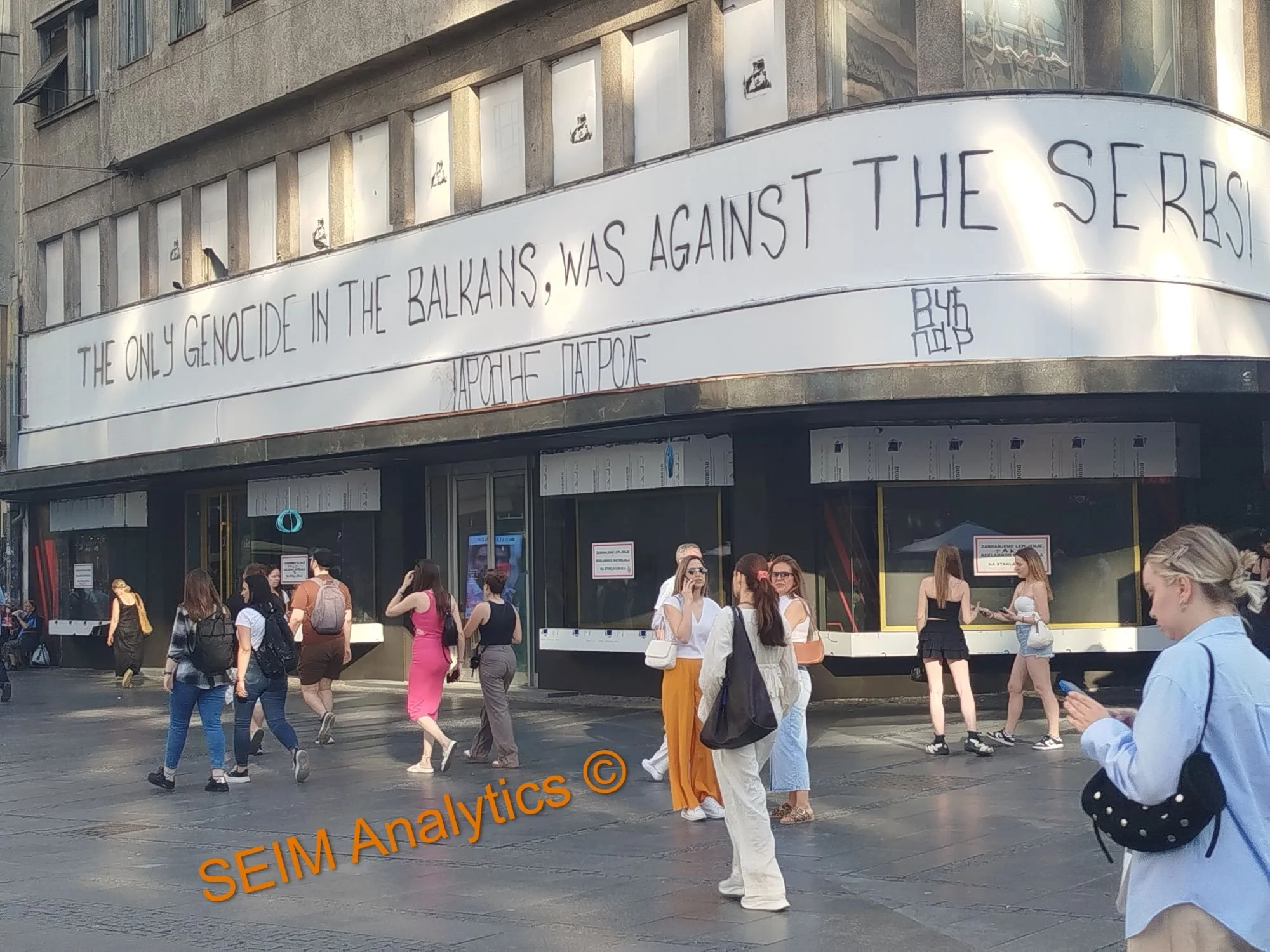
The use of the term genocide is much debated and is highly politicized. In the German court system, there has been a much more expansive understanding of genocide vs. the more restrictive usage in international courts. This is visible in two cases from the Bosnian civil war, that of Jorgić v. Germany (2007) (ECHR Judgment), and as discussed by Hvenekilde Seim (2022: 203) with regard to the verdict from 15 December 1999 (6 St 1/99) in Obere Bayerisches Landesgericht (Bavarian Higher Regional Court) v. Djuradj Kuslić, a former police chief in Vrbanjci in Kotor Varoš municipality which was sentenced to life in prison for genocide [!?] in conjunction with six counts of murder and illegal possession of a firearm.
Among conference presentations (27), the following ones were quite interesting to the conflict and war research profile of SEIM Academic (original German titles):
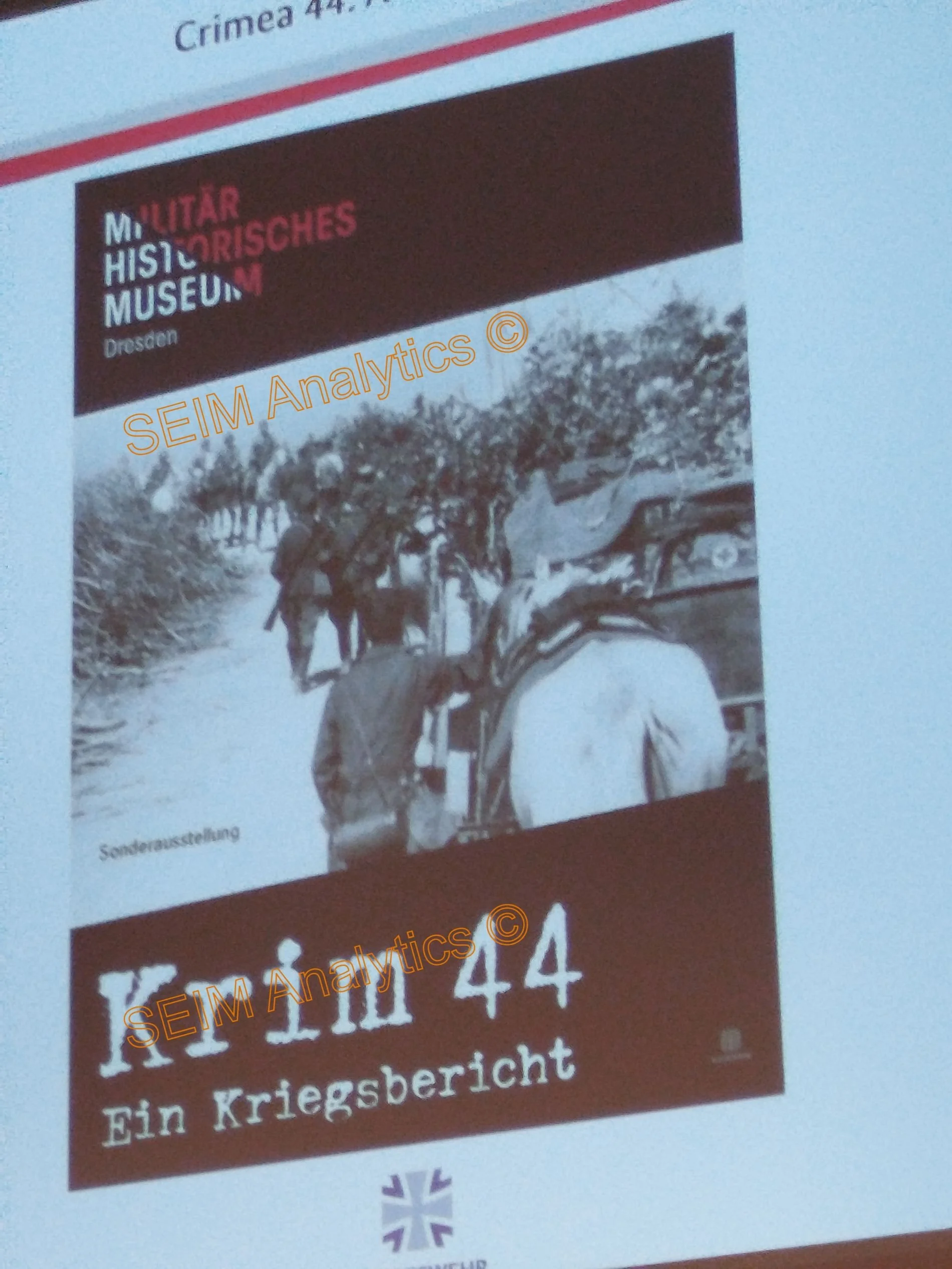
· Daniel GÖTTE | Militärhistorisches Museum Dresden. Krim 44. Ein Kriegsbericht.
· Mirjam ADAM | Universität Osnabrück. Spuren der Zerstörung? – Herausforderungen einer geschichtskulturellen Aufarbeitung.
· Ferdinand KÜHNEL | Universität Wien. Kriegerdenkmäler des Ersten und Zweiten Weltkrieges in Kärnten, der Steiermark und Slowenien.
· Yuliya VON SAAL | Institut für Zeitgeschichte München−Berlin. Krieg und Erinnerung in Belarus. Das Narrativ vom Genozid am belarusischen Volk als Paradigmenwechsel im Dienst der Propaganda.
· Takuma MELBER | Heidelberg Centre for Transcultural Studies. Japans letzte Helden im Zweiten Weltkrieg? Wie in Japan 80 Jahre nach Kriegsende an die Tokkōtai (‚Kamikaze‘) erinnert wird − das Fallbeispiel Tachiarai.
· Christian STURM | RWTH Aachen University. Die Schlacht von Stalingrad im historisierenden Digitalen.
· Spiel Ulrike JUREIT | Hamburger Stiftung zur Förderung von Wissenschaft und Kultur. Es ist Krieg und alle wollen hin. Das Nachleben von Krieg und Gewalt im Reenactment.
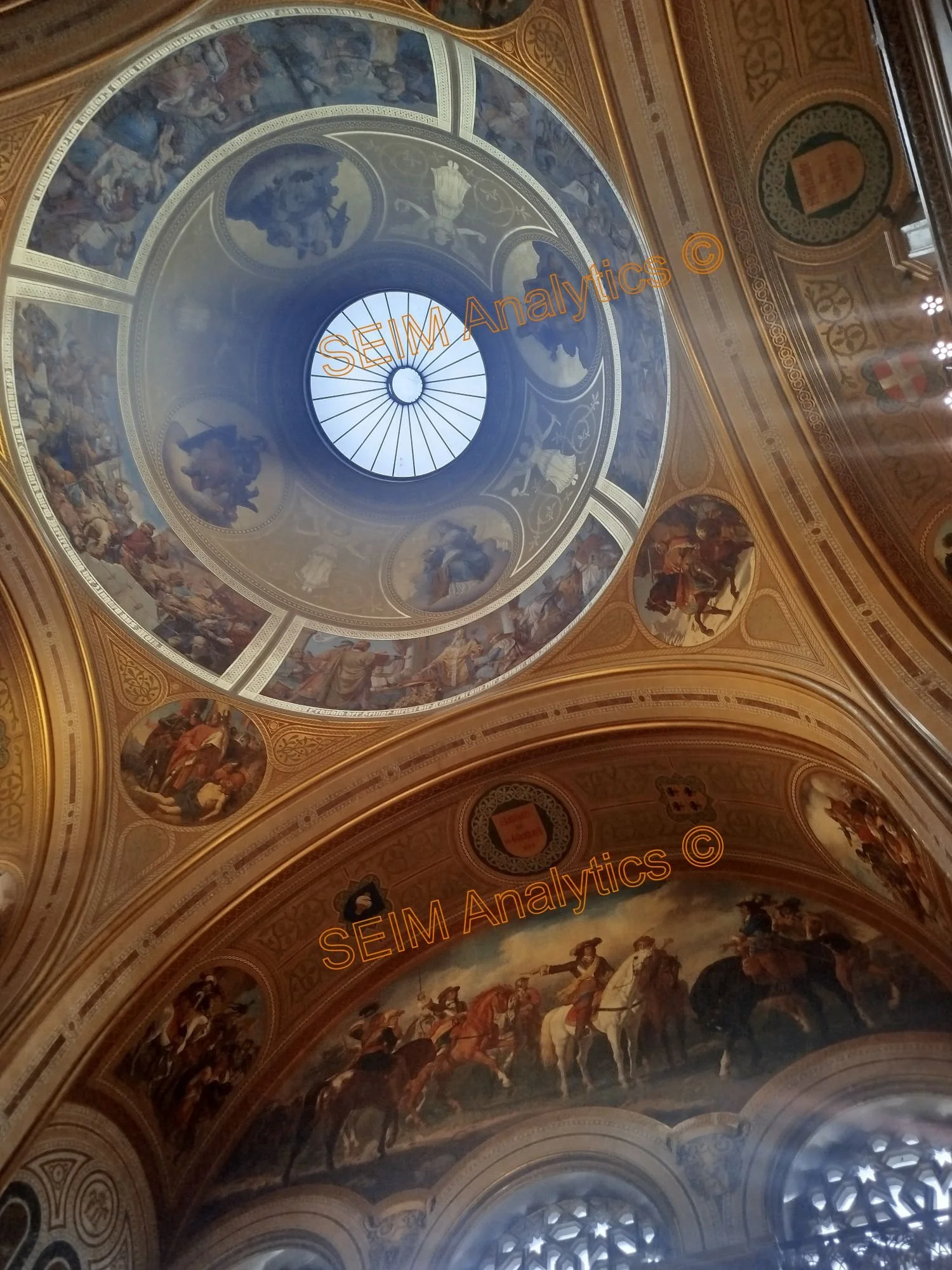
A conference volume from this 3-day conference in the glamourous Habsburg-built premises of the War Museum in Vienna is expected. Beforehand, more information and abstracts of conference contributions can be read in the the official conference booklet, including in the condensed program for download.
The event was also used to proclaim the winner of the Wilhelm Deist Prize for military history and to present the work of Arbeitskreis Militärgeschichte.
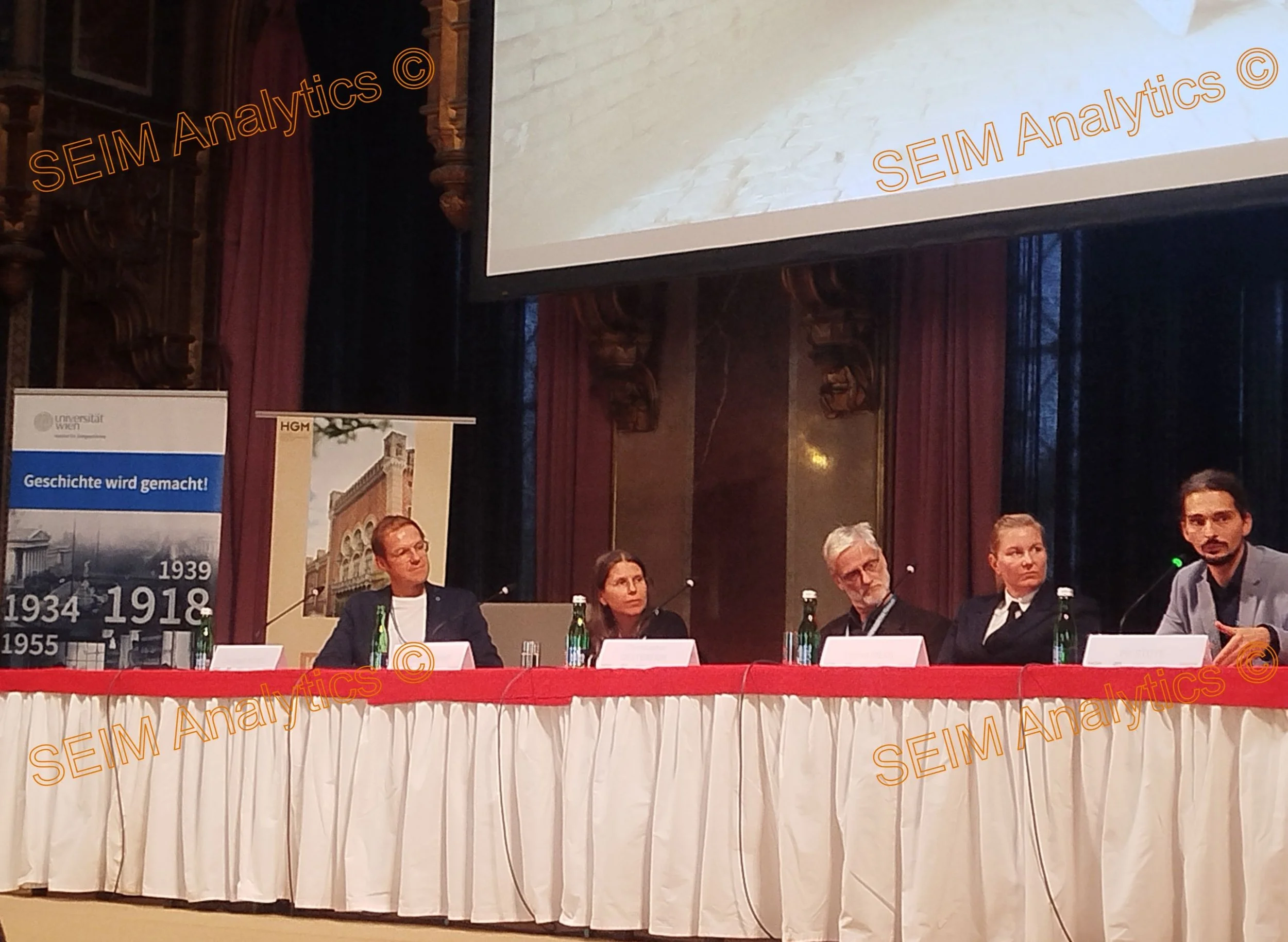
The war and memory conference at the War Museum in Vienna, 8-10 October 2025