
Vienna Peace and Security Talks 2025: Türkiye - An Ambitious Regional and Global Actor
14 October 2025
SEIM participating on the closed discussion workshop Vienna Peace and Security Talks 2025: Türkiye – An Ambitious Regional and Global Actor.
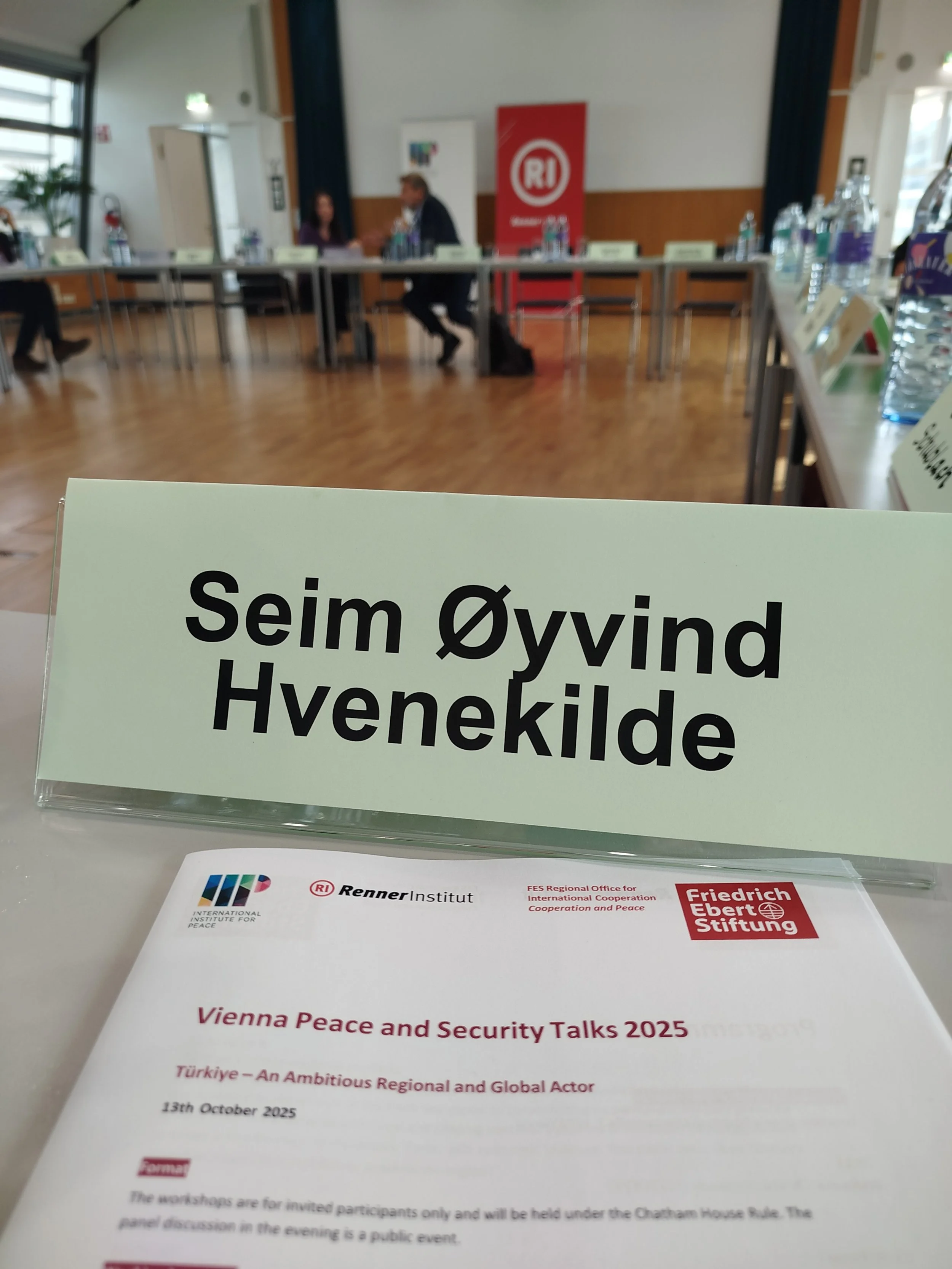
This event on 13 October 2025 after personal invitation was a full-day workshop bringing together scholar, diplomats, NGO-representatives, and thinktanks such as SEIM Analytics, to discuss the role of Türkiye in Europe’s security architecture and in regional conflicts, among other in light of the war in Ukraine. The event was covered by the Chatham House Rule, so SEIM Analytics will not bring any detailed report from the closed full day-sessions. Instead, this blog report and analysis will outline a few summarizing impressions from the open-for-public evening event The U.S.–Türkiye–EU Triangle: Between Tensions and Cooperation? and outline the general impressions of SEIM Analytics on the position of Türkiye and its role on the Western Balkans and with regard to Ukraine. The event was organized by the Karl-Renner-Institute, Friedrich-Ebert-Stiftung (FES), and International Institute for Peace (IIP) in Vienna.
As a consultancy on Southeast and Eastern Europe, SEIM Analytics recognizes the important geostrategic position of Türkiye and its ability to play an influential role in this region. Deep historical bonds and the associated socio-cultural longue durée is making Türkiye a part of the Balkans, for instance. The war in Ukraine has amplified Türkiye’s geostrategic position. Moreover, Türkiye has an active role in Syria, Libya, the Caucasus, and Central Asia, regions also encompassed by the professional engagements and analysis of SEIM Analytics. Apart from this analytical focus, Seim worked on the Black Sea Coast (Sinop, Samsun, Ordu, Giresun, Trabzon, Rize, Tokat, Amasya, Çorum, Sivas) as long-term regional OSCE-ODIHR election observer for the general elections in Türkiye in June 2018, meeting governors of Samsun and Sinop, and a variety of election stakeholders. This was a great opportunity for a privileged insider view also on Turkish domestic policies and society.
Türkiye’s ambitions, capacities, and limitations in the global system were discussed in one panel in this workshop. Another session discussed if Türkiye’s assertive pragmatism in regional conflicts stabilizes or unsettle them. Moreover, the frozen EU accession talks were analysed and its consequences for the many interdependencies (migration, security, energy) with EU.
Based on the public evening session and general impressions from past experiences with Turkey, SEIM Analytics offers the following general Türkiye-focused analysis and own advisory:
· Türkiye is in a complex position within the evolving European security order. Its geostrategic position, military capabilities, and population size makes Türkiye a key middle power in the region, but also one that in the new multipolar order has even wider ambitions, in Central Asia, the Middle East, and the Balkans. As an actor in multiple conflict zones, it is one that the last decade has gone from a passive to a more active conflict actor, for instance in Libya, Syria, Northern Iraq, and South Caucasus (the Nagorno-Karabakh conflict).
· In that regard, for the Western Balkans, where Türkiye’s roles are multifaceted and it actually has developed a quote constructive partnership with Serbia, the recent (October) delivery of Skydagger drones to the illegitimate Kosovo security structures, and Bayraktar drones previously, was not constructive. UN Resolution 1244 foresees demilitarization in Kosovo. This risks destabilization in the region. Here Türkiye must put in place stronger export controls.
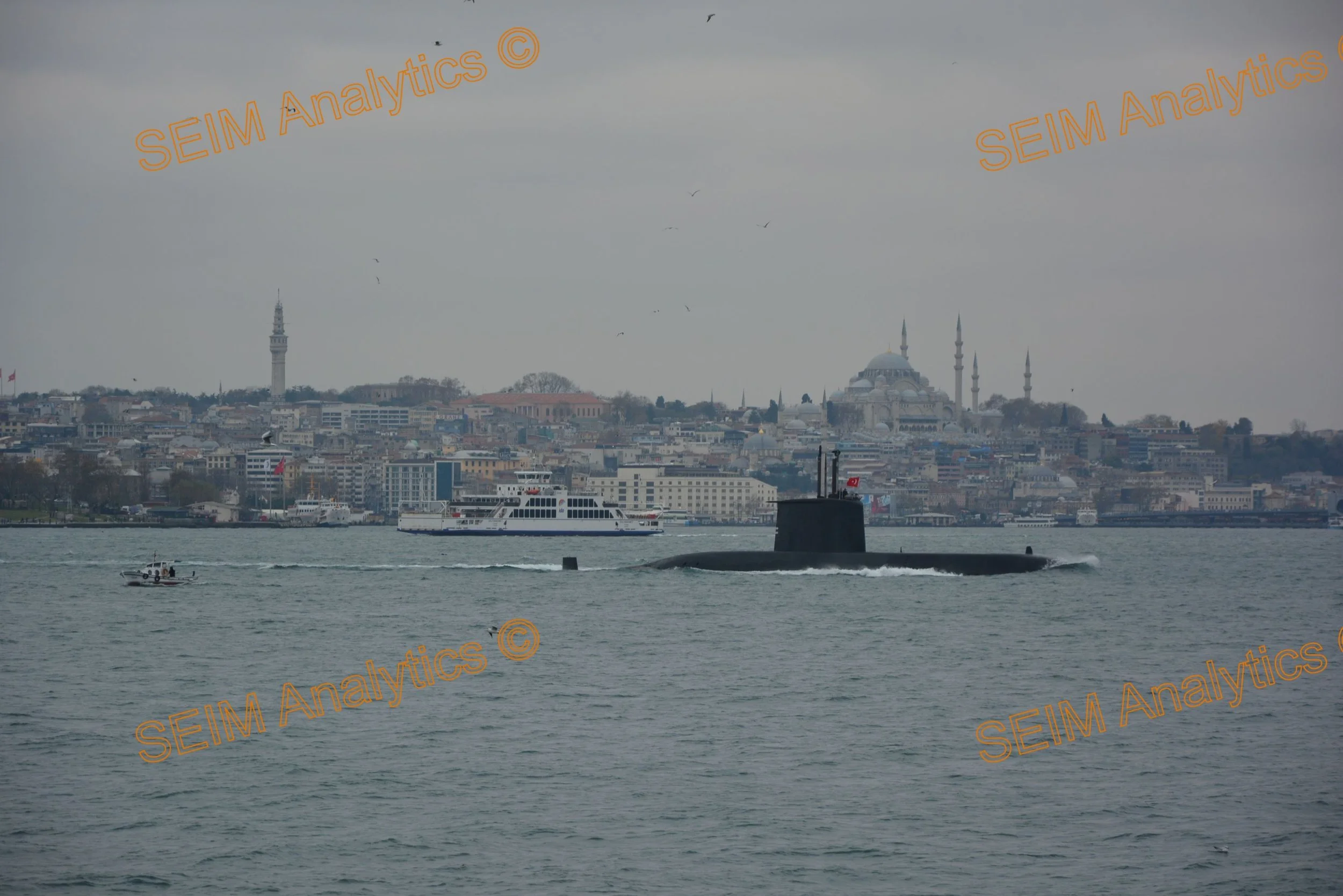
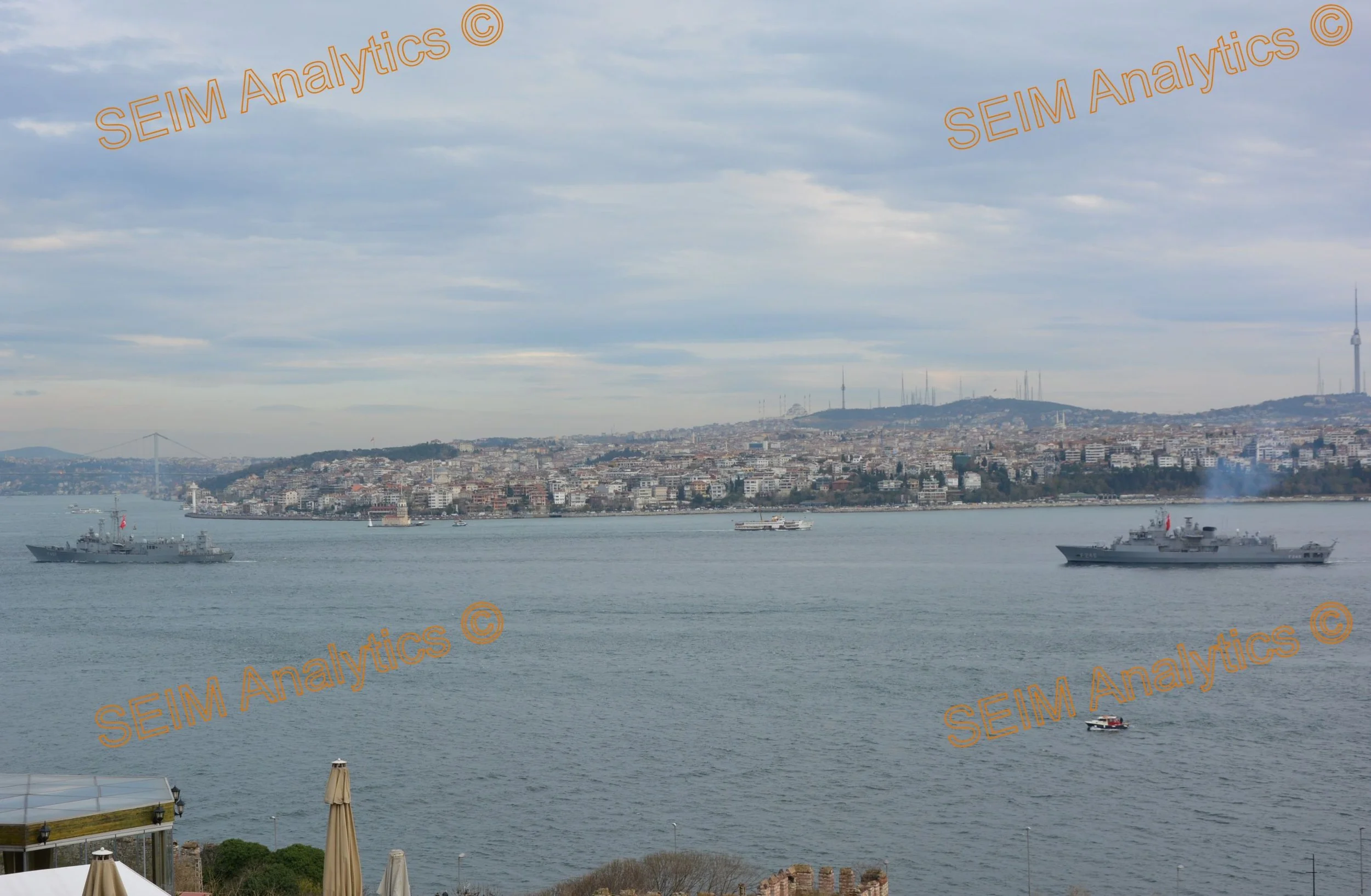
· In recent years, Türkiye has sought to play an active role in mediating conflicts. It is a constructive actor in the Ukraine war. Türkiye continues to uphold the Montreux Straits Convention, signed in Istanbul in 1936, which regulates naval passage through the Bosporus and Dardanelles, a cornerstone of Turkish foreign policy. This increases its regional leverage and makes it a responsible regional actor that at the same time could shield NATO from direct confrontation with Moscow in the Black Sea. Also, the Black Sea Grain Initiative was positive.
· Türkiye and Russia: That Türkiye can talk to Russia, means that its engagements in achieving peace in Ukraine should be motivated and supported. That the new general secretary of OSCE is the Turkish diplomat Feridun Sinirlioglu is likely to foster better conditions for peace talks between Ukraine and Russia. OSCE can play a key role in that regard, but also for post-war monitoring. OSCE’s effectiveness should therefore be strengthened, SEIM Analytics assesses.
· Türkiye is important for Russia, but also Russia has been potentially useful for Erdogan. Unverified media reports have it that Russian intelligence might have given Erdogan a helping hand during the coup in 2016, a coup that changed Erdogan’s relation to the West for years, and made it continue building strategic autonomy. Also, on other occasion has Russia been respectful and supported Erdogan’s power position domestically.
· Türkiye and EU: Demands on Türkiye to support EU sanctions against Russia can legitimately be resisted. Firstly, because Türkiye remains a non-EU state without a chance to take part in forming how these sanctions should look like, and secondly because no trustworthy EU perspective has been provided by EU to Türkiye. Türkiye should also be an indispensable partner for EU, yet the last 15 years EU has lacked a coherent policy towards Türkiye, especially with regard to potential EU-integration. This is an observation that SEIM Analytics finds also valid for Serbia that should not be forced to join EU sanctions if these are counterproductive to own security and bilateral relations with Russia or Ukraine.
· EU and close partners should attempt to move from the role of being reactive to security crisis and changing rules and orders to start influencing and co-shaping this order. Yet, that is among other done through economic strength, internal cohesion, and real military power, so not having taken defence seriously (due to the 1990s war-is-over thinking) and not being structured for quick decisions, this is a real challenge for EU. It leads EU to be sidelined, in the Middle East particularly, and partly in Ukraine.
· EU: Still, certain light-weight actors, like Estonia appears to be making strategic use of EU structures to amplify its influence and “be punching above its weight”. SEIM Analytics finds the appointment of Estonia’s Kaja Kallas as EU High Representative for Foreign Affairs may further accentuate this trend, though her approach has not necessarily proven constructive for fostering consensus within EU foreign policy, nor helped relations with Russia. Kallas is not very welcome in Washington either. Certain countries in EU have been holding Türkiye hostage, but also Türkiye has shown in the case of Sweden’s accession to NATO that it can do the same. In general, EU focuses on own interests in its engagement with Türkiye instead of considering Türkiye’s interests.
· Türkiye geographical position and multi-vector policies make it a key energy hub important to diversify energy sources to Southern and Central Europe. Here its EU partners must engage in better dialogue on its Black Sea initiatives (e.g. sea cables and energy). Meanwhile, the unresolved issues around Cyprus are hindering energy corridors and exploitation in that region.
· Realpolitik matters, and Türkiye understands that. Further developing a multi-vector foreign policy is natural for Türkiye, but does not mean that its NATO- and trans-Atlantic relations are in question. Türkiye keeps it strategic alignment amidst tactical disagreements. It seeks strategic autonomy to safeguard own interests.
Key obstacles and challenges for Türkiye: Cyprus, maritime issues in the Aegean Sea, the Kurdish issue, refugees from Syria, Islamist movements, human-rights issues, and media freedom restrictions. Democratic backsliding in the domestic political landscape continues in a manner that threatens the integrity of the next elections. Also, the neo-Ottoman traits of Erdogan is not to the advantage of Türkiye’s EU-integration. How to transition from the Erdogan epoch when that day arrives is a related challenge. The high inflation in Türkiye and insecure economic situation are constant trials.
Key advantages and opportunities for Türkiye: Apart from its geostrategic position and its strong defence industry and military capabilities, Türkiye has soft power through cultural influence and trade, it attracts thousands of students from the region and the Global South. Meanwhile, Istanbul with Turkish Airlines developed to a major global air transportation hub.
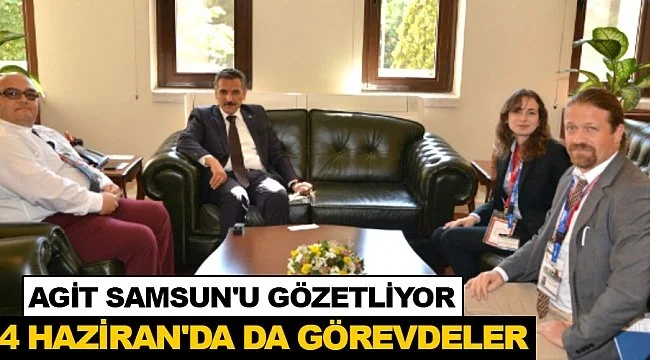
(Meeting the governor of Samsun in 2018 during OSCE-ODIHR work in Türkiye)
A rich collection of photography from Türkiye is available for purchase or as a photo-lecture presentation.
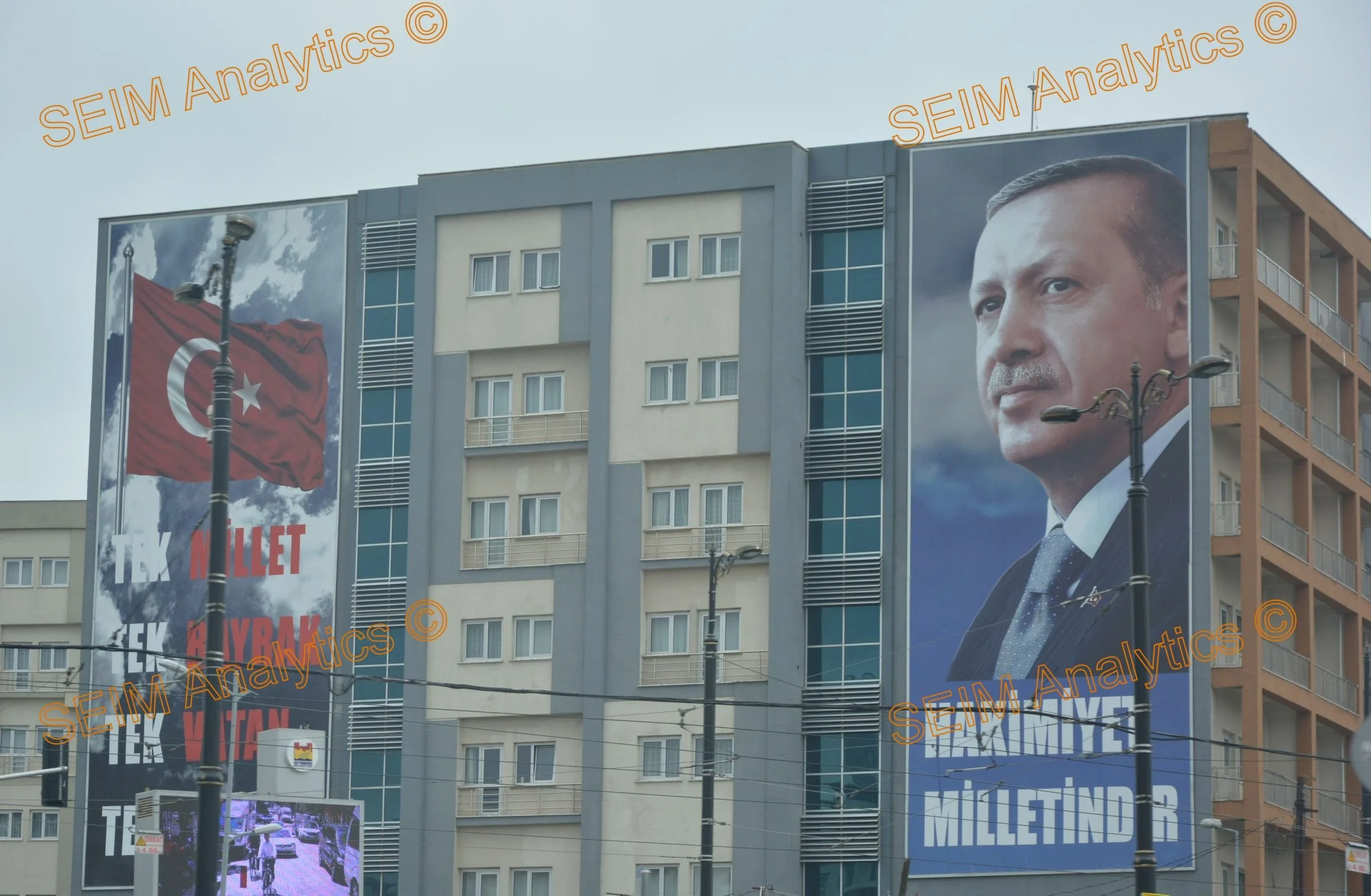
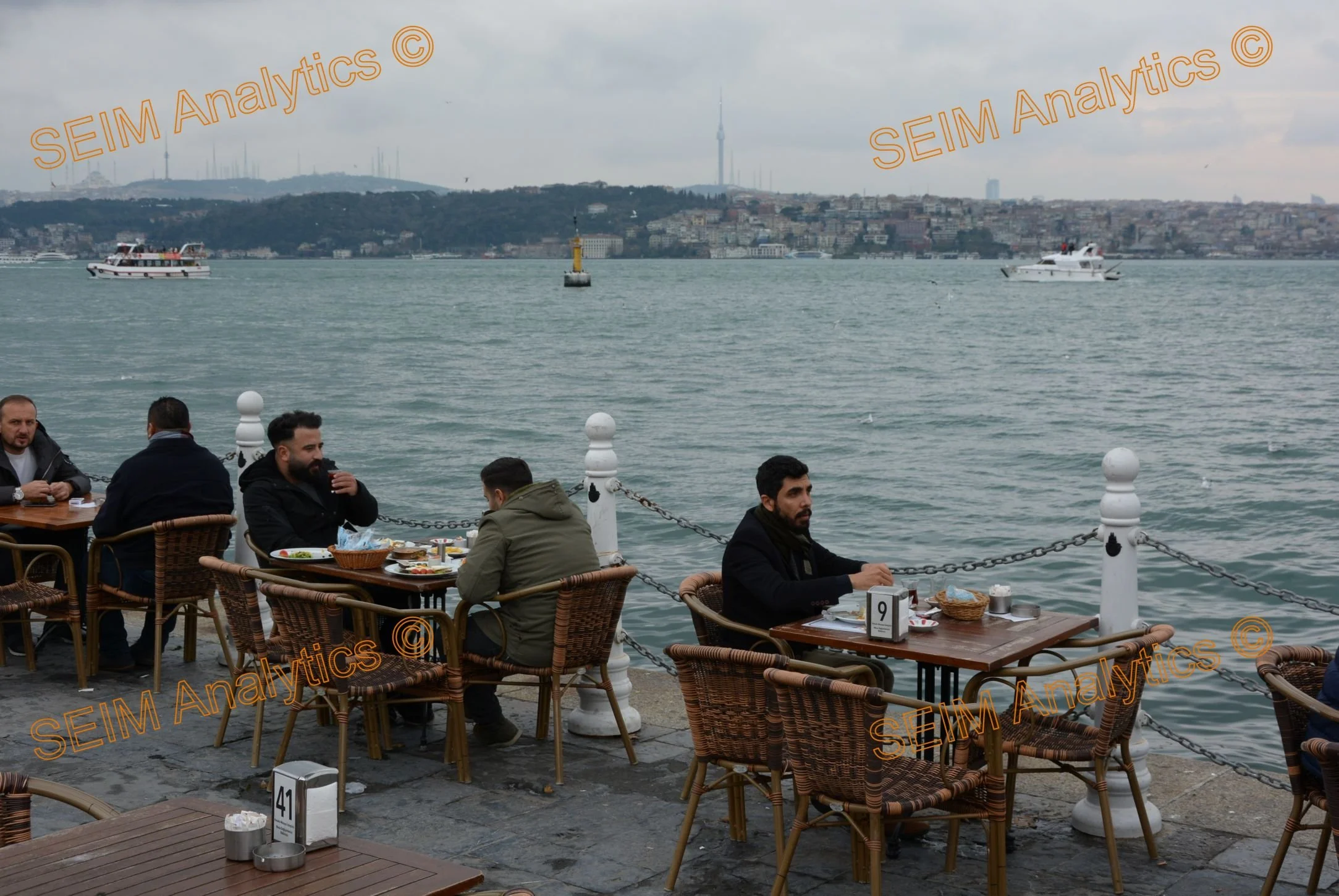
See Seim-analytics/middle-east for further information about lectures, engagements, and professional assignments in Türkiye and the Middle East, including North Africa.
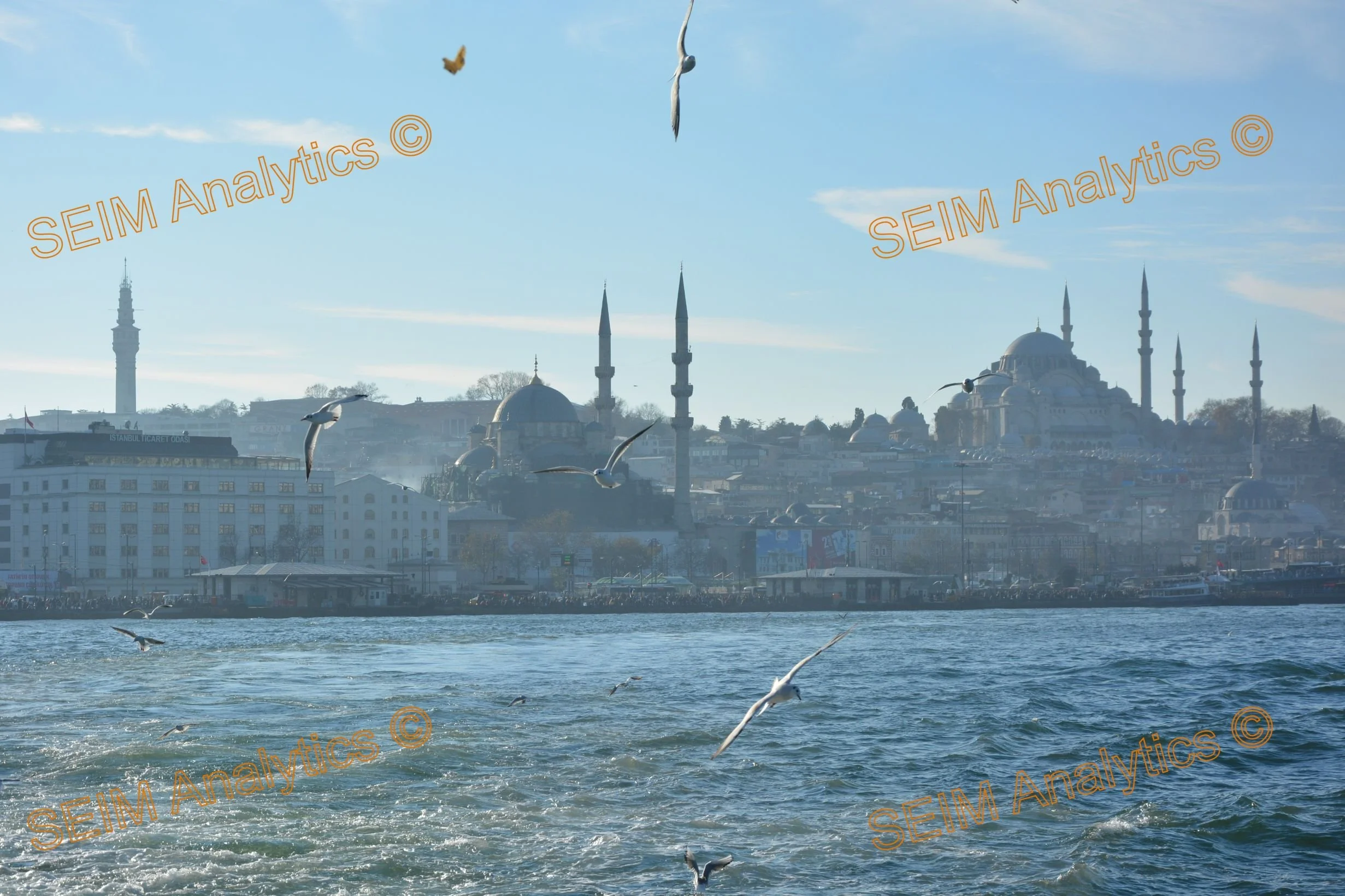
Istanbul - The important Bosporus Strait