
Dr. SEIM’s further academic research projects:
For institutions, research consortiums, organization, and individuals: SEIM Analytics seeks cooperation partners and donations/support for conducting further academic research on ex-Yugoslavia, Serbia, Bosnia-Herzegovina, and Ukraine through the following research projects
Research plans and ambitions:
In the years to come, work will commence on as many as possible of the research perspectives and questions mentioned below. Some are related to exempted texts and pending hypotheses from the fresh doctoral doctoral thesis about the road to war in Yugoslavia/Bosnia, to be published at a distinguished academic publishing house in 2026-27. See more about “The Road to War in the Bosnian Municipality of Kotor Varoš in 1992 – A Microhistory” HERE!
Other research topics are related to Bosnia’s post-war trajectory and challenging post-war reintegration, memory battles, and institutional-political dysfunctionality. These are all pending articles, which dependent upon the size of asked-for financing also might become larger projects or a future book. Outlining such a multifaceted project portfolio with auxiliary and pending potential tasks, also showcases the long-term and deep connection with Bosnia, the former Yugoslavia, and Southeast and Eastern Europe.
Ten of these projects and prospective research trajectories are listed below. They are in different emergent stages with the three main and primary projects described first, and other possible prospective article projects later down, all funding dependent:
For larger contributions, direct IBAN bank transfers labeled as “Gift” or “Support” or “Family/Friend” is possible to:
Den Norske Bank (DNB Asa) BIC: DNBANOKKXXX: IBAN NO42 1229 4339 750
Address: Dronning Eufemias gate 30, 0191 Oslo, Norway.
Please ask HERE for IBAN number in EUR or SEK
Or go to Support/Donation Page
Donations are purely voluntary and do not entitle contributors to any specific service or product.
-
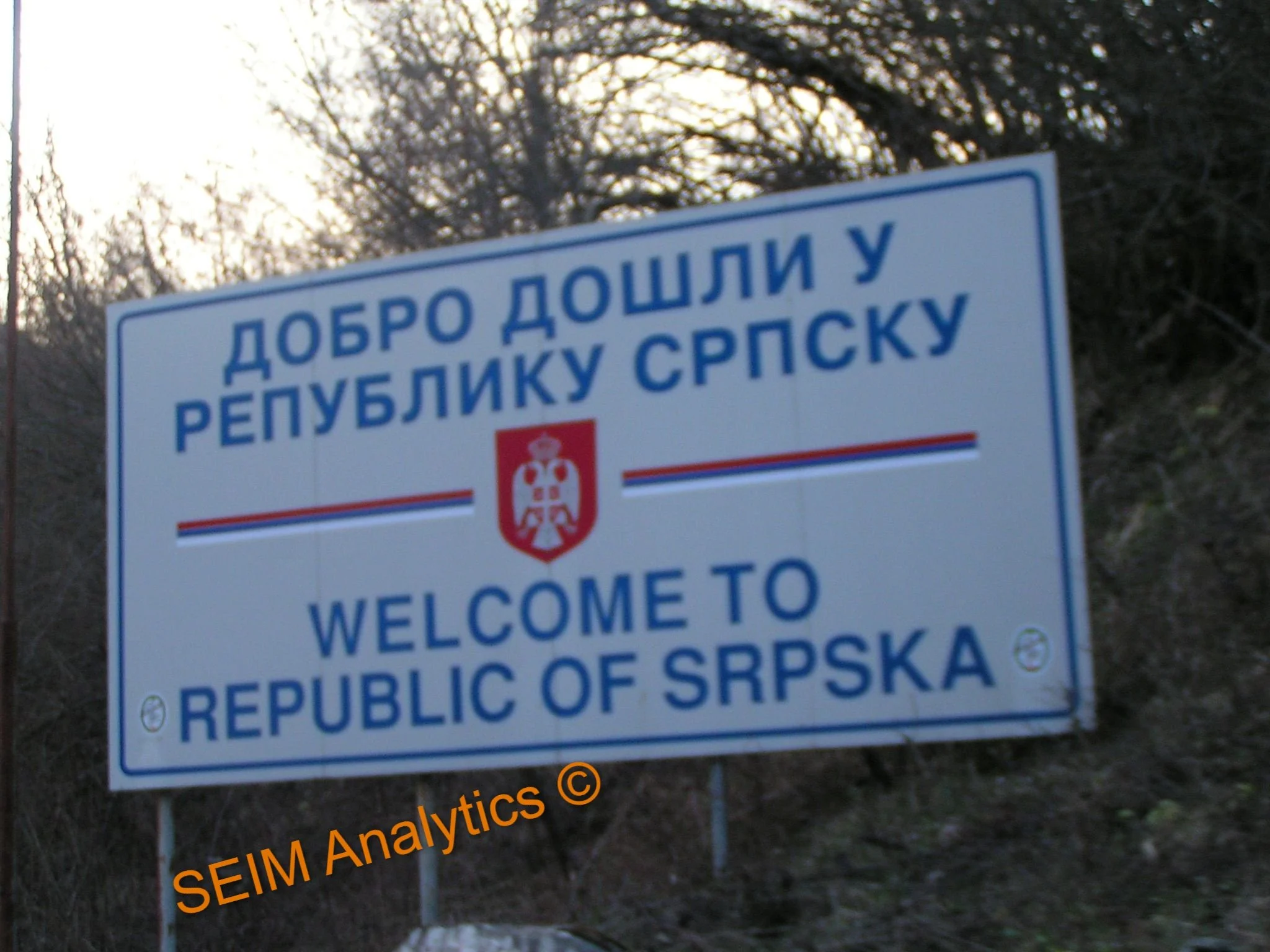
1. The entity- and “state-building” of Republika Srpska
Previous and planned research stays in Republika Srpska, including longer stays in Banja Luka, has and will give intimate access to continue to observe the functioning of the Republika Srpska entity, which together with The Federation of Bosnia & Herzegovina constitute Dayton Bosnia.
Without Republika Srpska there is no Bosnia. SEIM Analytics seeks funding for a research project to study the ongoing entity-building - in fact, attempted “state-building” of Republika Srpska (as part of Bosnia), and how Republika Srpska builds alliances on the international scene. For such a scalable research endevour, one could study political statements and speeches, school textbooks, and media representations, as well as a multitude of archives, among other relevant funds of the Archives of Republika Srpska in Banja Luka and its five regional outlets (e.g. related to the work of the National Assembly of Republika Srpska, the work of the RS President, and the various ministries and agencies of Republika Srpska). Also, the project can analyse and grow to encompass Republika Srpska’s longer-term historical development.
The endevour implies an interdisciplinary integration of political science (state-building, sovereignty studies), history (archival work, school textbooks), and anthropology/sociology (memory, identity).
Despite its legal affirmation in the Dayton Agreement of 1995, Republika Srpska has remained a negatively portrayed, state-like autonomous entity that researchers tend to avoid. There have been few studies of it. Yet, Republika Srpska is there, and SEIM Analytics suggests to research the political symbol use and messaging of its leadership and its institutional functioning. Often Bosnia is described as a complex construction of multiple administrative units and ministries, but this is a description that fits the canton-system of the Federation of Bosnia and Herzegovina, while the more centralized Republika Srpska is a somehow functional entity of a dysfunctional state. For many of its Serbian inhabitants, Republika Srpska meant security, as Serbs were expelled from both neighbouring Croatia and Kosovo where territorialized administrative-autonomous arrangements for Serbian minorities were not created or were abolished. But the grave consequence of security for one group, can be insecurity of others, namely the Bosnian Muslims and Croats in Bosnia, as explored in Seim’s fresh dissertation.
Although nationalism can be xenophobic and dangerous, as seen in Bosnia 1990-92, it can also have an integrative role of binding people together in noble endeavours of community building, as explored by Karl Deutsch, Anthony Smith, and Benedict Anderson. Here, the dissolution processes of Yugoslavia, but also of Bosnia, followed an already established Central-European nationalist logic, which also was and still is expressed in Bosnia. This exploratory project is partly overlapping with the next-described memory politics project. It can follow in conjunction with it and/or after it, and build upon it. Having studied and learnt Serbian language in Banja Luka many years ago and later done research there, few other researchers have a more advantageous starting point to explore this possible avenue of research than Dr. Seim.
Another research issue in conjunction with this topic: What are the consequences of foreign state-building visions lacking foundations in pre-war Bosnian realities, sometimes being ideologized and projected from Western domestic discourses, and the legitimacy crisis pinpointed theoretically by Linz & Stepan of the linkage between a disputed concept of state-ness and prospects for its democratic consolidation.
Currently, the questionable decisions and legitimacy of the High Representative (OHR) from 2021, Christian Schmidt — as he is not recognized by the UN Security Council or by Republika Srpska — is bringing Bosnia further into disarray and potential dissolution.
-
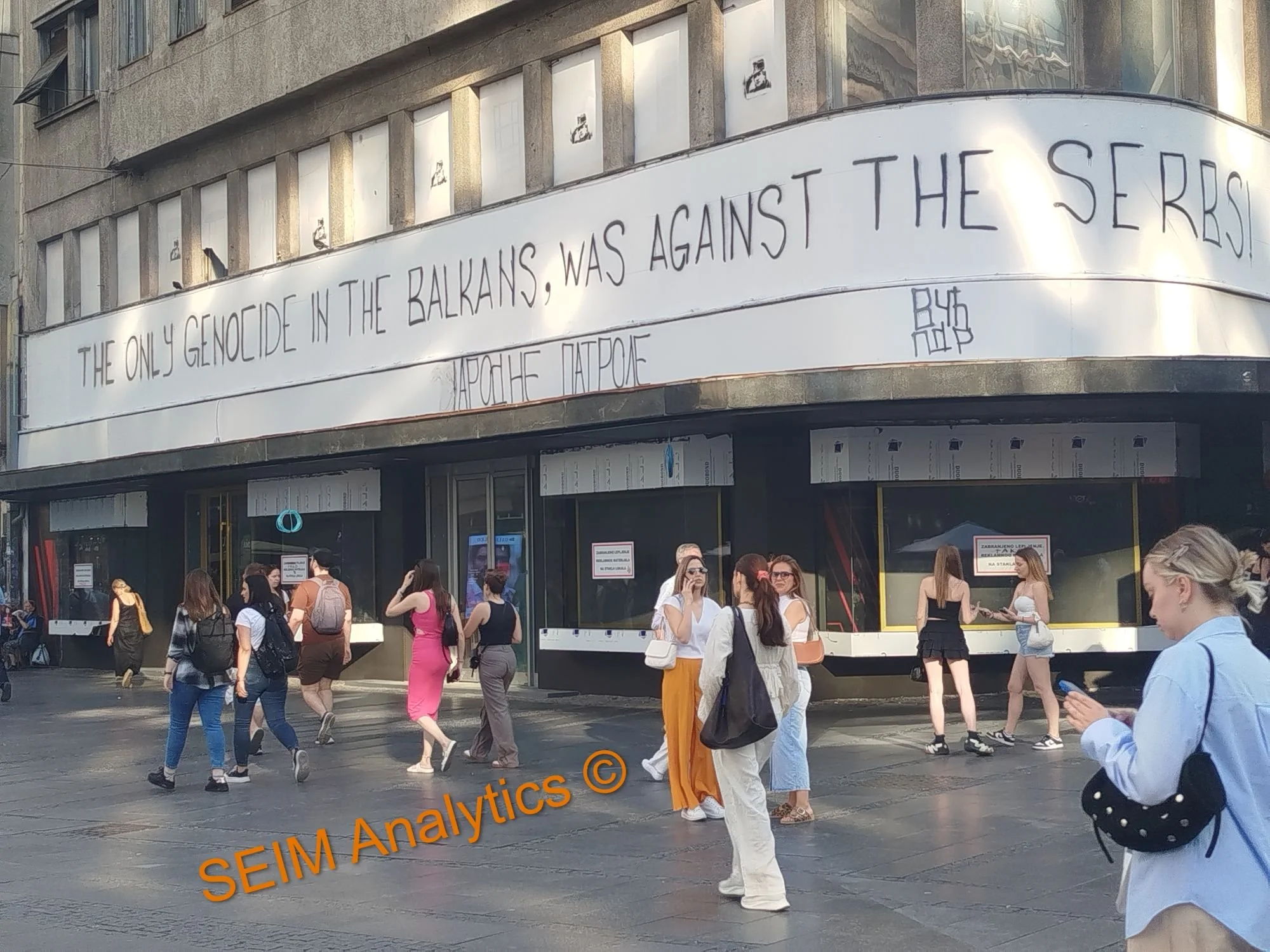
2. Memory Politics in Post-War Bosnia and Herzegovina
Approaching 30 years since the end to the tragic conflict, Bosnia appears trapped in this past war, with its resultant post-war traumas and institutional structures, ethno-nationalist election patterns, and divisive memory politics and war commemorations. In the Bosnian “fractured” memory landscape at least three versions of the past co-exist and clash on a daily basis, defining the political discourse. These post-war polarizing memory politics and mnemonic conflicts have contributed to Bosnia’s identity cleavages, its current political-institutional dysfunctionality, and has hampered reconciliation. This research project aims to assess these impacts on Bosnia’s state-building efforts and identify the actors that keep Bosnia in this state, both external and internal ones. This research topic SEIM Academic seeks to explore under the label Memory Politics in Bosnia “a Continuation of War by other Means” (the last quote from Ružić 2012) – an inversion of Clausewitz’s doctrine.
A theory pursued for investigation is that the manner how political and institutional structures have been supporting a discourse of victimization has roots in the attempt to achieve political aims not realized during the war. In this victimization strategy, inflated casualty figures were propagated (by Bosniak nationalists) and an active usage of the genocide accusation was pursued.
Alongside the chronic post-war political battles, these memory battles demonstrate that memory is not only about the past but is entangled with the present and the future, as highlighted in Hvenekilde Seim’s fresh dissertation. It pinpointed to government-sponsored memory politics, in particular Bosniak-led one, as a key factor for Bosnia’s post-war failure or challenges (Hvenekilde Seim 2022: 326).
That the debate over the recent conflict has become a permanent state of contemporary affairs is confirmed by during Seim’s professional engagements as long-term regional OSCE-ODIHR observer during two elections in Bosnia. Both in Sarajevo in 2010 and in Mostar in 2022, war-related political iconography and symbols were prevalent, and political speeches were clearly more focused on problems of the past (the war) than on suggesting solutions for current economic problems. (This is also confirmed by the OSCE-ODIHR Final Report of 2023: 14).
Instead of seeking common “horizons”, here Bosniak memory strategies have focused on creating internally shared memories to be developing a shared social entity in the sense of a Bosniak nation (See Hvenekilde Seim 2017: The Bosnian Civil War as a Constitutive Identity ‘Event’ ). This discussion will be contrasted with analysis of commemoration policies, war narratives, and denialism of Bosnian Serb and Bosnian Croat political-academic circles.
It is necessary also to be analyzing the truth narratives about the war that have been endorsed by Western international community representatives and how that might have jeopardized the foreign-assisted, Bosniak-led post-war state-building attempt in Bosnia. It is right to include an analysis of the role of the international community and Office of the High Representative (OHR), among other the “memory law” imposed by the outgoing High Representative in July 2021 through the amendments to the Criminal Code of BiH that outlawed the denial of genocide and relativization of war crimes. This sparked one of the worst crises in post-war Bosnia. The victim-focus and truth narratives put out in ICTY indictments, during ICTY court proceedings, and in its verdicts are making ICTY a part of the foreign-impacted politics of history in Bosnia (See Hvenekilde Seim 2022: 42-45, ch. 4.4., 325-328).
There are plenty of analyses of World War 2-related memory politics, from where methodological-theoretical inspiration can be taken (Đureinović 2020; Sindbæk Andersen 2012; Törnquist-Plewa & Sindbæk Andersen 2016; Kuljić 2010; Stojanović, D. 2017, Dragović-Soso 2002, MacDonald 2002, Höpken 1999). Yet, with regard to memory politics related to the recent war in the 1990s, further systematic research is needed.
The topic about genocide denial can also be turned upside down. Since ICTY has stated in numerous rulings that there was no genocide outside Srebrenica area, one could ask if claiming genocide elsewhere, in Bosnia as such, in Western Krajina, the Posavina, in Kosovo, etc., could or should have legal ramifications as it amounts to dangerous hate speech that can create civic unrest. Thus, it can have helped jeopardize the Bosnian state building attempt.
The research outcome will be an article in a relevant journal, but this can also grow to an even larger project.
-
3. Rural-urban dimensions of social inequality and cultural-ideological marginalization in pre-war Bosnia and Herzegovina: Exploring the political consequences for the 1990 elections and pre-war nationalist mobilization
While there is an abundance of literature about Bosnia’s political disintegration from 1990 that is centered on political elite actors, this novel research project explores the less privileged social layers or classes. It looks at the political-electoral consequences of the emergence of a socially stratified Bosnian society towards the end of communism. It analyzes the political impact of uneven rural-urban development in pre-war Bosnia and social tensions arising during communist Bosnia’s rapid industrialization and urbanization push.
In Bosnia's first multi-party elections in 1990, the newly-formed nationalist parties drew their primary support from the rural-provincial areas, as well as from neo-urban social layers with rural roots, while non-nationalist parties were strongest in urban areas and industrial hubs. These election patterns underscore the need for assessing the role of social tensions, social inequality, regional growth disparities, and “rural uprooting” in pre-war Bosnia in inciting nationalist polarization. This research contribution discusses if Bosnia’s unequal socioeconomic development and modernization impacted on its “failed democratization” from 1990, or if this rather was related to Bosnia’s slow cultural transformation and the ideological/cultural marginalization of the rural-related social layers during communism.
While industrialization was the mantra in Bosnia’s modernization and development programme, the agricultural sector was not adequately supported. Rather, the more nationally conservative peasants in Bosnia were treated as retrograde or regressive in communist ideology. This project studies the political impacts in 1990-92 of their slow cultural transformation.
The method will be continued fieldwork and interviewing in Bosnia about the migratory semiurban settings and rural-urban transition zones. It will look at the unequal access to socialist public housing, which tended to foster civic values of secularism and Yugoslavism. This is contrasted by the privately-built, semiurban housing zones of rural migrants which were more mono-ethnic, thus reflecting a continuation of rural segregation dynamics within the urban landscape. This residential perspective with an eye for socio-economic inequality can enable a search to locate social-political discontent spatially.
This research has two interrelated dimensions and possible articles, one focused on the spatial dynamics of marginalization; another examining the voting patterns in the 1990-elections. In both cases, it addresses a lacuna in the research: the experience of socialism from the perspective of the rural-related social layers. Here, one can add the observation that nationalist parties won the elections in 1990 to the surprise of the ruling communist-associated elites, among other because these rural-related social layers had been culturally and politically muted in the socialist system and were out of sight for them.
In prolongment of this article on the pre-war period, it is also fruitful to draw conclusions about the political consequences for election patterns after the war that have segmented the ethnic divides in Dayton Bosnia.
Moreover, this is a topic that might be relevant to some contemporary political tendencies related to the growth of populist political parties in Central/Eastern Europe nowadays. SEIM Analytics has been asking if it really was socioeconomic issues about social inequality and regional disparities that was leading the voters in Romania in Romania’s 2024 and 2025 protest vote, or if cultural issues were equally important. This is also relevant for the 2025 presidential election in Poland. See Seim’s contribution to the WIIW spring seminar on this topic here.
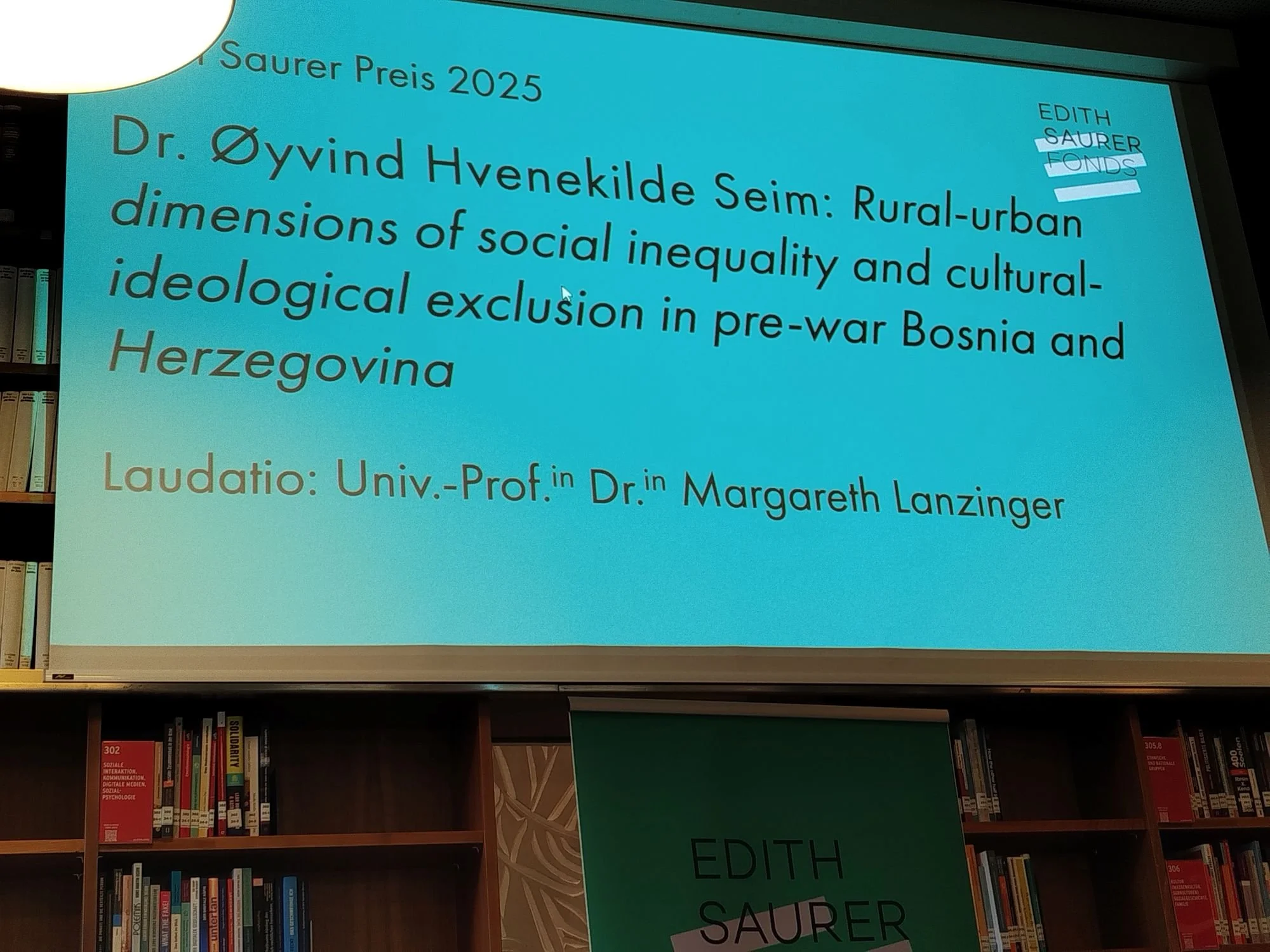
This project has been initiated at the University of Graz under the working title Rural-urban dimensions of social inequality and cultural/ideological exclusion in Southeastern Europe (case-study: Bosnia and Herzegovina): The historical continuities from pre-war Yugoslavia/Bosnia and Herzegovina. SEIM thanks the Center for Southeast European Studies (CSEES) and the Dimensions of Europe Research Program for the invitation to come as a Visiting Research Fellow 2024-25. See: Øyvind Seim - Dimensions of Europe
On 15 May 2025 this research project was given the Edith Saurer Research Prize. Thanks for this support, trust, and de facto recognition of previous research.
-
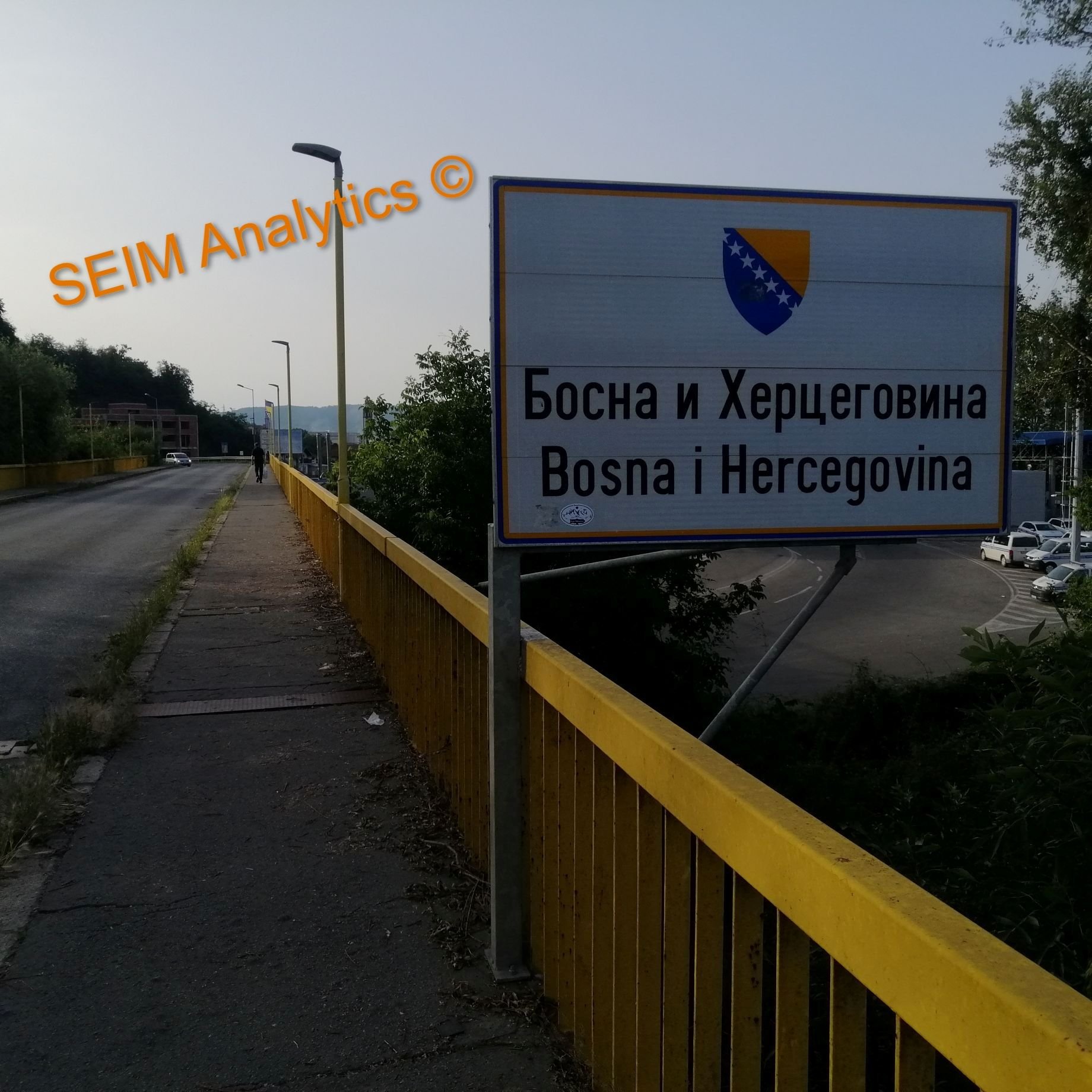
4. Improving the analysis of pre-war demographic composition and distribution patterns in Bosnia: Lessons for the territorial concepts applied during the Cutileiro and Dayton negotiations
This article has reached an advanced level of elaboration. It is based on findings in the PhD dissertation that will be mostly exempted from its forthcoming 2026 international publication. While pre-war Bosnia has often been described as a multicultural country with a high degree of ethnic intermixing, this article makes a deeper and more detailed analysis of the pre-war demographic composition and distribution pattern in the municipality of Kotor Varoš, and it includes examples from neighboring and other municipalities. From that study, hypotheses are formulated about patterns of inter-ethnic relations and ethnic boundaries in the community and elsewhere in Bosnia. Identified tendencies to ethnic distance and segregation are discussed as indications that ask for a more realistic assessment of Bosnia’s multiculture that might rather be labelled an “invention of tradition.”
These findings, both on the intra-municipal demographic level and in the political-ideological sphere, are important to better assess the territorial concepts applied during the Cutileiro and Dayton negotiations. In the former unsuccessful negotiations that were broken off by Alija Izetbegovic, attempts to reach to a pre-war territorial division in Bosnia to avoid war used a municipal-focused negotiation approach. In the eventually successful Dayton negotiations, allowing for a higher degree of subdivision of municipalities to reflect intra-municipal ethnic clustering helped maximize democracy locally when agreeing on the inter-ethnic boundary line (IEBL).
-
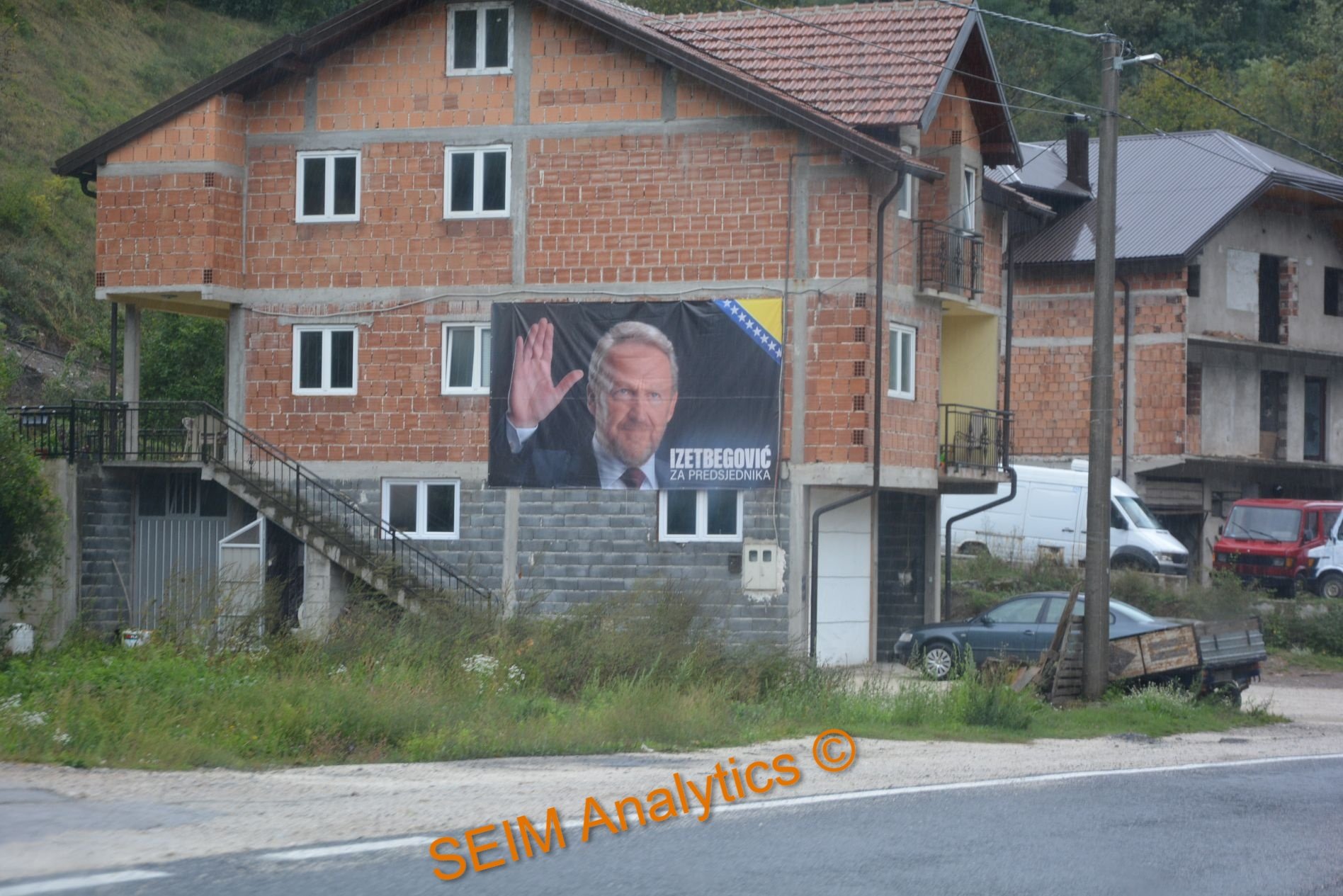
5. The first multi-party elections in Bosnia in 1990: How it came to the nationalist election victory
From 18 years of professional experience with election observation missions for OSCE-ODIHR, EUs External Action Service (EEAS), Carter Center, and twice (2010, 2022) in Bosnia, SEIM Analytics seeks to give a new assessment of the 1990-election that brought the nationalist parties to power. Some interviews have already been conducted, e.g., with Nenad Kecmanović, in the Bosnian Presidency in 1992 and other interviews with elected MPs in the Bosnian parliament in 1990-92. Also, election administration officials during the 1990 election have been interviewed. Additional interviews might get conducted with those of the political elite still alive, something which shows the importance of oral history and the urgency of this research endevour. The failure of the civic parties v. the nationalist parties will be analyzed in conjunction with the electoral system and Bosnia’s legacy of ethnically-based communitarism. Dr. Seim’s dissertation (2022: 318) concludes that the nationalist vote “is better explained as a rational response to the uncertainties of the new constitutional situation and as reasoned political ‘community behavior’ that derived from limited democratic traditions.” This proposed article seeks to continue the good work of Andjelić 2003; Burg & Shoup 2000; Hayden 2000; Hayden 2005; and Caspersen 2010, among others.
-
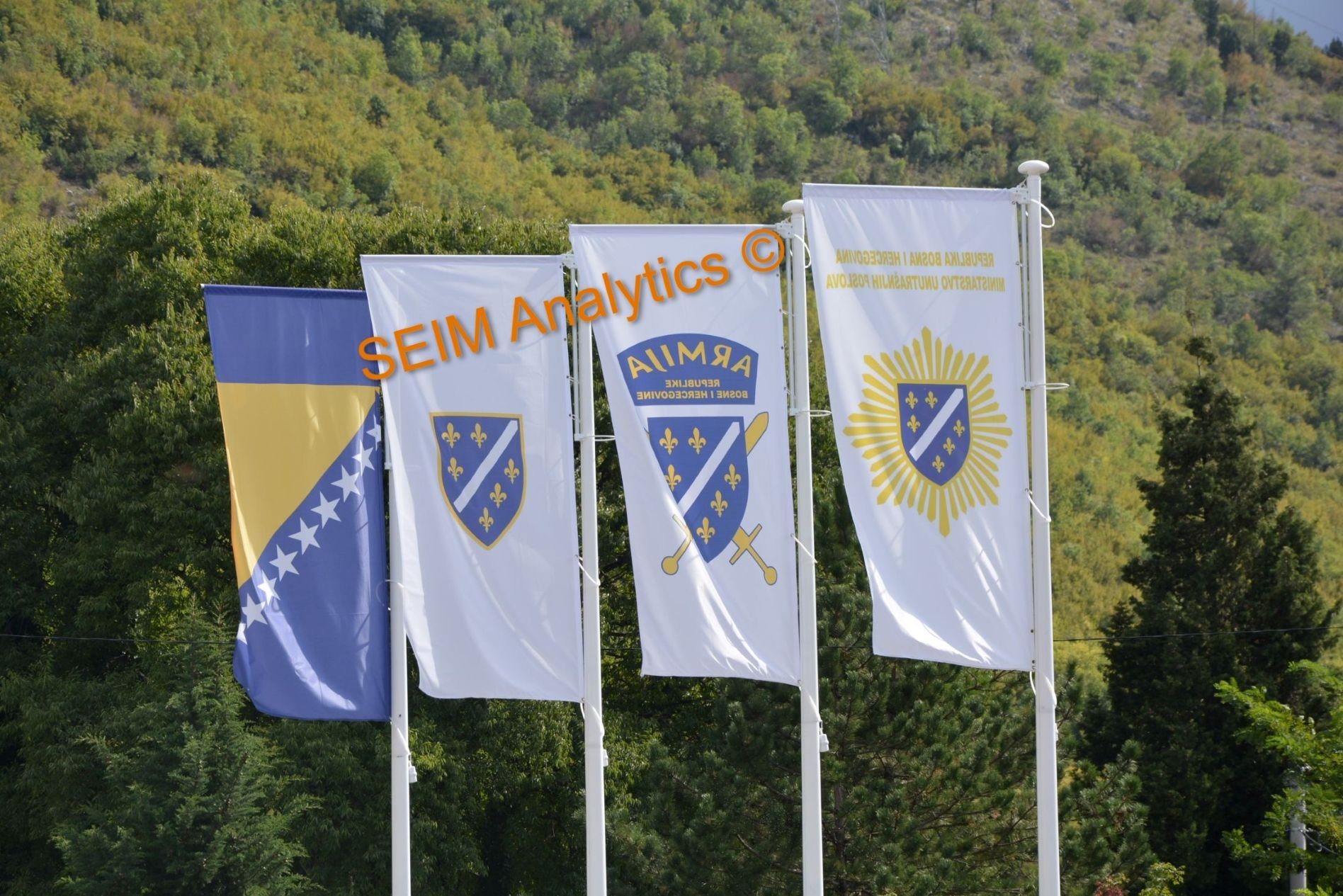
6. The ethnic contest for Bosnia in 1991
When studying the pre-war political system transition, my PhD highlights that it was not the election victory of the three nationalist parties in itself that made war inevitable, rather it seems to have been the political practices and breach of the consensus tradition in Bosnia after the election in 1990 that broke status quo and created political tensions that led to war. The doctoral dissertation of Seim (2022: 148, 318) states, “Along the politicization of ethnicity, a ‘re-feudalization’ of Bosnia occurred. Political power was being territorialized on municipal and sub-municipal level. That was the beginning of the end of Bosnia. It instigated the process of territorialization of political power and self-proclamation of Serbian and Croatian autonomous regions. It led to the eventual ethnic division of Bosnia even pre-war. In their internal subdividing of power and positions ethnically, and when implementing this ethnic principle locally, as I will detail for Kotor Varoš, all the three nationalist parties can be regarded to have been responsible for laying the foundation for the territorial fragmentation and re-structuring of Bosnia which the civil war would be about.”
From exempted thesis material about this internal fragmentation during 1991, an article will be built focused on internal Bosnian political practices and ethnic-based subdividing of political power locally, an ethnic contest for Bosnia which all the three main nationalist parties participated in. This focus towards analyzing the relational political dynamics in Bosnia itself stands in contrast to the overwhelming focus in literature on external political leaders, like Milošević and Tudjman. It is to be based on conducted and new interviews, and secondary literature.
-
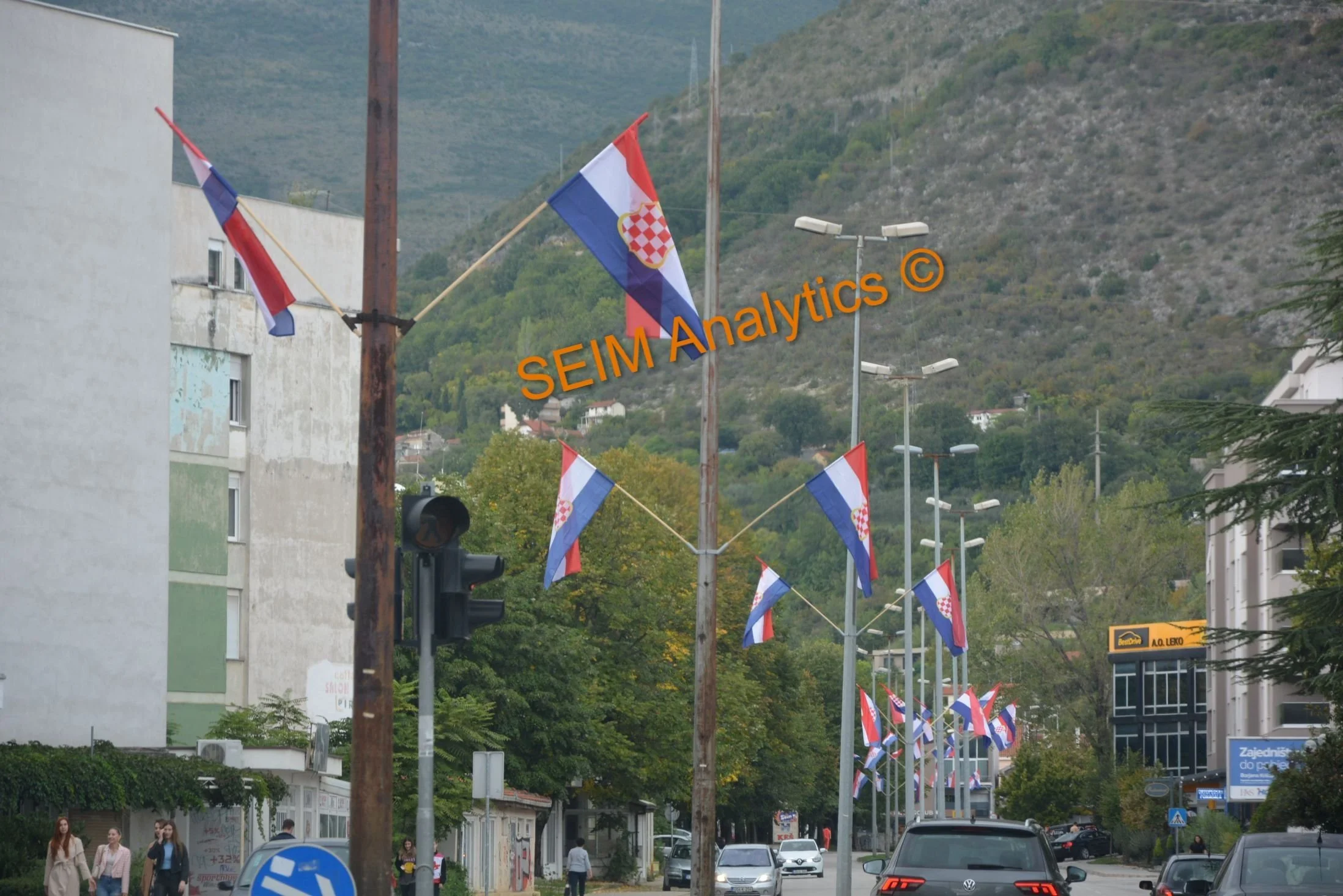
7. Reassessing the missed opportunities to avoid war in Bosnia: The 1991-92 negotiations
This article surveys the failures of the various pre-war negotiations, bilateral and multilateral discussions, political initiatives, and reform proposals that tried to hold Yugoslavia and Bosnia together and find transitory peaceful solutions and compromises to avoid war. It encompasses new insights into the federal-level negotiations, the “Belgrade Initiative”, “the historical compromise,” as well as the Cutileiro plan that was the last negotiated solution and chance to save Bosnia from war, a plan that Alija Izetbegović first conceded to but later backed down from. The article includes a look at the parallel Croatian-Serbian bilateral initiatives and talks (e.g., the Karadjordjevo negotiations and expert group follow-up) to define their own interest zones in Bosnia and beyond. This article seeks to continue the left-over hypothesis from Dr. Seim’s doctoral dissertation (2002: 335) about “the inadequately recognized role and responsibility of Izetbegović, who seems to have been steered by his own nation-building project, which he was willing to sacrifice peace and the security of his own people to achieve.”
-
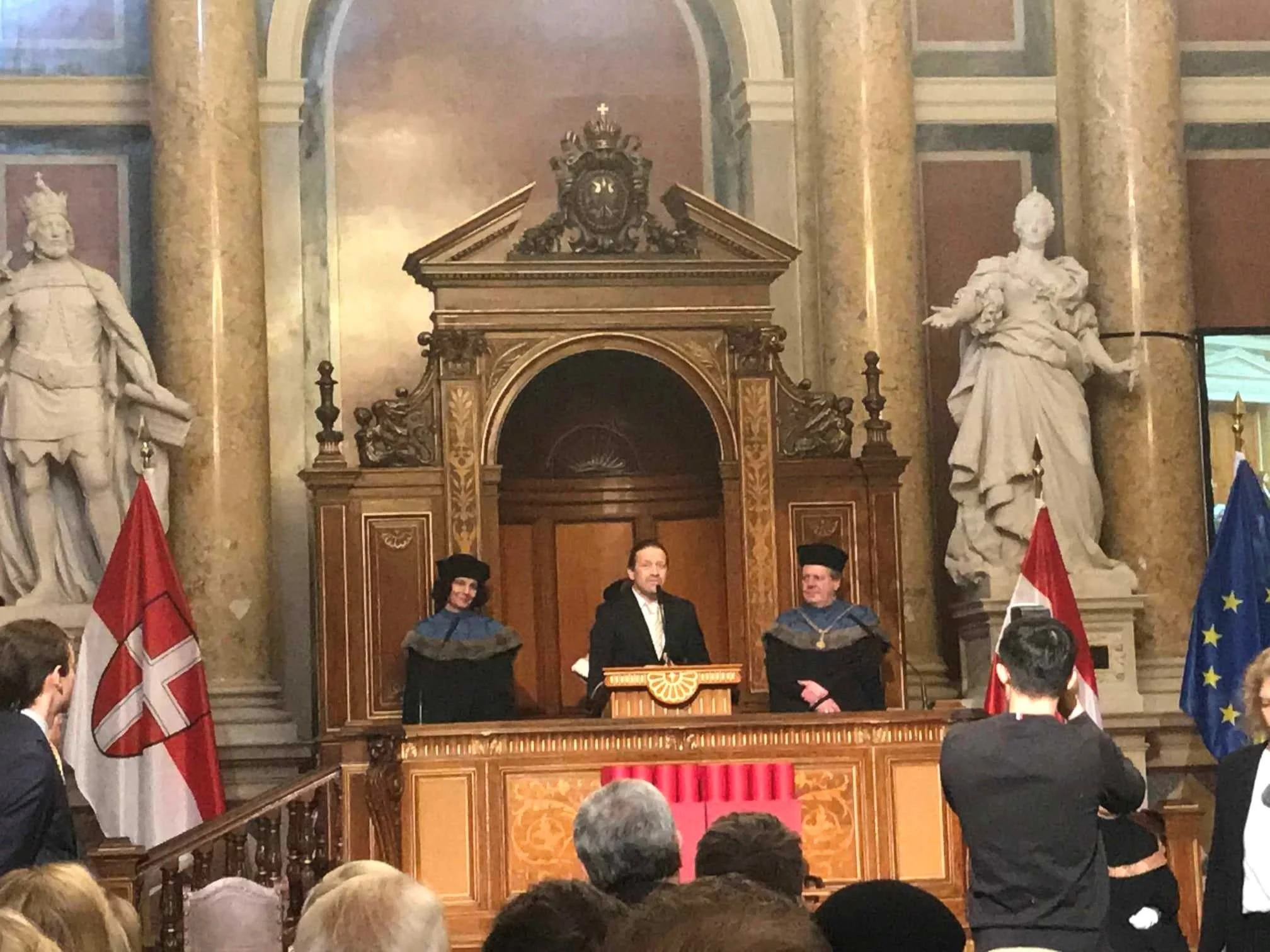
8. Work on the publication of SEIM's revised dissertation at an internationally prestigious academic publishing house under a new title: Contract signed.
The work with revising the dissertation before publication is already 50% finished. During this work, there might be the need for additional interviews and field trips in Bosnia. Support a field trip!
Publishing this book, no income can be expected, a reality for academics today. Yet, your contribution will enhance this work.
Dr. Seim was invited to the ASN convention in New York 22-24 May 2025 to present the thesis. Due to a professional engagement as election expert in Romania in 2025 this presentation had to be postponed to a future ASN convention when the forthcoming book is published.
-
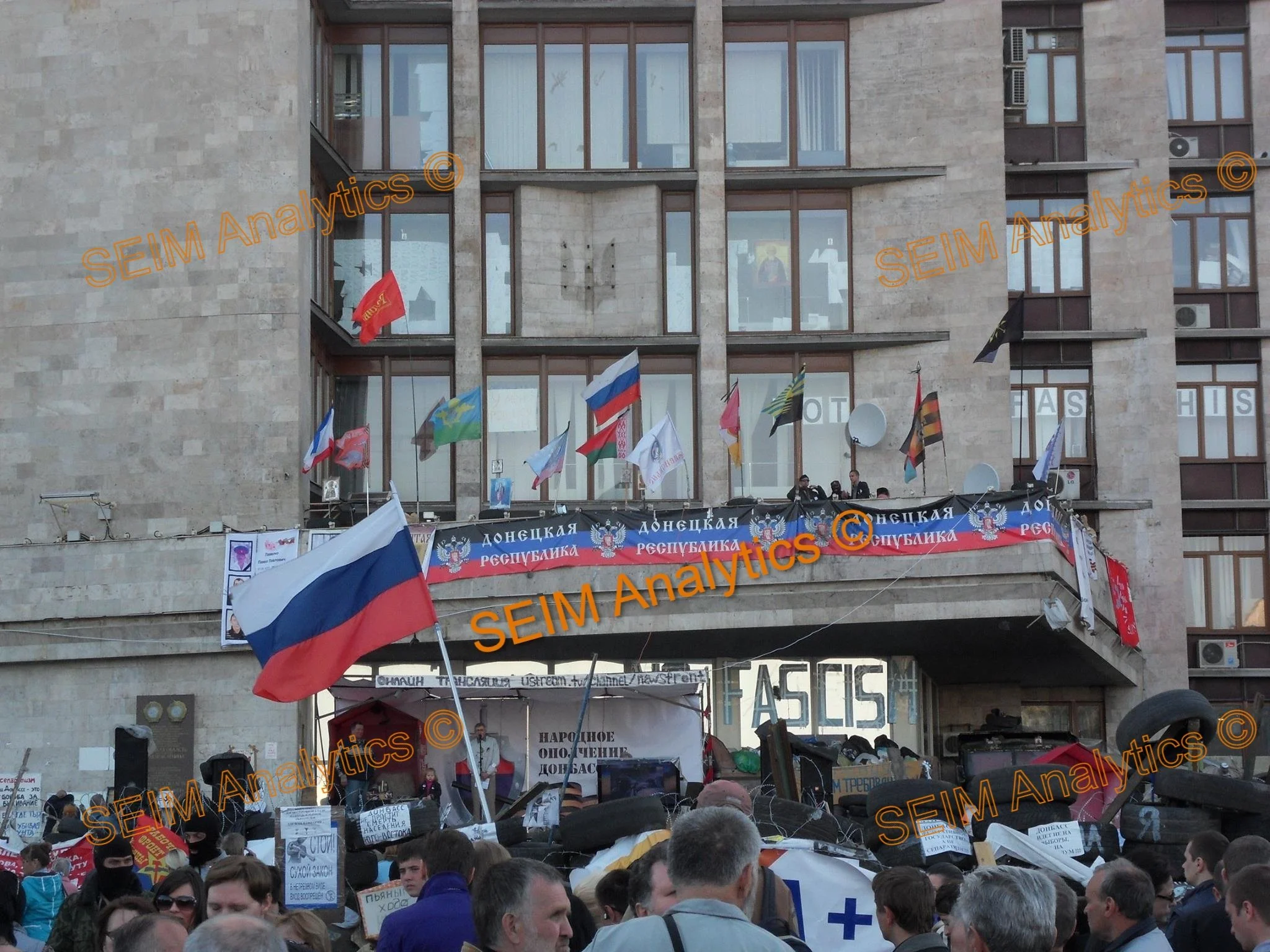
9. Revisiting Anti-Maidan in Donetsk March-May 2014: Before the Storm
Being an OSCE observer in Donetsk City from late March 2014 to leaving with the last flight out of the airport on 25 May was a unique opportunity to see the Anti-Maidan “revolution” in Donetsk (including observing the takeover of the regional administration building on 7 April). These experiences and privileged access (including own photographic material) can be used to create an interesting and informative timeline of events built around a retrospective essay/analysis.
SEIM also saw electoral processes in Ukraine during three months in 2009-2010 in Crimea. These were settings in which one could observe manipulative mobilization of citizens, but also hear voices about actual grievances and objective concerns related to the status of Russian language and the political and human rights of all citizens of Ukraine.
Support a blog post or a feature article for a magazine about these eye-witnessed experiences.
OR Support a wider historical analysis “War in Europe – again! Lessons for Ukraine from the wars in Yugoslavia in the 1990s.” This research project has been delivered for scrutiny to an academic institution, and decision is pending, but institutional funding is a very crowded place.
Research project No. 10. Anthony Smith’s Theories on Nationalism and The Road to War in Bosnia in 1992
The war in Bosnia is a crucial case for understanding how nationalism can drive political fragmentation, ethnic mobilization, and ultimately, armed conflict. Using Anthony Smith as a key reference and inspirational source, this research project aims at analyzing the collapse of Yugoslavia and the subsequent war in Bosnia (1992-1995) from the perspective of the different stages of development of the three main ethno-national groups in Bosnia. The proposed research builds upon SEIM’s dissertation The Road to War in the Bosnian Municipality of Kotor Varoš in 1992: A Microhistory. There, it was proposed with reference to the ethno-symbolist approach of Anthony Smith and the constructivist approach of Benedict Anderson, that, “While recognizing the tradition that approaches the nation as an imagined, constructed, unfixed, and instrumentalized community, it remains necessary to retain the idea that nations are real communities because of becoming a psychological reality, as Smith notes [1998: 77]. People tended to think that ethnicity mattered. That emotional source of national sentiment of “ordinary people,” which not only can be found in the shape but also in the content of national ideologies [Smith 1998: 83], (…) makes it mistaken to omit the role of the non-elites, which Anthony Smith concludes (theoretically) would be to miss the underlying drive and direction of the nationalist ideology [Smith 1998: 95-6]” (quote from Hvenekilde Seim 2022: 292).
This soon to be published dissertation takes Smith’s theories to the field and to the local municipality of Kotor Varoš and its villages and hamlets. It introduces hypotheses about the foundations for pre-war ethno-national identities, but also discusses nationalism as a psychosocial phenomenon of conceptually linking family (kinship) or clan to the nation or its nation-state. It states, that the emergence of nations in Bosnia “become rooted in its confessional cultures, which were created in Bosnia as a type of primordial nationalism before the emergence of the nation in the modern sense” (Hvenekilde Seim 2022: 106).
Due to its microhistorical character, the thesis left for further elaboration to work on “the hypothesis that Serbian national identity (…) formed politically as a mass phenomenon (due to its egalitarian character in the Serbian Kingdom) and at an earlier stage than Croat-ness among Catholics in Bosnia and much earlier than by the Bosnian Muslims – whose identity in the early 20th century was still malleable. The early emergence of nationalism among an unmodern Serbian peasantry during the 19th century and up to World War I seems in contrast to the functionalistic approach of Ernest Gellner that emphasizes development of high cultures, industrialization, and modernization as a precondition for the emergence of the modern nation, [which seems like circular reasoning, yet Gellner’s focus on economic development seems more fitting for the rise of nationalism in post-feudal Catholic societies in Central Europe than to explain nationalism by Orthodox Serbs]. In comparison, by Bosnian Muslims a relatively “late” political expression of ethno-confessional and cultural identity can be proposed. That emerging political expression seems linked to the Tito-time, Yugoslav-level nationality policies and to the role of (…) [Alija] Izetbegović in transforming and channeling this empowerment into their pursued political track of Bosnian state independence.
As propositions and as a framework for a study of the historical growth of national identities in Bosnia, even though I find certain national identities more recently “constructed” than others, [as with the “nation-ness” of Bosnian Muslims,] I emphasize how “[n]ations are (…) constructed essentially from above, but which cannot be understood unless also analysed from below” (Eric Hobsbawm 1990 [but also emphasized by Smith 1986]). In other words; it is indispensable to investigate and point to “the ethnic origin” of national identity (Anthony Smith) – especially in the Serbian case due to the pre-modern roots of nationalism there – and to cultural nationalism as a force on its own (John Hutchinson, [in Cultural Nationalism and Moral Regeneration]), because it would be mistaken to “extrude all reference to ‘culture’ from the definition of a concept whose specificity resides exactly in the relationship it proposes between culture and politics [as Smith 1998: 89 emphasizes]” (Hvenekilde Seim 2022: 321).
The dissertation “demonstrated how the political conflict that evolved into civil war in Kotor Varoš was rooted in and fueled by the political mobilization of individual and local-based ethno-national identities and visions of ethnic-based insecurity or victimization. (…) Bosnia descended to war among other because Bosnia-Herzegovina had never stabilized any historical identity or modern state tradition. (…) It was never envisaged as a state in the nationalist ideologies of two of its three ethno-national constitutive groups. (…) Bosnia was characterized by the absence of a “nation-state” or an idea of a Bosnian nation” (Hvenekilde Seim 2022: 322).
This research project will work with these pending hypotheses and outline in more detail the different stages and trajectories in the development of political expressions of national identity among Bosnia’s three main ethno-national groups. The research project will engage with Smith’s theories on nationalism and identity in a real-world case study (Bosnia). Thereby, it can contribute to theoretical debates on nationalism and conflict with empirical evidence. The initial focus will commence with The Ethnic Origins of Nations (1986) and Nationalism and Modernism. A Critical Survey of Recent Theories of Nations and Nationalism (1998).