Armenia’s 2026 parliamentary elections from the perspective of Gyumri City and Shirak Province
10 July 2026
From late April to mid-June 2026, Dr. Seim participated in the observation mission of the OSCE/ODIHR to Armenia for the parliamentary election on 7 June.
Seconded from Norway to the Organization for Security and Cooperation in Europe (OSCE/ODIHR) through the NORCAP expert roster, Seim was based in Armenia’s second-biggest city Gyumri while also covering Northern Shirak Province, including the municipalities of Ashotsk, Amasia, and most of Akhuryan municipality. Seim’s team met key election stakeholders, coordinated a group of 20 short-term OSCE-ODIHR election observers, and contributed key inputs to the OSCE/ODIHR Interim Report and Preliminary Statement, ahead of the upcoming Final Report.
Disclaimer: Always enjoyable to be part of and contribute to the important work of OSCE Office for Democratic Institutions and Human Rights (ODIHR). Yet, the reflections on the geopolitical setting of the election and on Armenia and Gyumri in this blog post is of the independent political analyst and historian Dr. Seim. They do not reflect any official OSCE/ODIHR position, which are exclusively found in the linked-to OSCE/ODIHR reports below.
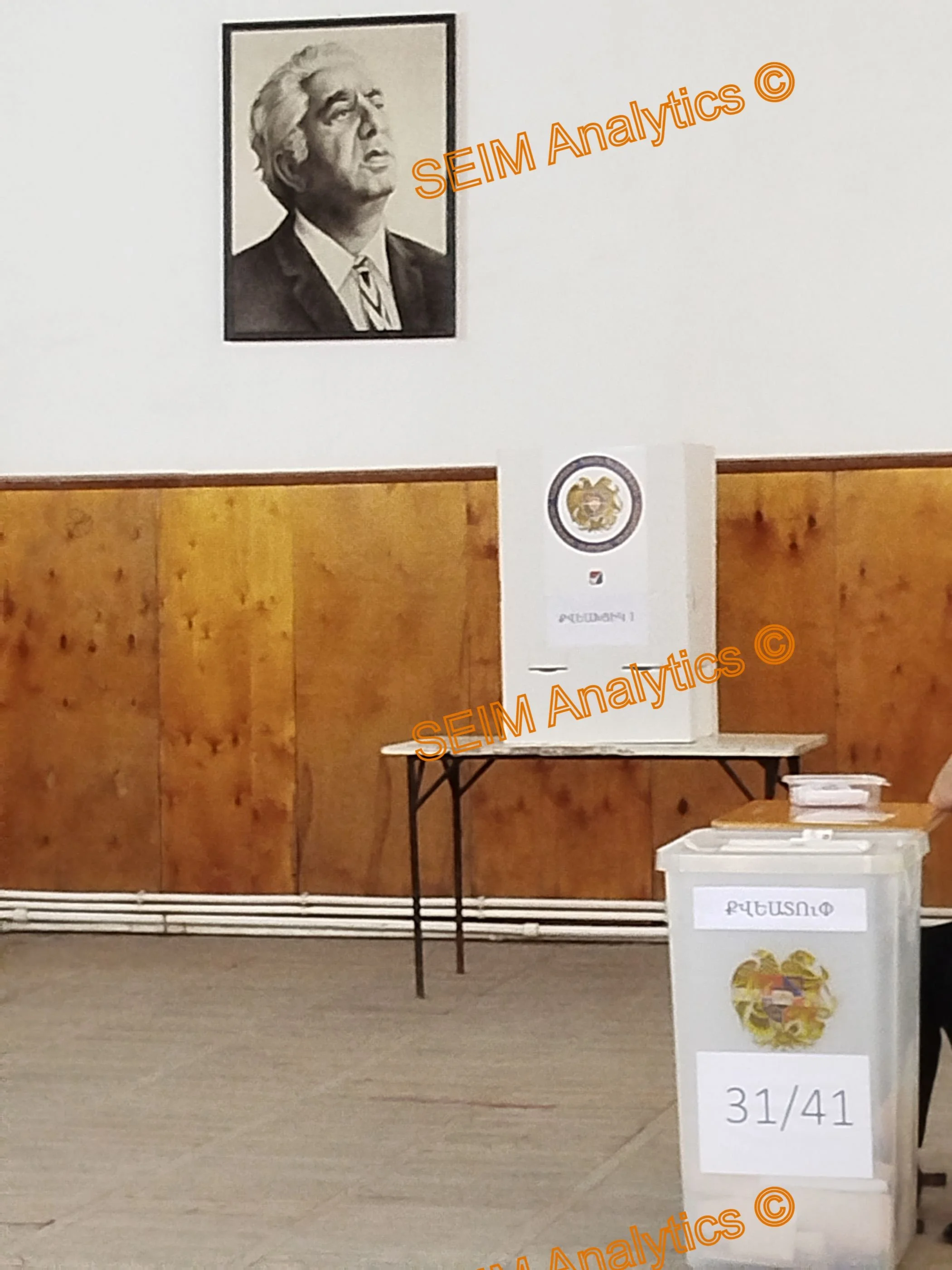
(Photo: Polling station in Gyumri city center)
Information about the joint findings of OSCE/ODIHR EOM Armenia can be found here:
Access OSCE/ODIHR Preliminary Statement of 8 June 2026
Elections in Armenia | Organization for Security and Co-operation in Europe
SEIM Analytics’ analytical focus on South Caucasus has emphasis on political monitoring, conflict analysis, and mediation and dialogue facilitation to achieve peaceful conflict resolution. Democracy support and election observation is integral to this professional profile.
Armenia: Restored stability, but increased polarization
After years with internal political tensions following the loss of Nagorno-Karabakh to Azerbaijan in 2020 and 2023, as well as a year of conflict between the government and the Armenian Apostolic Church, this election brought some more political stability and ensured a continued pro-EU course of Armenia’s incumbent prime minister Nikol Pashinyan, who secured a third-term re-election. Yet, the parliamentary situation remains fragile and the governing coalition did not win enough representatives to singlehandedly conduct constitutional changes. Though, the result was better than feared for Pashinyan than expected. It will make it possible to go forward with regional cooperation plans and trade routes, among other through the Trump-initiated TRIPP plan.
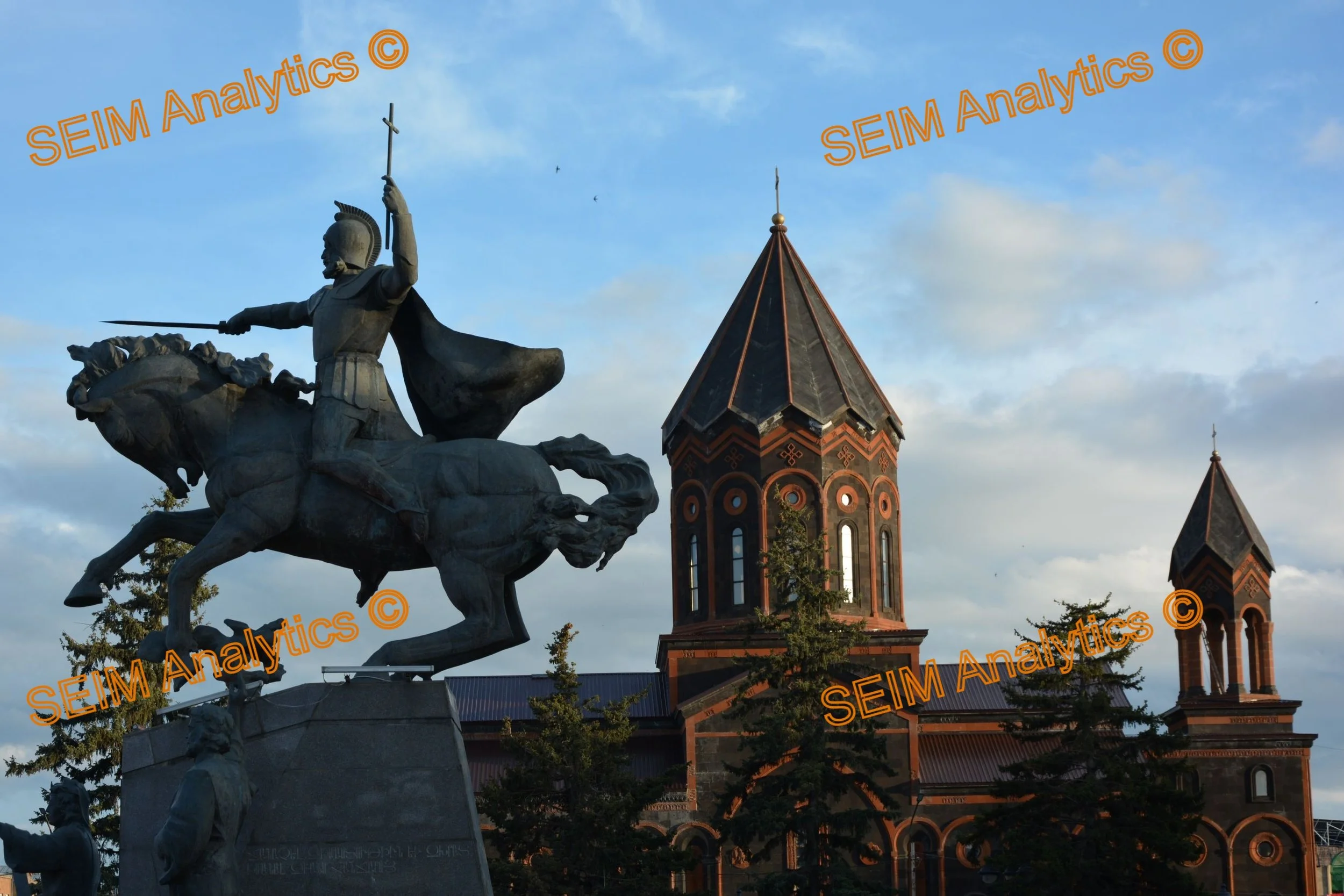
The Armenian national hero and military commander Vardan Mamikonian (in memory of the Battle of Avarayr in 451 CE) at the Vardanants Square in Gyumri City.
Election results and turnout (national level):
The Civil Contract Party of prime minister Nikol Pashinyan won the election with 49.8 percent, which translated into 64 of the 105 parliamentary seats after a 59 percent turnout. Among the opposition parties, Strong Armenia came second with 23.3 percent and 29 seats, and Armenia Alliance came third with 9.9 percent and 12 seats.
The members of the unicameral National Assembly are elected by party-list proportional representation. Seats are allocated using the d'Hondt method with an election threshold of 4% for parties and 8% for two- and three-party alliances. This made the opposition party Prosperous Armenia fall short of representation, with 3.996%. Their complaints were unsuccessful, among other related to invalidations of two rural precincts because of irregular military-related voting procedures that might have reduced Prosperous Armenia’s percentage. This has become one of the post-election controversies. Other opposition parties were also contesting the results, with appeals to the Constitutional Court turned down as final on 4 July.
If Prosperous Armenia would have passed the 4 percent threshold, it would have reduced Civil Contract’s share to 61 seats and directly impacted on their ability to unilaterally pass legislation related to constitutional law, referendum law, election codes, political party laws, election of judges, and members of the Central Bank, the Central Election Commission, and the RTV Commission, laws that demand a 3/5 majority (63 seats). Yet, Civil Contract fell short of the 70 seats needed to pass constitutional amendments to formally remove Armenian claims to Nagorno-Karabakh. This would have required a two-thirds majority in parliament. The election result makes the next National Assembly more competitive than the previous one, but with possibly even deepened polarisation.
Due to the many arrests, and allegations of misuse of administrative resources, a post-election debate in Armenia is whether the government is using judicial and security institutions against opposition leaders.
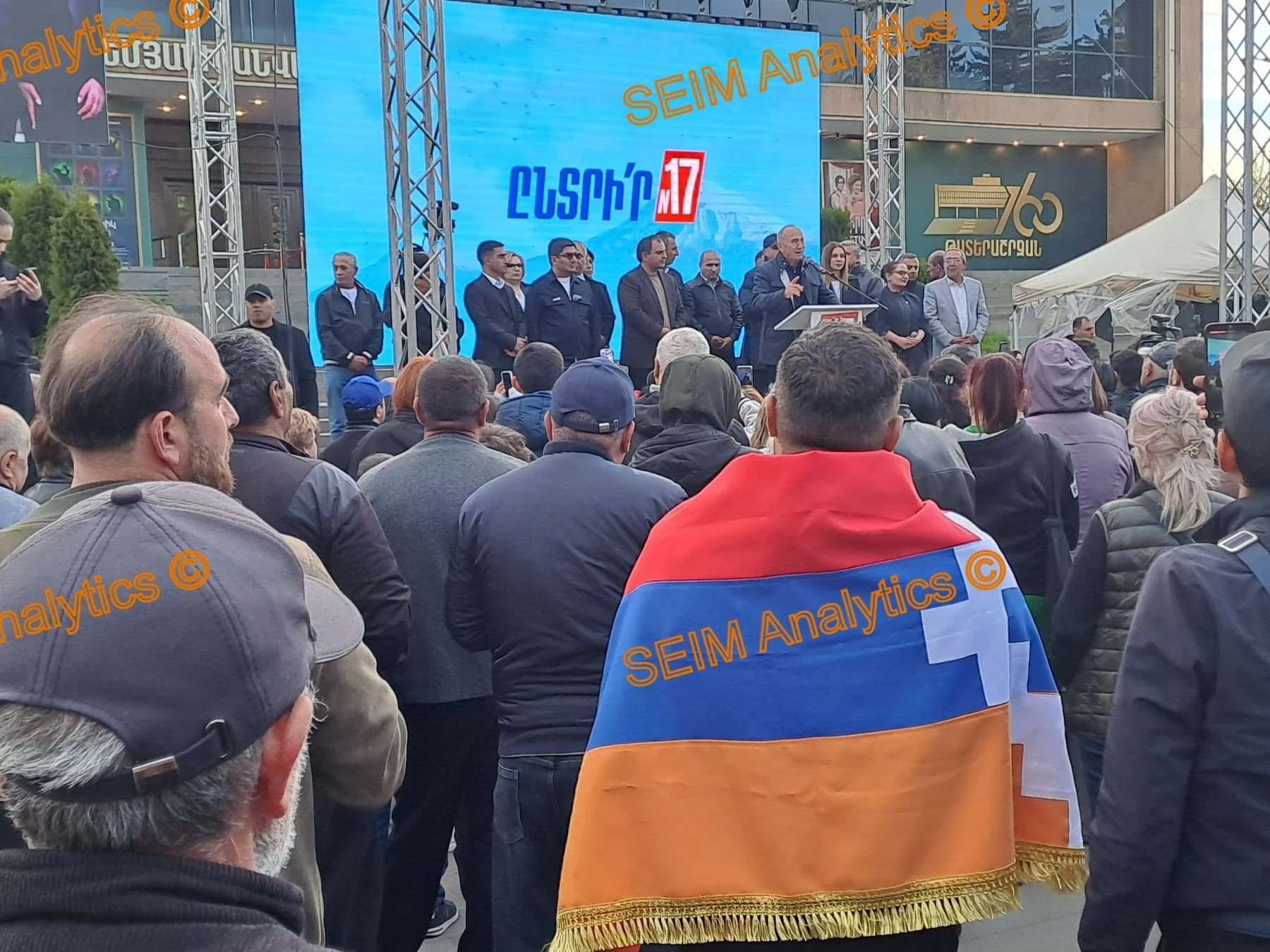
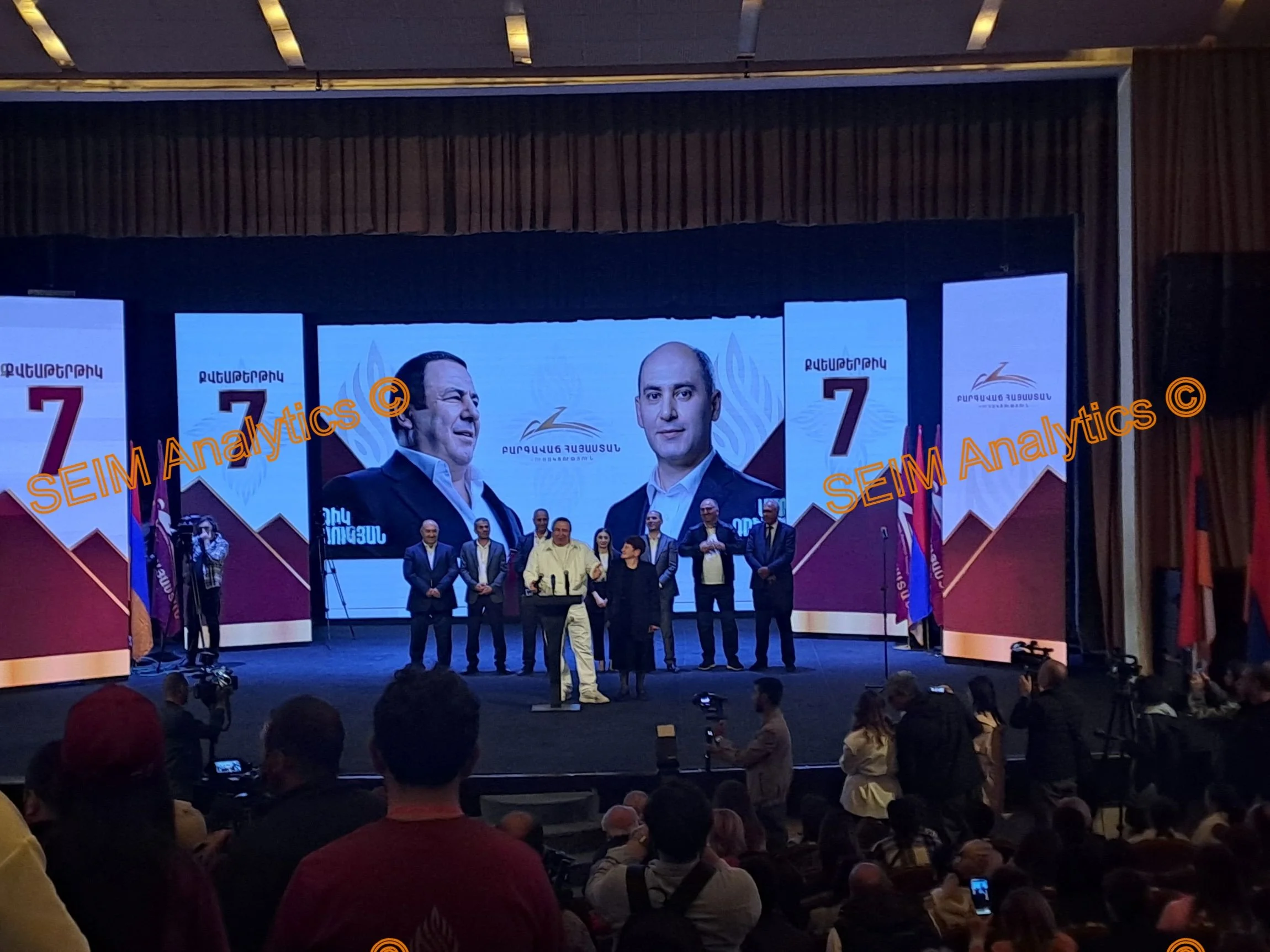
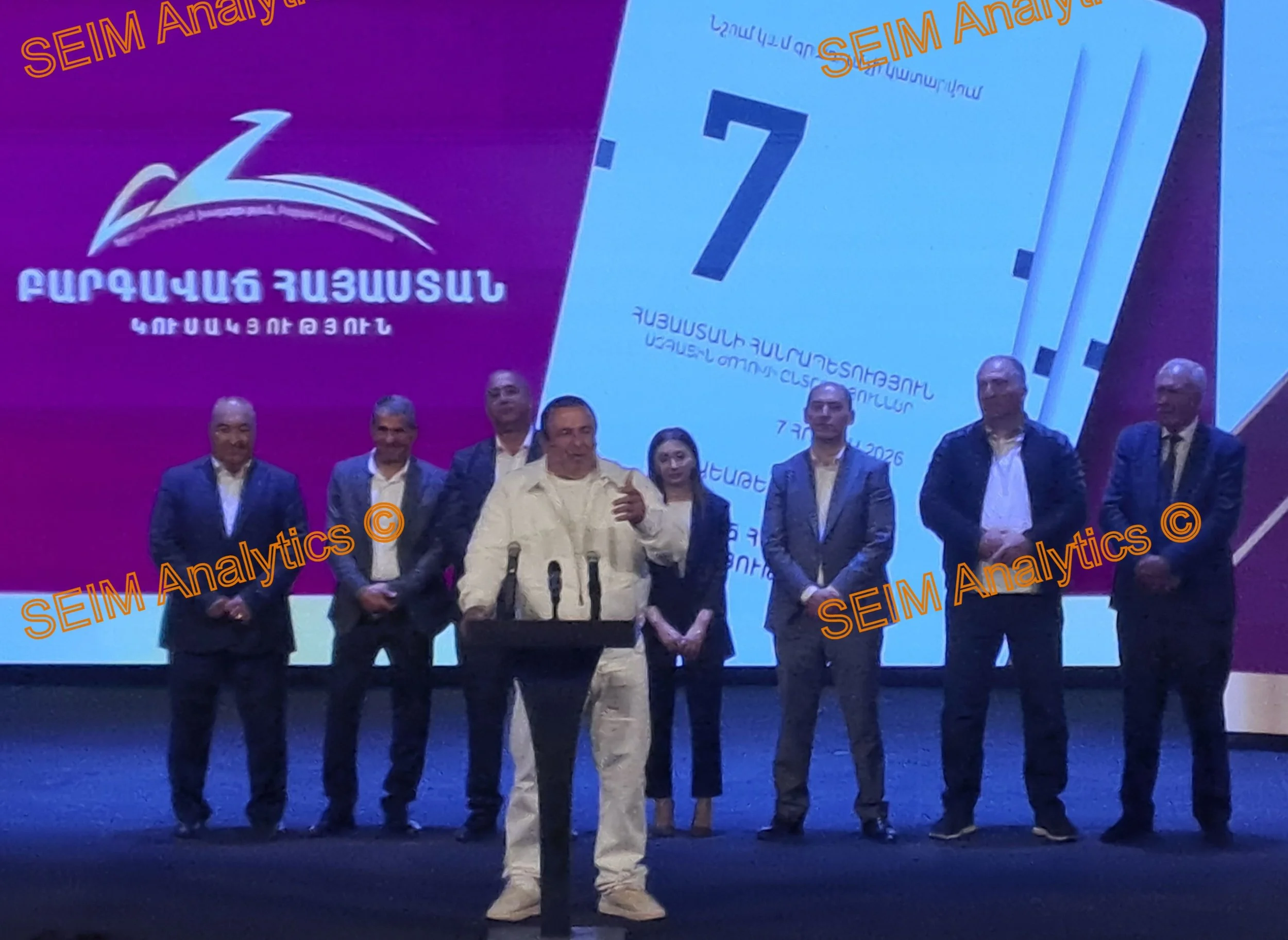




The election from the Gyumri perspective
Gyumri, Armenia’s second largest city, has a distinct trajectory and identity, with the last two local elections won by the opposition. After the 2022 local elections, Civil Contract did not form the local government in Gyumri but had a caretaker role from October 2024 to March 2025 after the opposition city government put down their mandates due to political pressures and arrests of their staff and associates. Again, after the March 2025 local elections, the smaller parties consolidated in an alliance in opposition to Pashinyan’s Civil Contract to form the Gyumri city government without it. The political climate in Gyumri was impacted by the arrest in October 2025 of the elected city mayor, the pro-Russian/Eurasian Vardan Ghukasyan, who also was in charge 2004 – 2012. Also, the Shirak Archbishop Mikayel Ajapahyan is in house arrest in Gyumri following the 2025 conflict of the Armenian Apostolic church with the government. The role of the Armenian Apostolic Church and its potential reform have been part of the election discourse. The church is both a topic as such and an influential factor that can sway or mobilize voters.
Some analysts maintain that Gyumri has both stronger Soviet legacies and clientelist structures. Others find that historically Gyumri has had a more independent political culture compared to Yerevan. Nikol Pashinyan initiated the velvet revolution in Gyumri on 31st of March 2018 with his protest walk towards the capital. For this national election in 2026, a question asked regionally was if the “Gyumri scenario” of opposition consolidation was possible also nationally. It did not materialize. Yet, the perceived “Gyumri way” is contrasted by solid support to Pashinyan in the surrounding rural areas in Shirak Province.
Nationally in 2026, Nikol Pashinyan won the election again, as in 2021 when Pashinyan’s Civil Contract Party took 71 seats in the National Assembly, the Armenia Alliance (led by former President Robert Kocharyan) achieved 29 seats, and the “I Have the Honour” Alliance (which included former President Serzh Sargsyan’s Republican Party of Armenia) won 7 seats. In Shirak province 2021, Civil Contract achieved 65 percent of the national votes, Armenia Alliance got 15.4 percent, and the Honour Alliance 2.9 percent.
Support to Civil Contract eroded in the 2026 election in Gyumri from 2021. This might lead the way to new local elections this year. Indicatively, the Shirak governor, Davit Arushanyan, a Civil Contract member, chose to refuse his newly won parliamentary seat in Yerevan to stay behind in Shirak to manage the fractured political situation there ahead of possible local elections.

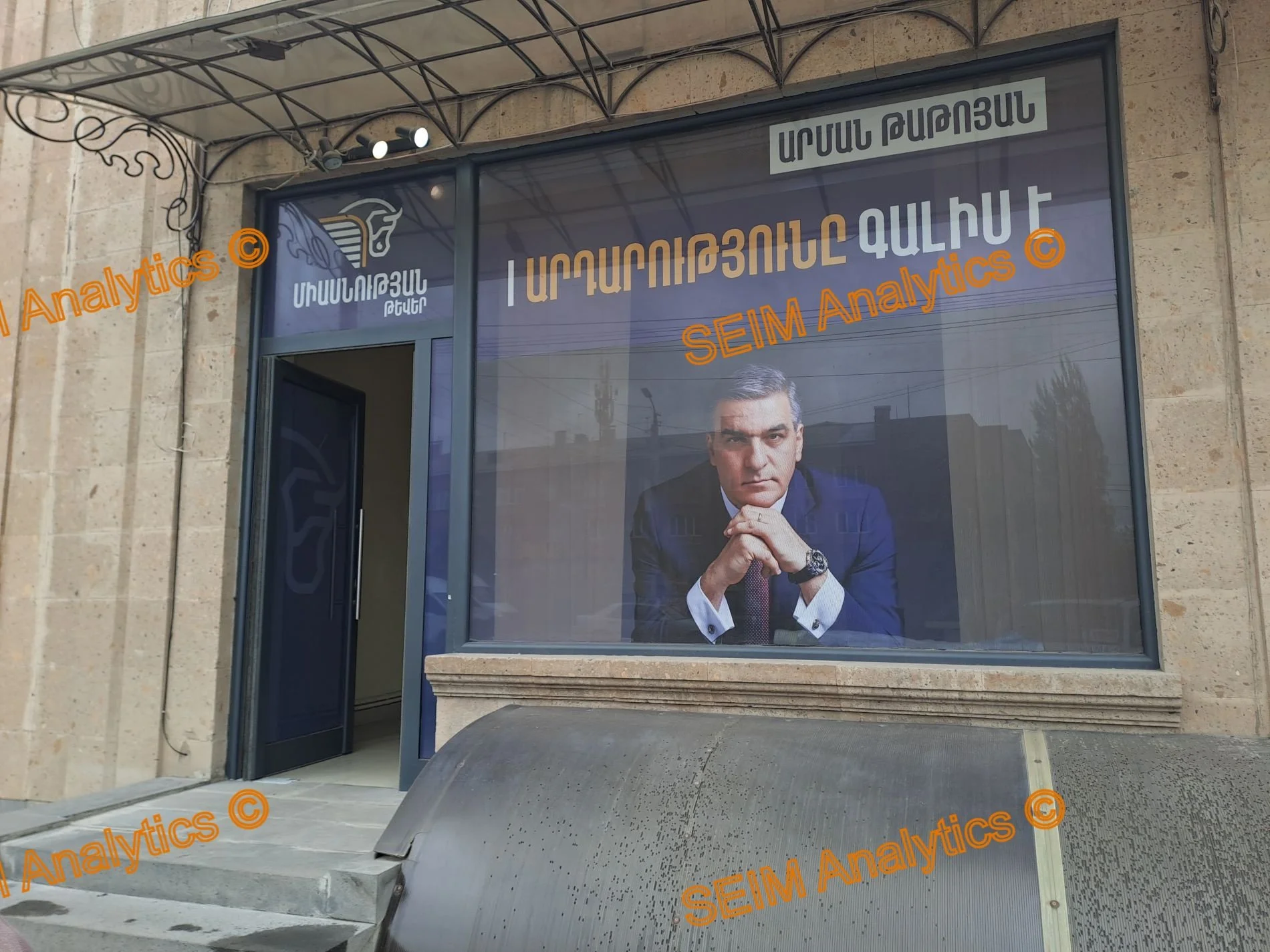
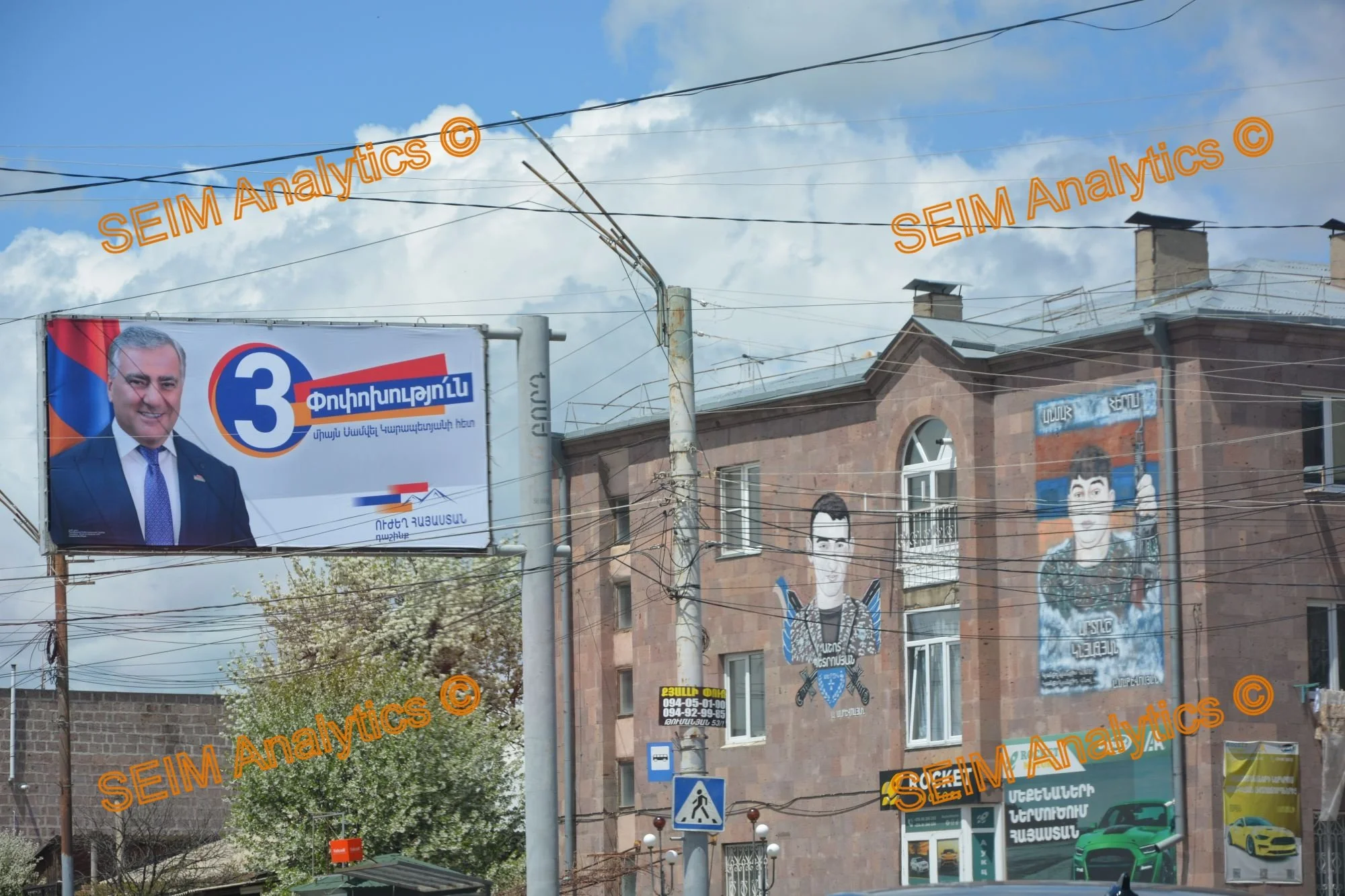
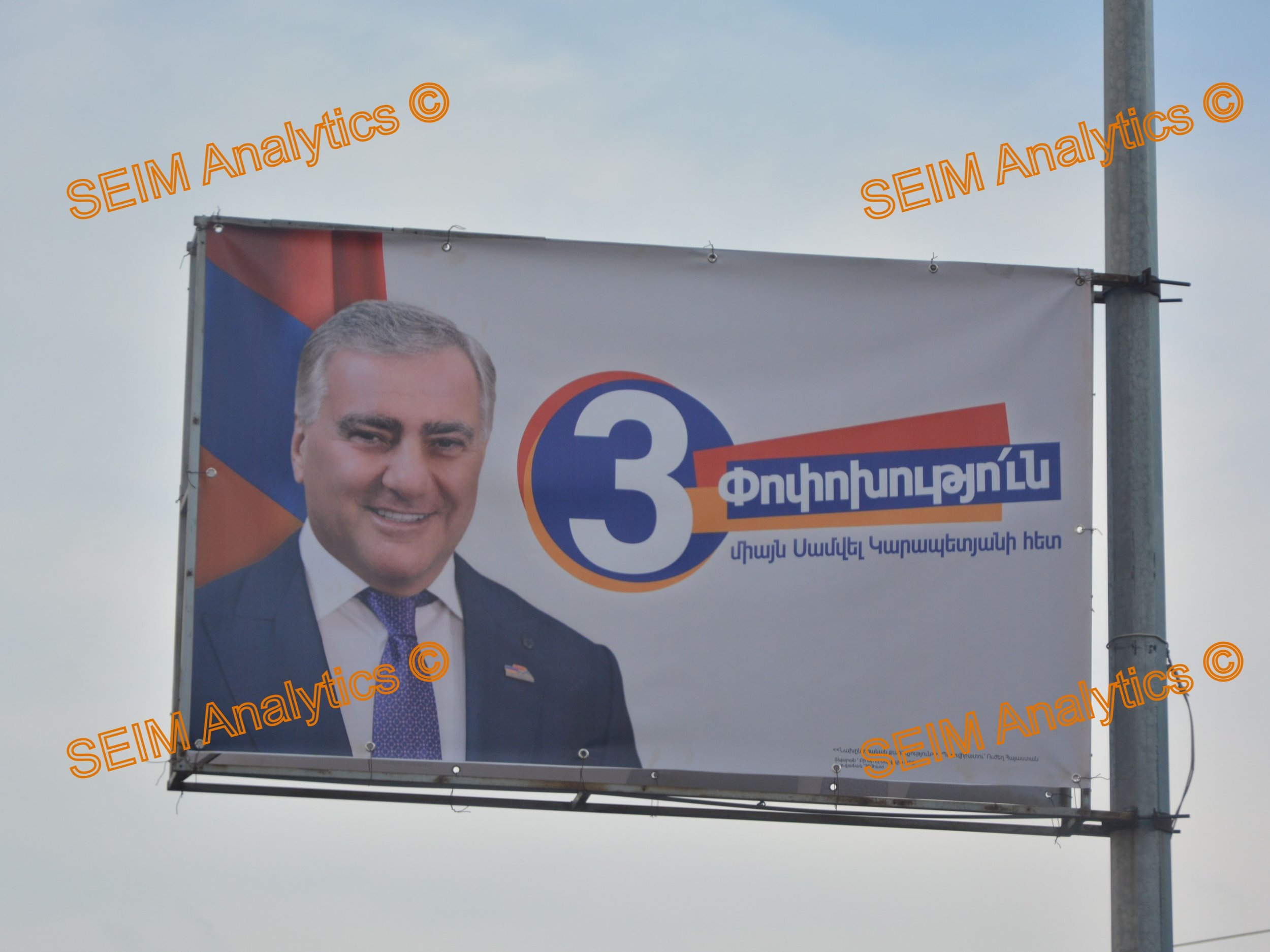
The 2026 election campaign
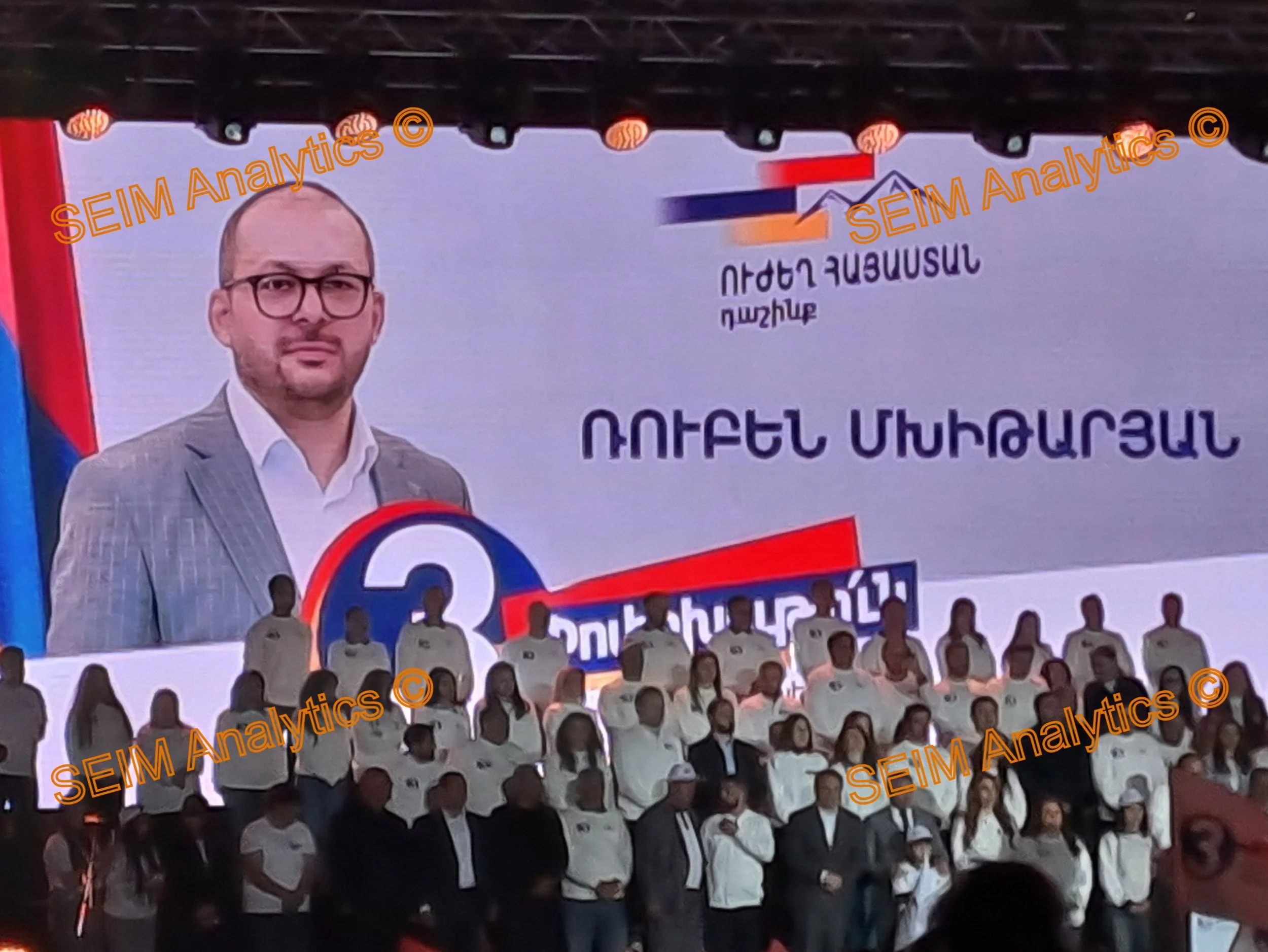
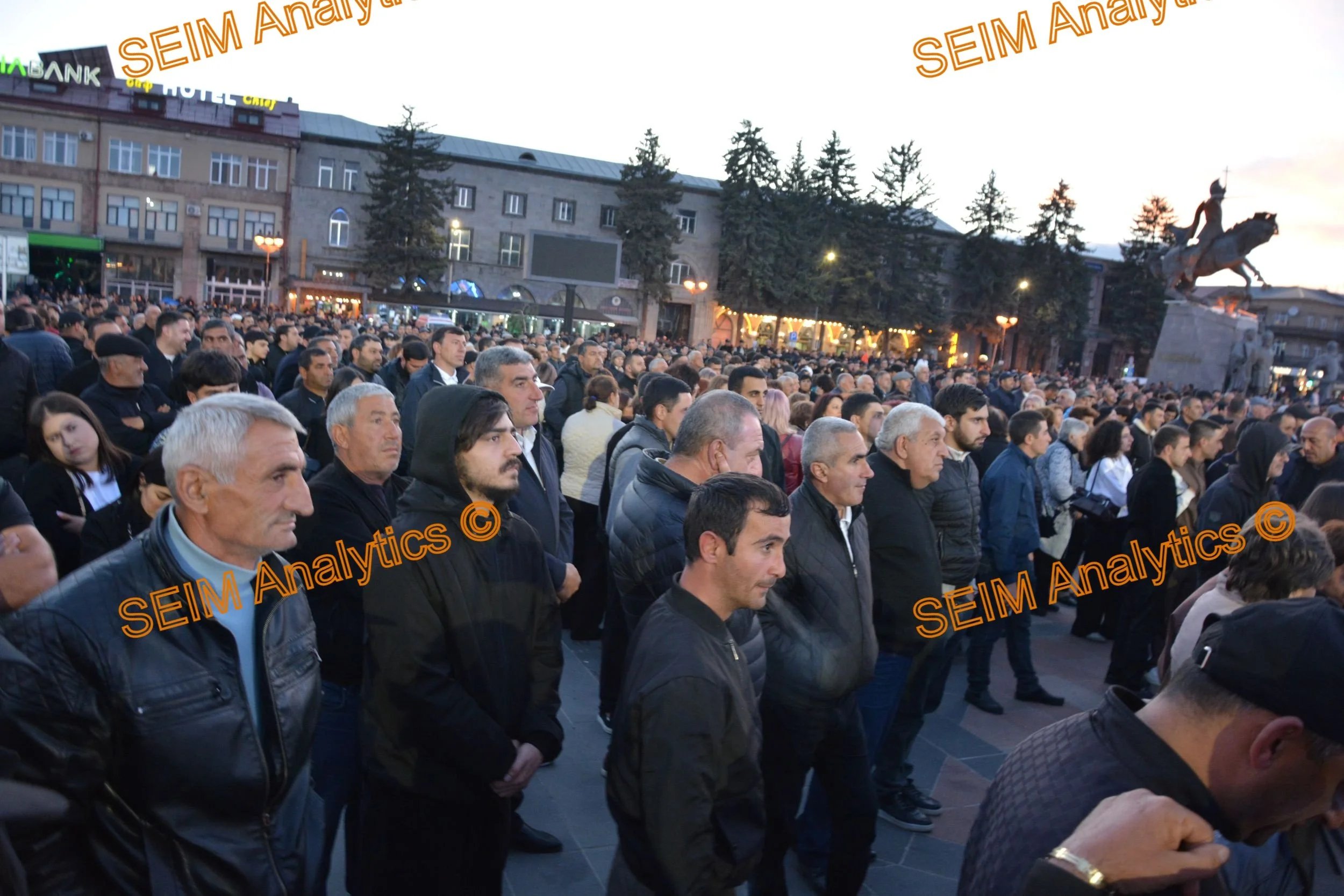
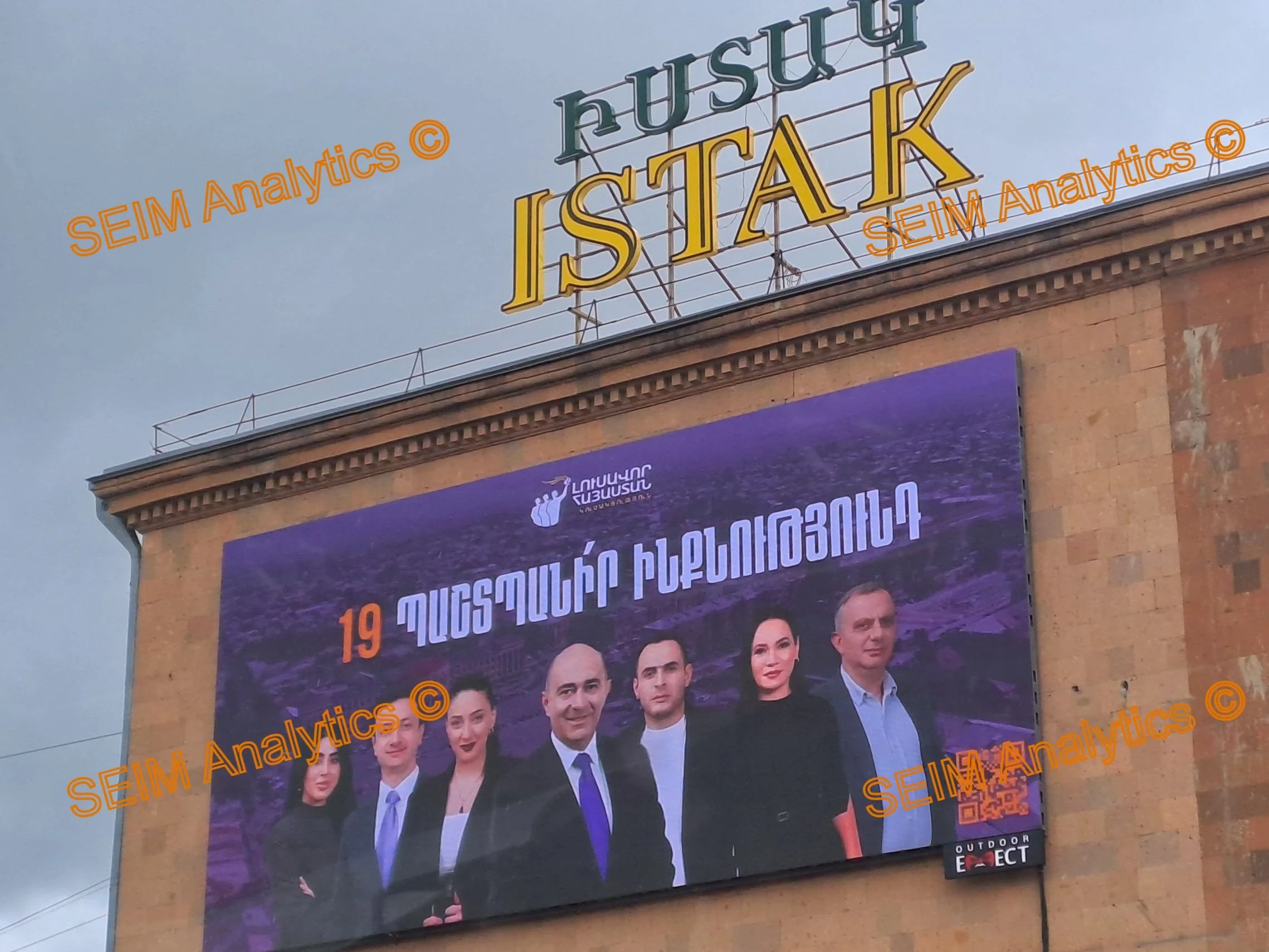
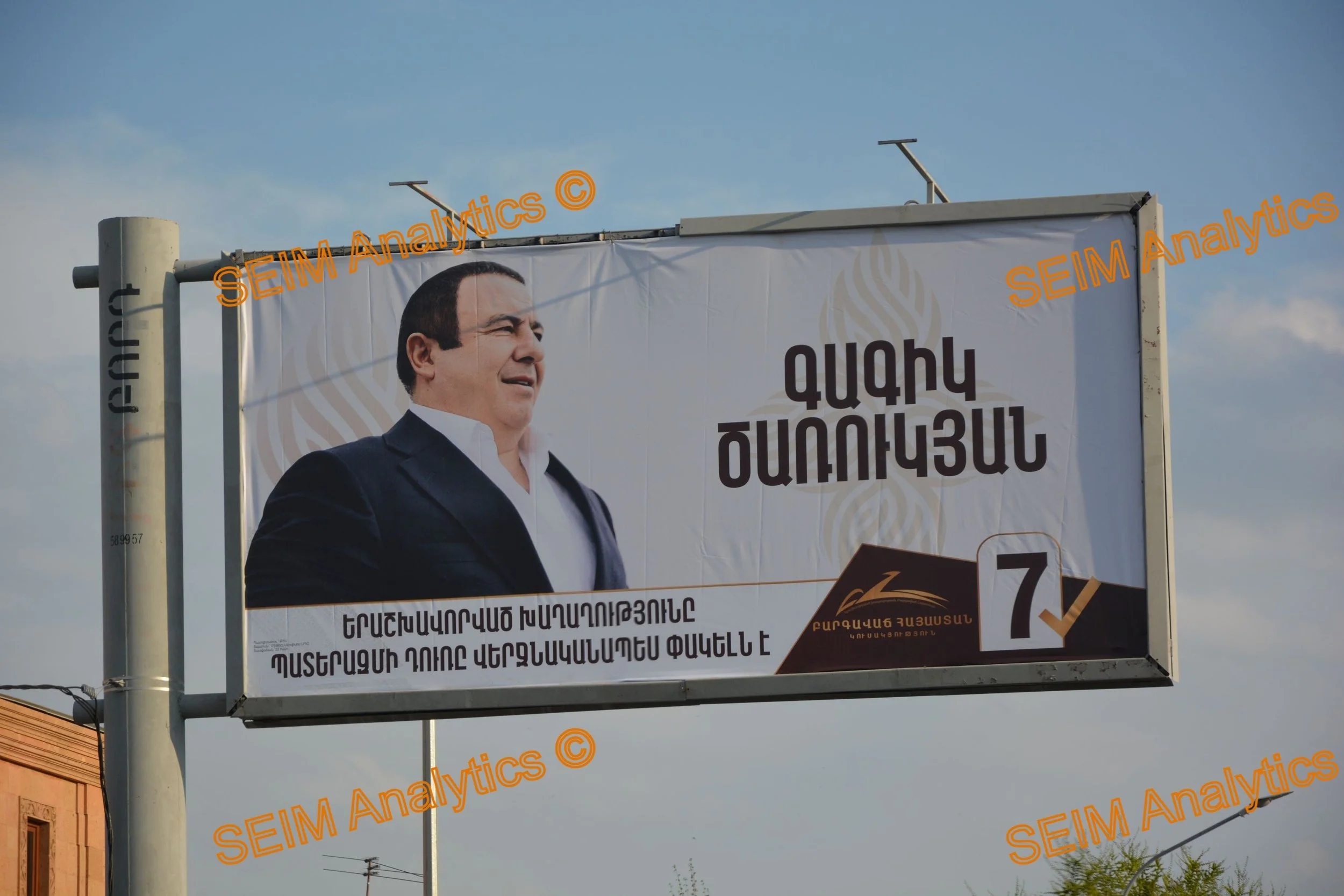
The offical election campaign for the parliamentary elections started 8 May. It was described as vibrant and visible, even in rural settlements. The campaign in Shirak was gearing up in the last weeks before E-day, especially in Gyumri City. It consisted of billboards, posters along the streets, smaller posters at public campaign boards, as well as cars with loudspeakers. Larger public rallies took place of Strong Armenia and Civil Contract on the city square. Armenia Alliance and Prosperous Armenia held rallies in the Gyumri Theatre, while street marches in Gyumri was the preferred method of smaller parties. There was also visibility in rural settlements through posters, leaflets, and door-to-door activities. The campaign was highly present online, through ads and social media, bit it was also highly confrontational.
Although it was an official state visit, President Emmanuel Macron’s visit to Gyumri on 5 May gave Prime Minister Nikol Pashinyan an opportunity to show himself to citizens there. This came in the lead up to the official campaign period, in which the OSCE/ODIHR preliminary statement noticed widespread unofficial pre-campaigning countrywide.

President Macron visiting Gyumri with Pashinyan on 5 May.
Campaign messages blended national and regional issues. Among local issues were the slow housing reconstruction of Gyumri after the 1988 earthquake, economic development, employment, school amalgamation, and tourism development. Some messages reflected nationalist rhetoric and historical iconography.
Opposition allegations
In the campaign, numerous allegations surfaced about misuse of administrative resources through pressures on public sector employees to benefit Civil Contract.
Also, leading up to and during the official campaign period, numerous police searches and arrests against opposition party candidates and activists (Strong Armenia, Armenia Alliance, and Prosperous Armenia) in Shirak Province took place, as well as elsewhere in Armenia. These were based upon charges of the Anti-Corruption Committee related to electoral bribes and campaign financing. Frequent police visits to their offices were experienced by opposition parties, some perceiving them as politically motivated. Narratives were spread among opposition parties alleging that an “atmosphere of fear” was present, as citizens would fear for their jobs if being associated with the opposition.
The most significant post-election and recent case was that of Gagik Tsarukyan, one of Armenia's wealthiest businessmen, who 6 July was placed in pre-trial detention on fraud and money-laundering charges. Thereby, Pashinyan made real his threats in the election campaign that he would arrest the main opposition leaders. Beforehand, in June 2025, the key opposition leader and businessman, Samvel Karapetyan, was put in house arrest, so his son Narik ran in the election instead. Opposition parties uphold that the cases are politically motivated; the government that they are criminal investigation.
The OSCE/ODIHR EOM Preliminary Statement mentions the arrests, criminal proceedings, and pressures on opposition politicians and supporters and the concerns it raises for the equality of opportunity to campaign. Yet, this did not impact access to campaign venues, but might have put obstacles on their campaign organization. On the other hand, the OSCE/ODIHR Preliminary Statement concluded that a genuine choice was offered in the election, and it assessed the election administration in Armenia as professional and transparent.
Domestic election observation:
Apart from OSCE/ODIHR, among the two primary national citizen observer groups operating in AoO were Akanates (The Eyewitness) Observation Mission and the Independent Observer Alliance, a coalition that includes the Helsinki Citizens’ Assembly Vanadzor, the Union of Informed Citizens, and Direct Democracy. Akanates comprises the Transparency International Anticorruption Center and the Law Development and Protection Foundation. Both deployed observers on E-day. Also, a local observation group, Progress of Gyumri, was active on election day.
Contact SEIM Analytics for more info on recommendations on the electoral process related to enhancement of voter education campaigns, the need to increase civic education and media literacy, and advice regarding media and private broadcasters’ mandatory free services role.
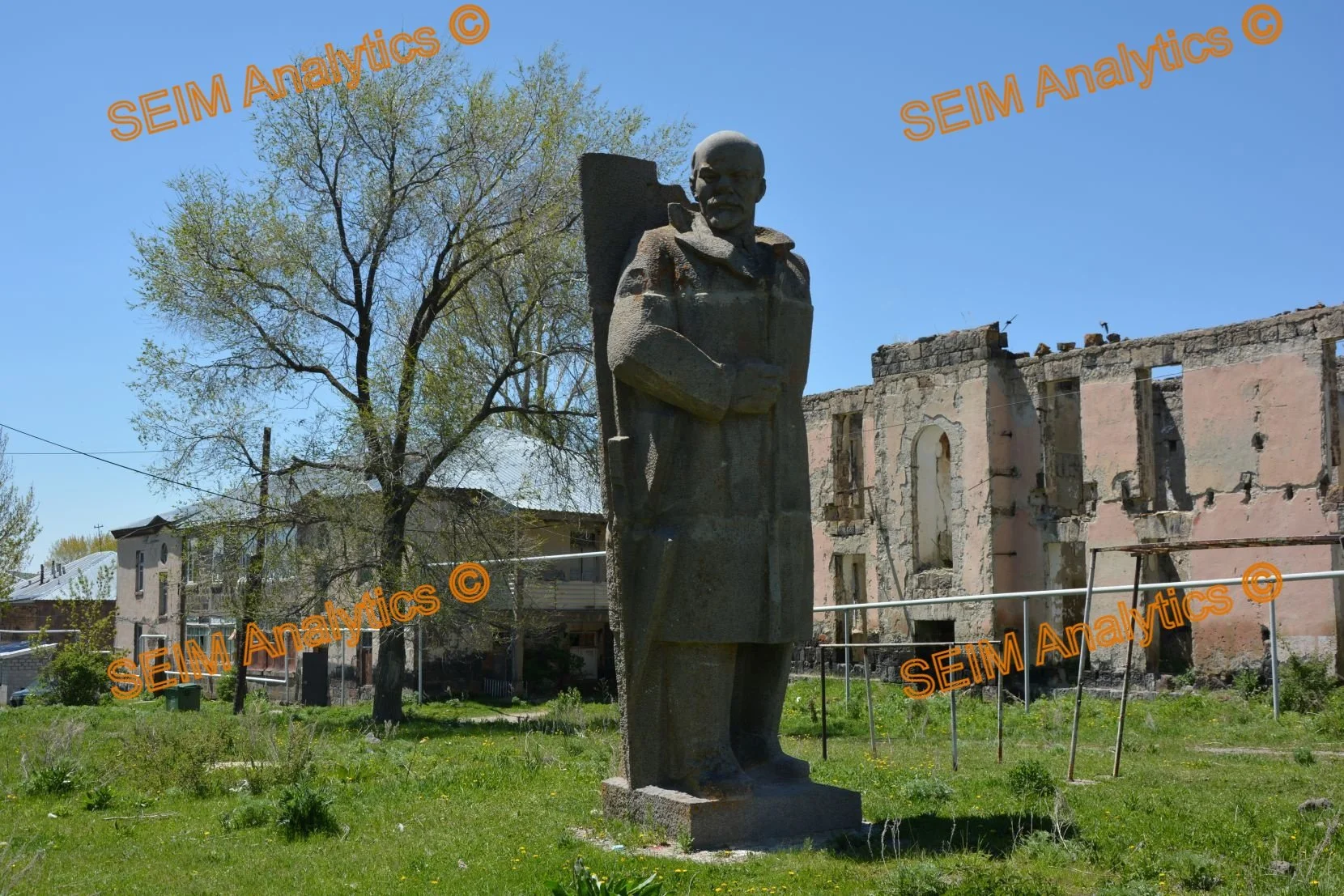
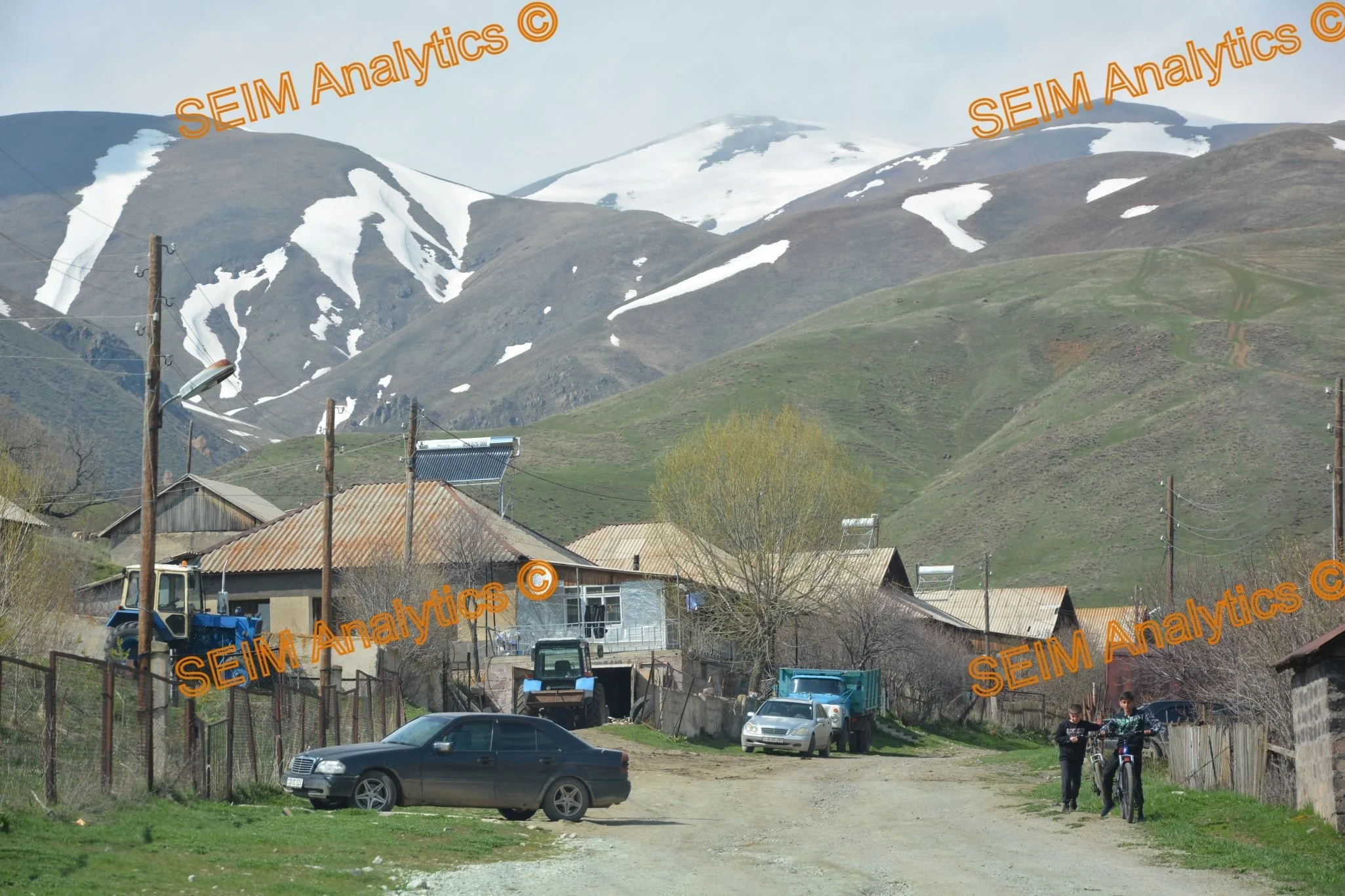
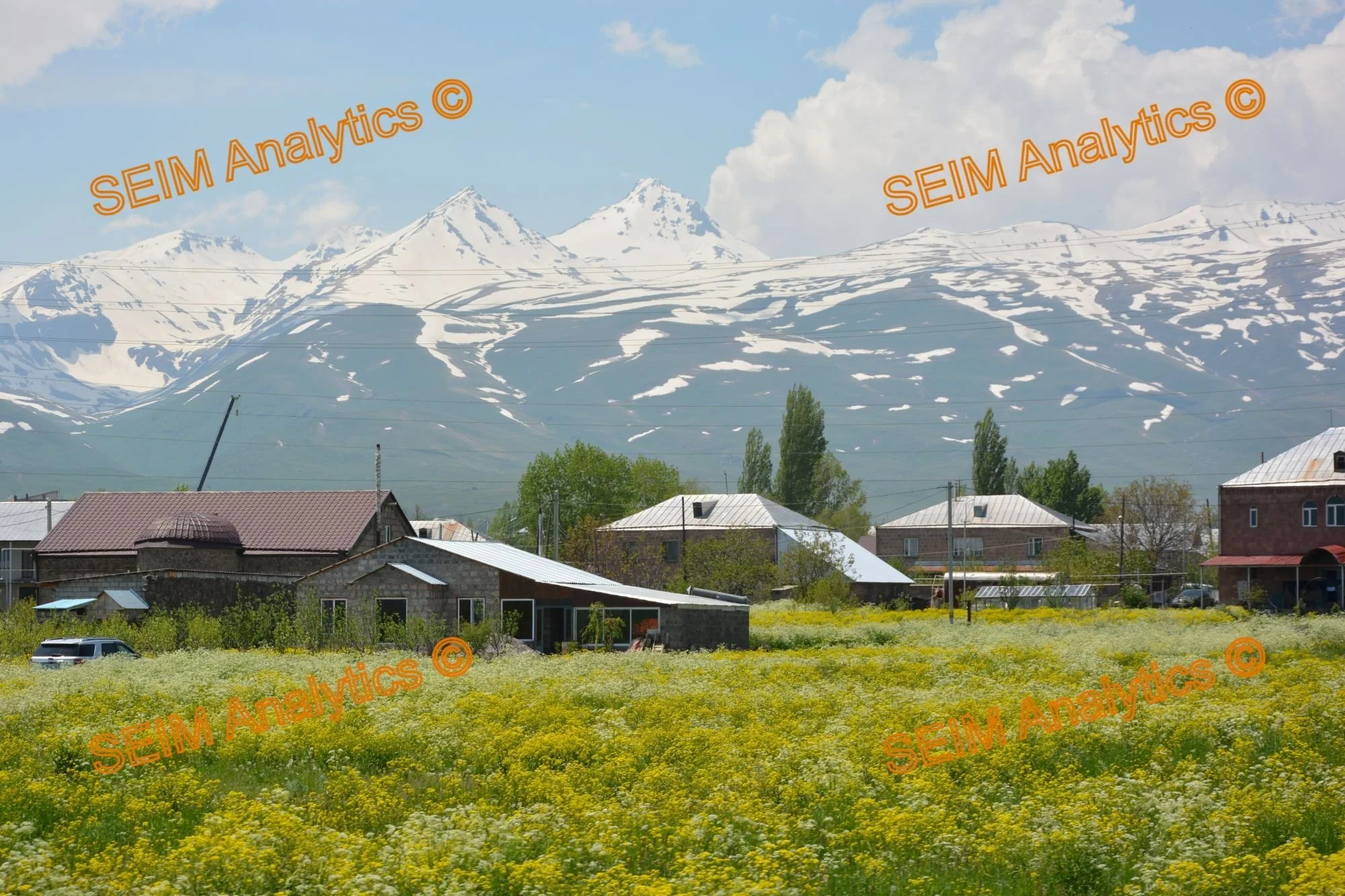
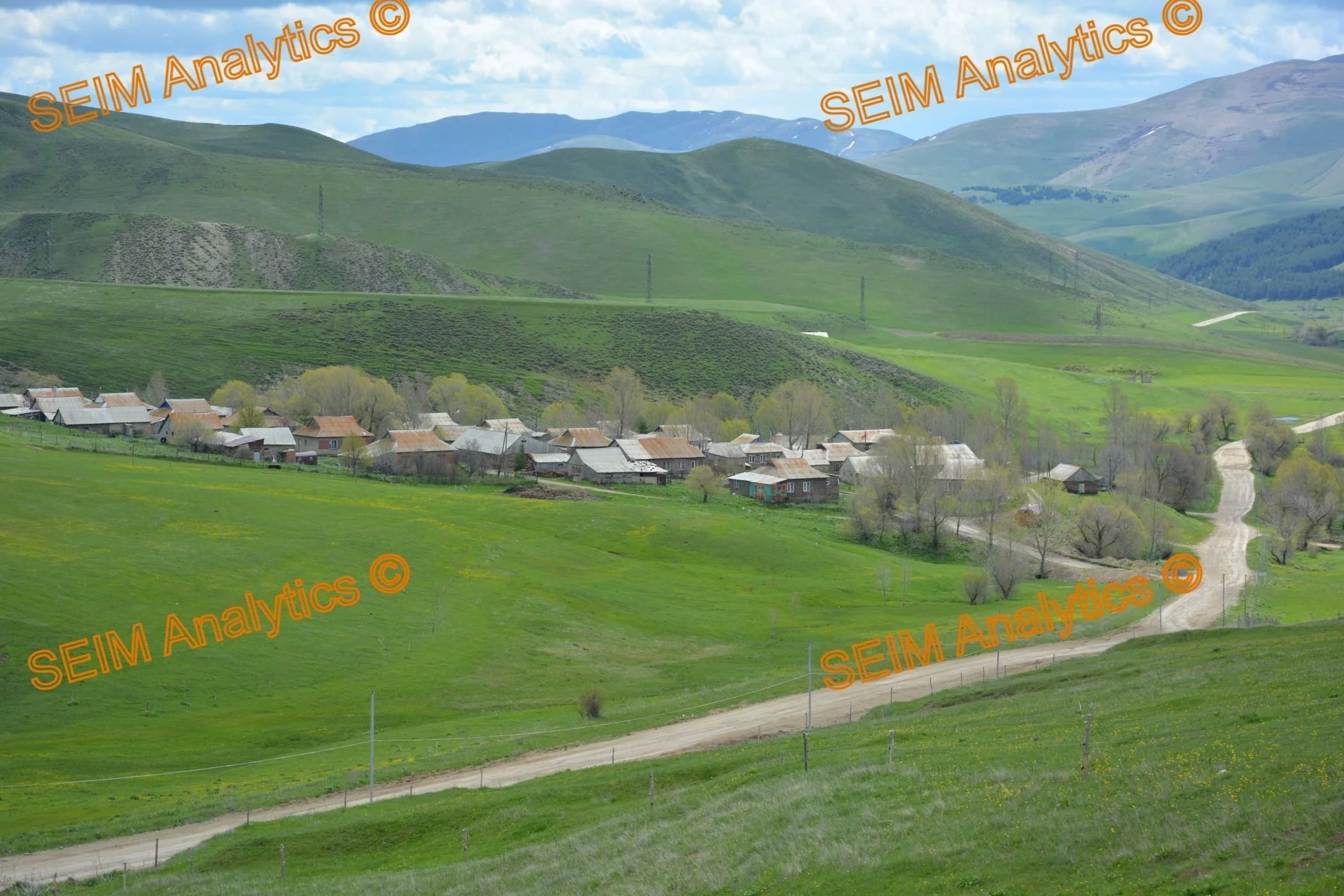
GEOPOLITICAL ANALYSIS:
Can Armenia's Geopolitical Repositioning Escape the Limitations Embedded in Its Geographic Position—or Even Capitalize on It?
From the wider electoral and geopolitical perspective, SEIM Analytics sees the parliamentary election in Armenia to add to a pattern of increased foreign election interference in Eastern Europe, both from Russia as well as from EU-related actors. While EU-leaders criticized Russian pressures, Russia alleged unprecedented pressure of the government on the opposition and interference from EU and also to some degree from the USA. Armenia is now on a trajectory similar to Moldova that also is turning away from Russia, which, preoccupied with the war over Ukraine, is losing political hegemony in the Caucasus and also tools to attract its previously closely aligned neighbours, among other through economic incentives. EU is now offering assistance to offset pressures from Russia or effects of Moscow’s politically-motivated embargos on certain trades with Armenia. Moreover, crucial geopolitically is the Trump Route for International Peace and Prosperity (TRIPP), a Euro-Asian trade corridor over its Syunik province. In the TRIPP Development Company Armenia will hold 26% and the United States 74%. Azerbajian’s pressures on Armenia to change its constitution to remove claims to Nagorno-Karabakh will ensure further political instability.
The election in Armenia took place in the shadow of the loss of the Armenian-inhabited Nagorno-Karabakh to Azerbaijan in 2020/23 and shortly after the US and Israeli attack on neighboring Iran, which Armenia has a constructive relation to. For Iran, the TRIPP-corridor passing close to its borders with Armenia is a potential threat to its North-bound trade corridor through Syunik province to Yerevan and further to the Black Sea and Russia, a route Iran also has helped building. Iran is also part of Armenia’s energy security. Yet, Iran also relies on the Russia-Iran trade route through the International North-South Transport Corridor (INSTC) that passes Azerbaijan.
Early March 2026, when the attack on Iran started, a drone attack from an unknown actor took place on the airport in Azerbaijan’s Nakhichevan exclave. A conflict with Iran, that has more Azeris than Azerbaijan itself, is the only possibility for the geopolitical trajectory of the Armenia-Azerbaijan conflict to change course to Azerbaijan’s disadvantage, after its oil revenues and diplomatic power enabled it to regain military control of the Armenia-occupied territories in and around Nagorno-Karabakh in 2020 and 2023 that were lost in the early 1990s.
The conflict between Iran with Israel and the USA and its regional allies is not over, so the region will continue as unstable. Read more on the IRAN conflict on the thematic pages of SEIM Analytics Middle East Analysis.
For a further analysis of the contradictory traits of Soviet nationality policy regarding the asymmetry of the Nagorno Karabakh and Nakhichevan enclaves/exclaves and other exclaves, the mistaken opportunities in the 1990s for peaceful regional solutions, contact SEIM Analytics. See also reflections in the context of a public debate about Armenia of the IIP and Renner Institute in Vienna here!
SEIM has had three OSCE assignments to Armenia, in 2008 to Armavir Province, in 2021 to Aragatsotn Province, and 2026 for long-term election observation work in Shirak Province. These visits helped build a sizable photo documentary library from different regions of a country in societal and political transformation, including from adjacent Sevan Lake, Yerevan, and numerous Armenian monasteries: Go to Photo Sale Armenia to order photos.
Go to Seim-Analytics/election-expert for further information about professional engagements and election assignments in Eastern Europe, Southeast Europe, Türkiye, South Caucasus, Central Asia, and South Asia.
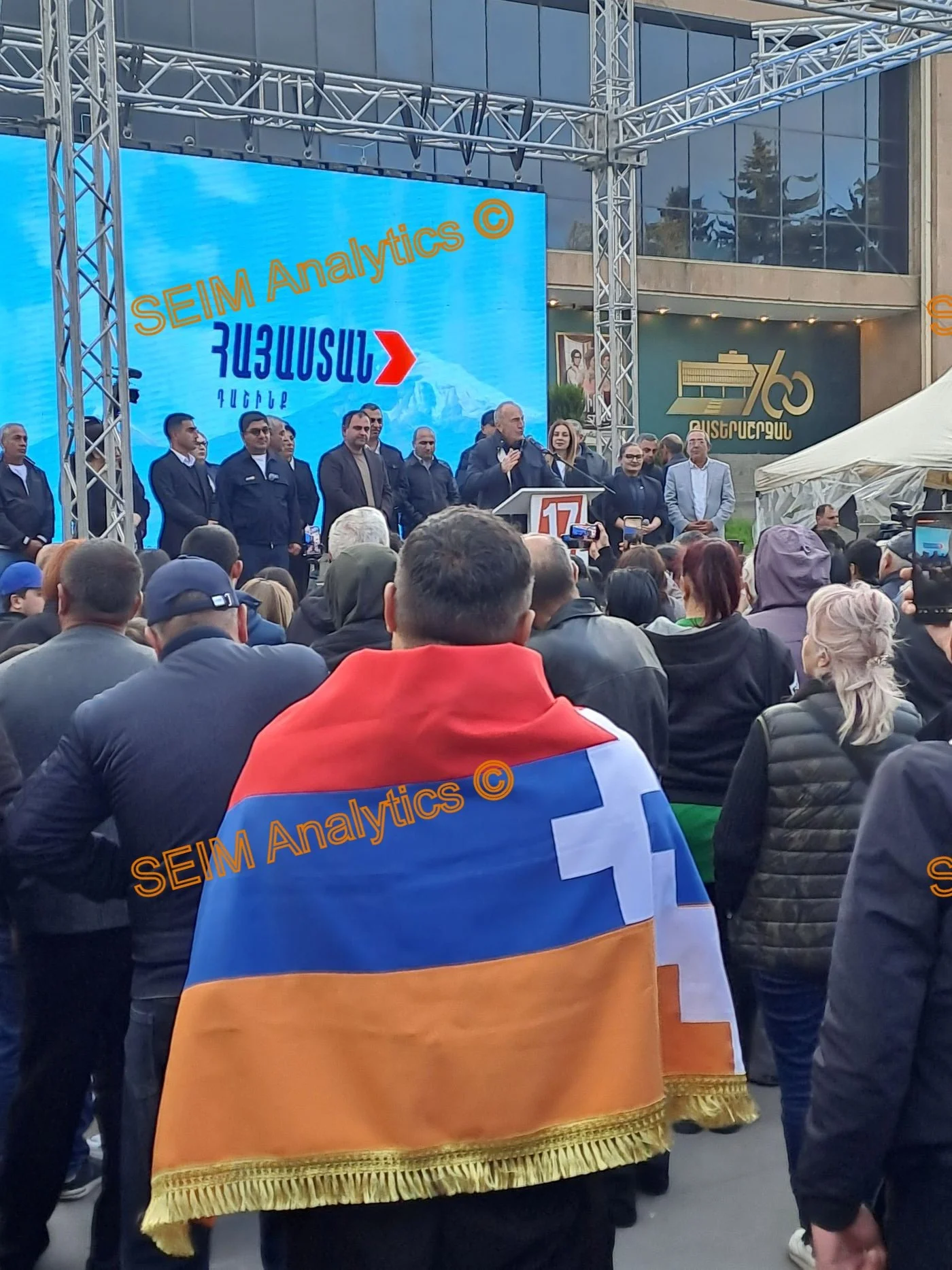
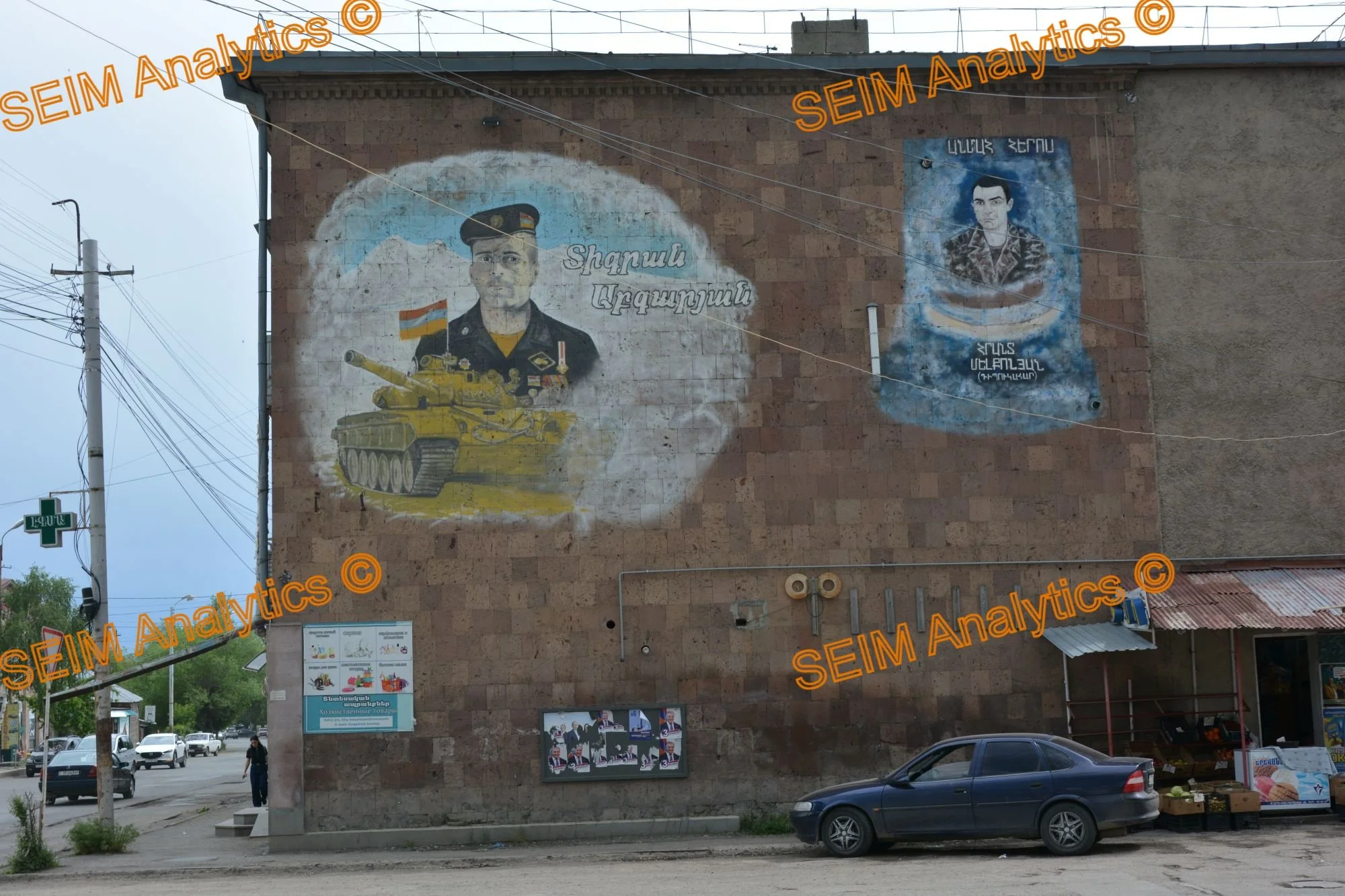
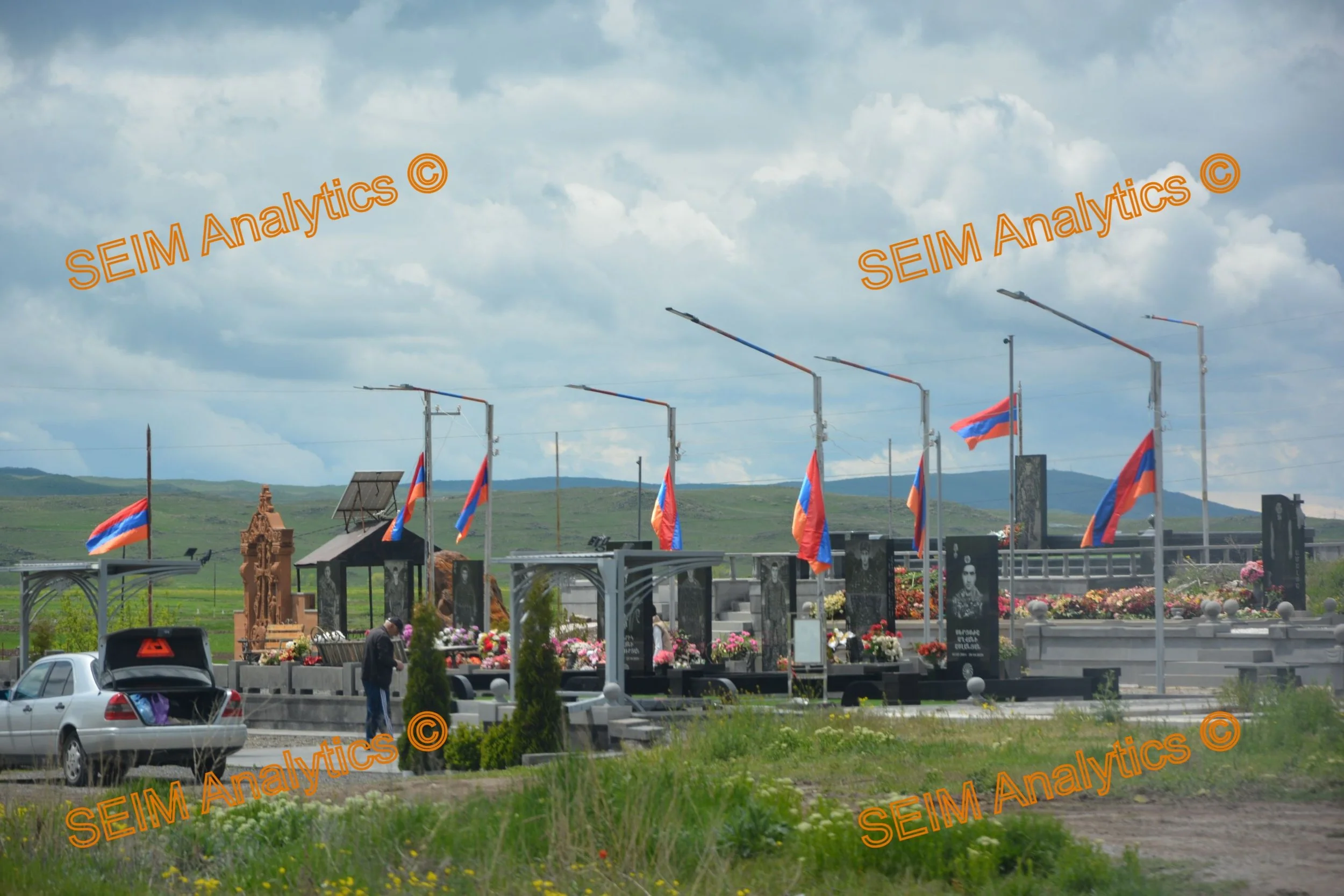
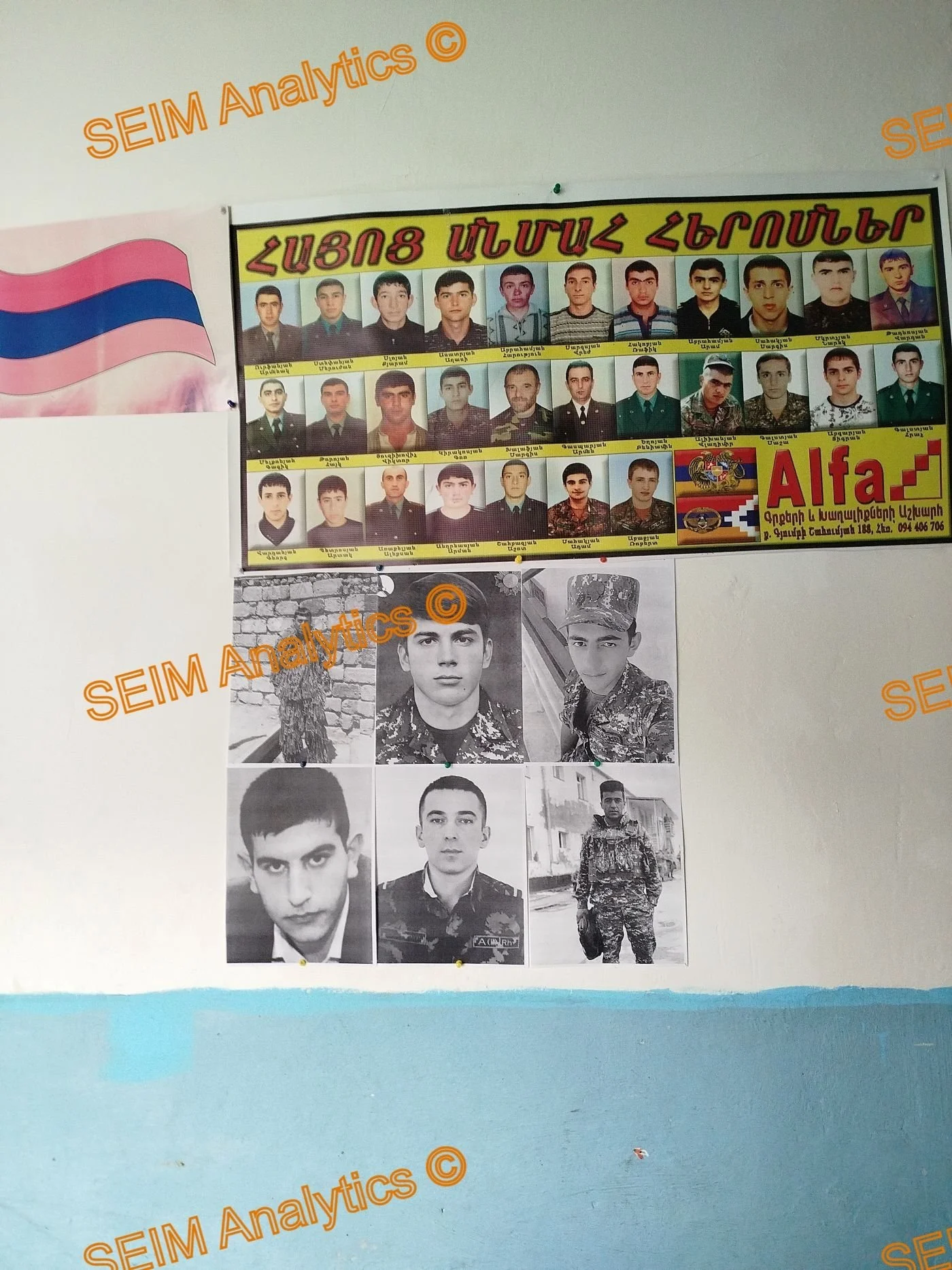
Above: The conflict about the Armenian majority-inhabited Nagorno-Karabakh enclave (labelled Artsakh by Armenians) led to thousands of killed in the 1990s and in the renewed war and eventual territorial loss to Azerbaijan in 2020-23. It remains a contentious topic, also in the 2026 election.
ADDENDUM:
On Gyumri and its history
Gyumri (fmr. Alexandropol and Leninakan) has been shifting names multiple times. These changes also reflect its last two centuries of history. Once the smaller settlement of Kumayri, inside the Safavid Empire since 1501, in June 1804 it was taken over by Russian forces at the beginning of the Russo-Persian War of 1804 and 1813. It officially became a part of the Russian Empire at the 1813 in the Treaty of Gulistan with Persia, and transformed to an important outpost for the Imperial Russian armed forces in the Caucasus. The Russians built the still existent Black Fortress (Sev Berd) at the western edge of the city during the 1830s in response to the 5th Russo-Turkish War of 1826-1828. In 1837 it was renamed Alexandropol by tsar Nicholas I. It was central during the Russo-Turkish War of 1877-78. In 1899 its railway station was built. Also other of Gyumri’s buildings and churches date back to the 18th-19th centuries.
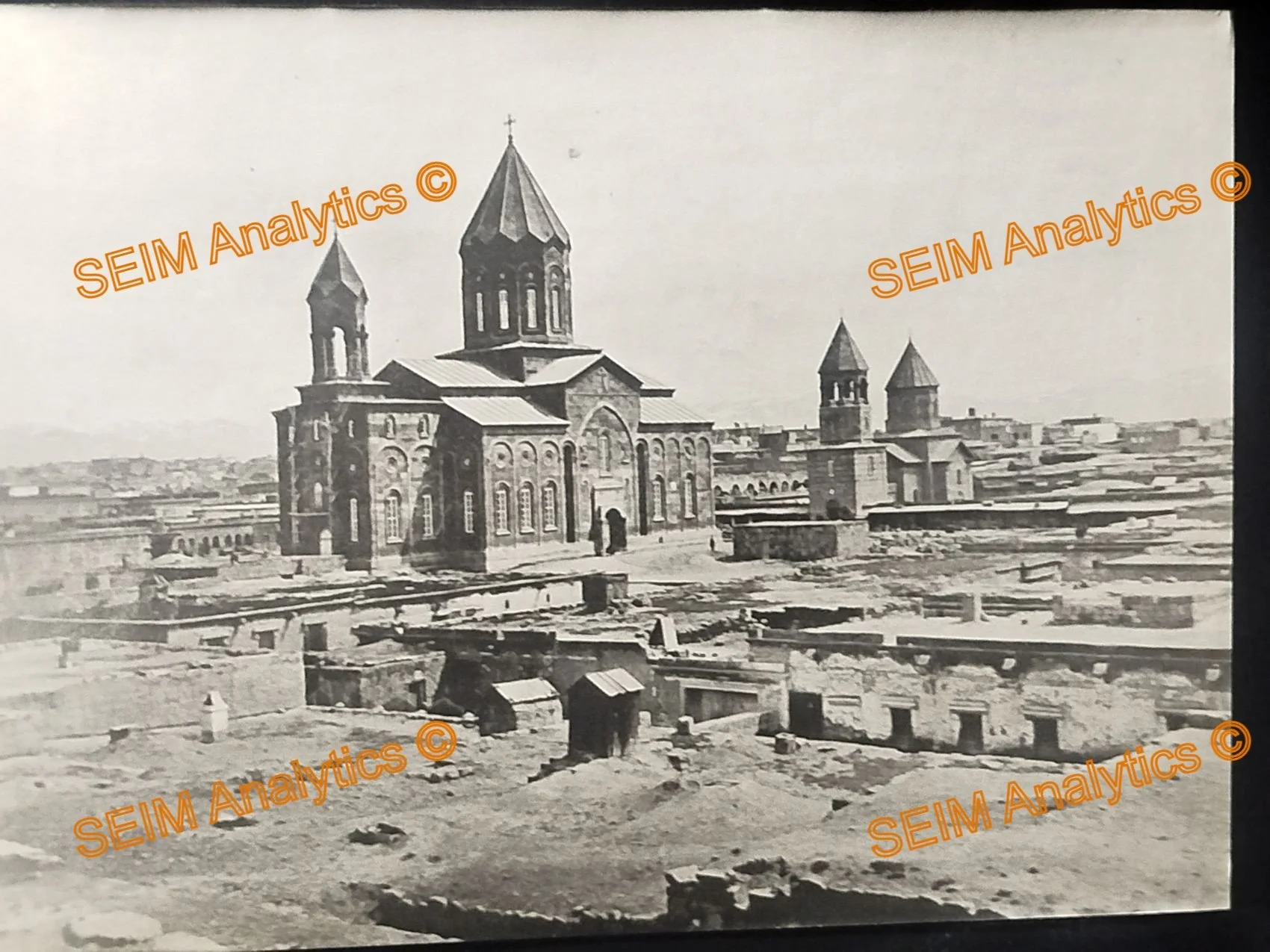
Photograph from old Gyumri at the Museum of National Architecture and Urban Life
In the tumultuous years of war, persecution, and exile during and following World War I, Gyumri hosted large numbers of Armenian refugees. The city was part of the newly established Republic of Armenia proclaimed on 28 May 1918, until December 1920 when the Armenian government came to an end and Alexandropol and Armenia came under Turkish rule for a year before Soviet rule commenced. In Soviet Union, it was renamed Leninakan in 1924, and it became a major industrial and textile center in the communist period. Following independence in 1991, shortly the city was renamed Kumayri until 1992, when Gyumri was chosen as the name of the city.
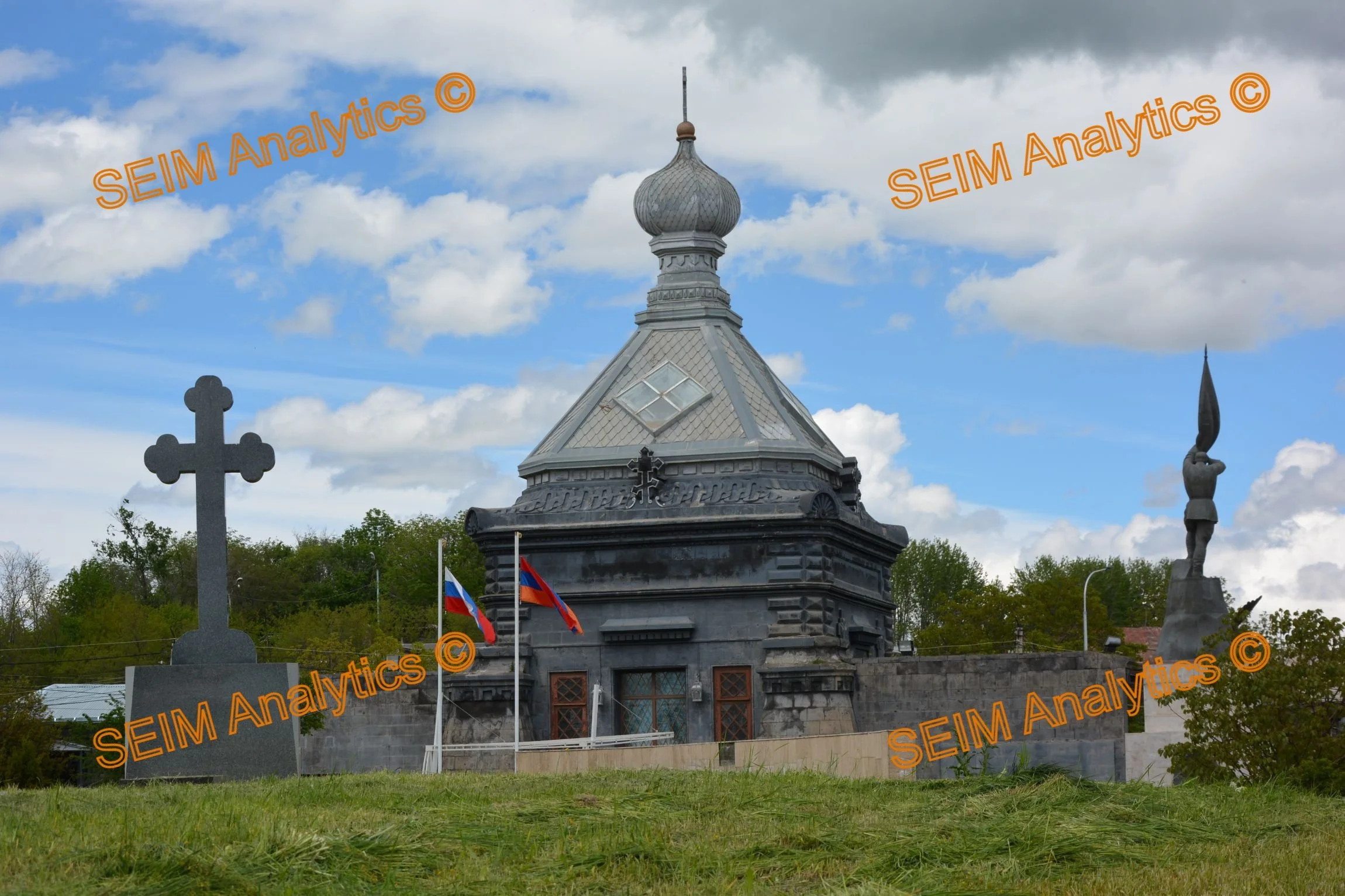
The Russian Church St. Michael the Archangel (‘Shining Chapel’ from 1886) in Gyumri (above), and the monument to the victory over Nazi Germany (below)
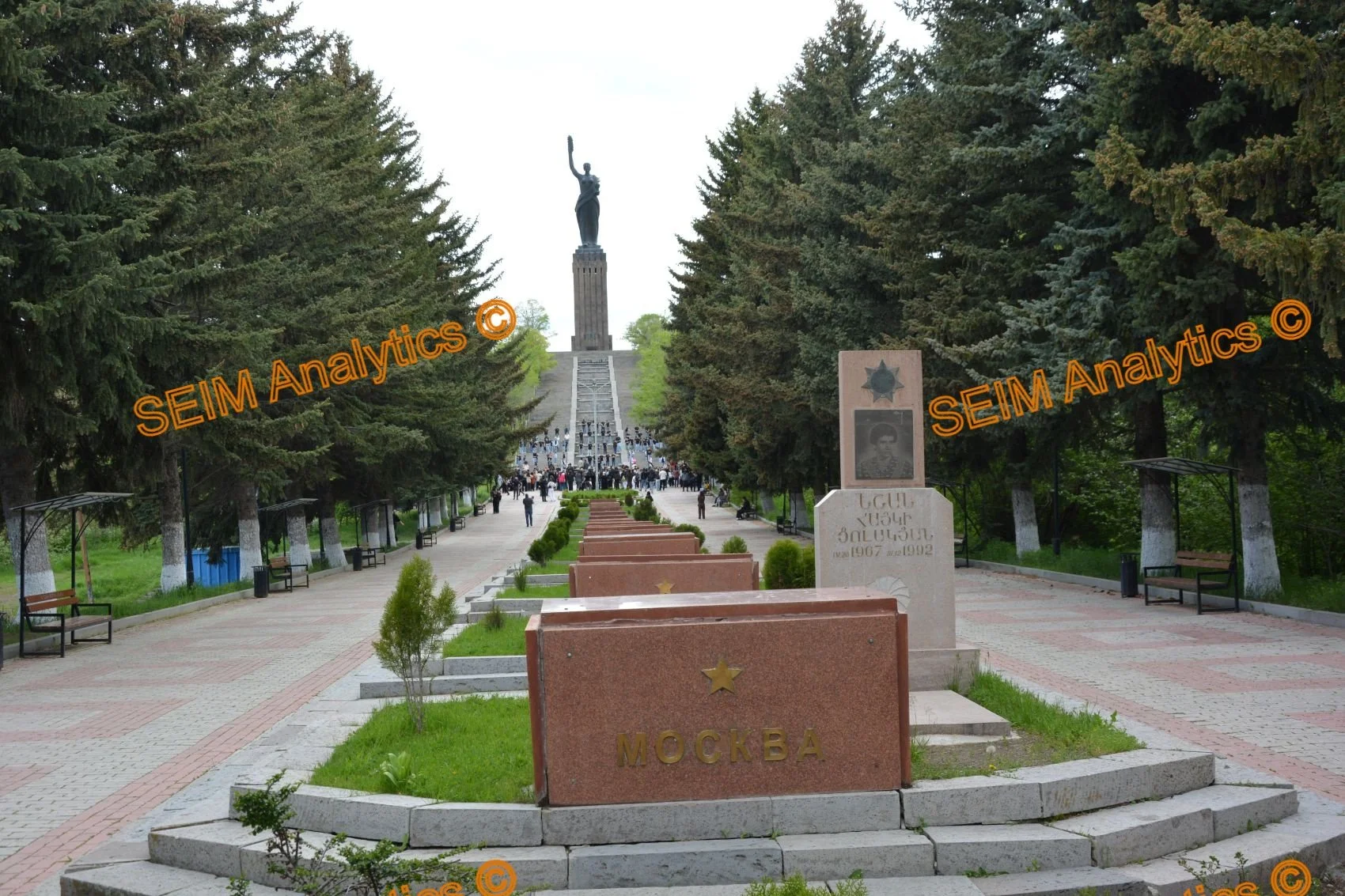
The 1988 earthquake
The most dramatic event in recent history was the Spitak earthquake which occurred on 7 December 1988. Between 25,000 and 50,000 people were killed and up to 130,000 were injured. Gyumri was devastated. The earthquake raised a wave of international solidarity and support. Yet still many people live in provisional shelters. The ruins from the earthquake are clearly visible everywhere in the city. The post-earthquake reconstruction efforts are often said during election campaigning to be too slow. Thus, Gyumri continues to struggle socio-economically, prompting residents to seek work abroad. In general, Shirak Province, which borders Türkiye and Georgia, is among the less developed region in Armenia.
Impacted by the socio-economic crisis in the post-communist years, the population of Gyumri fell from some 200.000 to 121,976 in the 2011 census, and 112,301 in the 2022 census. In line with the overall Armenian trend, also the population of Shirak Province is declining. According to the 2011 census, Shirak had 251,941 inhabitants, and in 2022 it declined to 235,484.
Parts of the Kumayri historic district in Gyumri survived the 1988 earthquake. This part of Gyumri is known for its crafts and arts, cafes, and the Gyumri theater. Gyumri has the Shirak State University, opened in 1934, that currently has seven 7 faculties. Numerous Gyumri campuses of national universities are also based here. Yet compared to Yerevan, it is probably a bit more socially conservative city.
Gyumri’s economy
Following the 1988 earthquake and the collapse of the Soviet Union in the 1990s, the region's industrial sector drastically declined. Today, Shirak’s economy relies on agriculture, including farming and livestock breeding. The province stands as the country's largest producer of grains and potatoes. Gyumri’s current industrial sector comprises building materials, shoe and textile manufacturing, food and dairy processing, light machinery, and alcoholic beverages (such as the Gyumri and Aleksandropol beer brands).
Yet, unemployment and poverty rates remain among the highest in Armenia, prompting many residents to seek work abroad, particularly in Russia. Meanwhile, the Russian military base on the north-western outskirts of the city has been significantly downsized.
Shirak Tourism
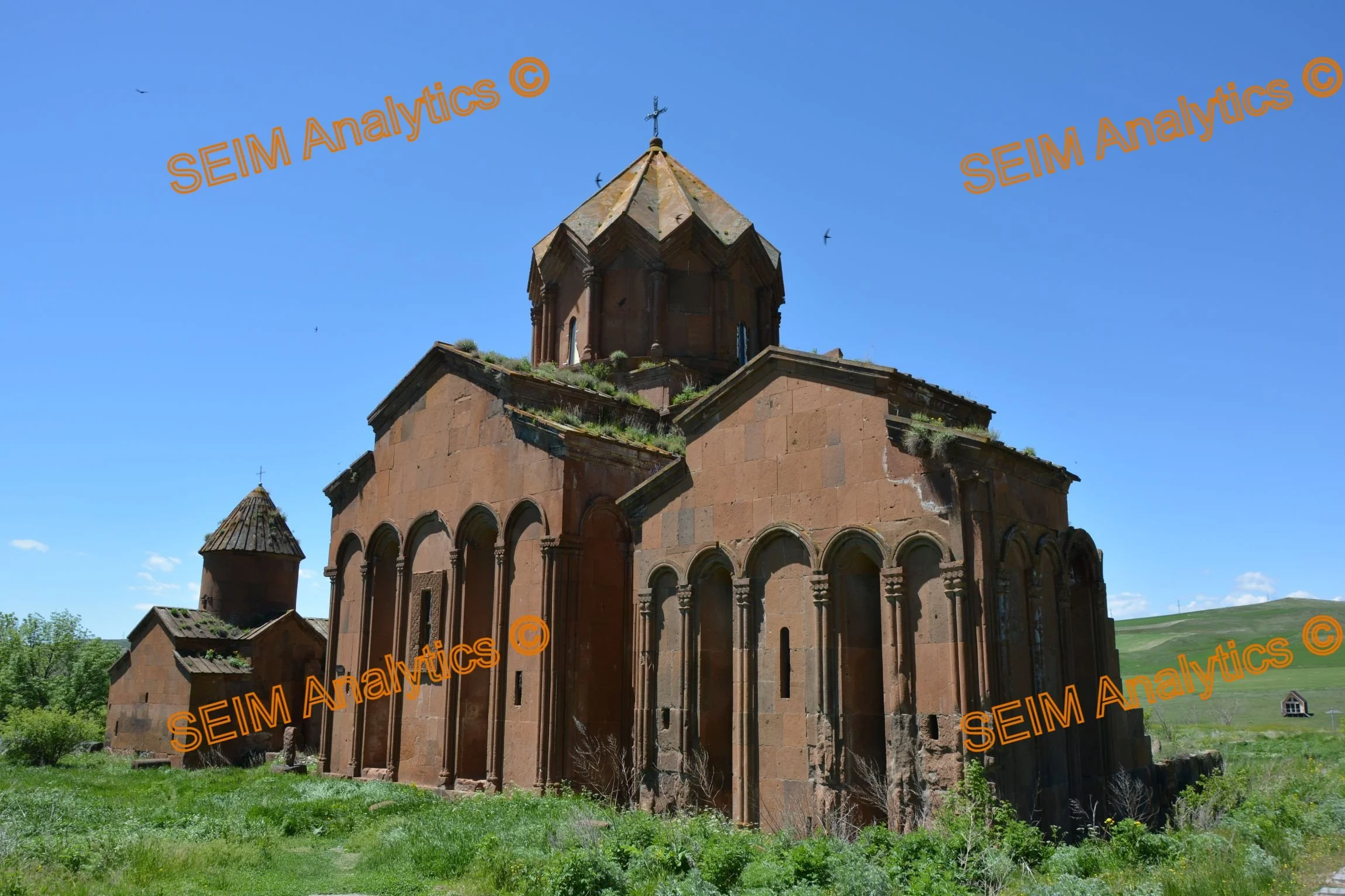
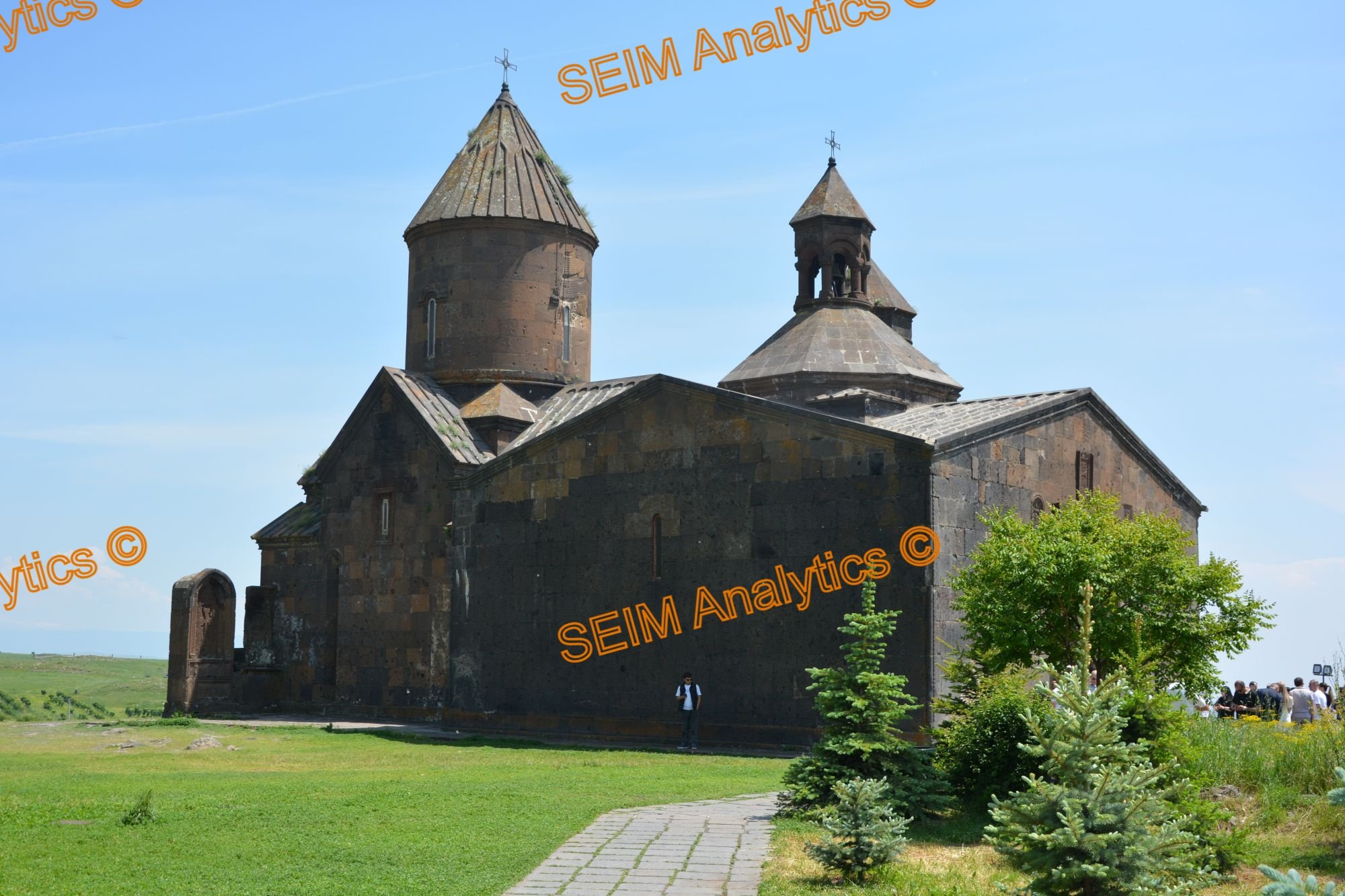
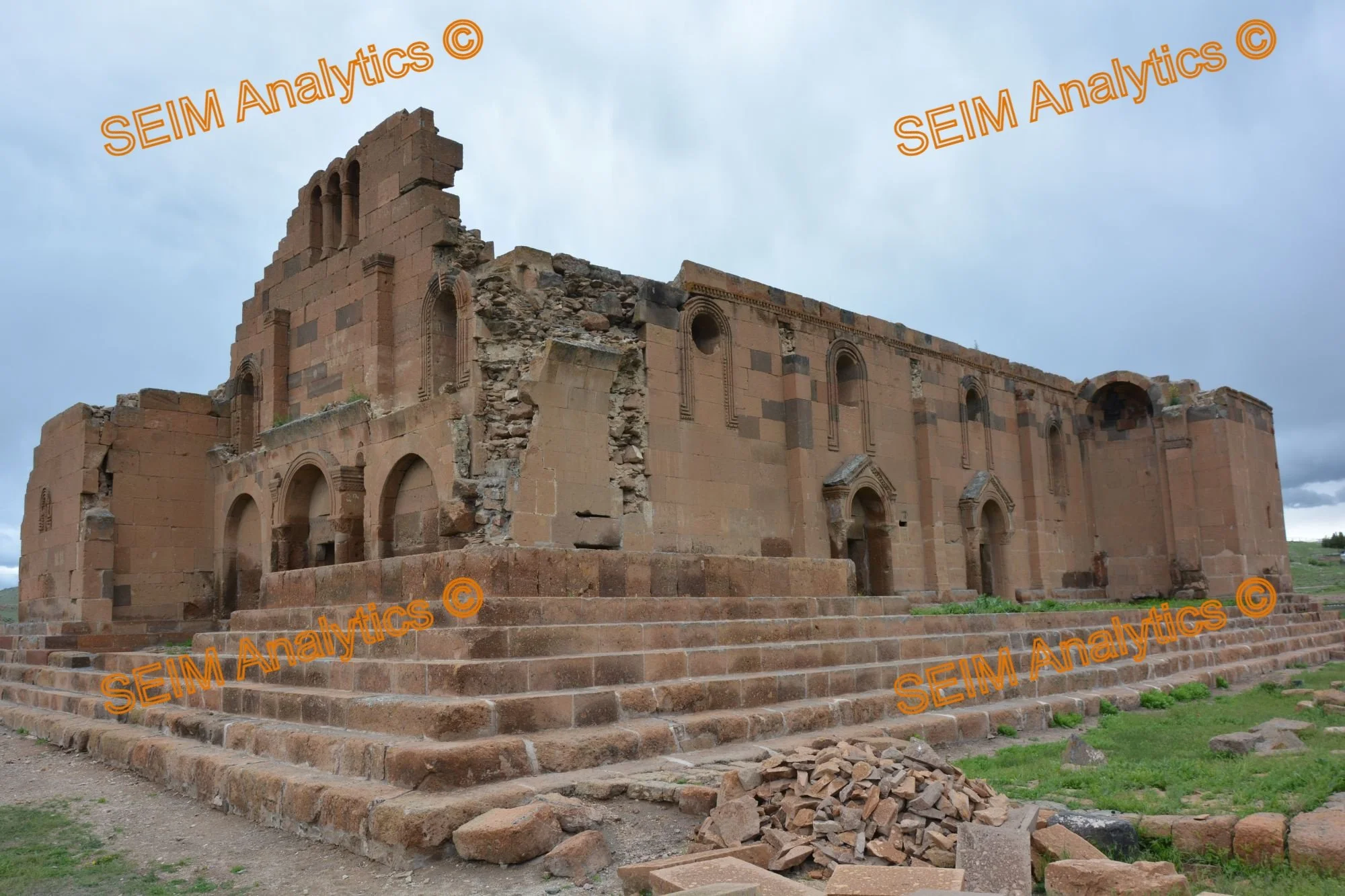
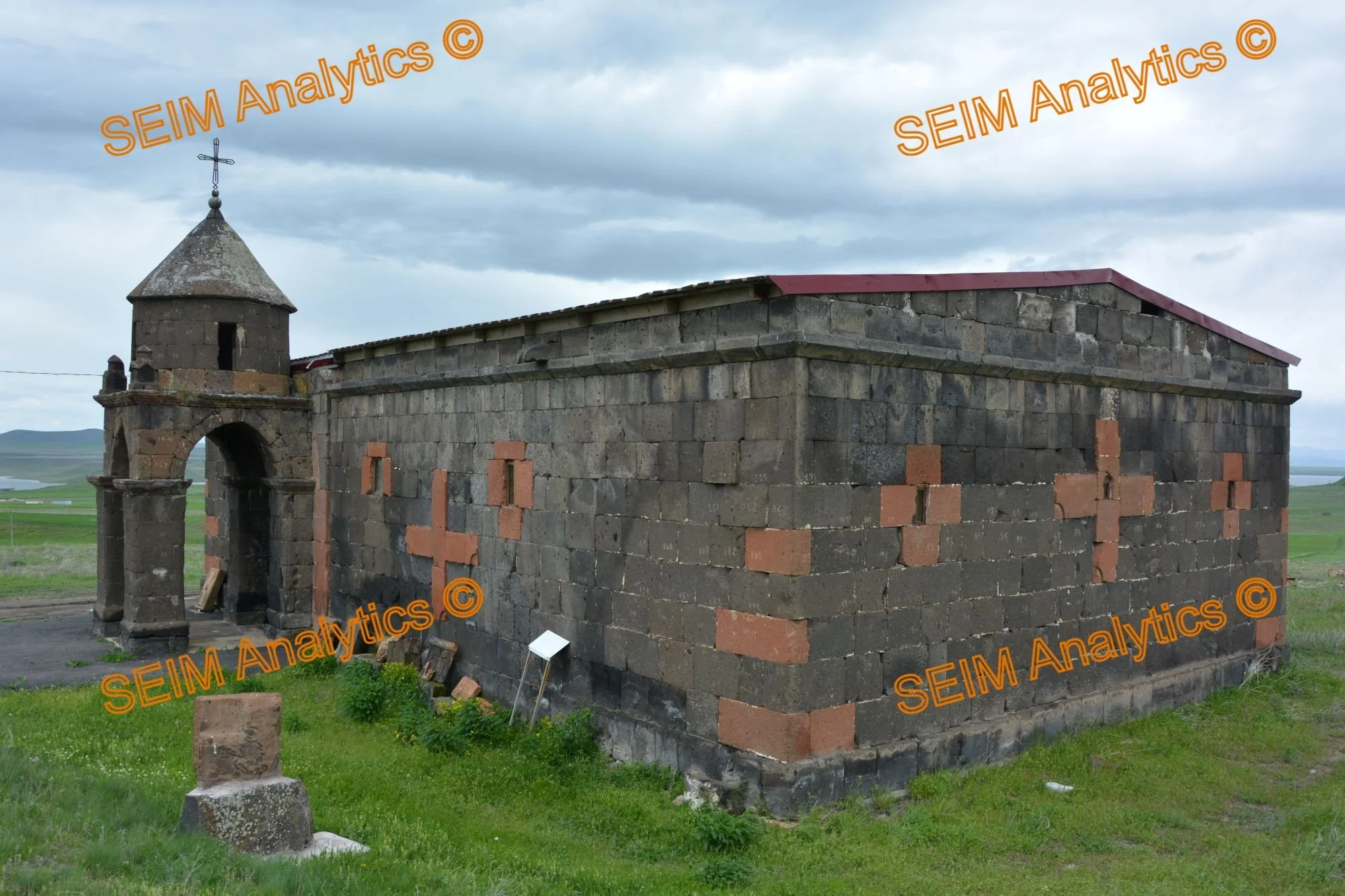
In recent years, tourism has played an increasing role, boosted by Gyumri being celebrated as the CIS (Commonwealth of Independent States) Capital of Culture in 2013. Shirak Province also offers a wide variety of outdoor sport and mountaineering activities. With its beautiful surrounding of snow-covered peaks, green meadows, villages, and century-old monasteries, like the Marmashen from the 10-13 century northwest of Gyumri by the Akhuryan River. Harichavank and Lmbatavank south of Artik town, and the Yereruyk Basilica from the 4-5th century by Anipemza (photos below).
Ashotsk towards the Georgian border Bavra crossing houses a centre for cross country skiing where equipment can be borrowed on-spot.
National and religious minorities
The demographic profile of Gyumri and Shirak remains ethnically homogeneous, as most Soviet-era minority populations (arriving as workers to Gyumri’s extensive industries) re-emigrated during the 1990s when factories closed. The overwhelming majority of Armenians (97%) follows the Armenian Apostolic Church. Yet, in the northern part of Shirak there are some Armenian Catholics. Shirak Province hosts a small Yezidis community. One can see some traces of Turkish and Azerbaijani villages and tombstones in villages north of Amasia town toward Arpi Lake, another tourist attraction in the far northwest of Shirak Province.
Armenia - visually : Go to Photo Sale - Armenia!
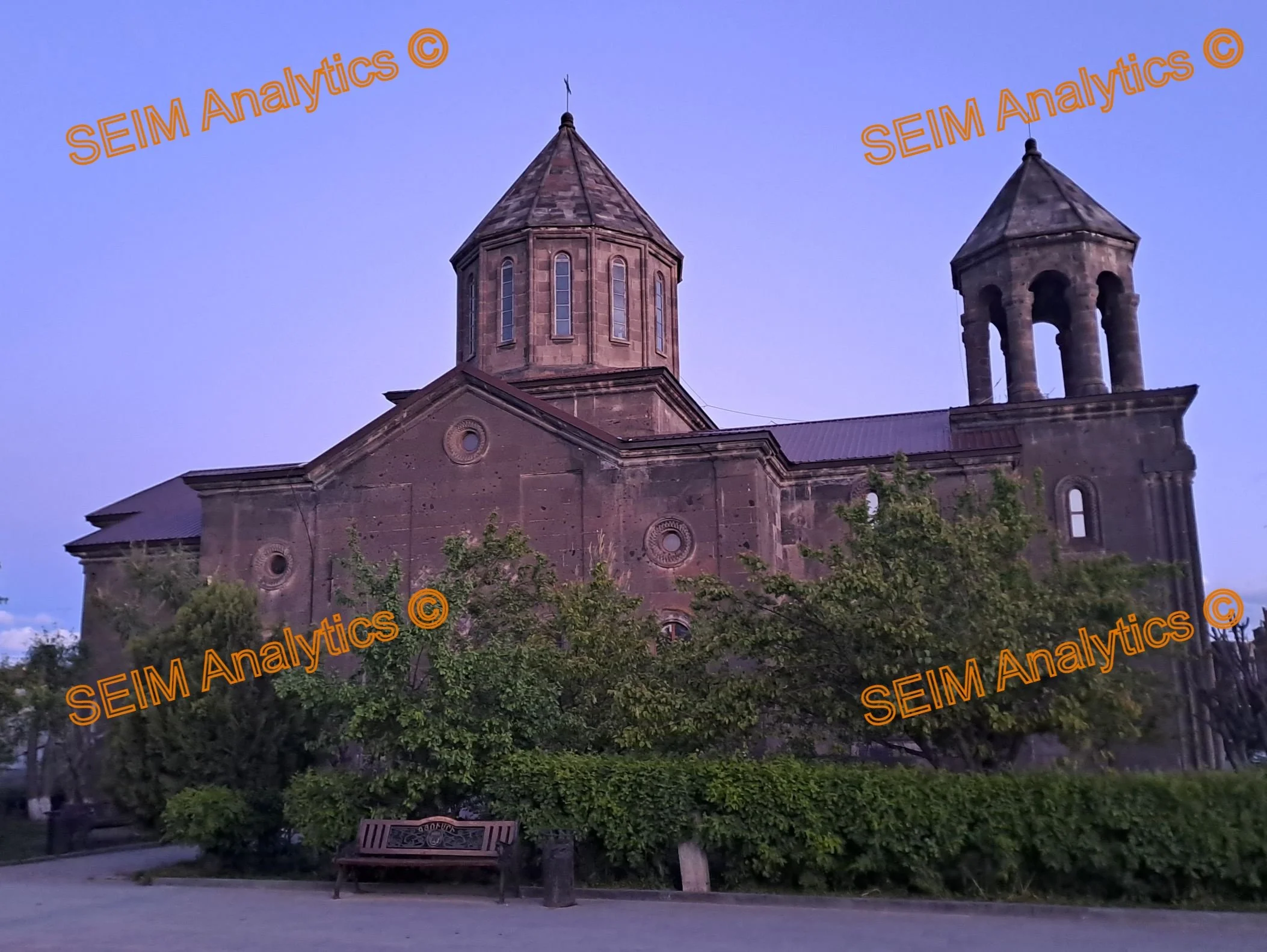
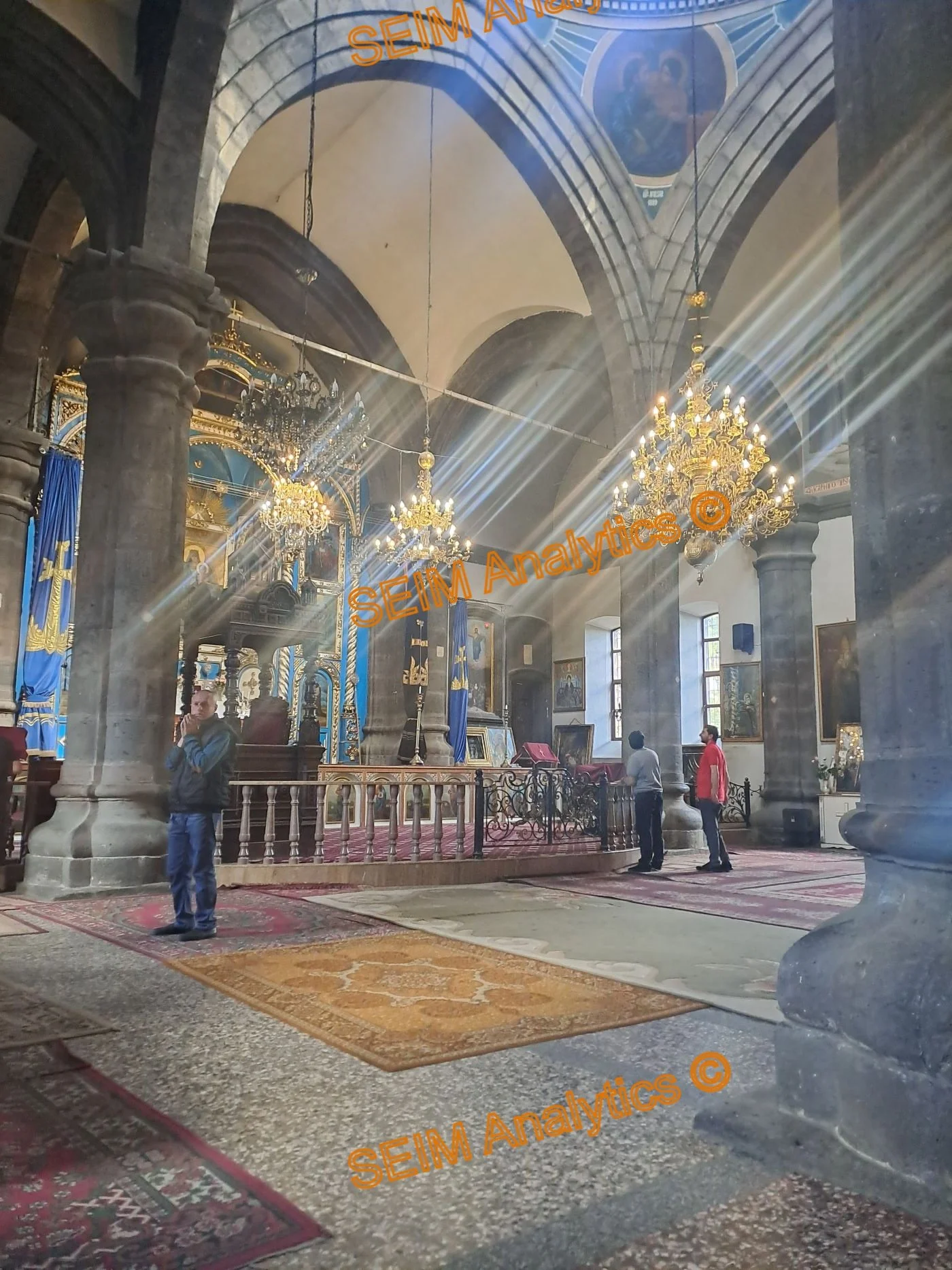
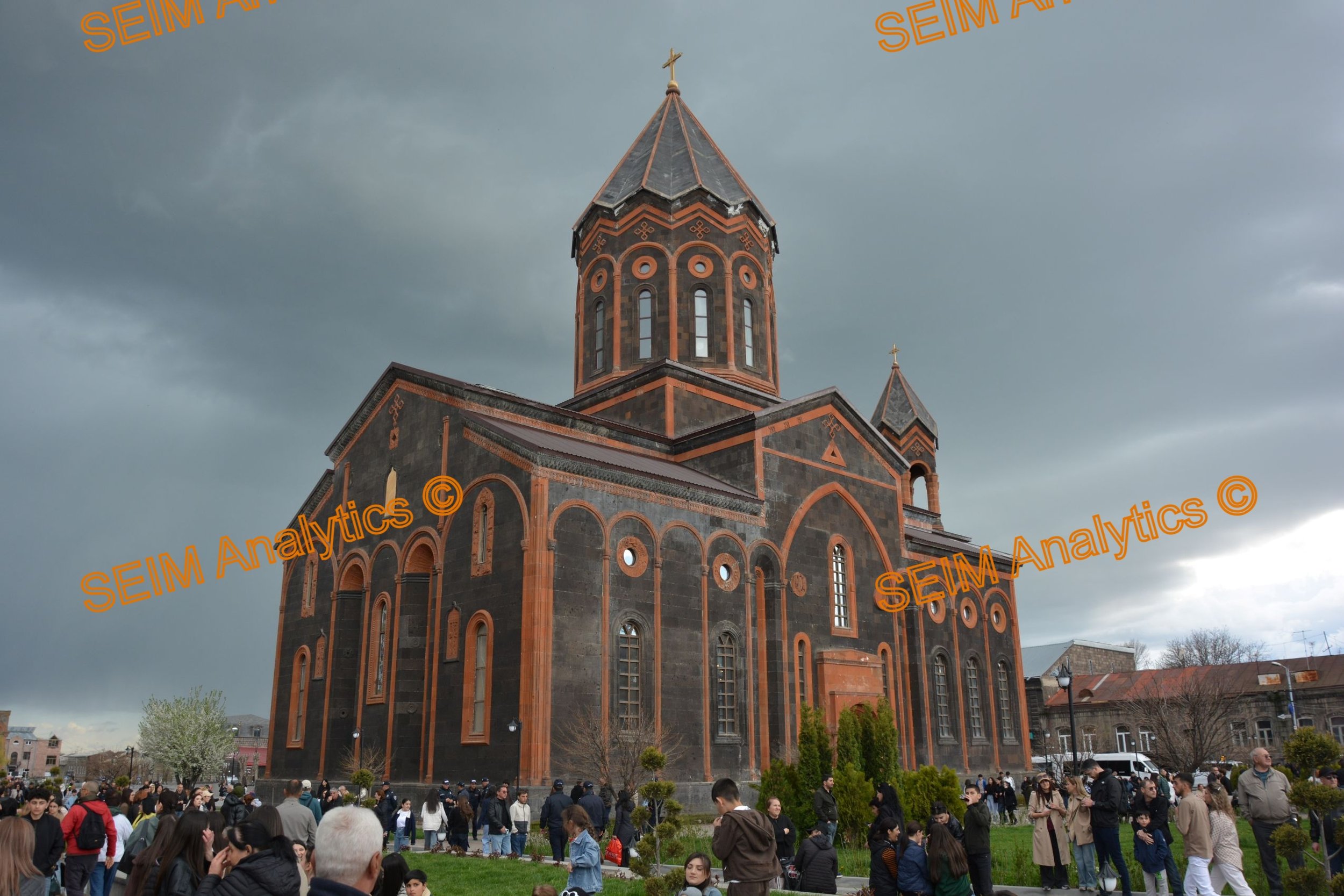
Monasteries in Shirak Province and churches in Gyumri (Saint All Saviors and Cathedral of the Holy Martyrs, St. Nshan Church, Church of the Holy Mother of God / from inside).