
Jesenice in the Slovenian Alps
12 July 2026
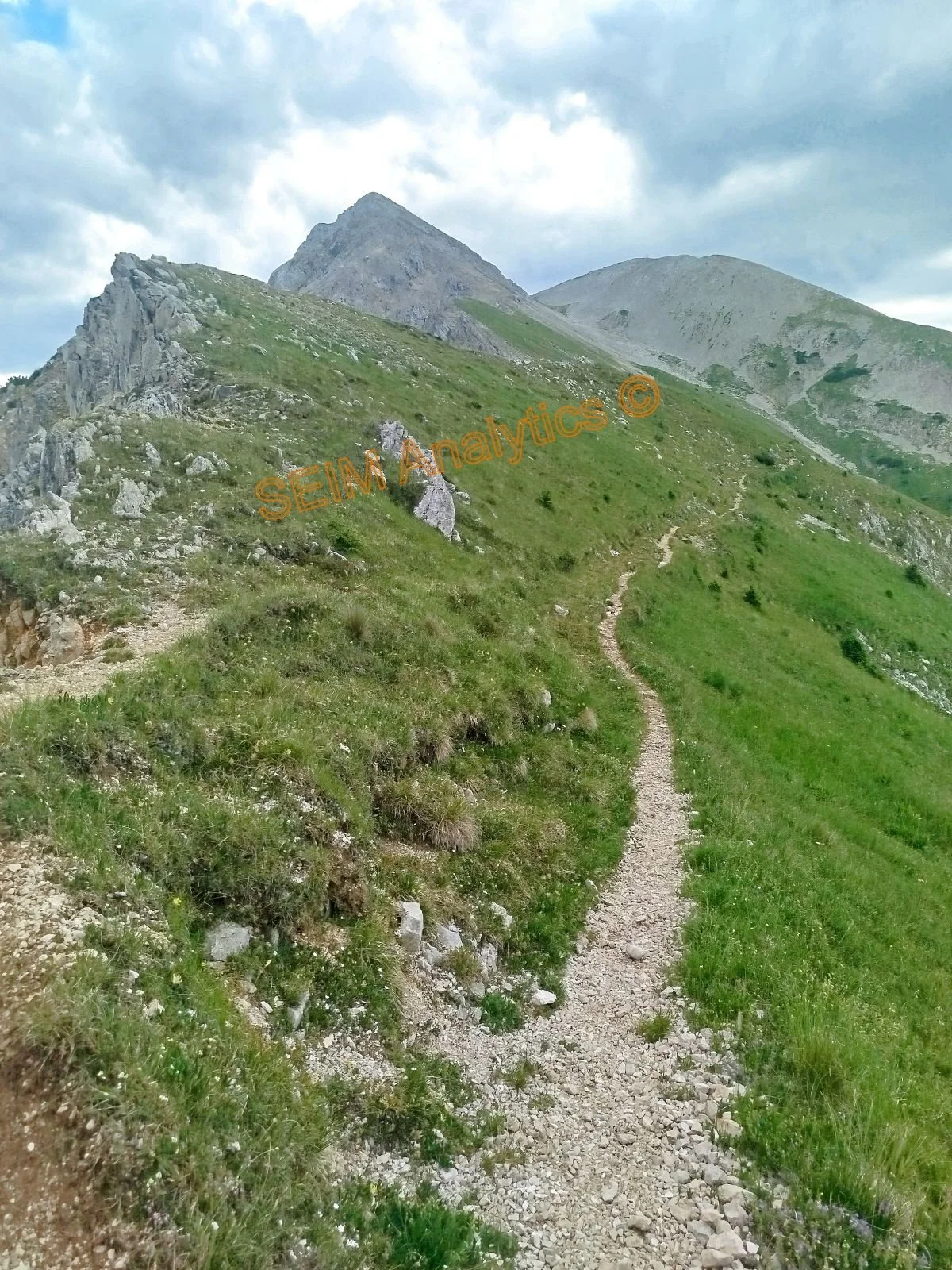
FIELD REPORT: With temperature records being set in neighboring Corinthia and Styria, it was maybe not the optimal date chosen to hike the Karavanke mountain ridge on the Slovene-Austrian border and explore Jesenice town and region, but the magnificence of this mountainous part of Slovenia and the micro history it presents to its visitors was worth the efforts and the sweat.
S
EIM Analytics is a consultancy on Southeast and Eastern Europe. It regularly explores and researches this multifaceted and culturally rich region, and sets as a goal to aid and advice clients about it.
Through this field report, interested readers and travellers are invited into this part of Europe.
As a microhistorian, the opportunity was seized upon to see what two days of hiking could offer of perspectives from the region. This travel/sports reportage offers practical information both for fellow mountaineers and those interested in the region’s touristic potential. It also gives a view on the processes of post-communist transition of this
industrial region.
Jesenice can be reached easily with train from Ljubljana, Italy, or from Villach in Corinthia. The Austrian State Railways www.oebb.at offers rather cheap tickets from Vienna that includes the connecting regional cross-border train in Villach to Jesenice.
Multicultural Jesenice: Iron mining and processing formed Jesenice and made this tenth biggest town in Slovenia known as the cradle of Slovenian steel industry. During Tito, but also before the communist period, Jesenice attracted working migrants from all over Yugoslavia, in particular Serbs and later Bosnian Muslim migrants. Slovenia had 47,097 Serbs (2,5% of the population) in the 1991 census. With the fall of Yugoslavia, the industrial enterprises in Jesenice were hardly hit, several plants closed, but others reinvented themselves and still functions, like Acroni. In the 1990s, as a result of this secession and transition from Yugoslavia, many of these working migrants experienced significant problems when they were illegally removed from Slovenia’s registry of permanent residents in 1992 (some 25,000) without proper notification or legal procedures, many after having lived and paid taxes for decades in Slovenia and raising families there. Slovenia’s constitutional court ruled in 2003 that their erasure was unconstitutional. ECHR ruled in 2012 in the Kurić case that the state had violated their rights. The problem about the erased (izbrišani) was particularly felt in Jesenice. Yet, after solving these problems many stayed on in Jesenice. Also, new migrants arrived, including many war refugees from Bosnia. Today Jesenice remains the most multicultural town of Slovenia.
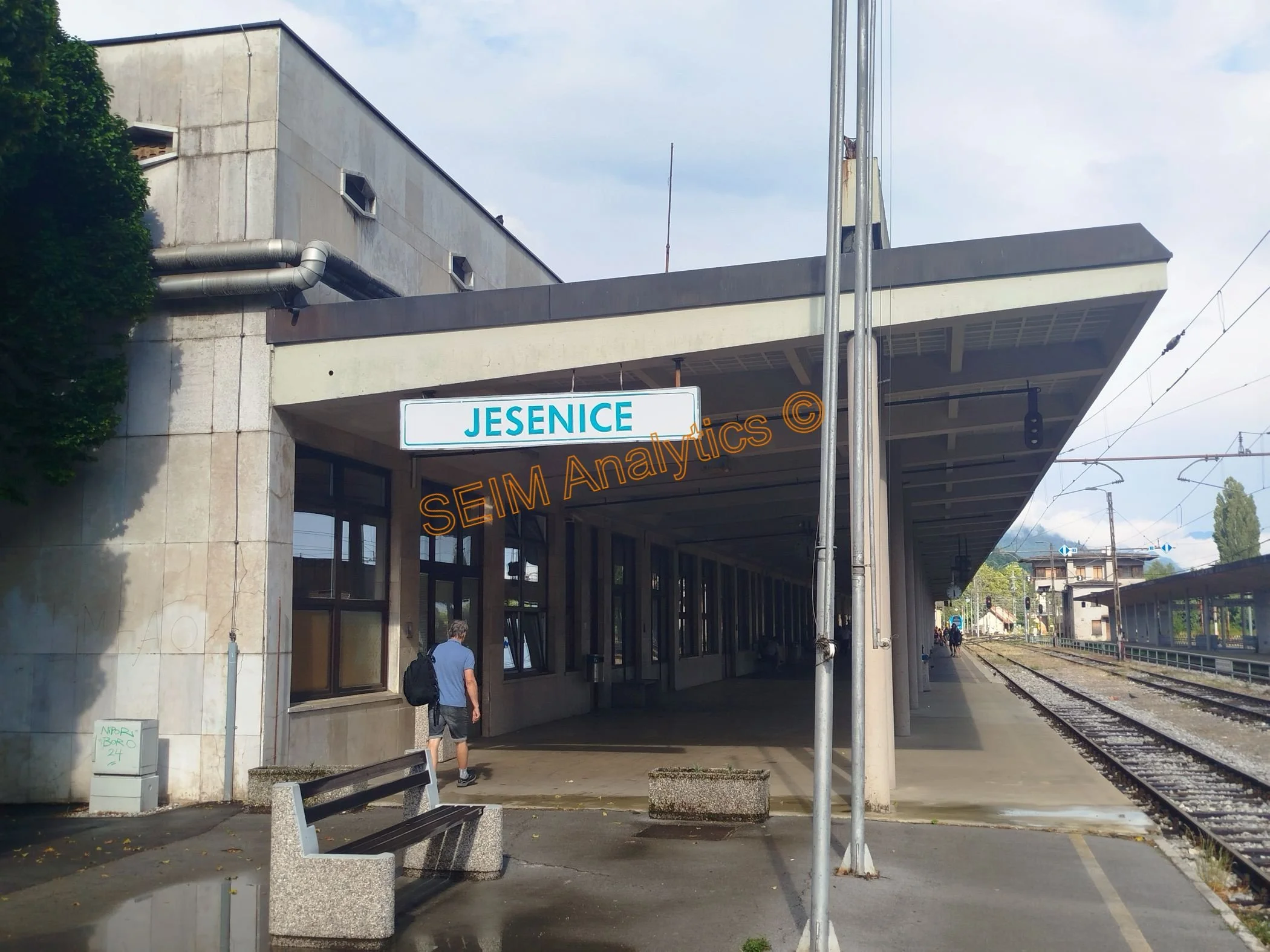
When arriving in Jesenice train station, this multicultural character of Jesenice is visible or at least audible, a majority of service workers in cafes, restaurants, and transport seems to be workers or entrepreneurs from other parts of the former Yugoslavia. Serbian/Bosnian pop music was streaming out from the bakery café, as their personnel. Our host of a prebooked apartment had a distinguishable Bosnian Muslim name, the taxi driver we managed to find next morning a Macedonian, and the very hospitable hosts at the wonderful Prešeren Mountain House at Mt Stol/Hochstühl, the end destination of our hike of Day 1, were Croats from Posavina, in nowadays Republika Srpska. During the whole day while hiking Stage 4 in the heat, we met two Austrian couples, a lone Frenchmen, Czech girls, several Americans, but not a single Slovenian. In fact, only in the morning of Day 2 we first heard Slovenian language. Then, two young mountaineers who cleverly had started early on their hike in the hot weather, approached us at the Prešeren House, before our purposely late departure still being distracted with enjoyable Bosnian coffee and the stunning view of the Triglav mountain massive in the West. Locals probably knew the conditions better than to start a hike in such heat.
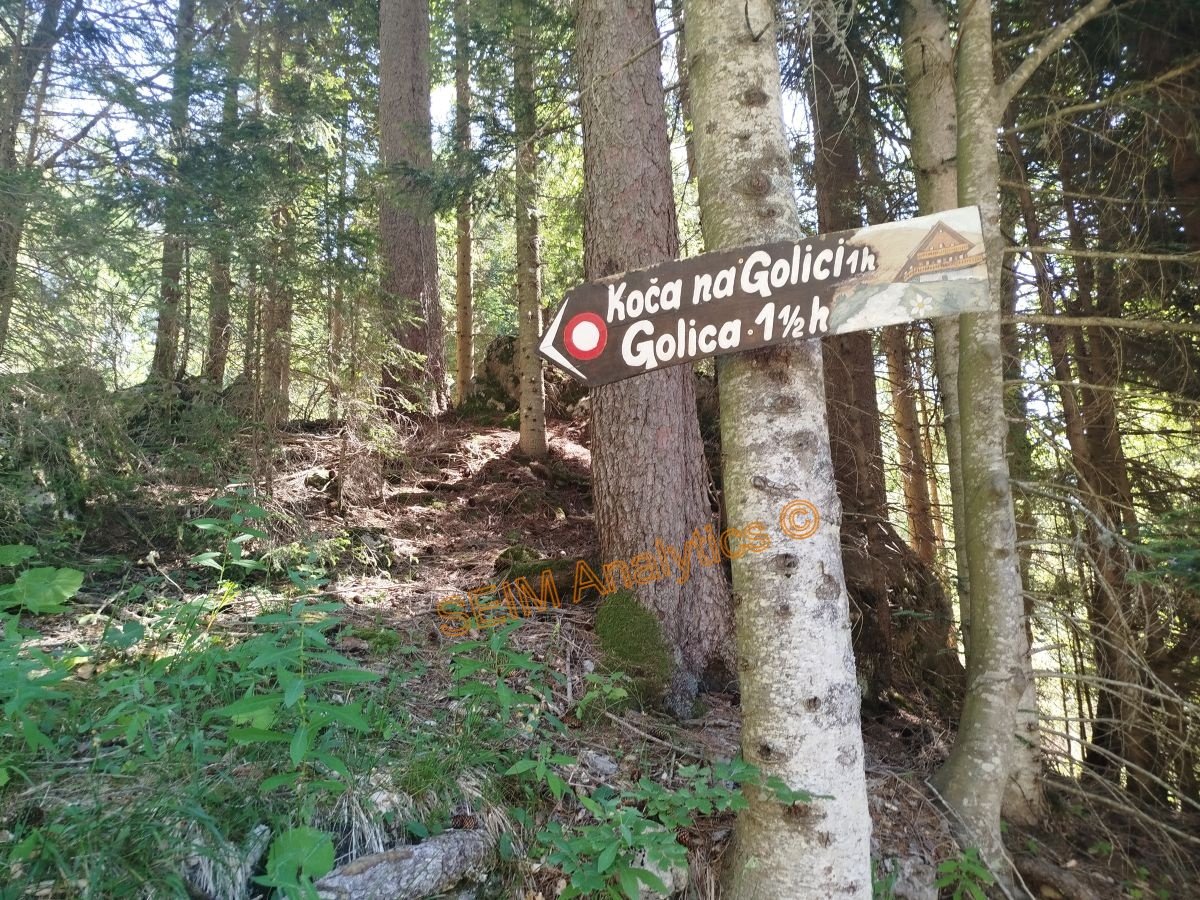
The Hiking Route - Stage 4 of Via Alpina at the Karavanke Alps: The hiking from Planina pod Golico village to Koča na Golica (the Golica mountain hut at 1,583m) run by Jesenice Mountaineering Association has two parallel routes starting east of the Betel Tourist Apartments. Another longer route starts by Sv. Križ and goes below Mt. Klek (1,753m), over Jeklevo Sedlo (1,487m), and below or over the Mt Golica/Kahlkogel (1,834m) to also reach Koča na Golica. Here, a spectacular view of the Triglav mountains await, but also a well-deserved cold soft drink or Laško Beer to be enjoyed in nice sun shairs. For those who use Koča na Golica as destination, the hut has overnight capacity of 41 beds (15 in shared bed dormitory).
The area around Koča na Golico is known for the wild white narcissus that flowers in mountain pastures around the village from late April to early May. The plants have been protected by law since 1949 and picking them is strictly forbidden. A narcissus festival is held by the local tourist association in May. There is also a chairlift for the Španov vrh ski slope that begins in the village Planina pod Golico.
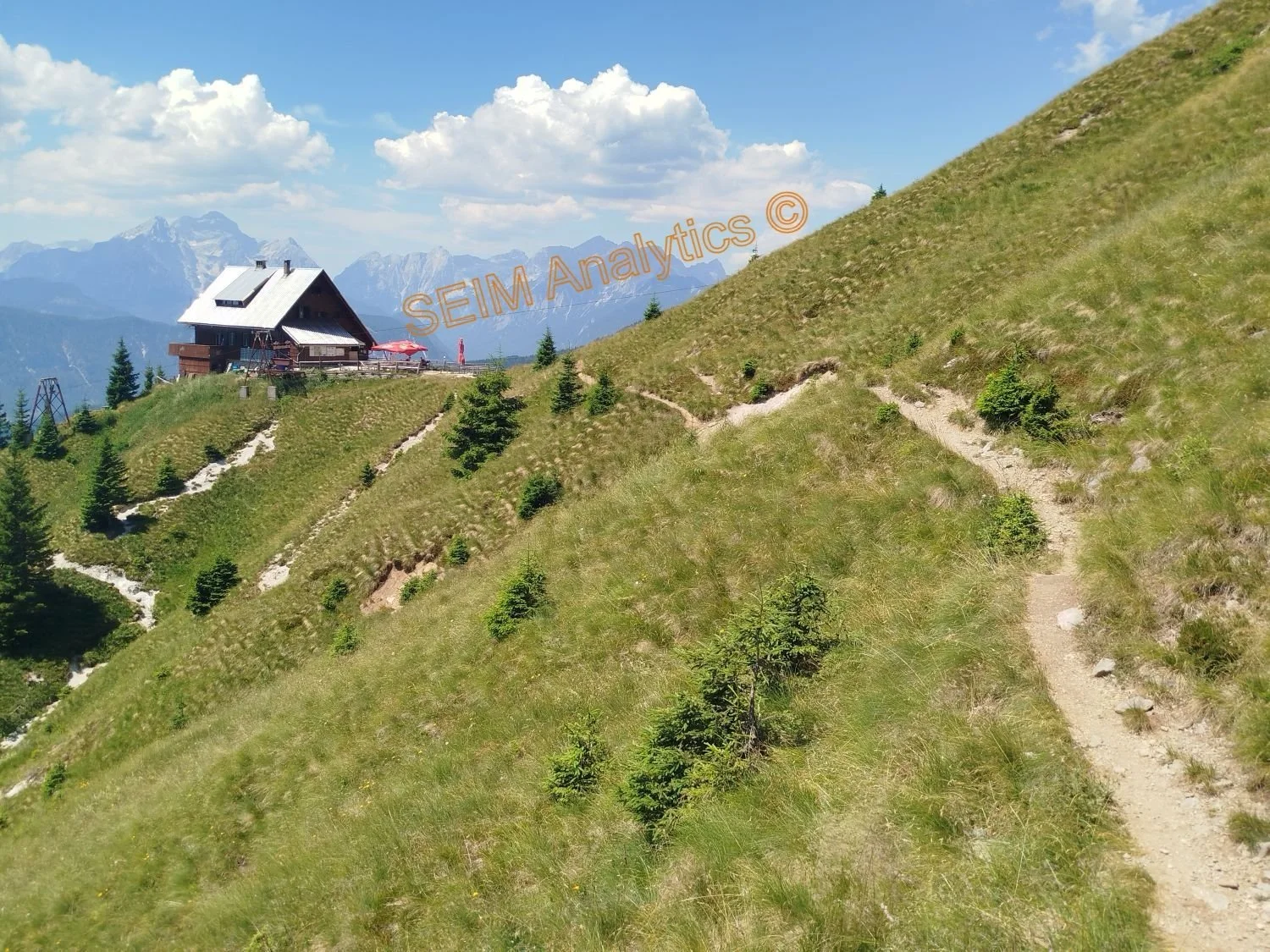
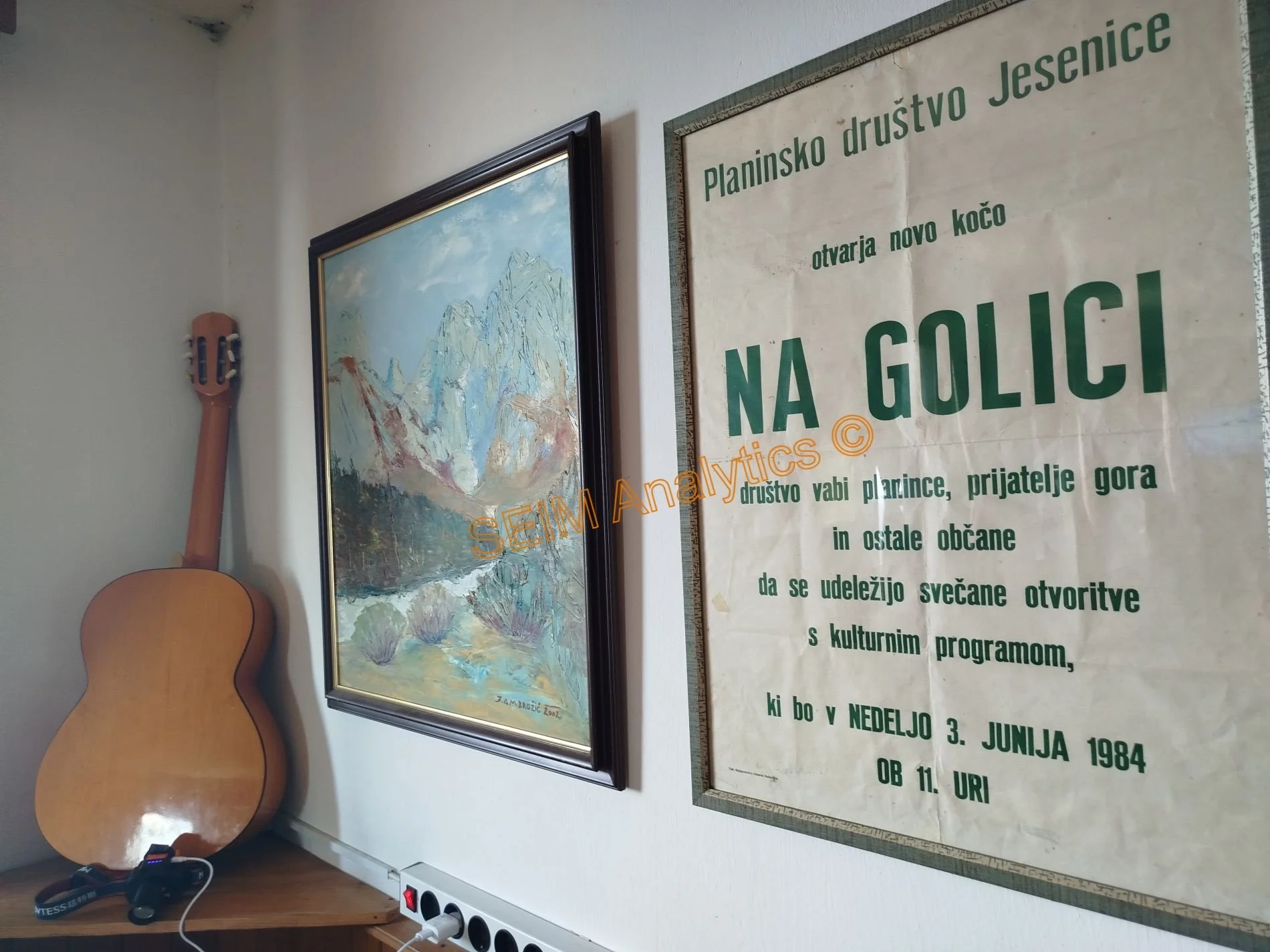
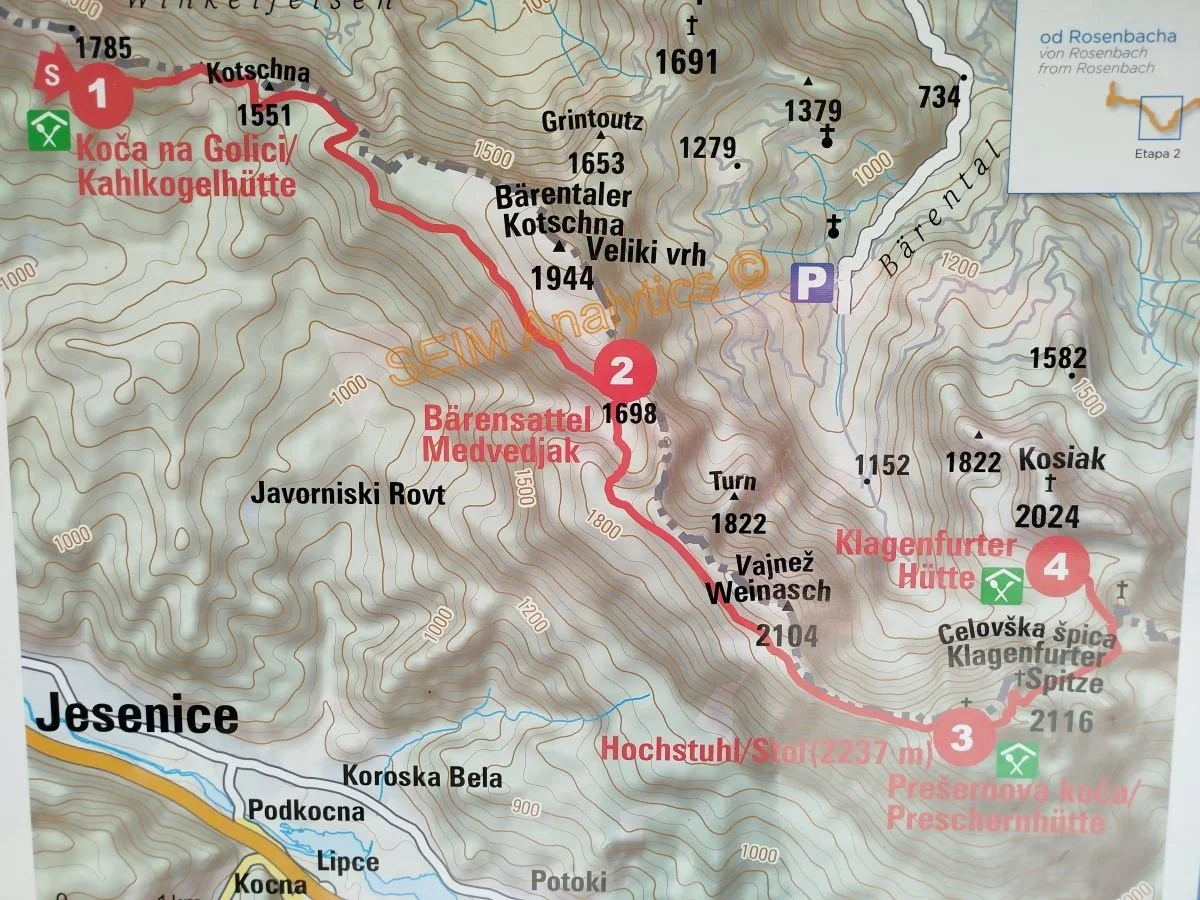
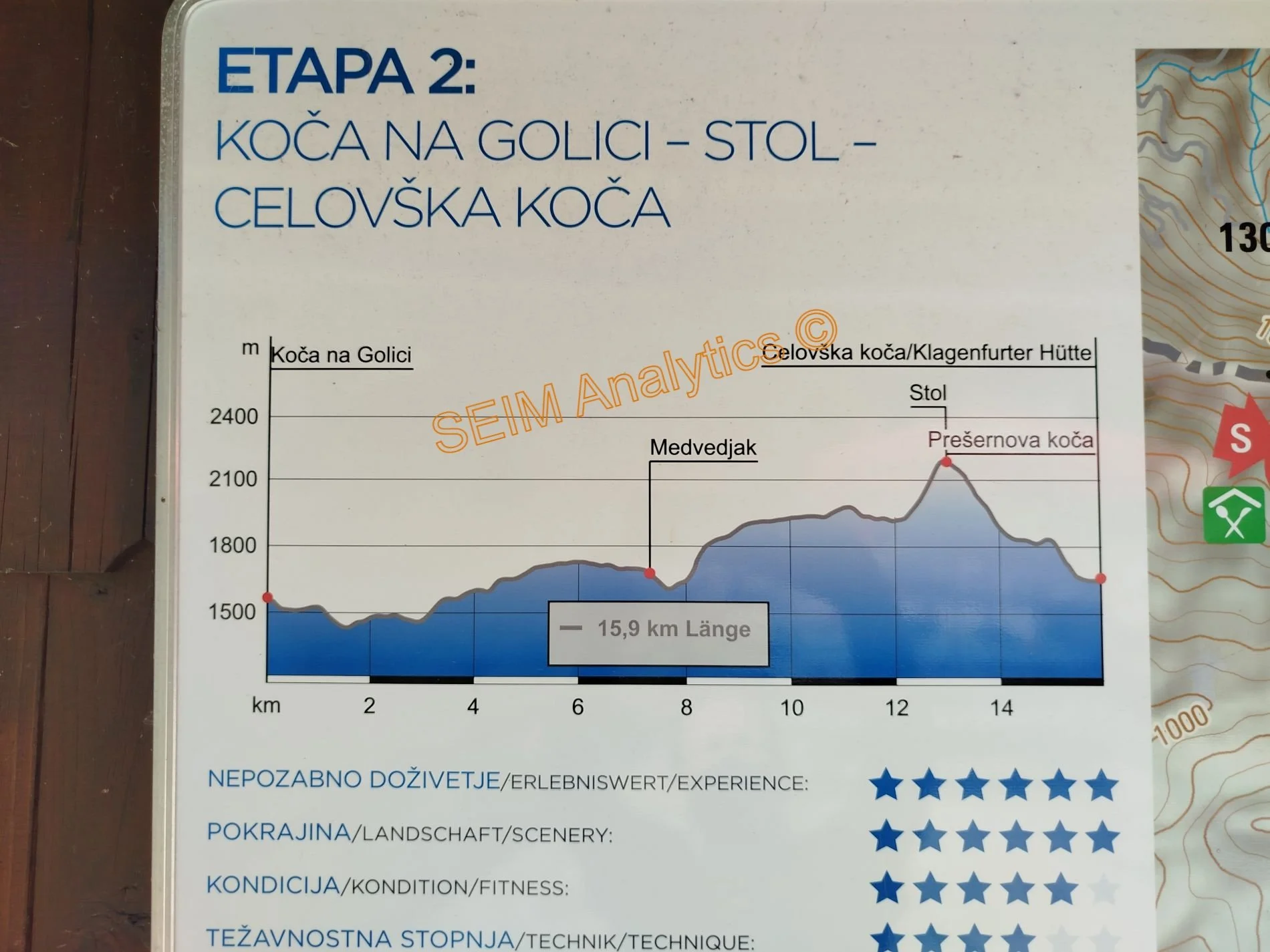
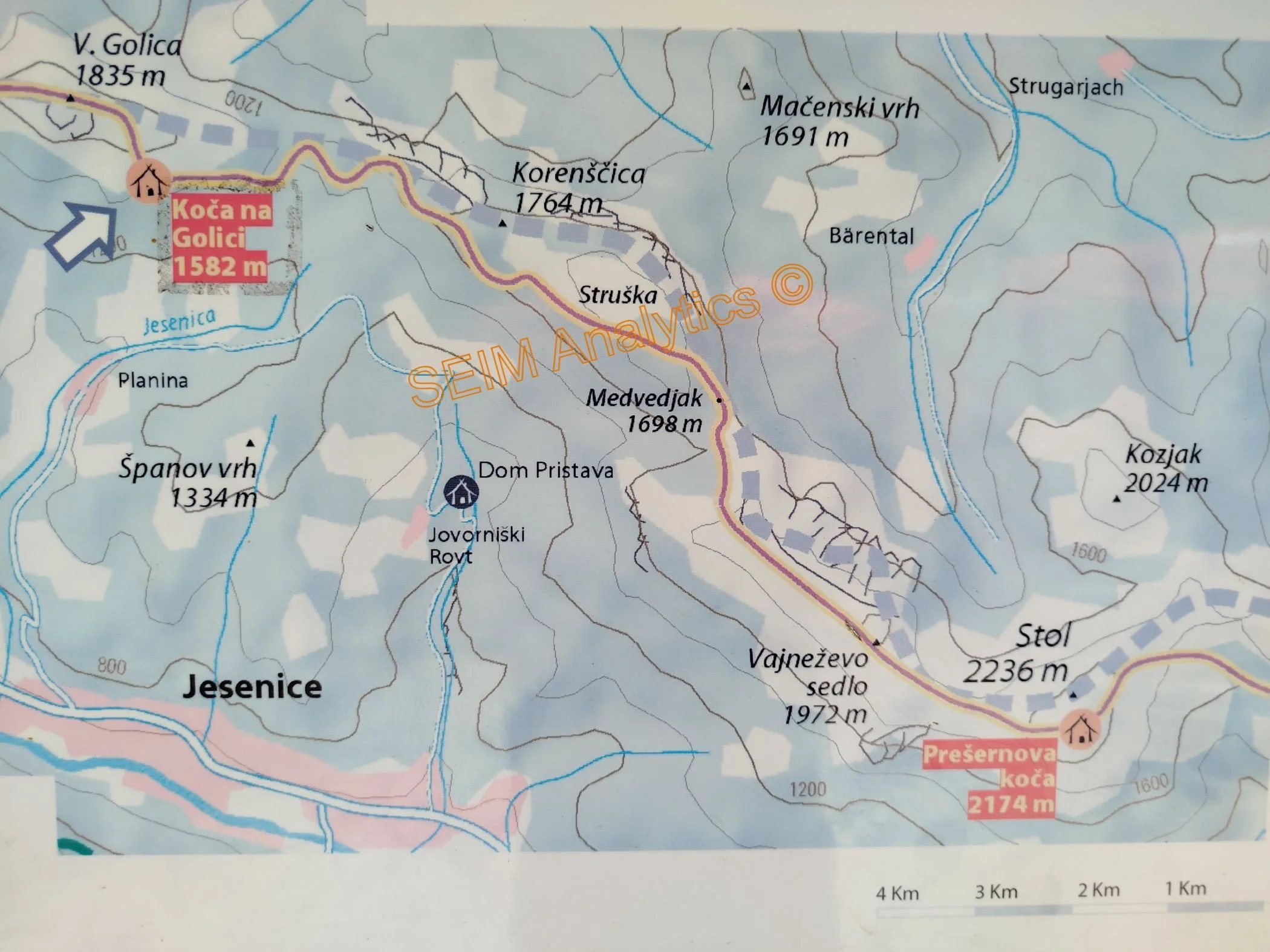
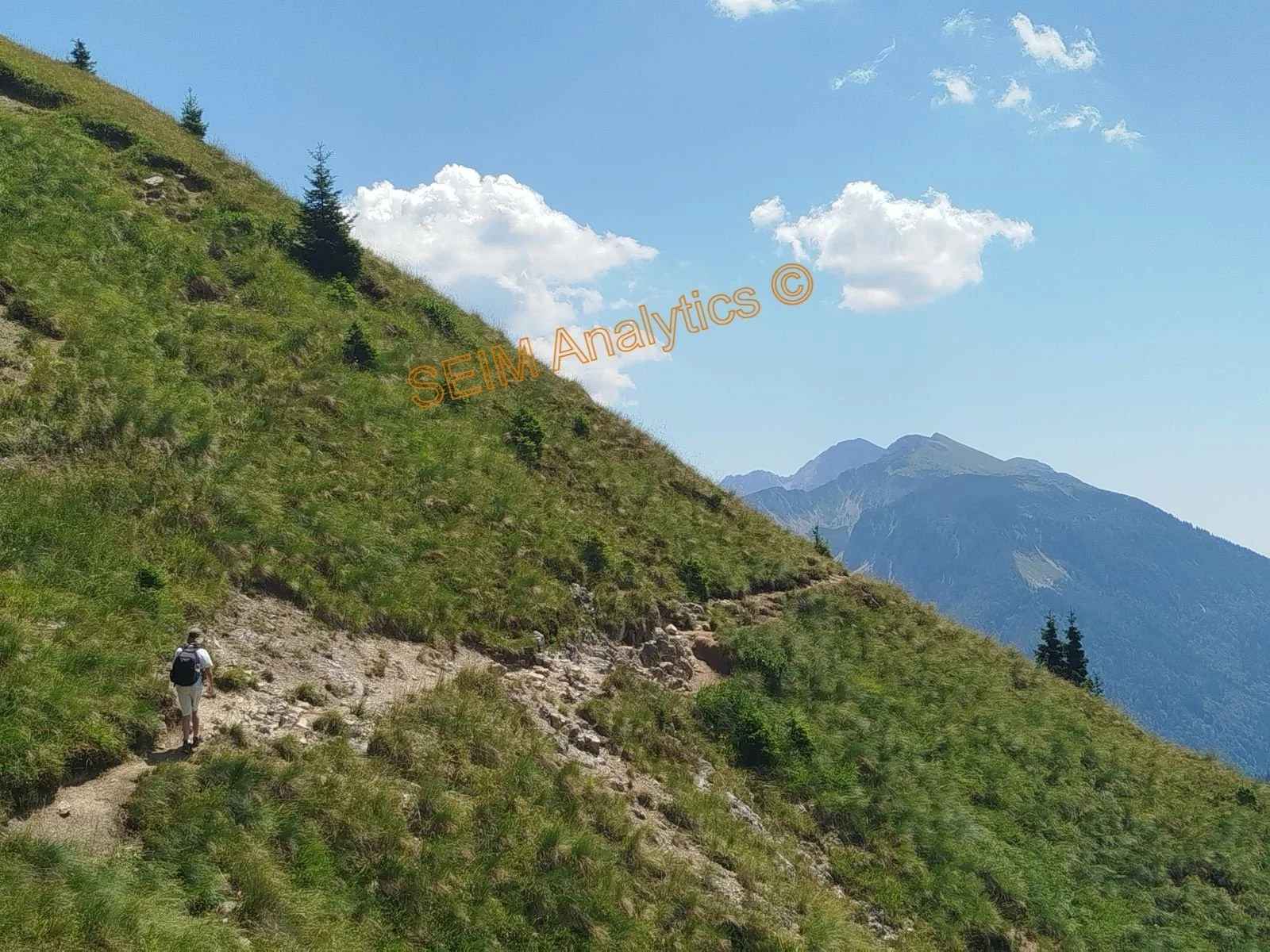
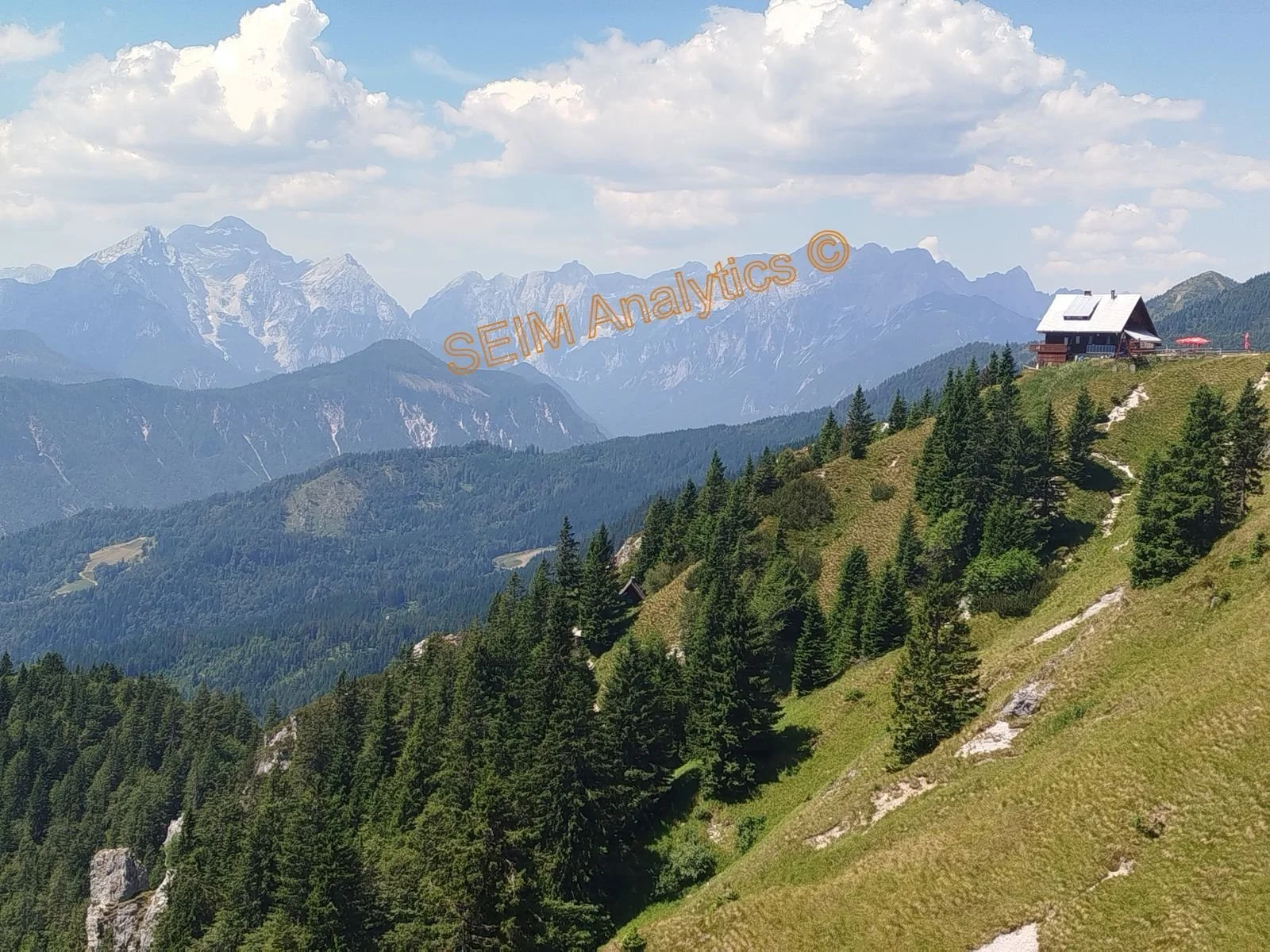
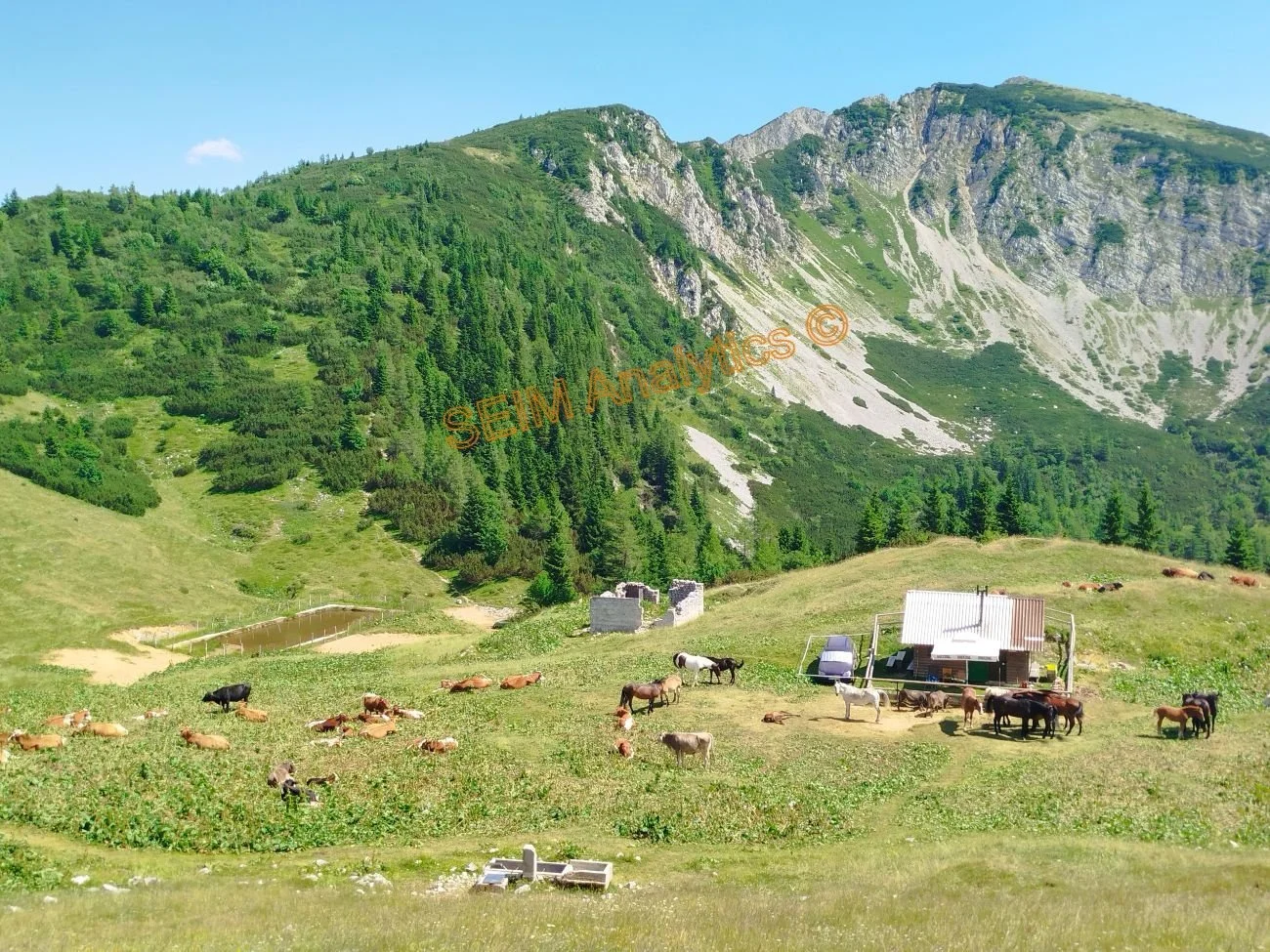
For the hike from Koča na Golica to Prešeren House in 30 degrees we spent 5-6 hours, but it is also doable quicker. Yet, with so many nice landscape sections, including functional mountain farms, diverse vegetation and fauna, reommendable is to use longer time to enjoy properly. From Koča na Golica, where there are good maps on the wall of Stage 4 (Purple Trail), the hike eastwards goes along a diverse mountain trails, with gorgeous pastures, and the unique rock formations of the Julian Alps Trail. Eastwards towards Prešeren House 2,174m by Mt Stol/Hochstühl 2,236m the trail passes the Sedlo Suha/Maria Elend Sattel of 1,439m, it continued beneath Štruško via Medvedjak farm (Bärensattel), while further east, the trail slowly takes mountaineers higher into more and more arid and stony terrain and cliffs facing Austria and passes beneath Mt Vajnež (at 2,104 meters). The international border between Slovenia and Austria is along this trail, with the trail on Slovenian side, cliffs on the Austrian side. Border stones are visible along the trail. This is unspoilt nature, with authentic farms in operations, cows, horses, sheep grassing at various altututes, including at 2200m.
The latter part of Stage 4 in the eastward direction has certain risky sections where experience and good foot-wear is required but not equipment. The final section to Mount Stol/Hochstühl 2236m and Prešeren House beneath it for a well-deserved cold Laško Beer for 7 EUR is a quite steep ascent through stones and rocks. The whole route has a marvelous panoramic view towards the Triglav Mountains and national park in the West, with its (for the occasion) threatening rain showers and summer thunders. From this hut one also sees towards the Eastern Karavanke Mountains, Ljubljana, and the famous Lake Bled. This is a less crowded, but not less magnificently scenic trail compared to the Triglav national park area.
At the high-altitude Prešeren House at 2174m the highly hospital Bosnian hosts will be inventive with the 3-course menu if needed to accommodate vegetarian or other need, and in general make extraordinary efforts to accomodate guests. Card payments are possible. Prešeren Mountain House (named after Slovenia’s national poet France Prešeren 1800-49) offers one 10-bed rom, and four 6-bed room, and one 4-bed room (38 beds). It is run by the Javornik - Koroška Bela local alpine club and is part of the Alpine Associatiion of Slovenia (PZS).
A recommendable return route next day goes to the Valvasorjev House (1181m) via two trails, where the recommended eastern trail (a former horse track that goes via Zabreška Farm in Žirovnica Municipality is less step but takes some more time. Valvasorjev House offers meals and drinks and ice cream in a nice pine wood surrounding. From here a direct route to Jesenice goes via Koroška Bela, but another route goes towards Moste/Žirovnica where one can catch the bus or train.
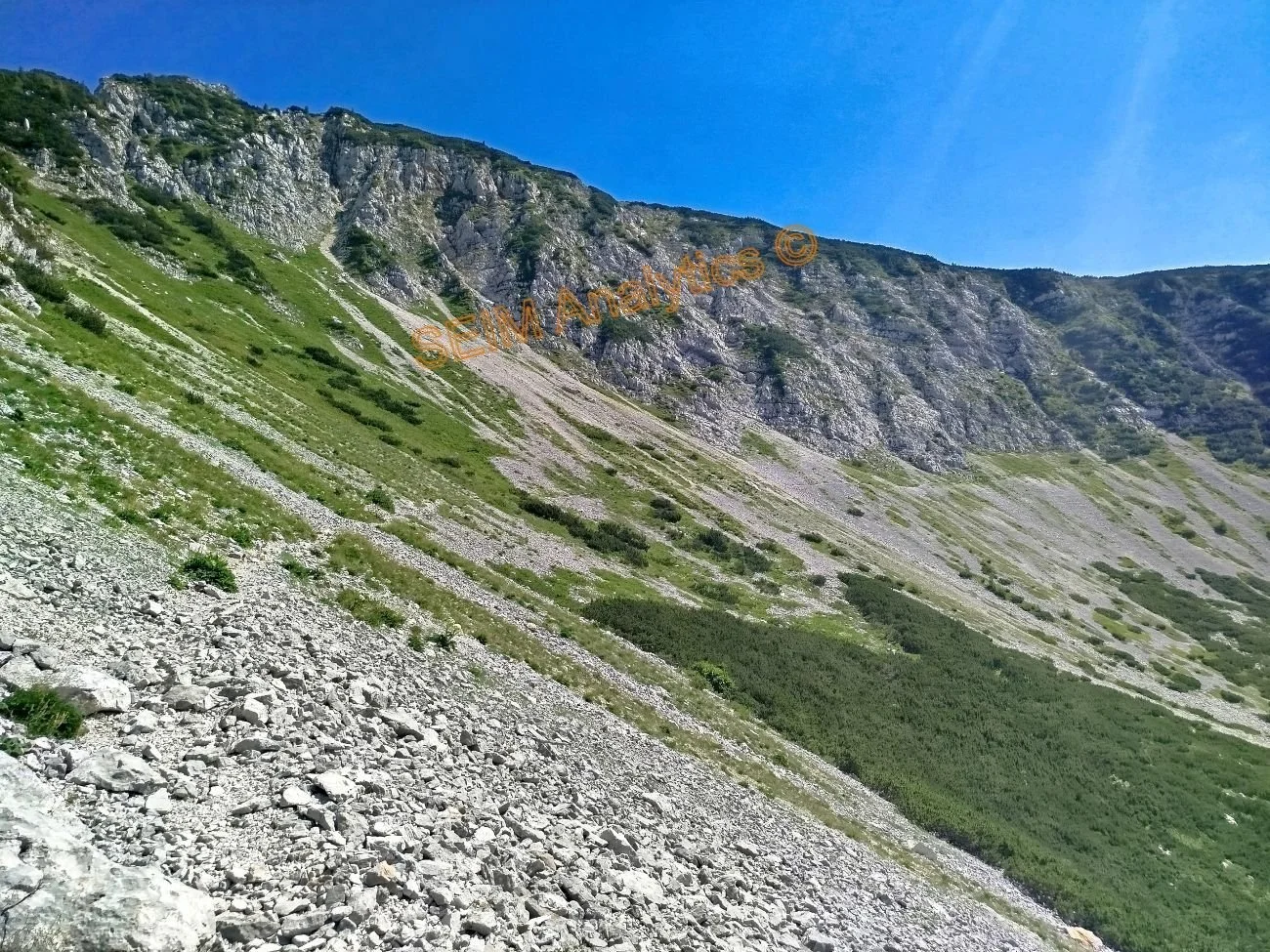
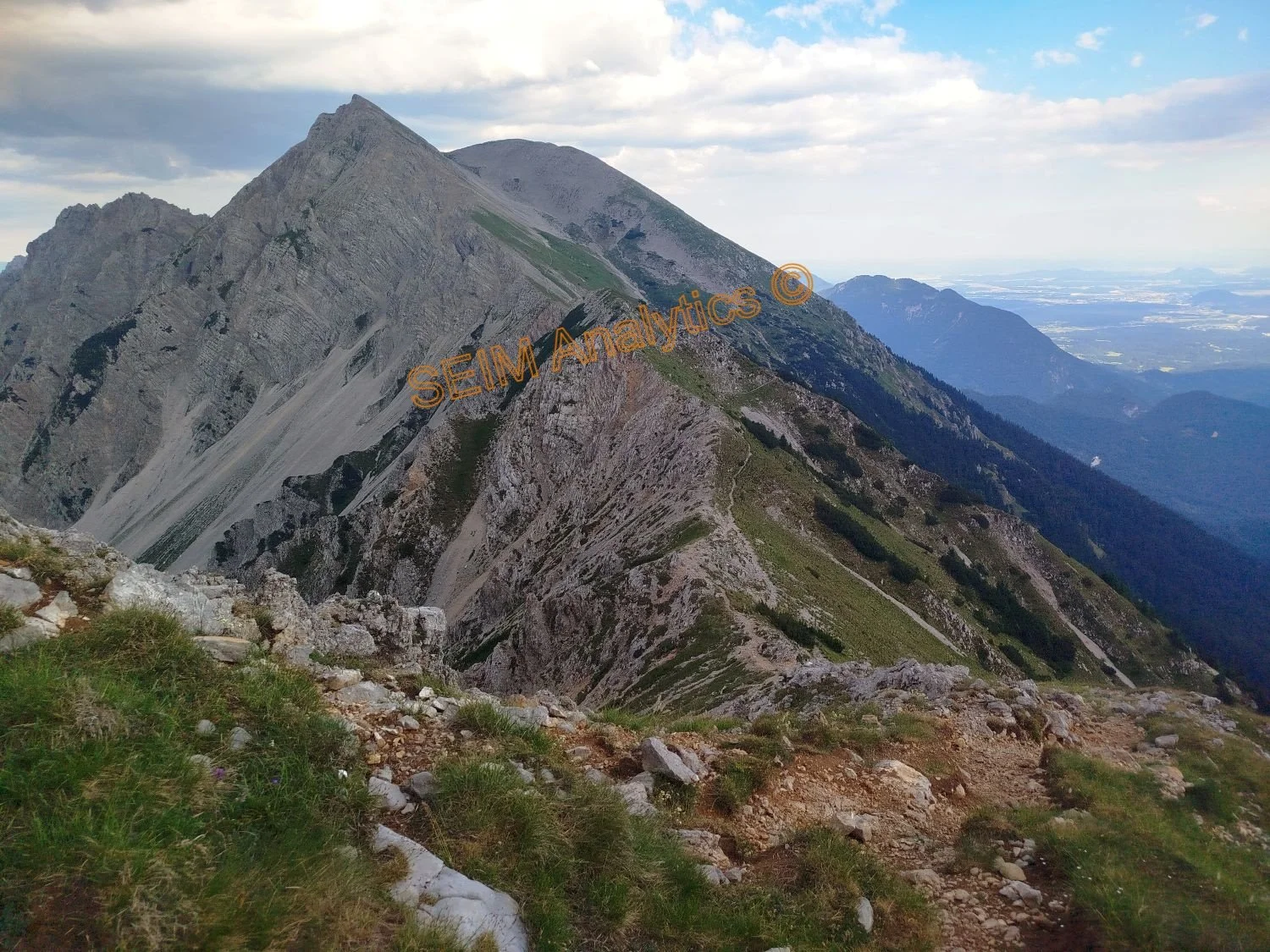
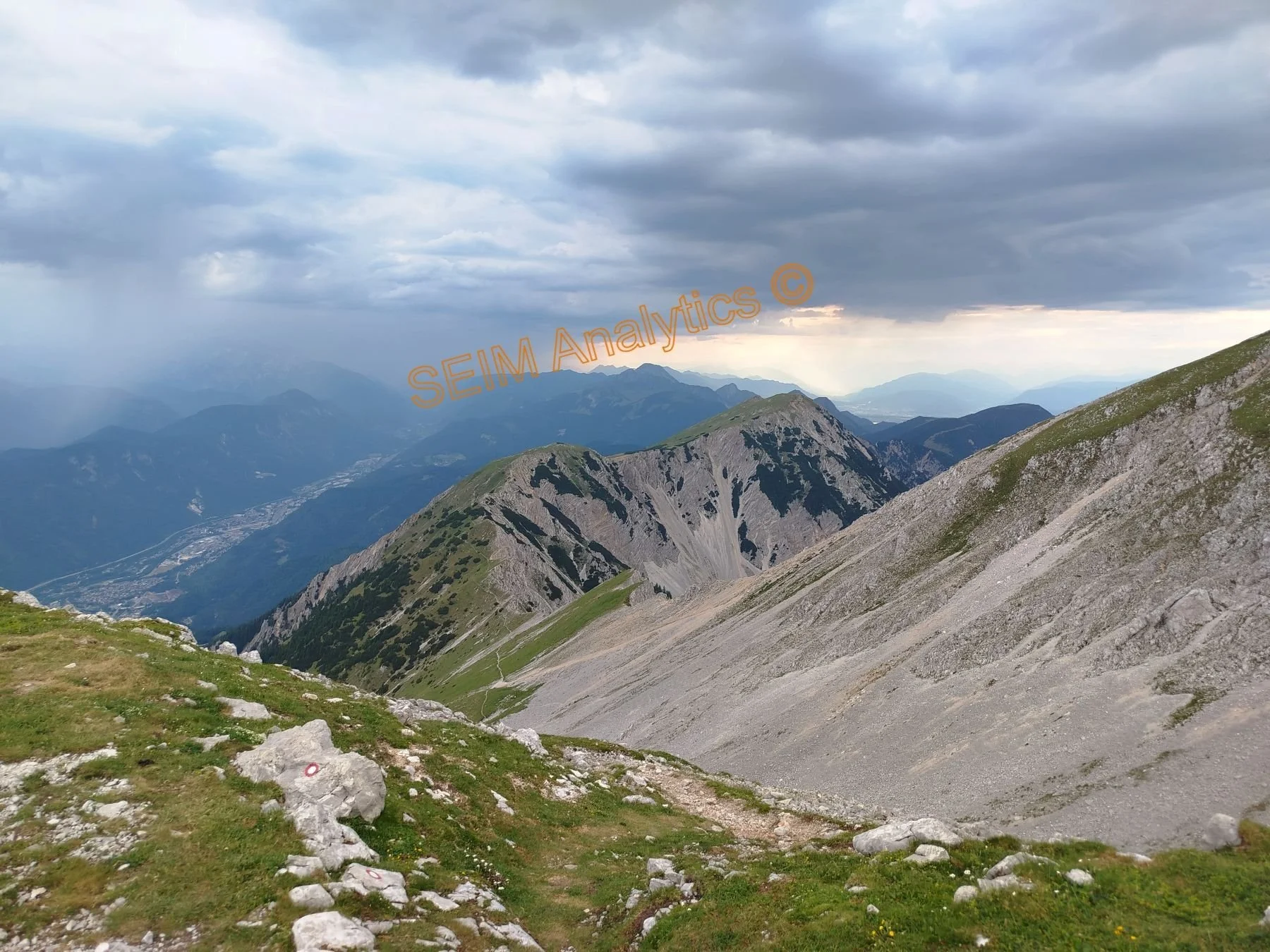
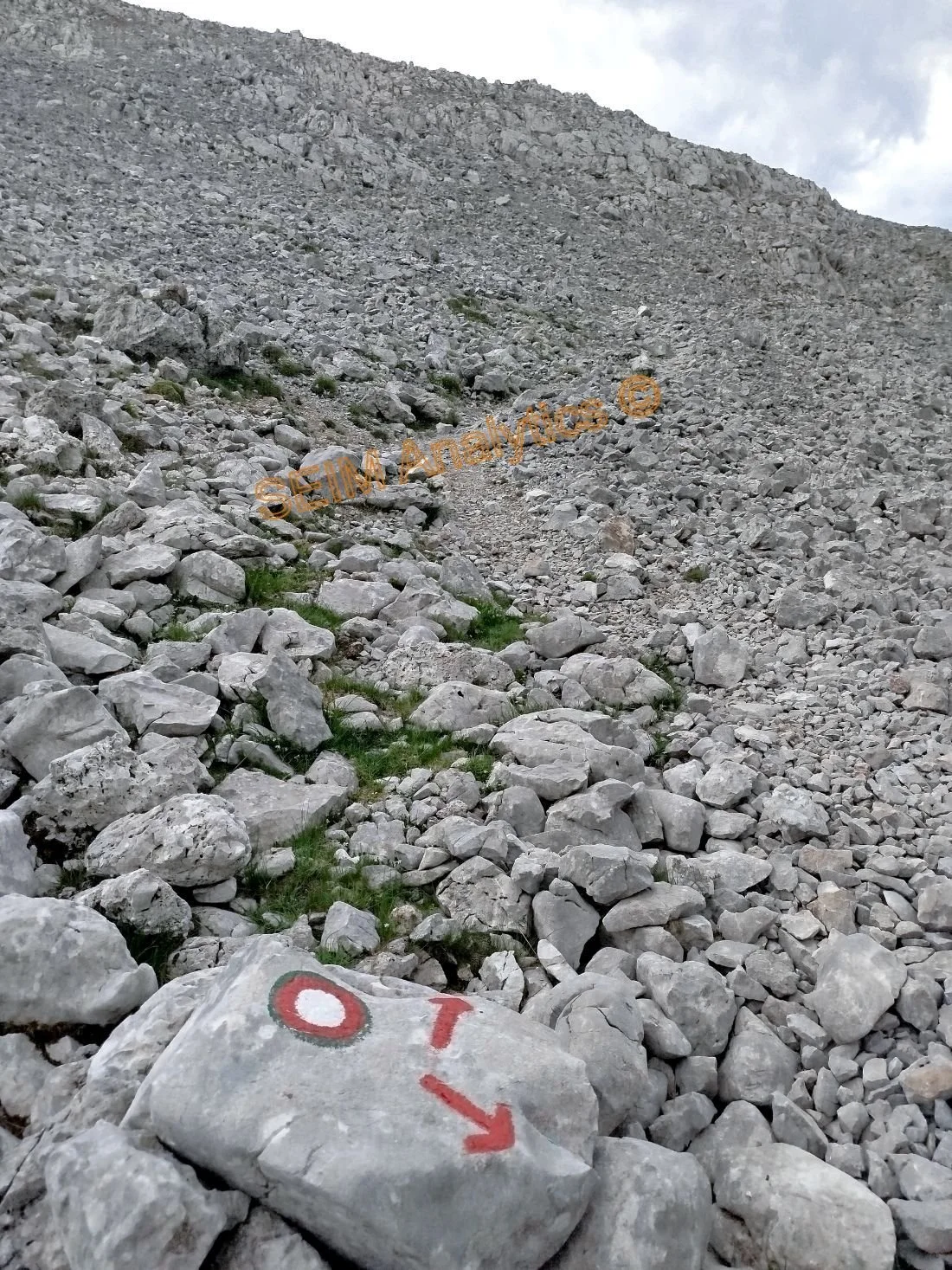
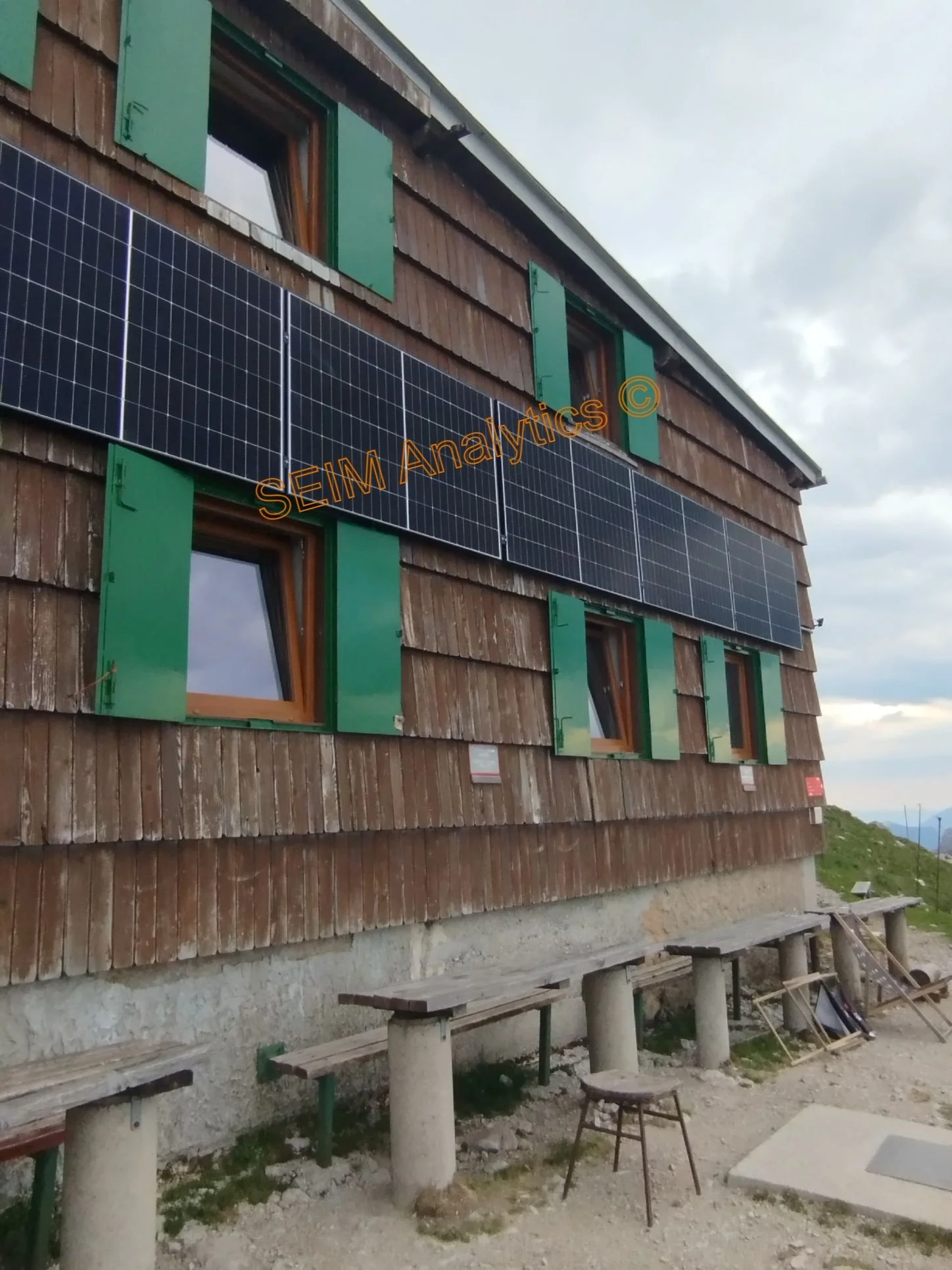
Stage 4 (Purple Trail), is part of the Via Alpina Trail, a spectacular long-distance trail divided into 161 stages located in Slovenia, Italy, Austria, Germany, Lichtenstein, Switzerland, France adn Monaco. The Slovenian part starts in Maribor, runs by Pohorje and the Kamnik and Savinja Alps, goes along the Julian Alps, and descents into the Slovenian karst area and finishes by the Adriatic Sea. This popular trail in Slovenia, established in 1953 has some 80 checking points along the trail. For Stage 4 of the Julian Alps, good maps are available at the tourist information or hotels in Jesenice. Yet, this is a well-marked trail, marked with red circles with white spots.
More information and hut reservation on the homepage of the Slovenian Alpine Association: www.pzs.si
Slovenian Alps: To the West is the Triglav National Park with countless opportunities for hiking but also for winter activities at the renown Kranjška Gora Alpine Ski Center and the Planica Nordic Skiing and Ski Jumping Center.
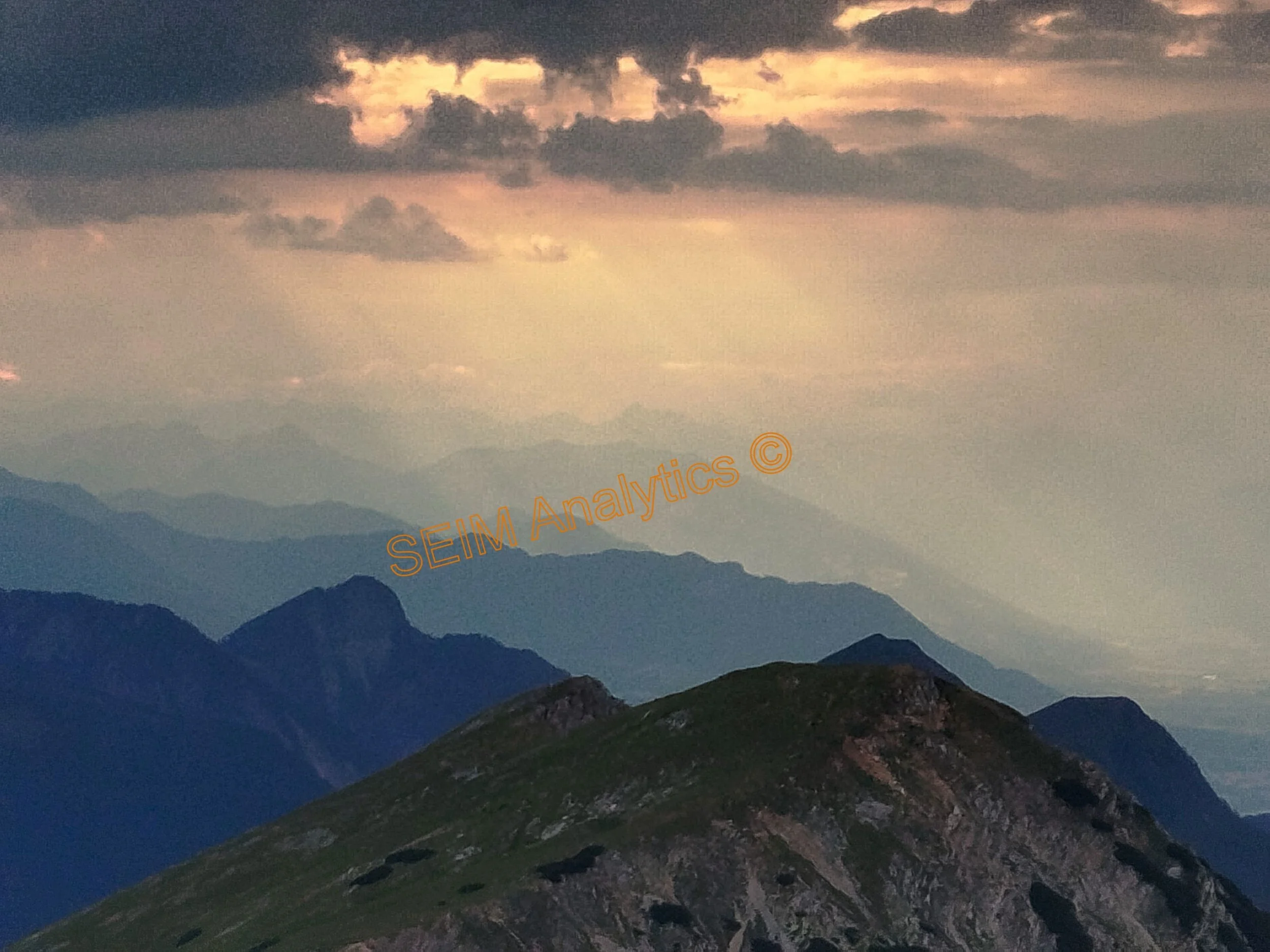
View from Prešeren House (2174m.)
POST-INDUSTRIAL JESENICE:
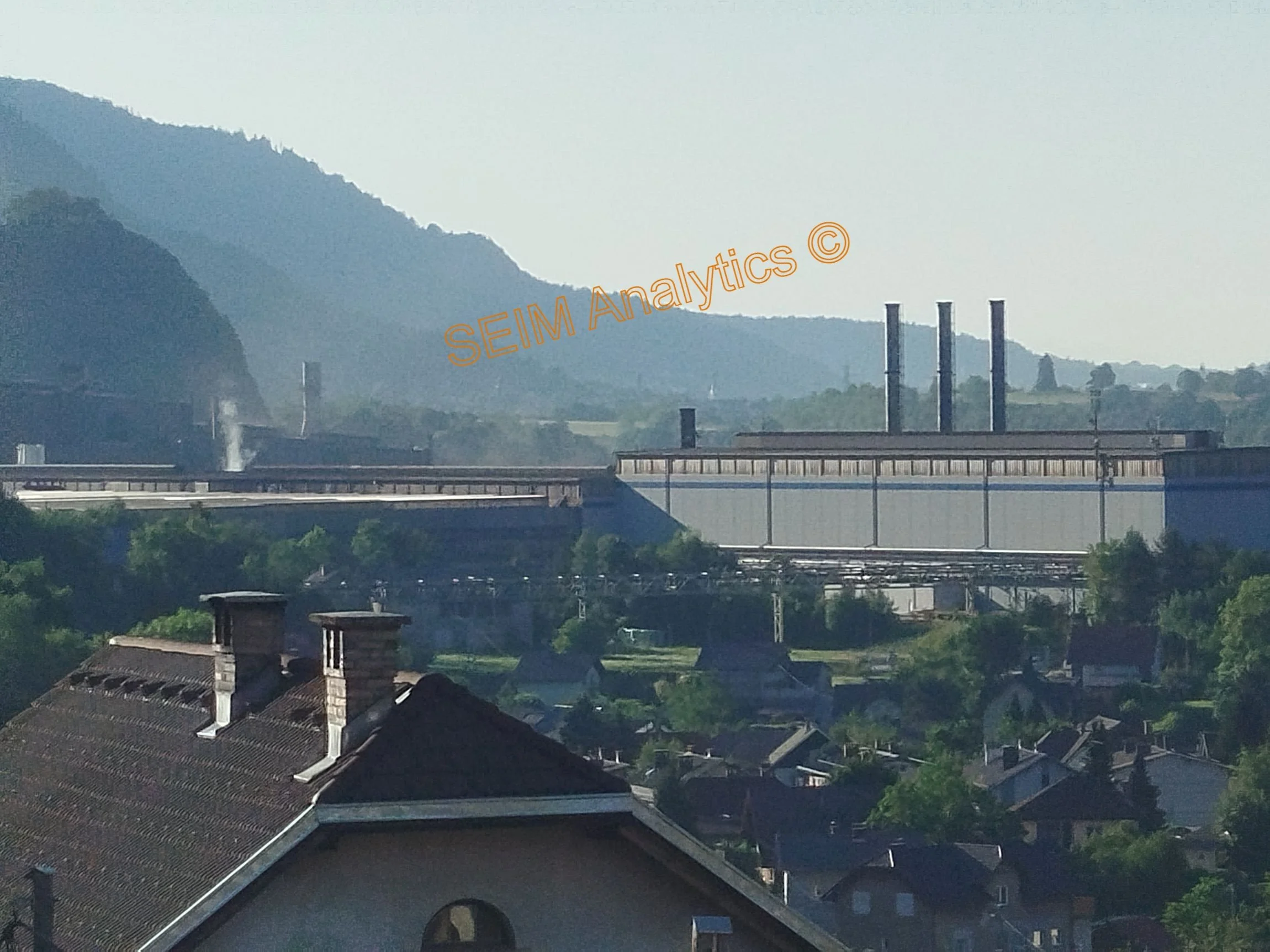
Returning to Jesenice town via Koroška Bela where the current Acroni Steel Plant is located gives some new opportunities to reflect on the towns industrial and developmental trajectory. The first mining in Jesenice started in the 14the century with the mining of the iron ore deposits at Planica pod Golico. It formerly carried the name Sveti Križ nad Jesenicami (“Holy Cross above Jesenice”) until the settlement was changed to Planina pod Golico (“pasture below Golica”) in 1955. Some mining caves can be seen at the beginning of the trail (east of Betel Tourist Accomodation).
A range of smaller settlements were established in the region, like Plavž, Sava, Murova, and Slovenski Javornik until King Alexander I of Yugoslavia by degree amalgamated these settlements into the town of Jesenice on March 20, 1929.
During Habsburg times, the Jesenice ironworks (esp. Corinthian Industrial Company) was a pioneering center of technical invention in the history of ironworking, among other by winning a gold medal for a process for obtaining ferromanganese in a smelting furnace at the World Exhibition in Vienna in 1873. The Austrian Südbahn constructed through Jesenice in 1870 accelerated the industrial growth.
Jesenice became a border town to Austria with the fall of the Habsburg Empire and as part of the Kingdom of Serbs, Croats, and Slovenes in 1918. A plebiscite was held on 20 October 1920 about the belonging of the territories north of Jesenice and the Karavanke mountains ridge, the so-called Zone A, which ended with 59% voting for Austria and 41% for SHS, despite considerable Slovenian populations. This result hindered a plebiscite in Zone B, further to the North. On the Slovenian side there were considerable German minorities in Gottschee/Kočevje, Celje, Maribor, Ptuj, but not in Jesenice other than a decreasing small German-speaking industrial elite.
World War 2 and the Partisans: With the Italian occupation on 11 April 1941, and German from 19 April, Jesenice was exposed to forced assimilation, with school teaching in German language only, Germanization of road and public signs, and forced mobilization and recruitment, despite Jesenice being outside the German linguistic majority zone. Forced deportation took place of the Romany people in WWII. Jesenice and its steel industry had strategic industrial importance for Nazi Germany’s war efforts and military needs.
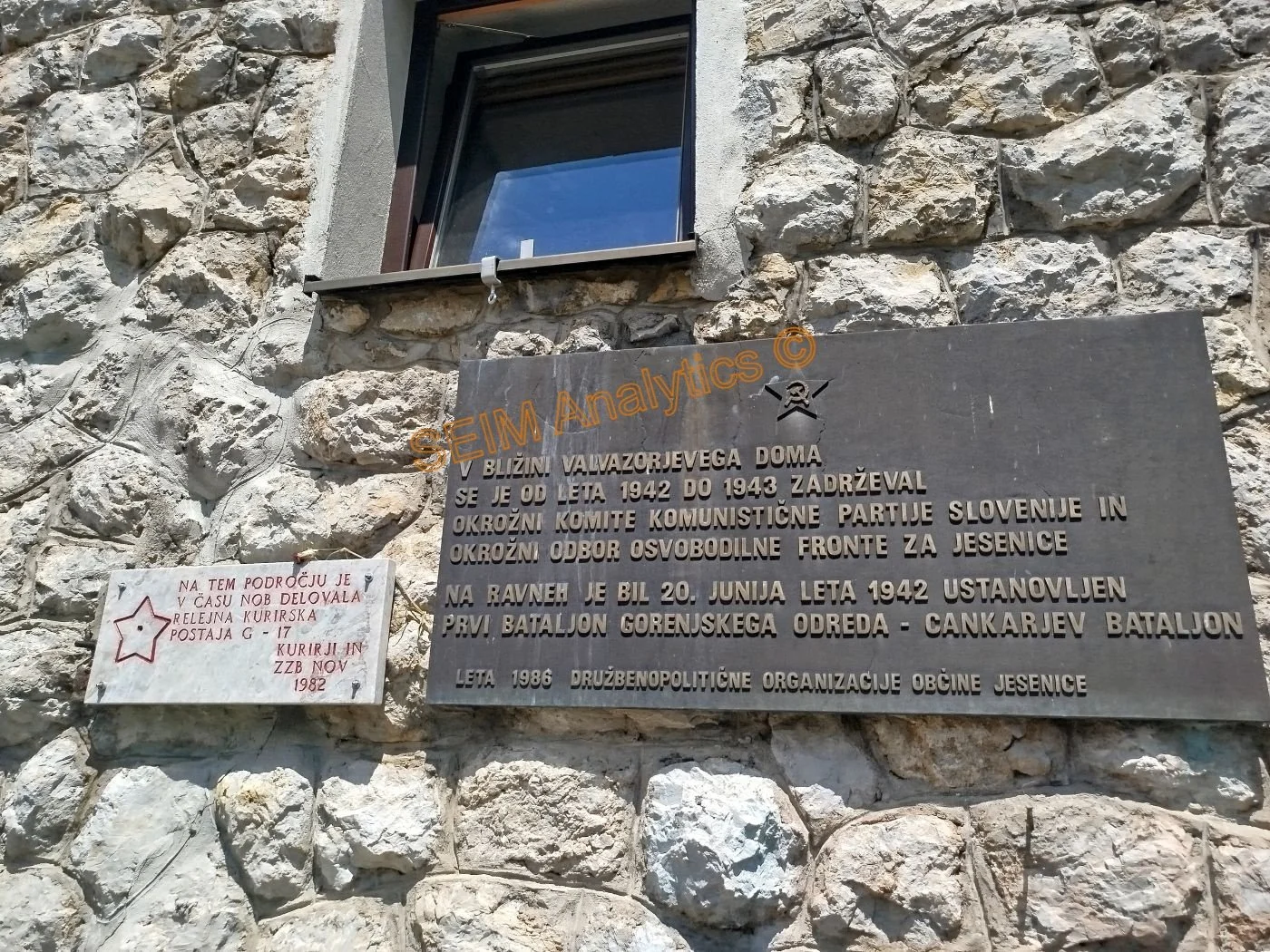
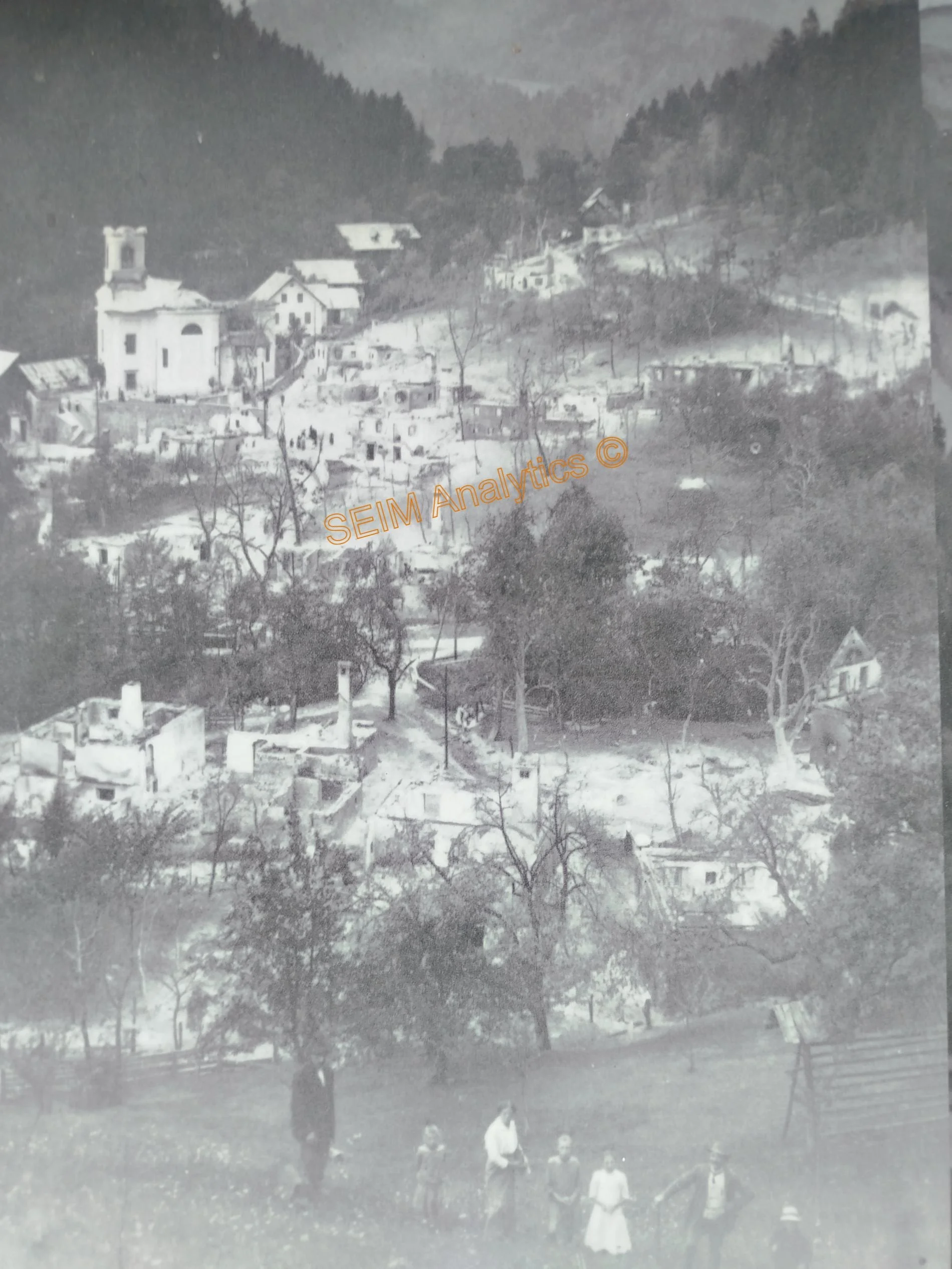
As a result of German repression, a home-grown Partisan movement formed in the region, the Cankar Brigade of Tito’s Partisan movement (that was involved in sabotage and the larger Dražgoše Battle late December 1941 and early January 1942). At Valvasorjev Dom one sees a plate to its memory. Across the street by the bus stop at Jesenice Railway Station, is an intact Partisan monument. At Plavž is a memorial to 42 fallen Partisants. At Moste is a monument honoring 30 prisoners executred by German forces after an rail bridge sabotage. Jesenice underwent a severe bombing by Allied forces on 1 March 1945 (see photo of Koroška Bela). At Sedlo Suha/Maria Elend Sattel on the trail of Stage 4 of the Via Alpina Trail one finds a monument to an American bomber crew that crashed there after a raid in Austria, but was saved by the Slovenian partisans in the area. At the end of the war, at the Jesenice transit point, as part of retribution towards fleeing collaborationist forces and war criminals (Ustasha, Domobranci) some were captured and executed, still a taboo topic.
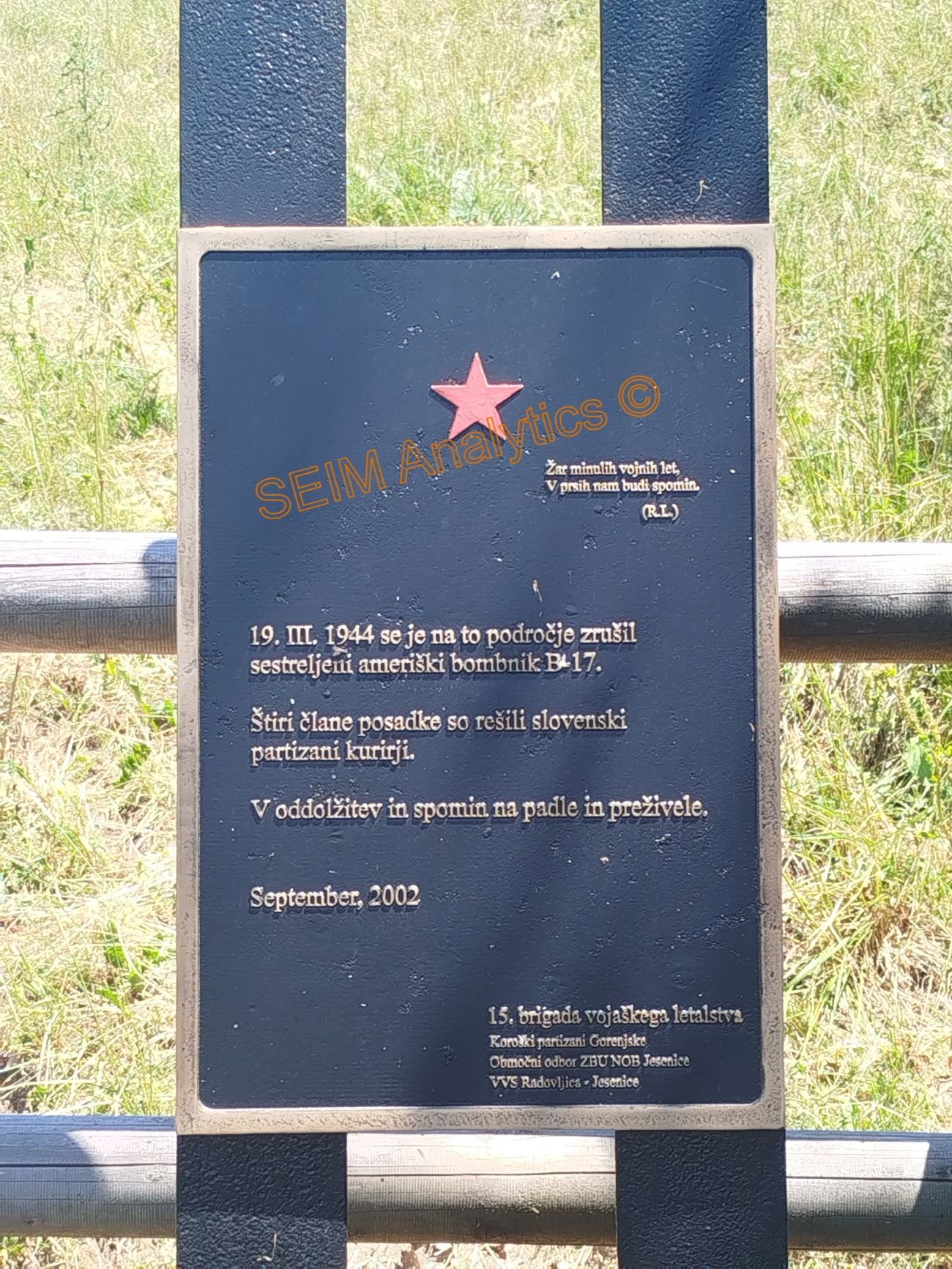
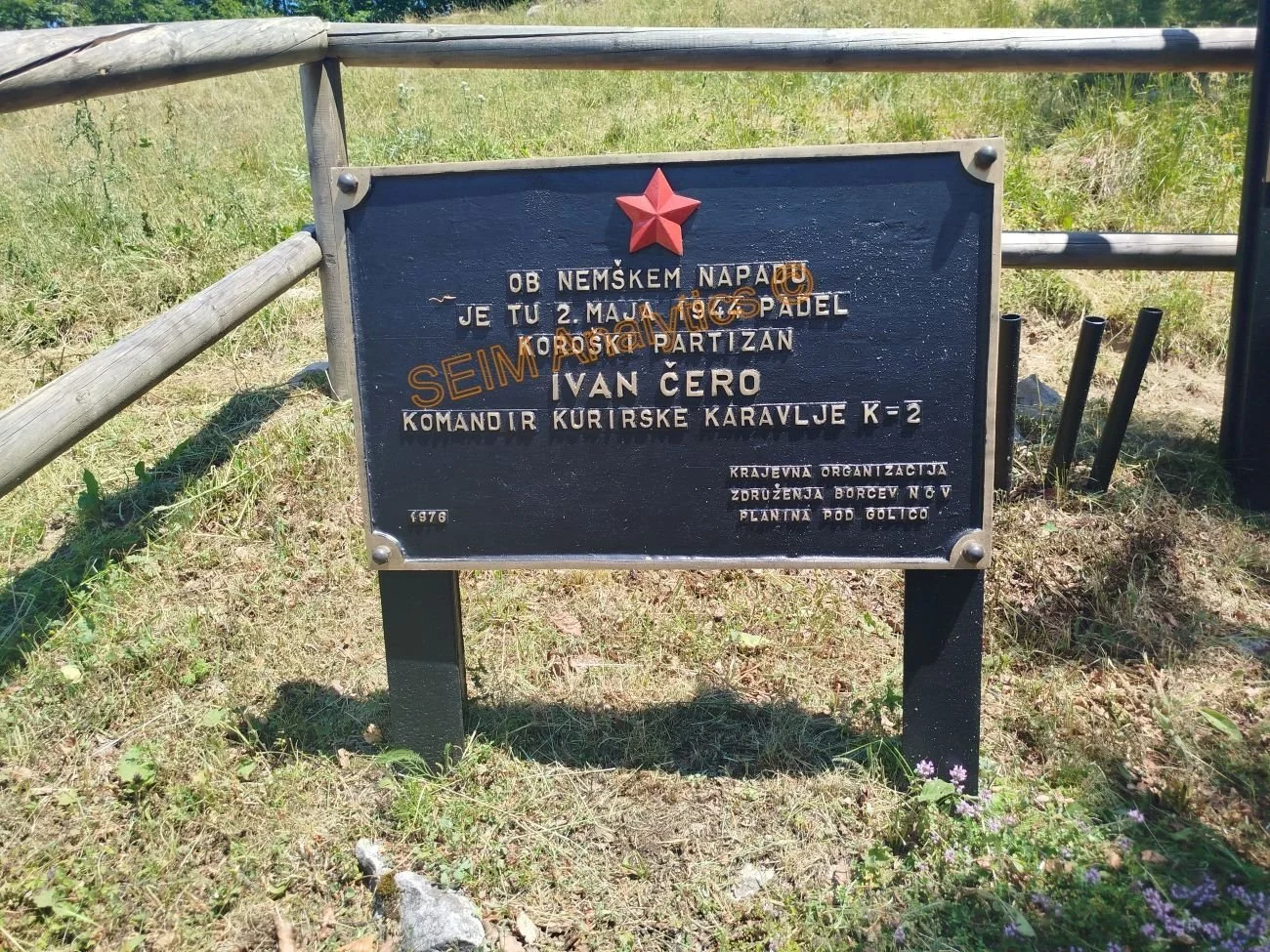
With the end of World War II followed a period when Jesenice grew rapidly during Socialist Federal Republic of Yugoslavia (SFRJ). It developed into a working-class hub with a distinctive industrial atmosphere. Its major steel company Jesenske Železarne (Jesenice Ironworks) played a central role in Yugoslavia's industrial plans after WWII. It expanded and Jesenice ironworks became one of the main steel manufacturers in the SFRJ. Also, other new industrial plants were built. In Jesenice today one sees the many apartment blocks (social housing) from socialist times that were built to accommodate the new immigrant workers, and the cultural and sports houses from that period. At its economic peak in the 1970s, the ironworks employed more than 8,000 people.
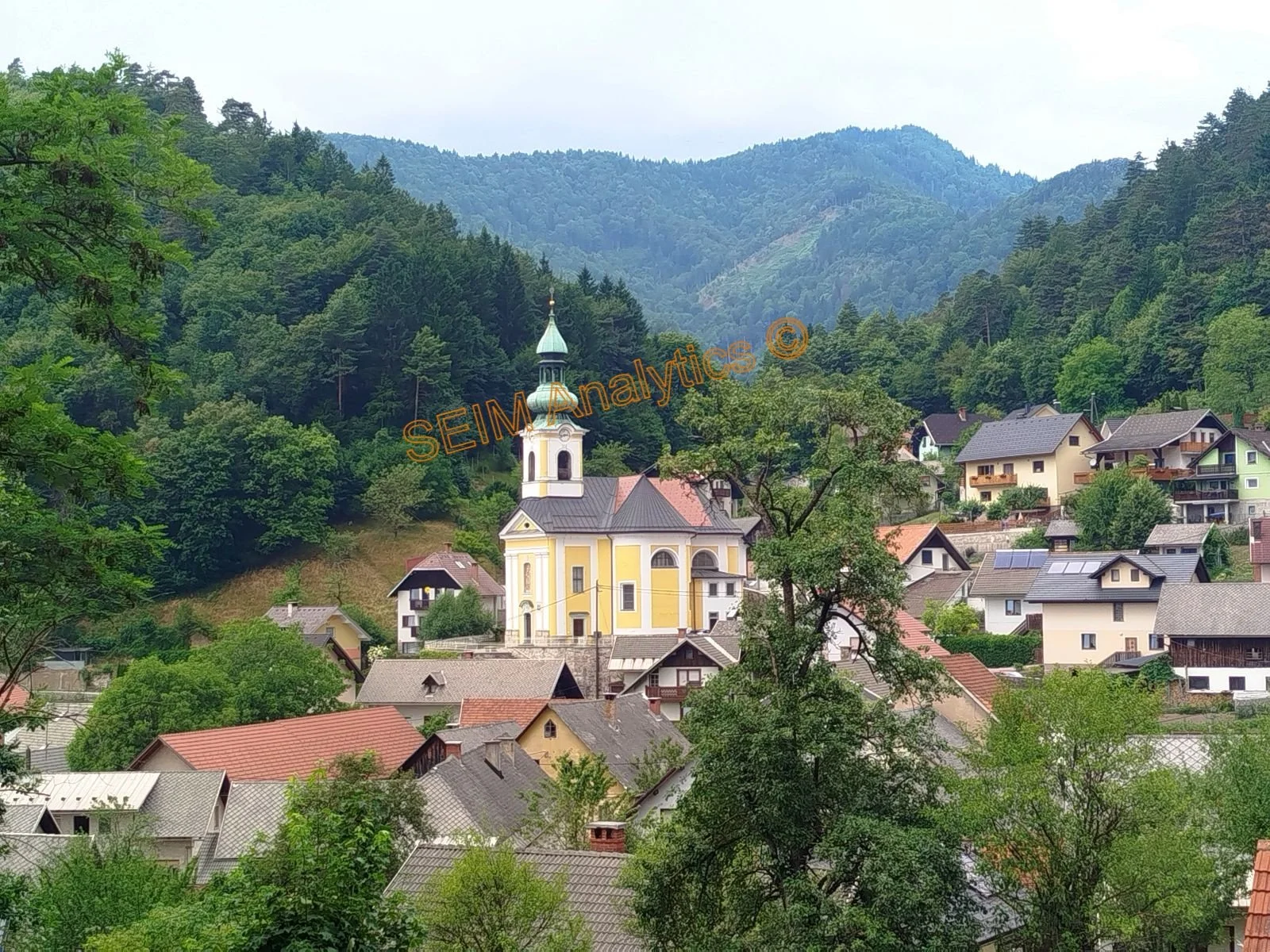
With the declaration of independence of Slovenia, no hostilities with JNA were recorded in Jesenice. After the collapse of the SFRJ, the Jesenice ironworks could not compete with the better developed Western metallurgy. The war and disintegration also led to loss of access to raw material resources. Massive layoffs and closures followed, like in other neighboring former communist countries in Eastern Europe. Almost all of the 1950s steel-mill buildings were demolished, but the industrial core of Jesenice survived after undergoing massive modernization, and layoffs. In 1992, (now Slovenian) state-owned Jesenske Železarne restructured under the name Acroni, (a name it had when founded in 1933) later integrated into Slovenian Steel Group, today being specialized in high-quality, niche steel products, both from Jesenice and at Ravne na Koroškem.
Read more about this production and competitive technology here: www.sij.si
With Slovenia joining the European Union in 2004, Jesenice began a massive urban reconstruction of the former industrial parts of the town. Two shopping centers were also constructed. Today Jesenice offers a good starting point for outdoor sports like hiking, skiing, mountain biking, but also cultural tourism, with popular visits to Lake Bled and a varied assortment of museums. Among the most important museums are: The Upper Sava/Gornjesavski Regional Museum with mining, worker culture, and ironwork history, and the permanent WWII liberation struggle exhibitions, Mojstrana Alpine Museum, Alpine Dairy Museum, Kranjška Gora Museum, and Planica Ski Jumping Museum.
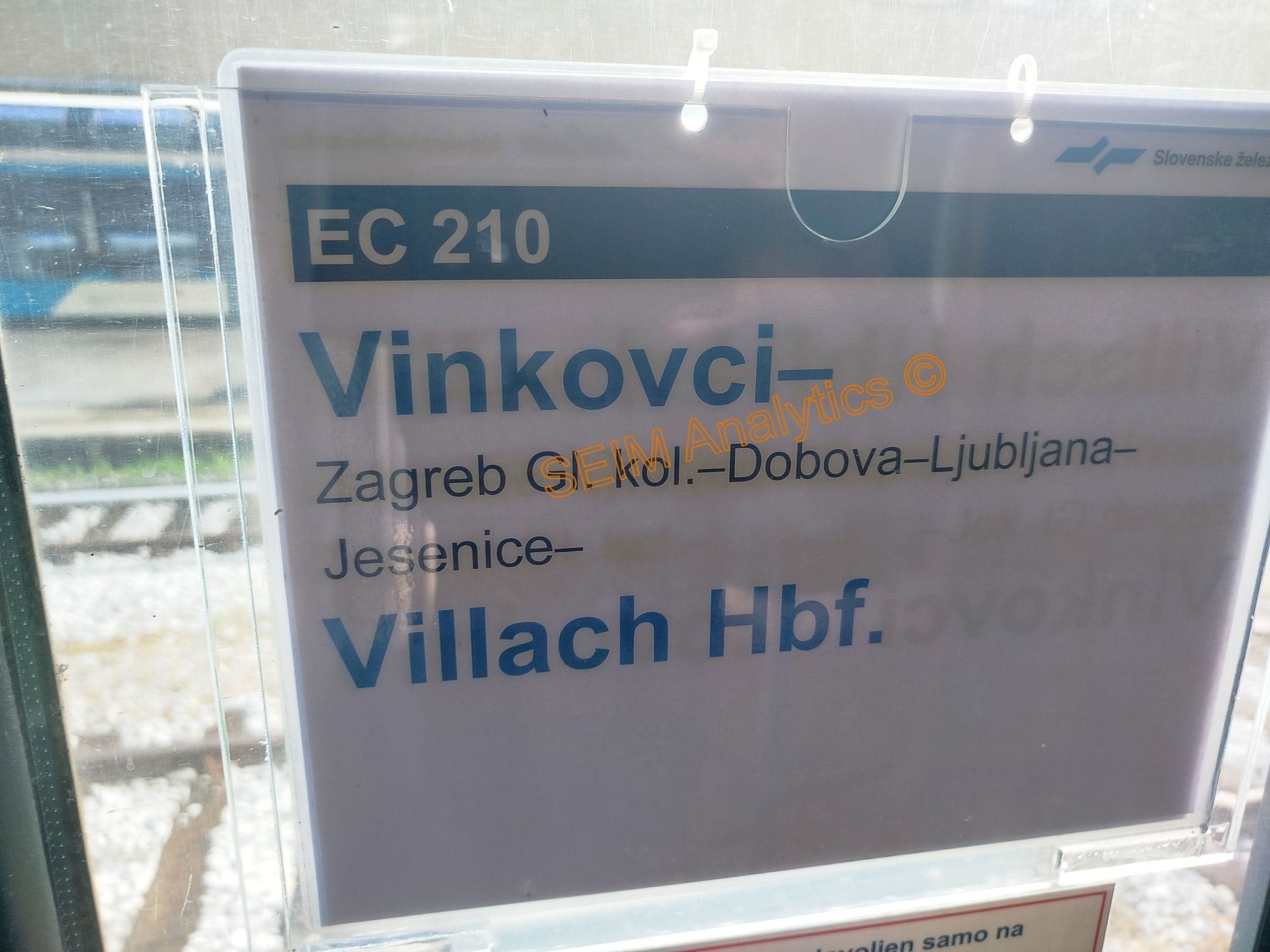
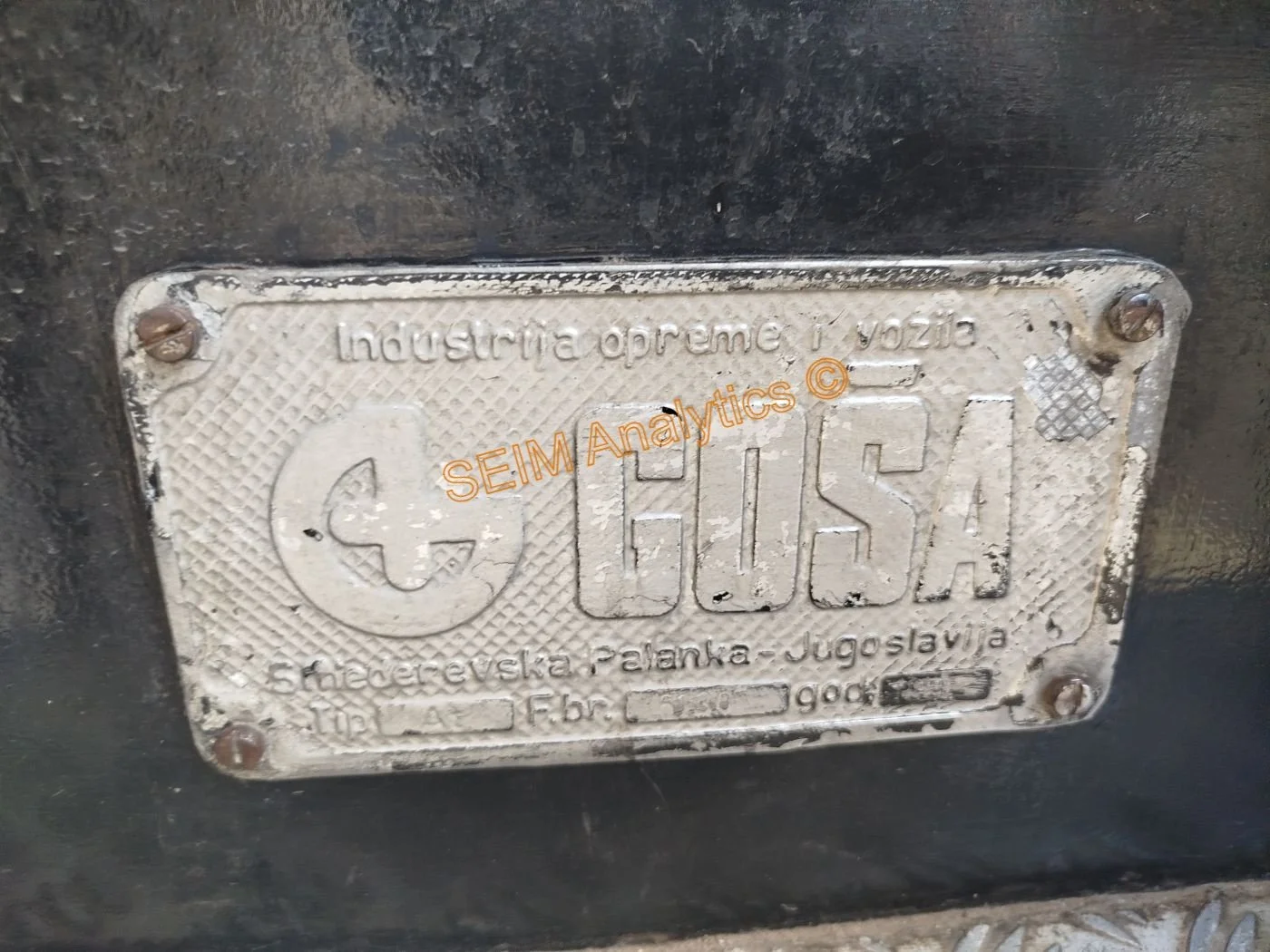
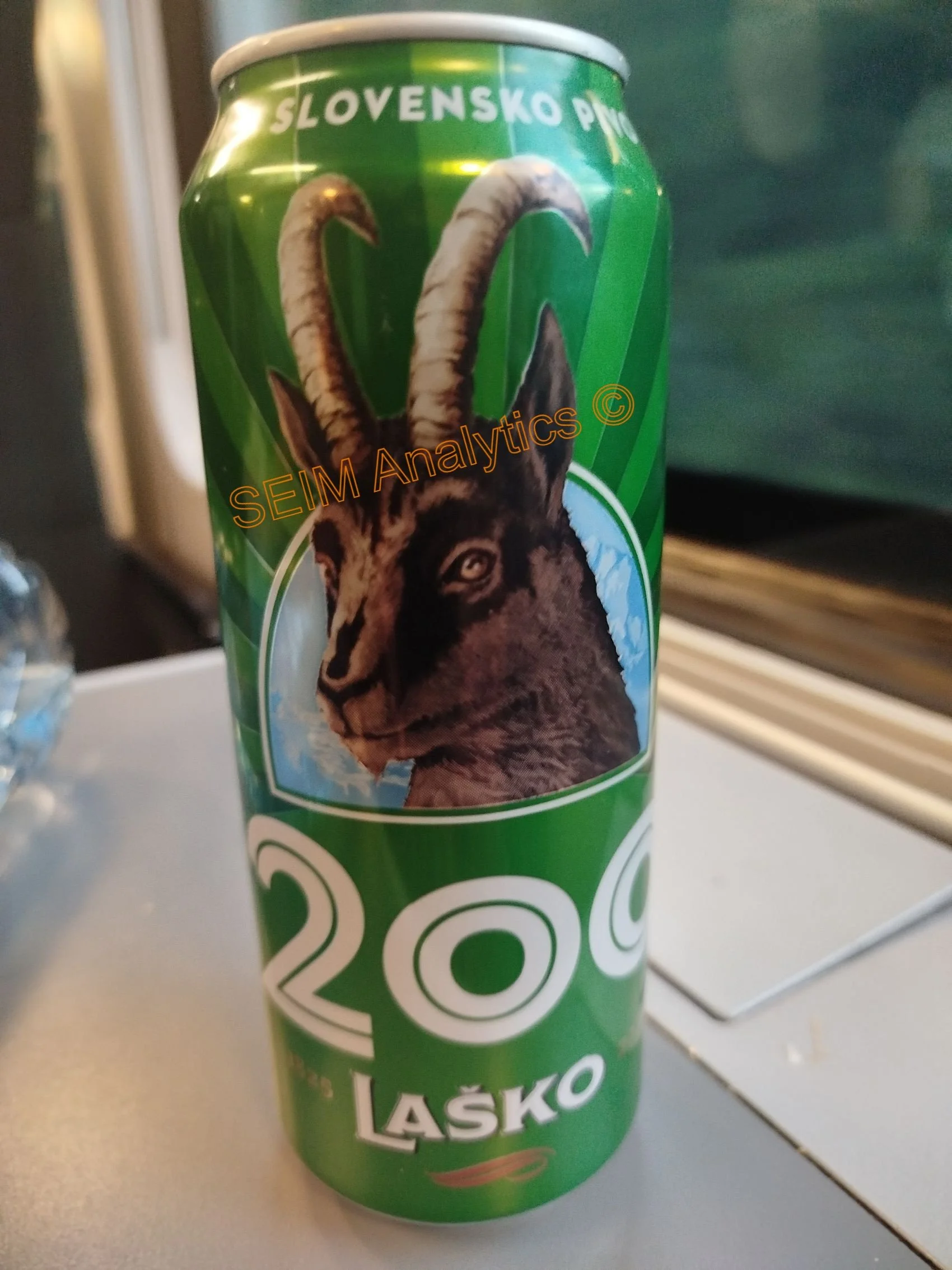
Photos above: Although leaving Yugoslavia by violent secession in 1991-92, the Croatian State Railways are still using the (mostly) reliable wagons from Yugoslavia from Smederevska Palanka, Serbia.
Having a meal upon train arrival/departure? Why not try the (a bit pricy) but interesting restaurant EJGA in walking distance just outside the train station, Marshall Tito Street 27. This restaurant is run by the first Olympic medal winner of Slovenia as an independent country, Alenka Dovžan, earned in the Winter Olympics in Norwegian Lillehammer in 1994.
Copyright SEIM Analytics ©
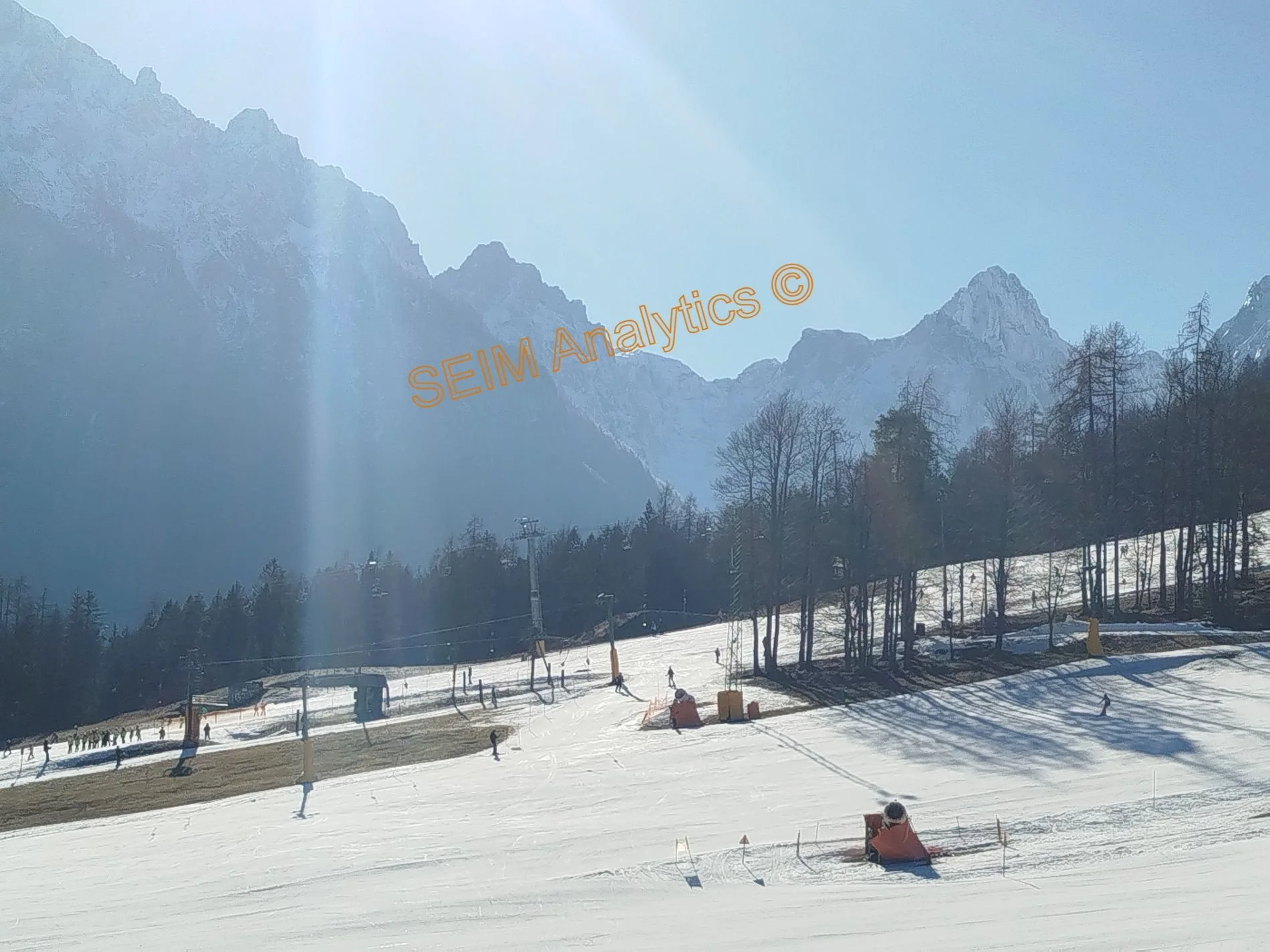
Kranjska Gora and Planica to the west of Jesenice offers excellent and affordable skiing opportunities