
OSCE - on the 50-years Anniversary of the Helsinki Final Act
1 August 2025
Today, 1 August 2025, is the 50th anniversary of the signing of the Helsinki Declaration on 1 August 1975 at the Conference of Security and Cooperation in Europe (CSCE). This multifaceted act aimed at reducing tensions between the Soviet and Western blocs by establishing common principles for relations between participating states.
On 4 June 2025, SEIM Analytics followed the public Vienna event “50 years of the Helsinki Process: Old Treaties, New Wars.“ As an independent advisory concerned with dialogue facilitation, conflict analysis, and peace research, in this blog report SEIM Analytics offers some remarks on this anniversary of OSCE, the legacies behind it, and how OSCE being deadlocked by multiple actors the latest years can find a way forward in light of the war over Ukraine. This article pinpoints to how Europe reached this war, but also looks for constructive solutions for the period beyond the anniversary of the Helsinki treaty.
The event in Vienna was hosted by International Institute for Peace (IIP), Friedrich Erbert Stiftung (FES), and Renner Institute. Key speakers were Petra Bayr of the Austrian Social-Democrats (SPÖ), James C. O´Brian, a former U.S. diplomat, Martin Schulz of FES and former Chair of the SPÖ-Germany and former President of the European Parliament, and Ireneusz Bil from Amicus Europae Foundation in Warsaw.
See the whole event on Youtube here (external link)
For SEIM, as a political analyst, PhD academic, and democratization and election consultant with 18 years of experience with serving for OSCE/ODIHR, participating at this event was an opportunity to gain insights from experts and politicians on OSCE and the possibilities to improve dialogue in Europe in these dark years of military conflict in and around Ukraine. Conference participants agreed that there is now is a situation with little or no sincere dialogue with Russia. Among key questions asked was what can be learnt from the Helsinki Final Act, if Europe’s security model has failed, and how OSCE can enhance its role as an actor for European security after having failed to deliver on its core mandate with the war in Ukraine. Can violators of the Helsinki Accords be held to account?
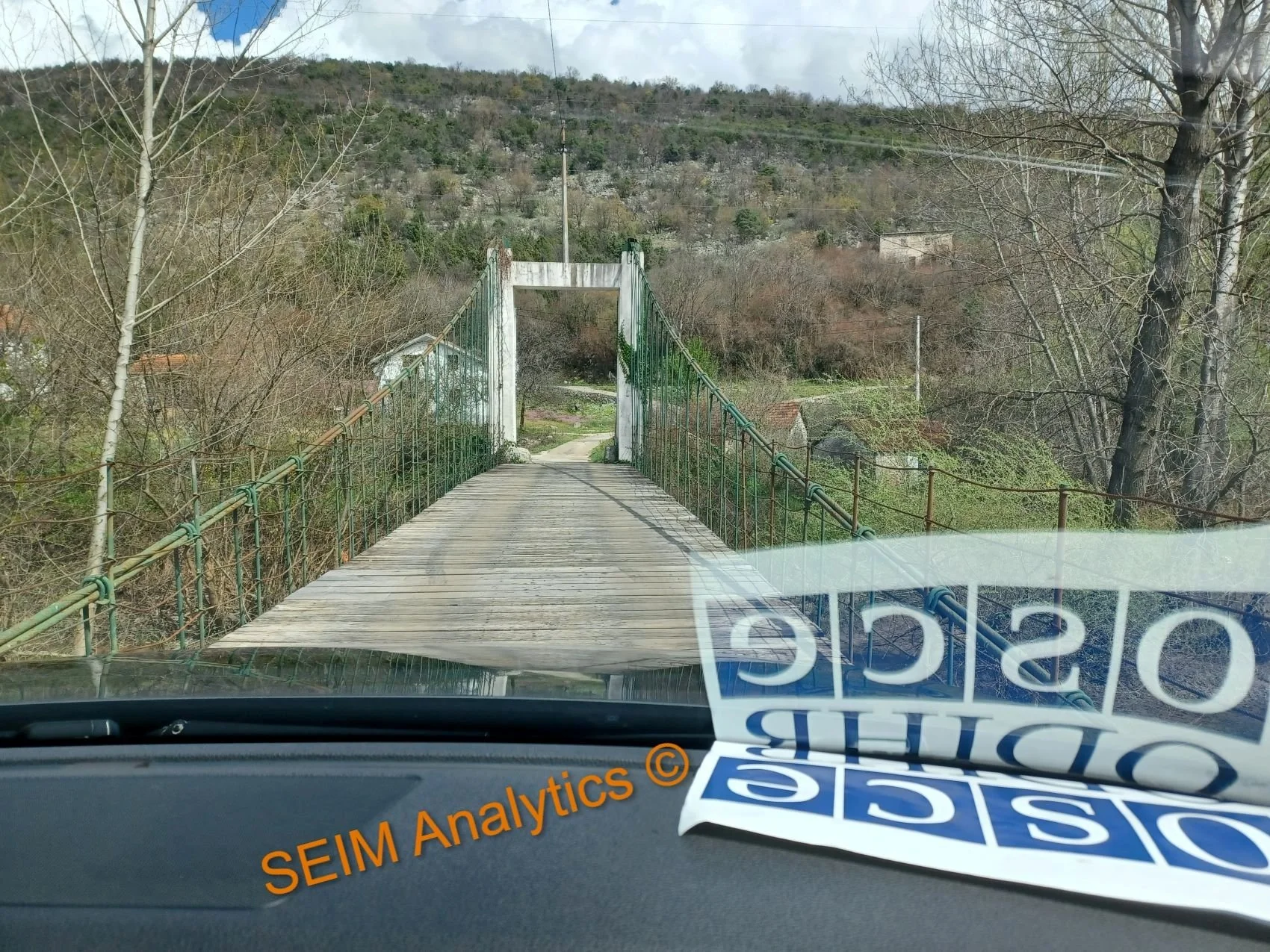
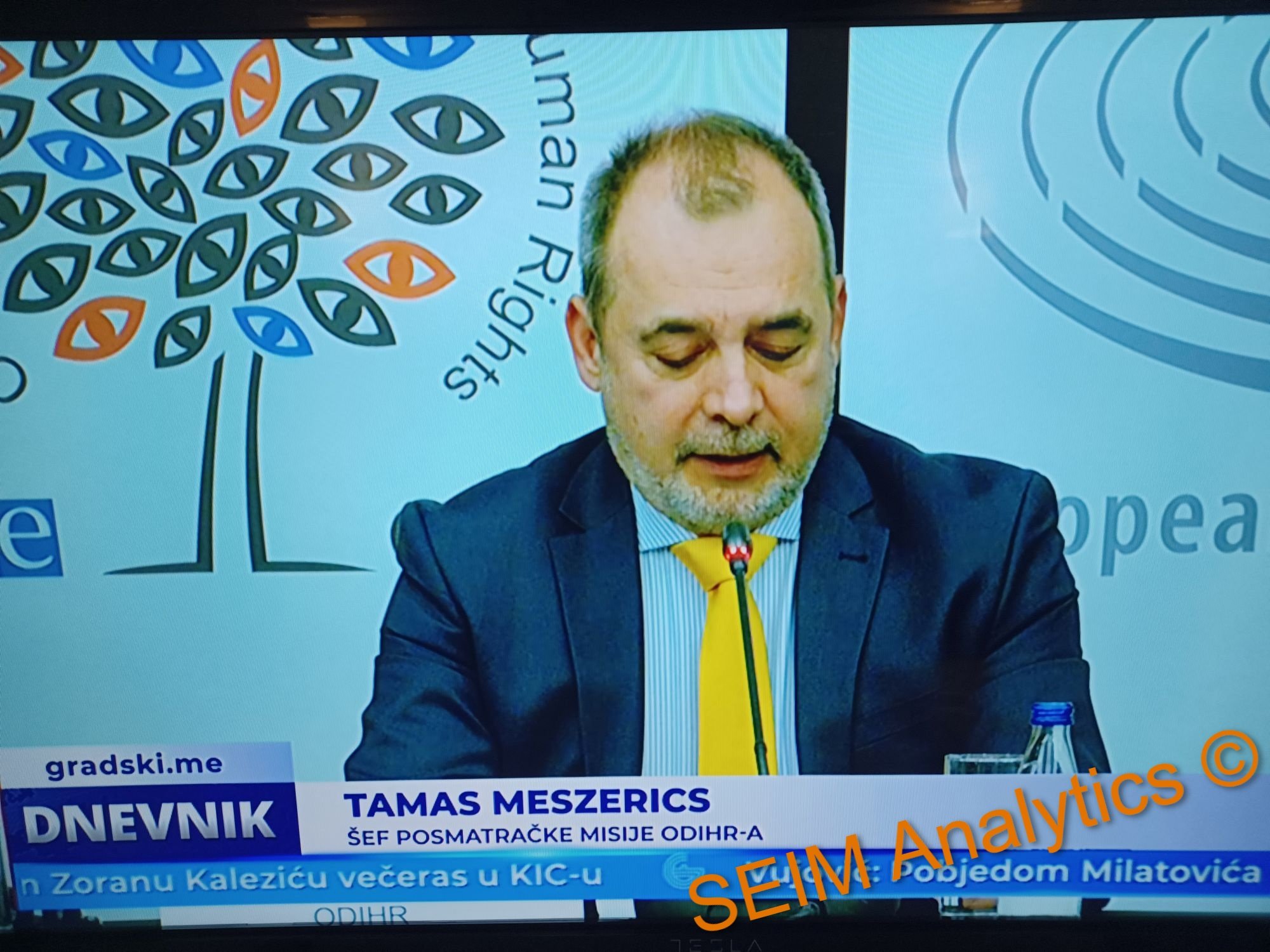
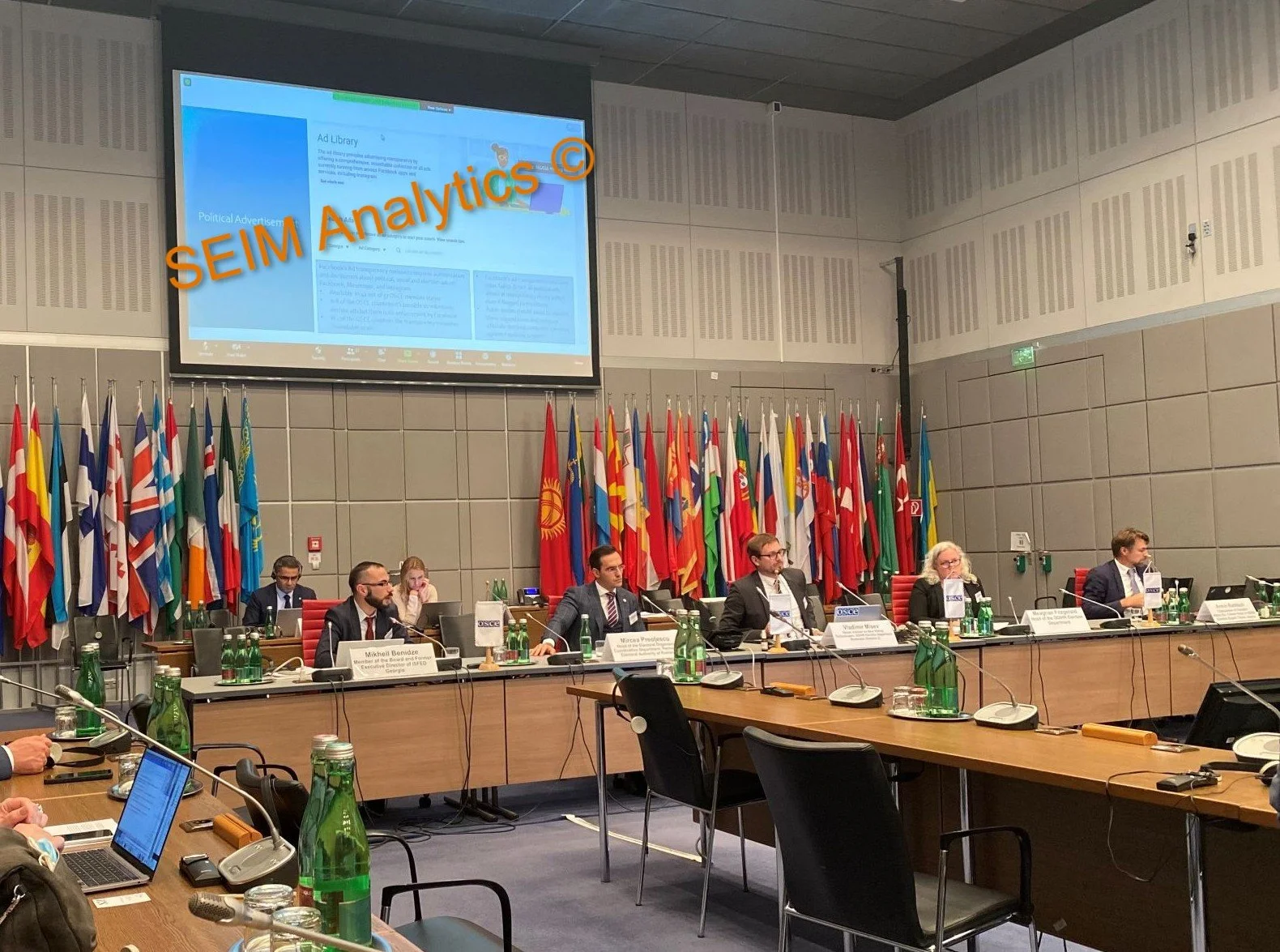
The historical setting of the 1975 CSCE Helsinki Final Act and the role of the Human Dimension – the third basket on human rights and fundamental freedoms:
The Soviets had attempted in 1954 at the Geneva Conference on European issues to seek a formal recognition of the new political boundaries created by the Yalta conference and WWII, but US and Western states refused. Little progress was made in the rest of the 1950s and the 1960s too. After intensive negotiations from the summer of 1973 to 1 August 1975, the Helsinki Act was achieved. Much like the congress system after the Congress of Europe in 1814-15 secured Russia’s centrality to the 19th century European order, from the Soviet viewpoint and motivation the CSCE and the Helsinki Act was an attempt to secure legality and inviolability of the new borders in Soviet-ruled Eastern Europe.
Yet, the final act included more than political-military security issues in the First Dimension of the Helsinki Act. The Second Dimension included cooperation on economic issues and in science, but most importantly, the in 1975 probably underestimated Third Dimension, the Human Dimension, gave legitimacy for citizens in Eastern Europe to demand basic human rights and fundamental civil rights. This was a formal encouragement to political dissent throughout the Soviet bloc, and started the Helsinki Rights Movement. When the Soviet Union started disintegrating, then dissolving, it was the Third Dimension that would be of great importance for this development and it was in the Third Dimension new institutions were built up in CSCE/OSCE from 1992, with ODIHR and HCNM, and later RFoM (1997). It is justified to claim that the human dimension of the Helsinki Act and the series of CSCE-conferences in Vienna 1996-89 contributed to the widespread political and social changes in Europe and aided the end of the Cold War.
SEIM Analytics key takeaways and reinterpretations:
The war about Ukraine shows the deep rifts in Europe today. The attacks from Russia in 2014 and 2022 were clear breaches of the principle about inviolability of borders of the Helsinki Final Act. Yet, the principle of inviolability of borders was first broken by Western powers with the attack on and occupation of the Serbian province of Kosovo-Metohija in 1999 and the later recognition by many EU and other states of an independent Kosovo state in February 2008. Later followed the Russian intervention in Georgia in August 2008 after foolish policy adventures of Mikheil Saakashvili with regard to South Ossetia, including an attack on Tskhinvali.
It is also clear that it was a legitimately elected president (Viktor Yanukovych) that was forced to flee Kyiv in February 2014 in what resembled a coup, although new democratic legitimacy was secured in the presidential election of Petro Poroshenko on 25 May 2014. Both these elections were observed from the field by Seim, in Crimea/Simferopol in 2009-10, and in Donetsk/Horlivka/Yenakiieve/Torez during two months in the spring of 2014.
A way to return to the Final Act principles is also for Western powers to face their own double standards, vested power interests, and ideological illusions and delusions. The ideological focus of many OSCE states, like the “feminist foreign policy” of Sweden during its 2021 chairpersonship for instance, as witnessed by Seim during OSCE-work in Vienna that year, risks diverting OSCE away from its core mandate of conflict prevention. Indeed, (as an ideological example) due to enforcing its gender discourse into the negotiations leading up to the Ministerial Meeting in Stockholm 2-3 December 2021, valuable diplomatic time and energy was lost to prevent the conflict in Ukraine that started that winter. Little was achieved by the Swedish chairpersonship in terms of de-escalation or crisis management. One might claim that Sweden rather was misusing its OSCE chairpersonship role for its meaningless domestic political-ideological debates instead of focusing squarely on OSCE’s primary security responsibilities.
It is necessary to adopt a more sensitive and honest perspective on how the conflict between Russia and Ukraine evolved after Western powers broke promises about not expanding eastwards after the withdrawal of Soviet troops from Eastern and Central Europe in the early 1990s. SEIM Analytics follows a “geo-realistic” approach more than the current idealistic paradigm in IR-theory when claiming that it was unnecessary to attempt to include Ukraine, Georgia, and Moldova into NATO as this was seen as offensive in Moscow for the simple reasons of geography and history.
The war in Ukraine started as a “proxy war” between Moscow and Washington, and is therefore a revival of the Cold War rivalry that the OSCE was supposed to help prevent. It is also a manner to weaken Europe and European industrial production capacities as a whole, and the latest tariff agreement between Trump and Van der Layen where import of more expensive U.S. energy on the expense of cheaper Russian energy is an indication of this structural shift and global competition.
To build a new and more stable Europe, EU and the US must recognize that Russia is a power with legitimate security concerns like other states but without legitimizing breaches of international law. A final settlement is likely to imply territorial changes in Ukraine to solve the conflict long-term, a Kissinger type of realism. For Ukraine’s own sake, the earlier this is recognized, the better territorial demarcation can be achieved. To achieve a strong Europe, one must include Russia in economic cooperation to counter dominance from the U.S. and China. Economic cooperation is more important than creating a disputed value community based upon often nebulous and shifting ideological trends (the latest trend wave being related to gender ideologies, LGBTQ, and various temporary woke ideas and grievance discourses). Yet, the values ingrained in the Helsinki Act should still remain the common denominator in such an enlarged and real “Europe”, that should include Western Balkans, Ukraine, and Russia to safeguard Europe’s security and prosperity. With the avoidable war in Ukraine, Europe as a whole is the loser, and China, India, and the U.S. the winners.
The war in Ukraine raises the fundamental questions if one can or should talk to autocrats. SEIM Analytics consider that investing in dialogue is cheaper and more efficient than for all NATO countries to invest in military spending towards Trump’s 5% GDP-target. Yet, it seems that this can become a measurement for US to agree to aid a NATO-state invoking Article 5. To become part of the post-war solution in Ukraine, EU must invest in diplomacy and dialogue, not avoid it, and become irrelevant. Symptomatically, and not by chance, instead it is Türkiye that holds the negotiations over Ukraine, and a Turkish general secretary that was elected at the OSCE Ministerial Council meeting in December 2024.
Much as in 1975, OSCE is more than ever needed as a framework for dialogue and cooperation despite differences. Thus, OSCE remains an arena that must be revived and supported, as it is one of the few arenas to talk to Russia, including in cooperative settings like in OSCE/ODIHR’s regional LTO-teams. Yet, as the last years have shown, dialogue is difficult when trust is broken.
Among future task of OSCE is to be rebuilding OSCE’s presence in Ukraine, continue to manage tensions in the Western Balkans, but also adopt unified approaches there, as one cannot continue to put pressure on Republika Srpska through the illegitimate “high representative” Christian Schmidt (who was not confirmed by the UN security council), while simultaneously supporting independence of Kosovo. OSCE is also needed to be addressing frozen and warm conflicts in South Caucasus and Transnistria, and to work on preventing democratic backsliding both in old democracies and in new or aspiring ones in Eastern Europe and Central Asia.
Despite the Helsinki Final Act being an old treaty, compared to the 1975 Act, from 1990 new institutions (as mentioned), toolboxes, and mechanisms have been developed to foster progress and safeguard the principles agreed in the Helsinki Act. These and new tools must be developed to revitalize OSCE. The OSCE Conflict Prevention Center (CPC) plays an important role related to the conflict cycle through early warning, early action, conflict prevention, crisis management, and post-conflict rehabilitation, as elaborated at the Astana Summit 2010 and agreed on in the Ministerial Council Decision 3/11 in Vilnius the preceding year.
Furthermore, especially ODIHR election observation has developed into the gold standard internationally and must be supported. Yet, in line with increased online election campaigning, the important role of social media algorithms, and the future role of artificial intelligence (AI) in elections, also the election observation field needs further methodological updating and optimalization.
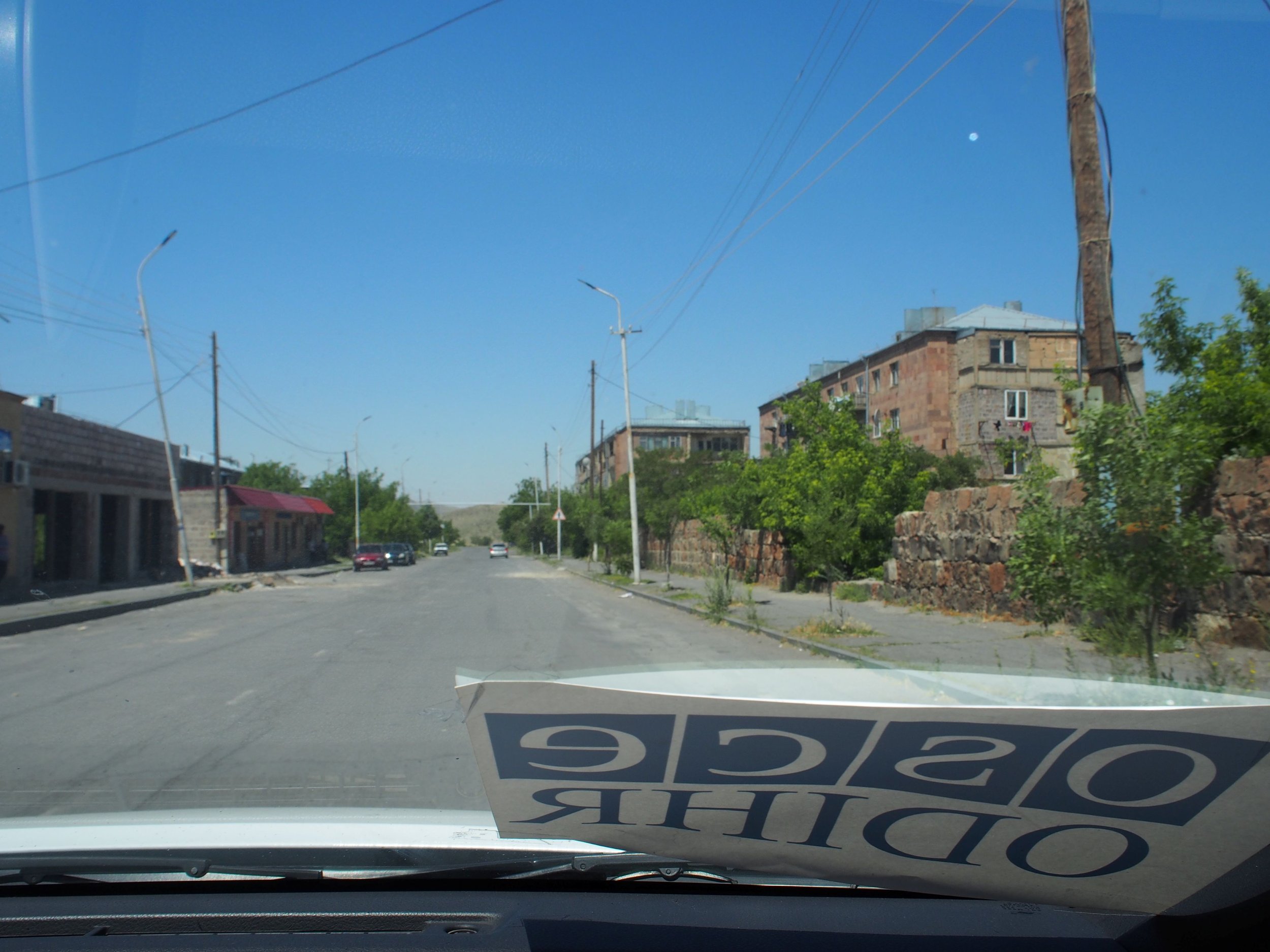
OSCE/ODIHR during election observation in Aragatsotn in Armenia in 2022.