Finding Solutions for Armenia
31 January 2025
Armenia’s dilemma
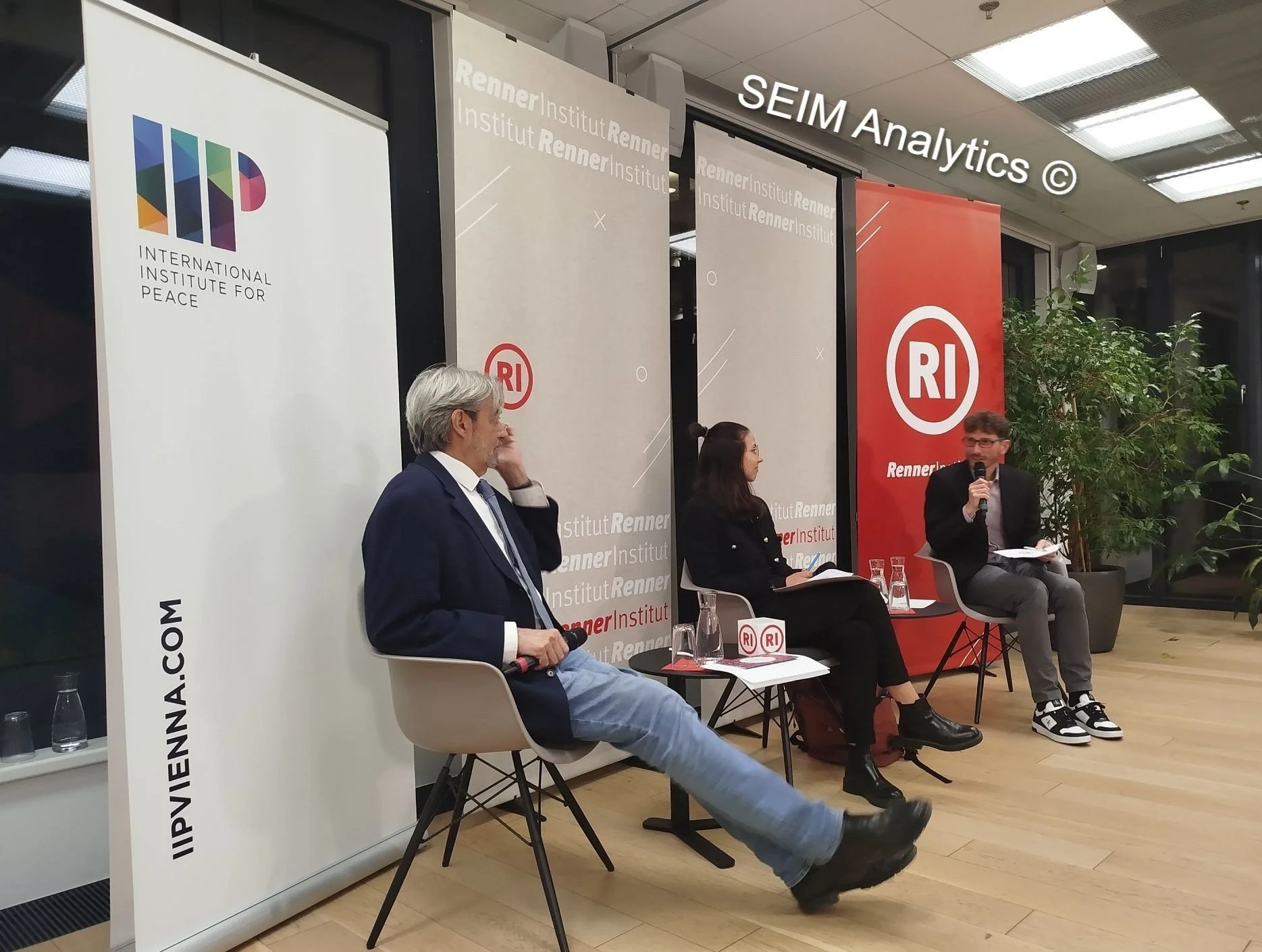
SEIM Analytics participated at the public panel Armenia between the past and the future (Armenien zwischen Vergangenheit und Zukunft) organized by Renner Institute and International Institute of Peace (IIP) on 29 January 2025 in Vienna. The speakers agreed that Armenia is a rather remote country in a difficult geopolitical position that has not been sufficiently in Europe’s attention. They discussed the two catastrophes of autumn 2020 and September 2023 when Azerbaijani forces first overrun and retook territories occupied around the Nagorno-Karabakh enclave since the 1990s, including Southern parts of the enclave (Shusha, Hadrut), later to overrun the whole enclave. More than 100-120.000 Armenian civilians fled or were displaced, and Armenian cultural heritage destroyed or damaged. Yet, the peace negotiations with Azerbaijan remains unsuccessful and the political landscape in Armenia fragmented and bitter.
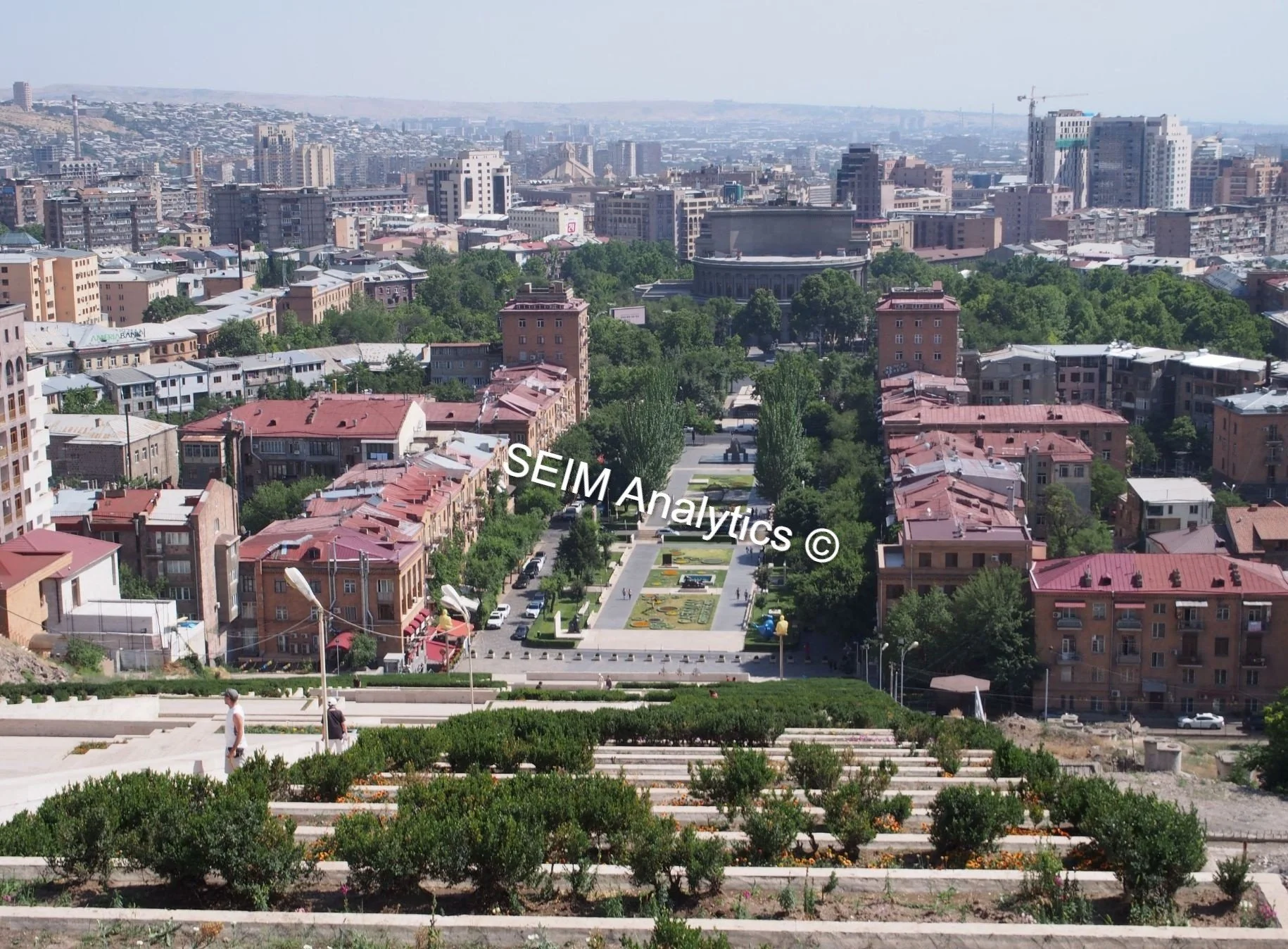
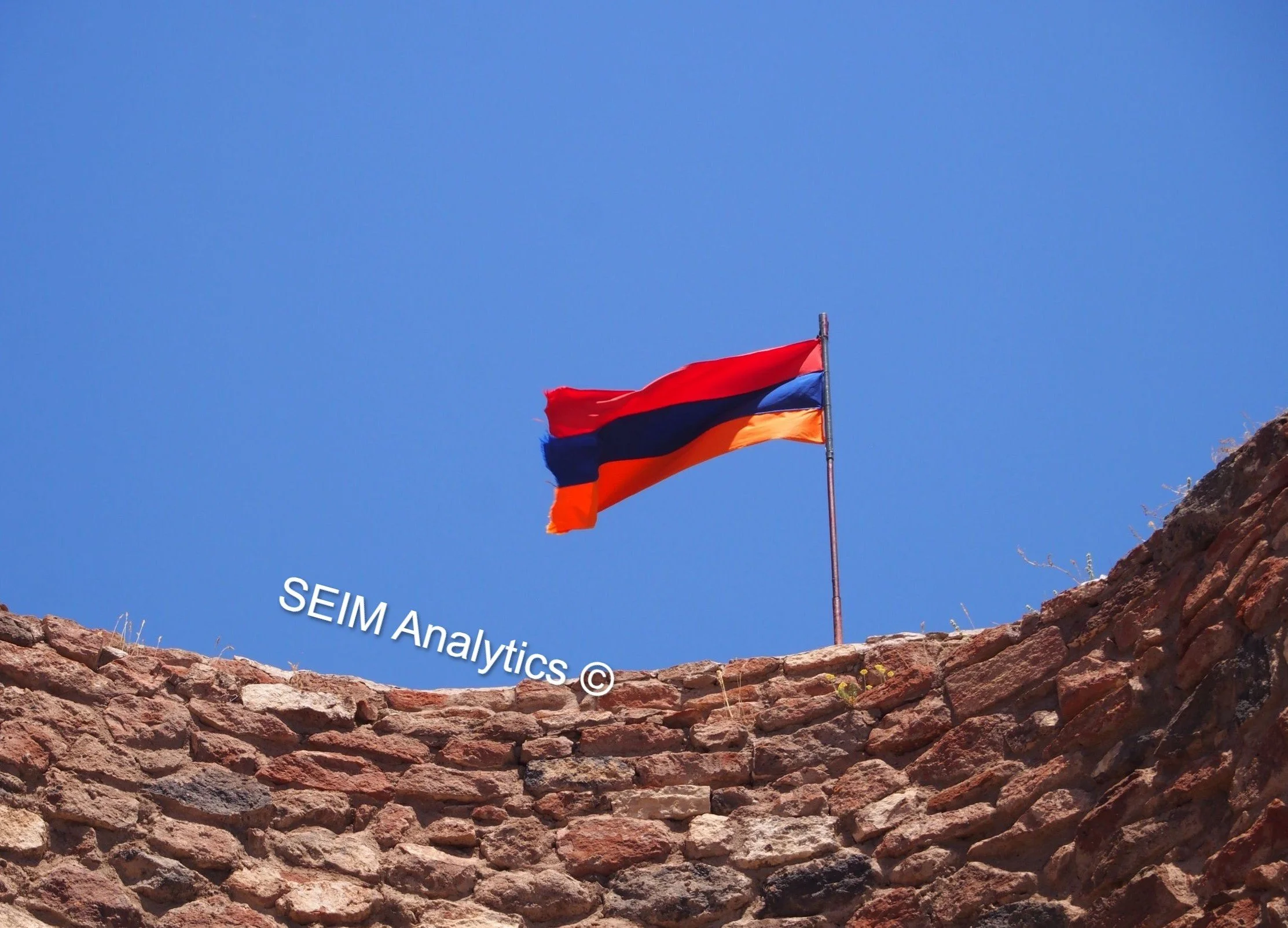
SEIM Analytics assesses that Armenia under Nikol Pashinyan, when Nagorno-Karabakh was lost, has seen insufficient benefits from its brave geopolitical turn that was initiated by Pashinyan from 2018 when Armenia turned away from Russia and embraced EU and the West. EU negotiations and integration have been slow, but with some improvements in trade (including CEPA signed in 2017 but fully in force since 2021). Nonetheless, internal reforms and more freedom of the civic sector are among areas of progress.
Meanwhile, and interrelated, the war about Ukraine has weakened Russia’s presence in and relevance to the Armenian-Azerbaijani conflict. Although Russia was a protective power of Armenia, which has participated in the Russia-led CSTO since 1994, these security guarantees did not include the Nagorno-Karabakh enclave. CSTO took an uncommitted approach to Armenia triggering Article 4 in the CSTO treaty in September 2022. Armenia froze its membership in 2024 and has in 2025 officially notified the CSTO it will not participate in its financing. SEIM Analytics considers it as a paradox that soon after two countries chose pro-EU leaders, Georgia in 2008 (after the rose revolution of Saakashvili in 2003) and later Armenia in 2020/23, both lost control over perceived national territory.
Missed solutions: With regard to Nagorno-Karabakh, SEIM Analytics was always in favor of a pragmatic swap or redefining of territory to be facilitated for both Nagorno-Karabakh and Nakhchivan or exterritorial status of roads for related trade and transport corridors (Lachin, Zangezur). That this was not achieved in the 1990s or 2000s was a major internal Armenian strategic mistake. Such territorial redefinitions and change of irrational borders inherited from Stalin could have and still can pose as methods to solve conflicts if carefully handled by safeguarding basic human rights and agreed by consensus. This is also among solutions for the Western Balkans. In this regard, it is not without reason that President Heydar Aliyev has a statue in the Tašmaidan Park in Belgrade, as Kosovo-Metohija and Nagorno-Karabakh have similarities.
Meanwhile, during decades as a frozen conflict, oil and gas revenues allowed Azerbaijan to build up its army. As an energy power, Azerbaijan managed to win Western powers’ subtle support or at least to secure their non-intervention when retaking lost territories in 2020 and 2023.
Yet, South Caucasus is part of larger geopolitical seismic lines, as Iran is also building a trade corridor over Armenian territory, but has large Azeri populations on its Northwestern territories, Israel is aligned with Azerbaijan, while the interests of and influences from Russia, US, EU, and China will endure in the region. Meanwhile, Türkiye sees its ambitions in Central Asia (trade and political influence) secured through its Azerbaijani alliance.
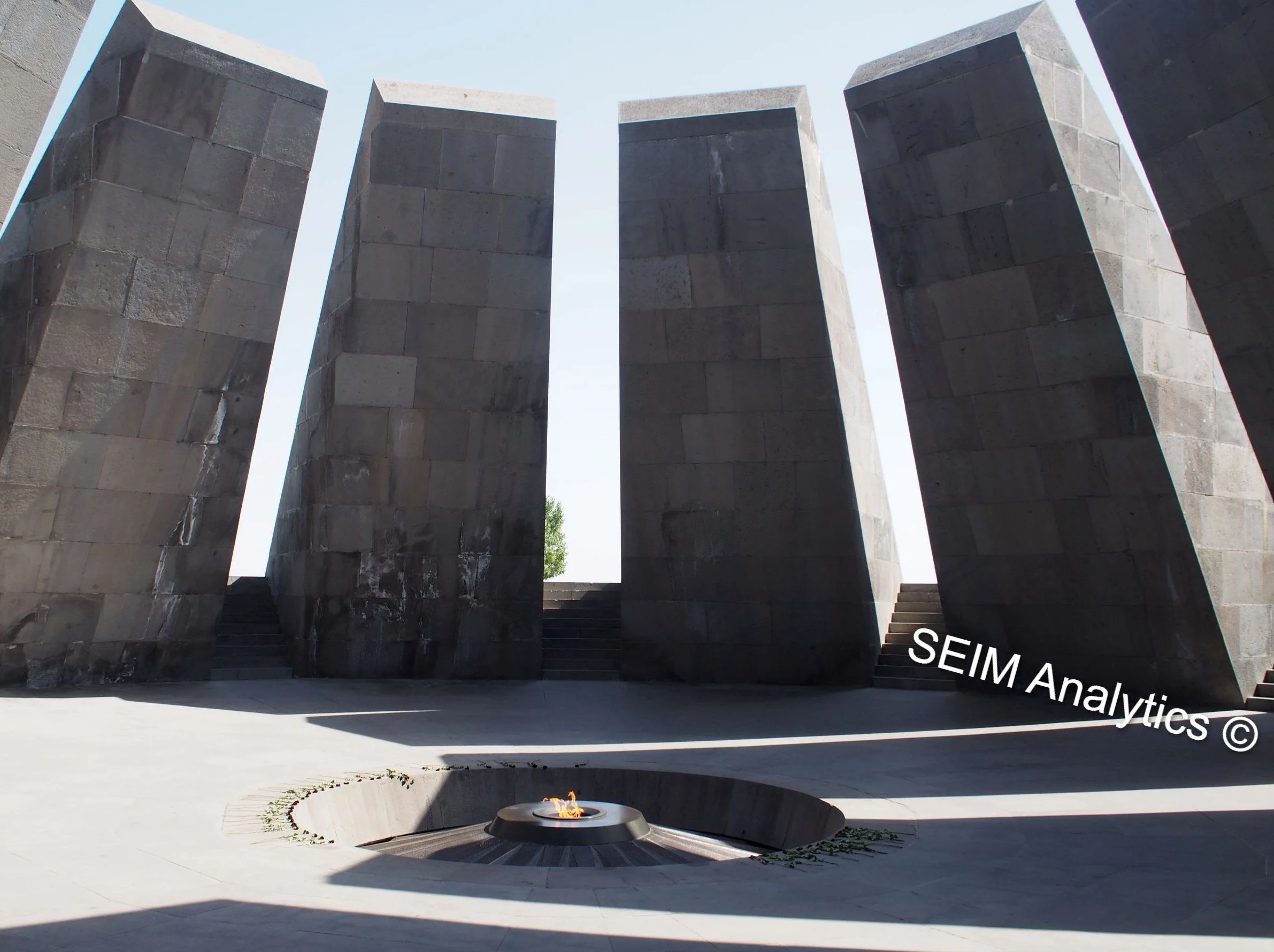
The eternal flame at the genocide memorial in Yerevan commemorating the genocide on Armenians in 1915-16. Armenians historically used to inhabit a much broader territory of the Southern Caucasus, Anatolia, and the Middle East. After the recent expulsion of Armenians from Nagorno-Karabakh, yet another territory has been demographically and politically lost.
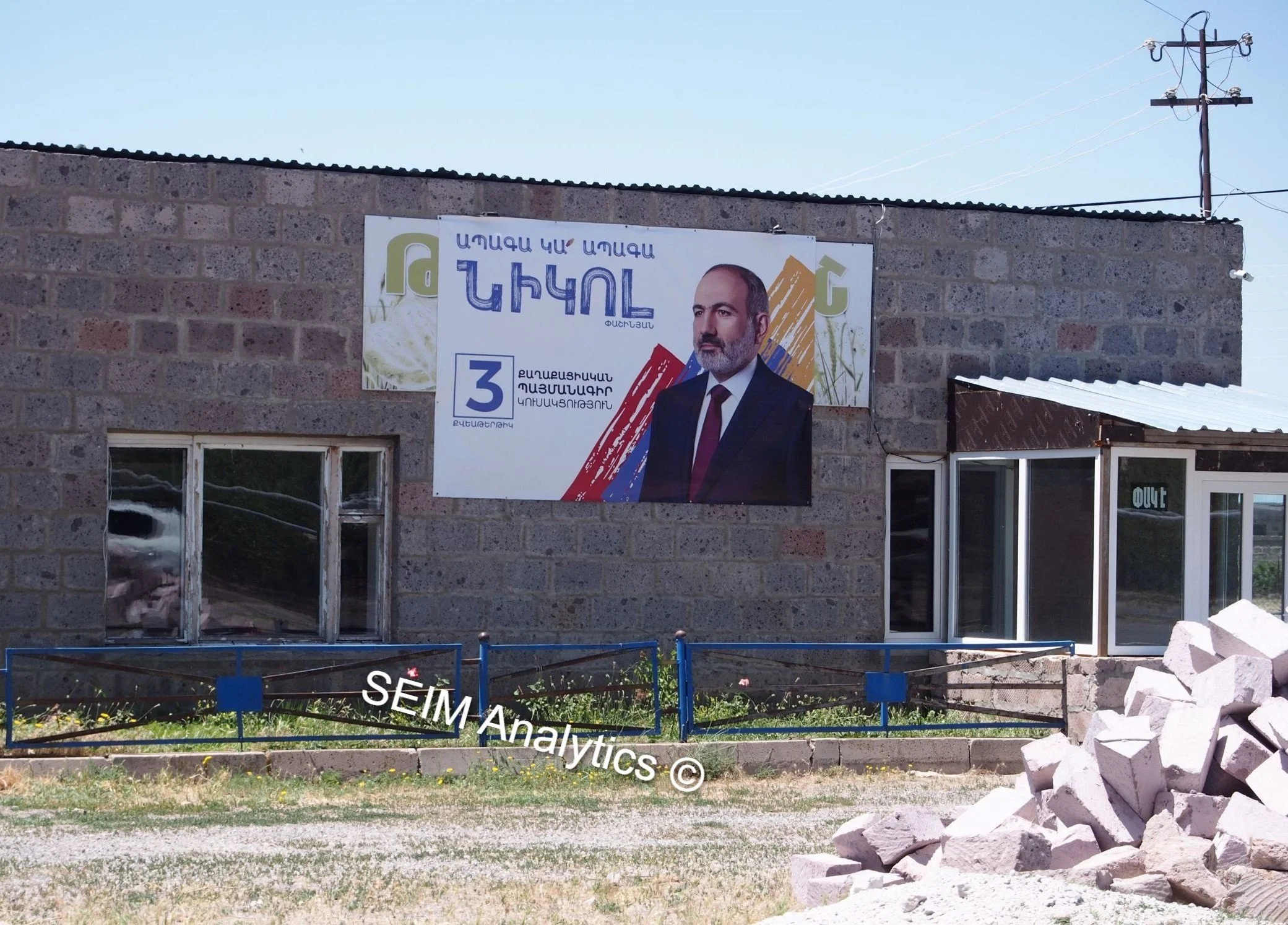
SEIM Analytics and the South Caucasus: With primary focus on the Western Balkans, Central Europe, Romania, Ukraine and Moldova, SEIM Analytics has a secondary but targeted analytical focus on South Caucasus, with emphasis on election analysis, conflict analysis, and mediation and dialogue facilitation to achieve peaceful conflict resolution. On two occasions, Seim had the opportunity for in-depth insights from the field while observing the presidential election in Armavir Province in 2008 and in Aragatsotn Province in 2022. Georgia was visited for election observation in Kutaisi region in 2018. Photo material is available from these cities, as well as from Yerevan, Sevan Lake, and Tbilisi: See SEIM Photo Sale Page!