
Political climate in Slovakia: Towards autocracy?
30 January 2025
A report from an IWM event:
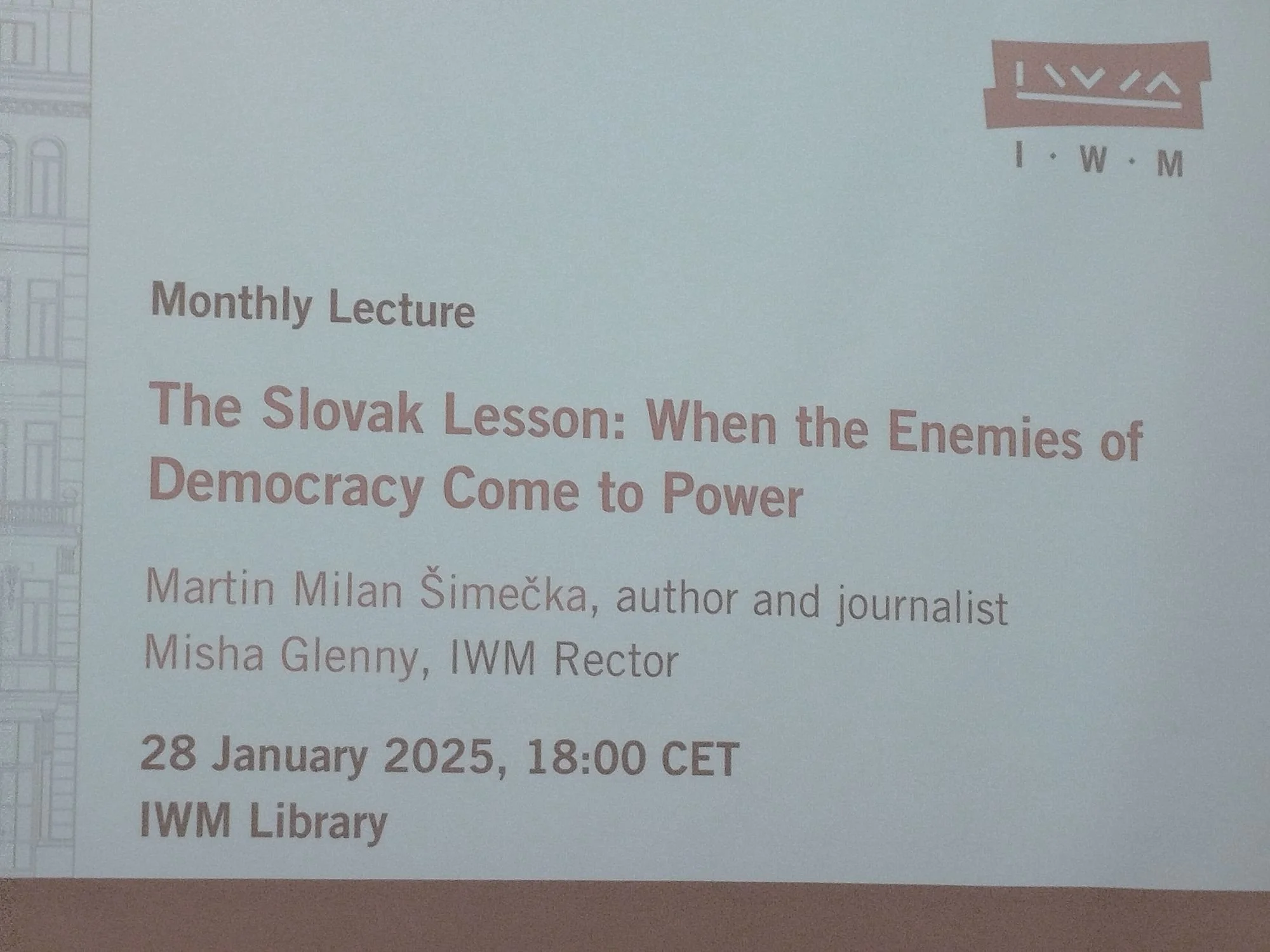
IWM (Institute for Human Sciences) in Vienna is a leading meeting place of intellectuals for intellectuals in Vienna with particular focus on Central Europa and Ukraine. On 28 January, a public event about the political situation in Slovakia was held at IWM Vienna. Invited was Martin Milan Simečka, a life-long dissident and political commentator, and former samizdat author during communism, who in conversation with director Misha Glenny delivered the talk about Robert Fico The Slovak Lesson: When the Enemies of Democracy Come to Power.
Simečka argued that democracy need strong and independent media and civil society, but that this is under attack in Slovakia today, where Fico is on a fast-track mission to transform Slovakia to an autocracy after the assassination attempt on him last year. Both the justice system and the cultural sector is being put under severe pressures.
Simečka does not foresee Fico to sit too long, yet acknowledges him as a talented populist who previously has won four elections (for prime minister). Yet, the failure of the democratic/liberal alternative before the 2023 power change remains a challenge for achieving any change of political course.
Simečka claimed Fico is revenging himself after the assassination attempt, that he invents self-made enemies for little Slovakia, and that 800 doctors clam he has post-traumatic stress syndrome.
SEIM Analytics would like to share the following interpretations on Slovak politics:
A new alliance is being built in Central and Southeast Europe of Eurosceptic parties, of which Fico is part. It includes Orban, Vučić, Dodik, as well as Romanian and Polish right-wing leaders.
During Fico, Slovakia’s foreign policy changed from very supportive of Ukraine to the opposite.
Paradoxically, Slovakia now seems to have better relations with its “arch enemy” Hungary than its long-term ally Czechia. President Orban’s traditional influence in the Slovak areas in Southern Slovakia might make many Hungarian voters vote Fico next time. In the 2023-parliamentary elections, the Hungarian Alliance (Allianca – Szövetseg) narrowly did not reach the threshold, among other because two smaller Hungarian parties (both 1 %) divided the electorate.
The far-right SNS-leader Andrej Danko is also a key to Fico’s survival and his return to power in 2023. SNS now has seven loyal MPs after three left the SNS parliamentary club. SNS and Hlas-SD are part of Fico’s 3-party coalition which holds a thin 79/71 majority in the 150-seat parliament.
After numerous visits to Slovakia the latest years, SEIM Analytics assesses that also in Slovakia an underestimated explanation of the move away from Eurocentric and liberal parties is the cultural battle and voters feeling offended by cultural policies. The regional disparities in Slovakia remain pronounced; the Bratislava region with its innovation clusters, skilled workers, and multinational HQs, being far ahead its lagging regions, in particular Eastern Slovakia. This two-speed Slovakia with its socio-economic divergencies impacts EU perceptions and political alignments. Eurosceptic parties are strongest in rural and post-industrial regions. Yet, even in the quite well-developed Western Slovakia (Trenčin, Žilina, Nitra), Fico and Eurosceptic parties are doing very well. (Meanwhile far-right anti-NATO Republika fell out of parliament (with 4.75% under the threshold) in the parliamentary elections in 2023, but secured 12,5% and two MPs from Slovakia in the EU parliament in 2024.)
Only Bratislava Region remains a liberal-progressive political stronghold and an economic powerhouse with growth double the size of the national average and above the EU average (188%).
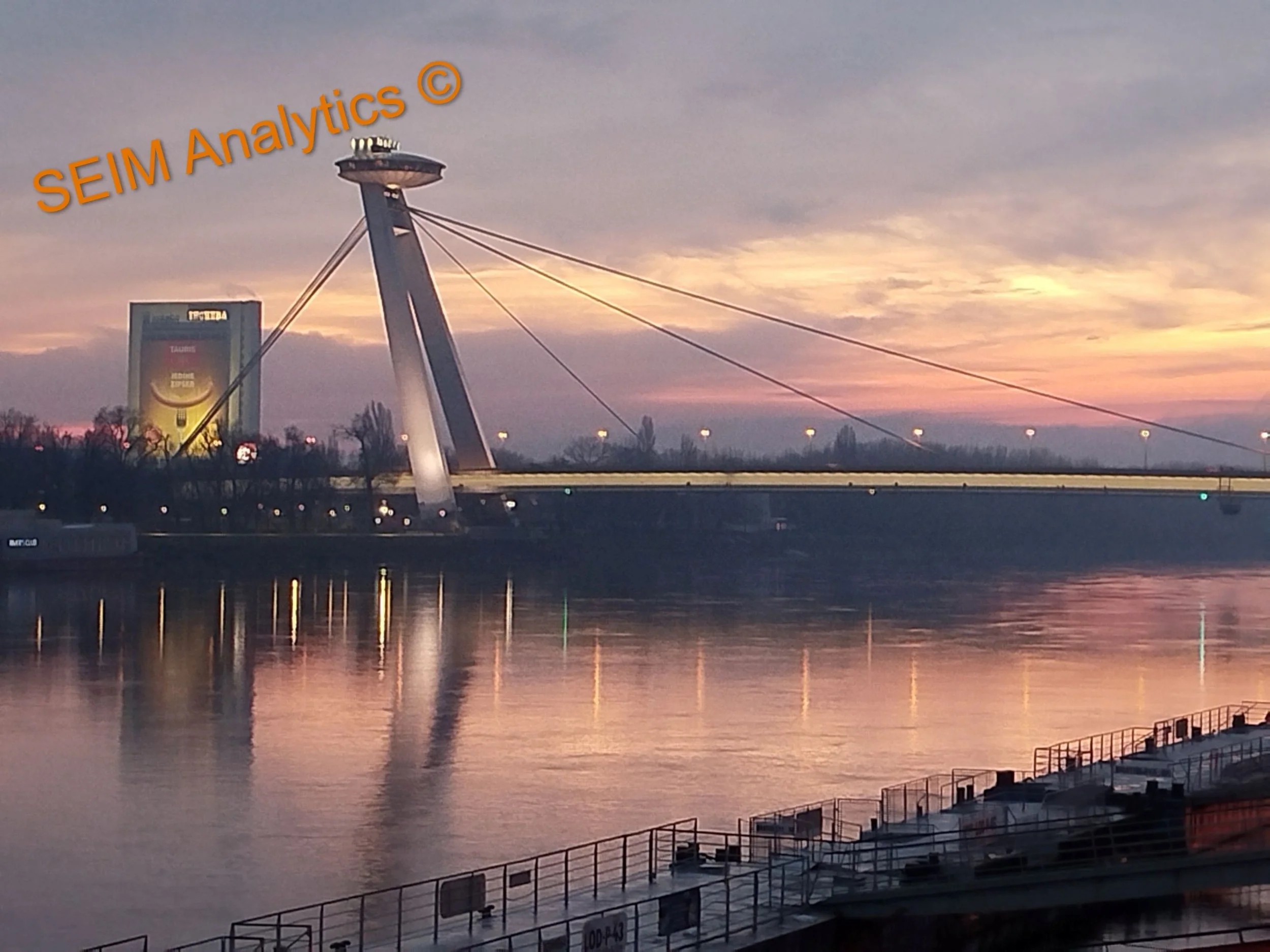
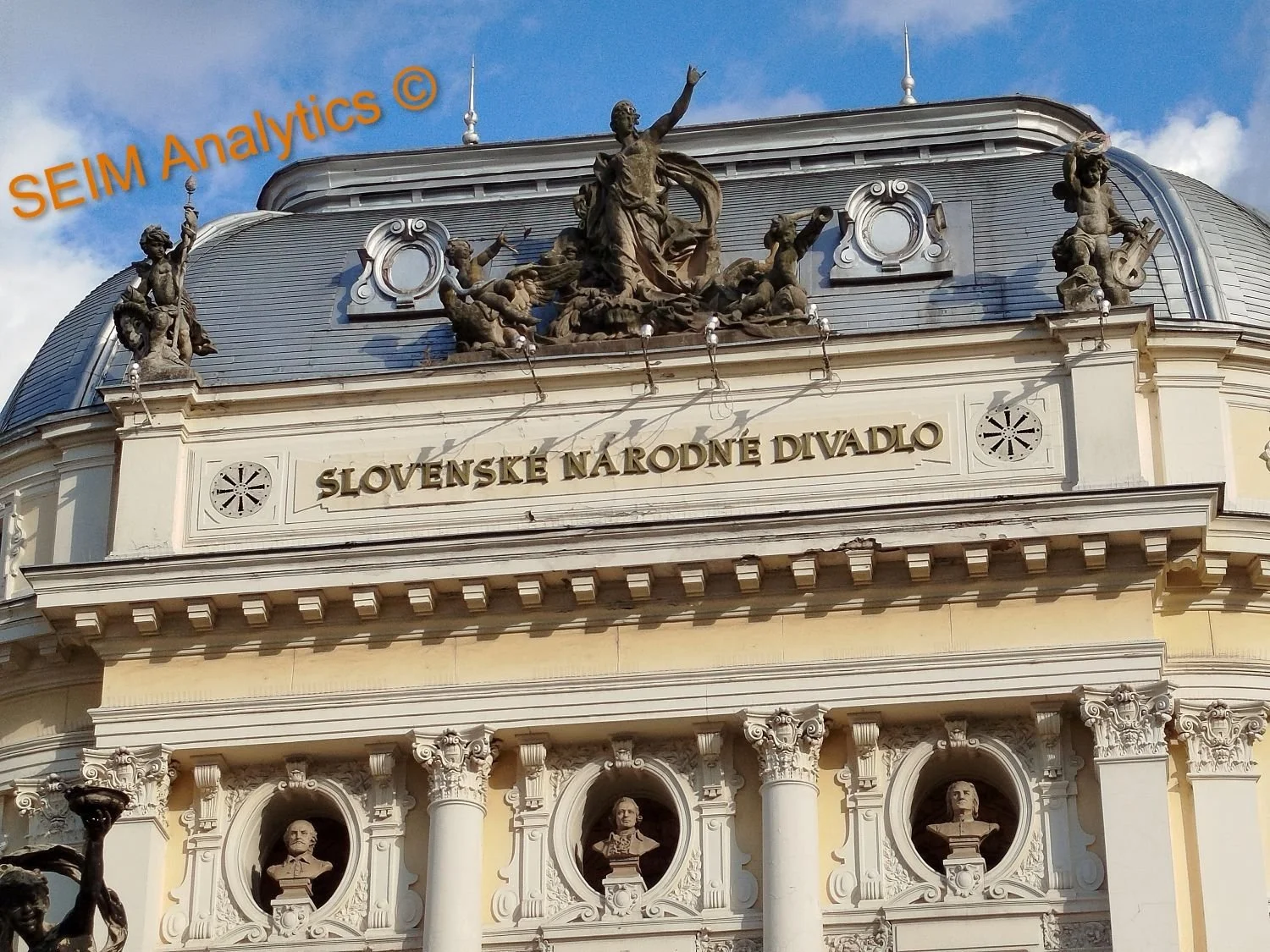
SEIM Analytics and Slovakia: With primary focus on the Western Balkans, Romania, Ukraine and Moldova, SEIM Analytics has a secondary but targeted analytical focus on Slovakia with emphasis on election analysis, post-communist economic development, Habsburg history, and cultural issues. Slovakia is also an attractive country for mountaineering with its beautiful High Tatra mountains, but also the less know Mala Tatra and Mala Fatra, as well as Bratislava-area cultural trips.
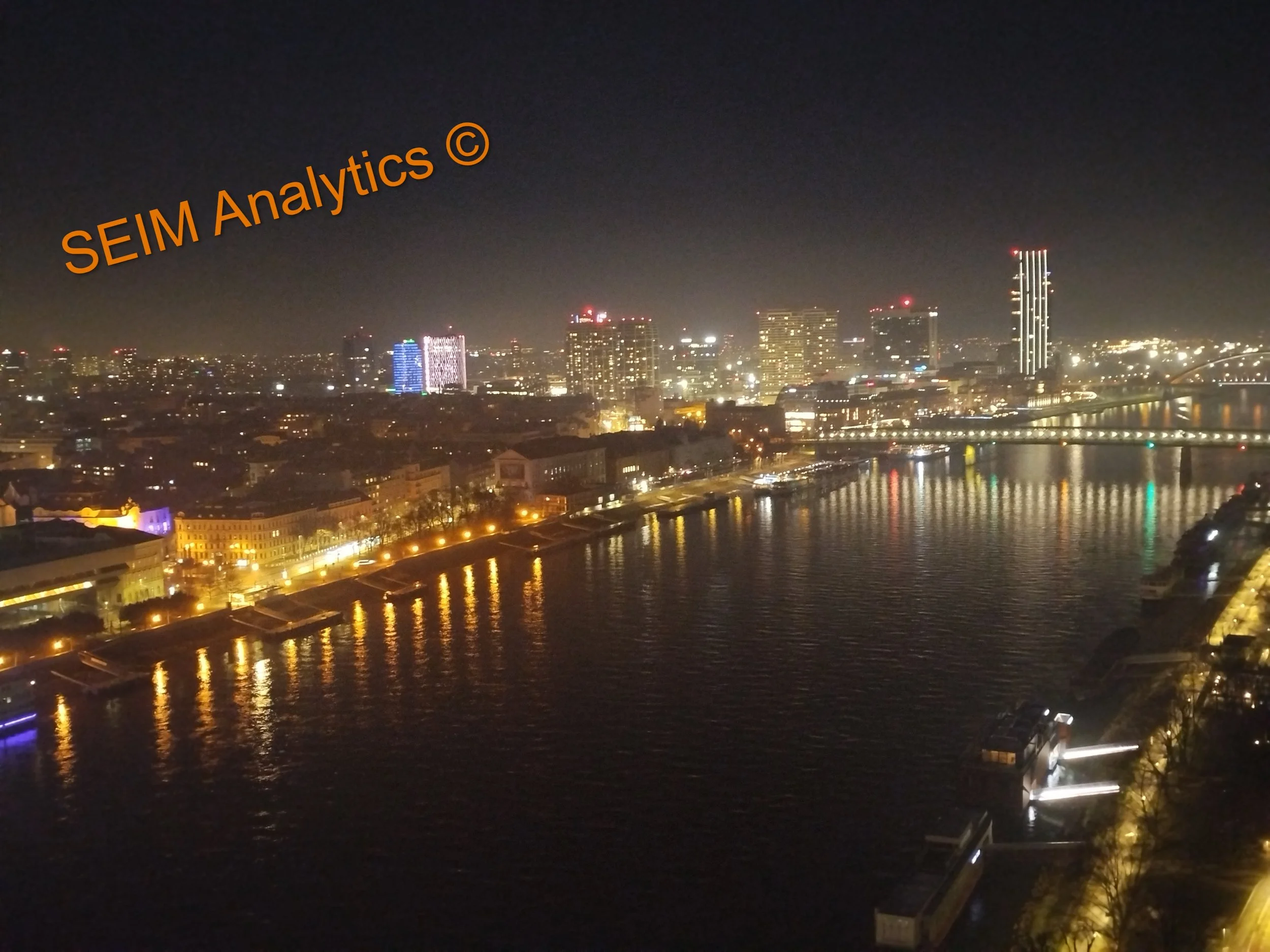
Bratislava by night. Slovakia experienced rapid economic growth the last decade, but is politically polarized
After numerous travels to Slovakia since the late 1990s, including hiking in the High Tatra, and a number of bicycle trips, SEIM Analytics can offer a rich collection of documentary photo.