
The 2023 Local Elections in Moldova from the Perspective of the City of Bălți
21 August 2024, in retrospect
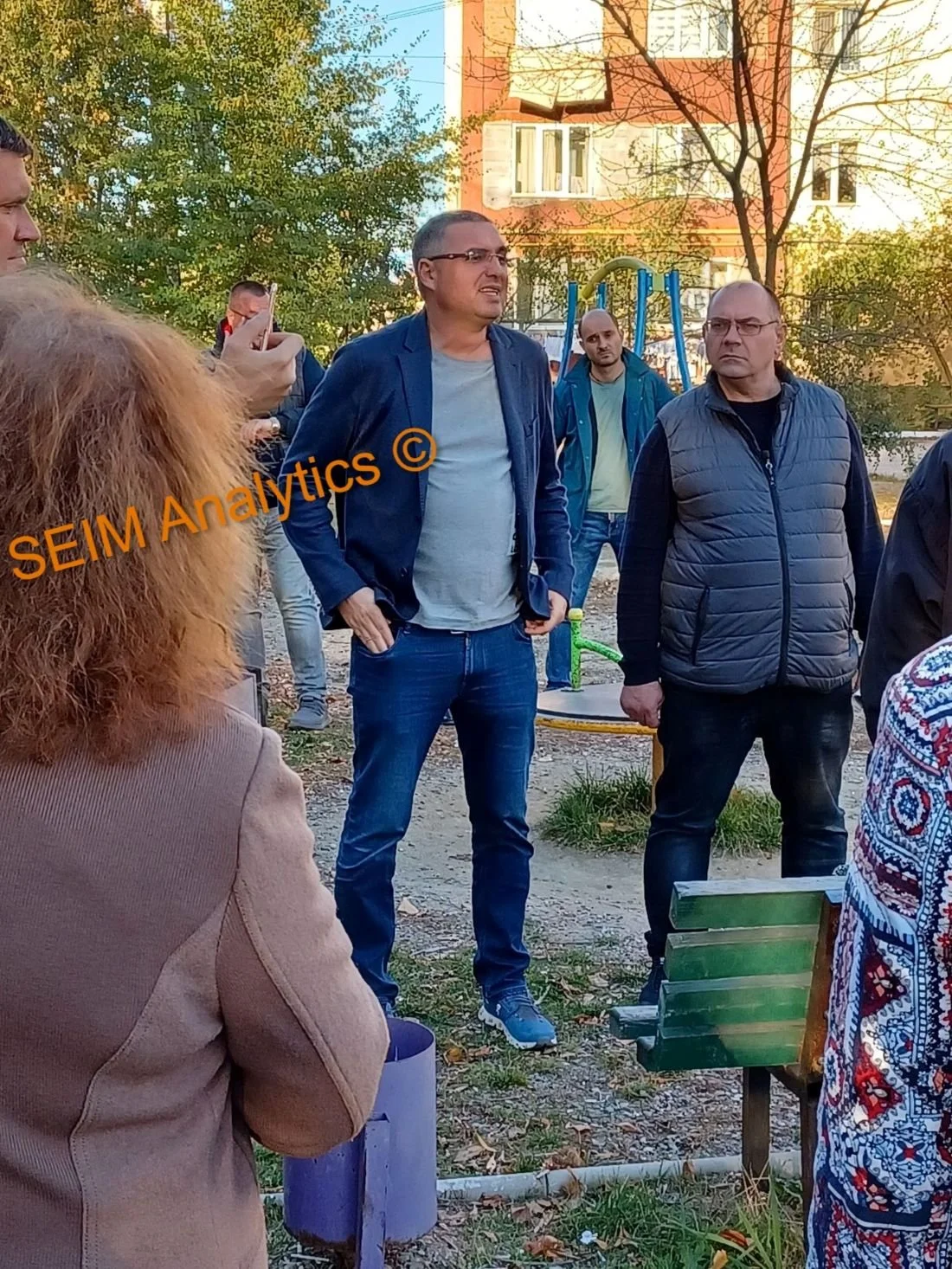
Autumn 2023, Seim participated in the observation mission of the OSCE-ODIHR to Moldova for the local elections.
Seconded from Norway to OSCE-ODIHR, Seim was meeting election stakeholders and observing the local elections in the city of Bălți, the second biggest in Moldova, as well as in the neighboring agricultural municipalities of Glodeni and Rîșcani. This was the second time Seim was responsible for OSCE-ODIHR long-term observation in the city and it surroundings. 2014 was the first time.
Disclaimer: The reflections in this blog post of the political analyst and historian Dr. Seim do not reflect any official OSCE-ODIHR position. They are exclusively found in the linked-to OSCE reports.
(Photo: OSCE-observers meeting election stakeholders. Head of Our Party, Renato Usatii (left) campaigning for Aleksandr Petkov (right) during a meeting with voters in Bălți.)
The political context in the city of Bălți is specific. There is Russian presence in Bălți (culture, language) but a tendency for romanization can be noticed, in particular in administration. 50% of ballots were in Russian, and 50% in Romanian (until 2021 labelled Moldovan). Yet, inter-ethnic relations in Bălți are good. AoO is multi-lingual and multi-cultural. Rîșcani and Glodeni districts have sizable Ukrainian and Russian communities, and even one Polish village (Stircea). Yet, the ethnic distribution seems to have a rural-urban dimension, with urban areas being more “Russian.” Bălți City also has an Armenian church, and a Jewish community, whose head (also head of the Jewish Council of Moldova) Seim met.
Traditionally leftist parties have been strong, as in the rest of Northern Moldova. Recently they lost influence to Our Party and to Sor-related candidates. After Marina Tauber’s disqualification in 2021, the incumbent mayor Nikolai Grigorishin was elected on a very low turn-out and he has had little legitimacy among citizens. He lost clearly on 5 November 2023.
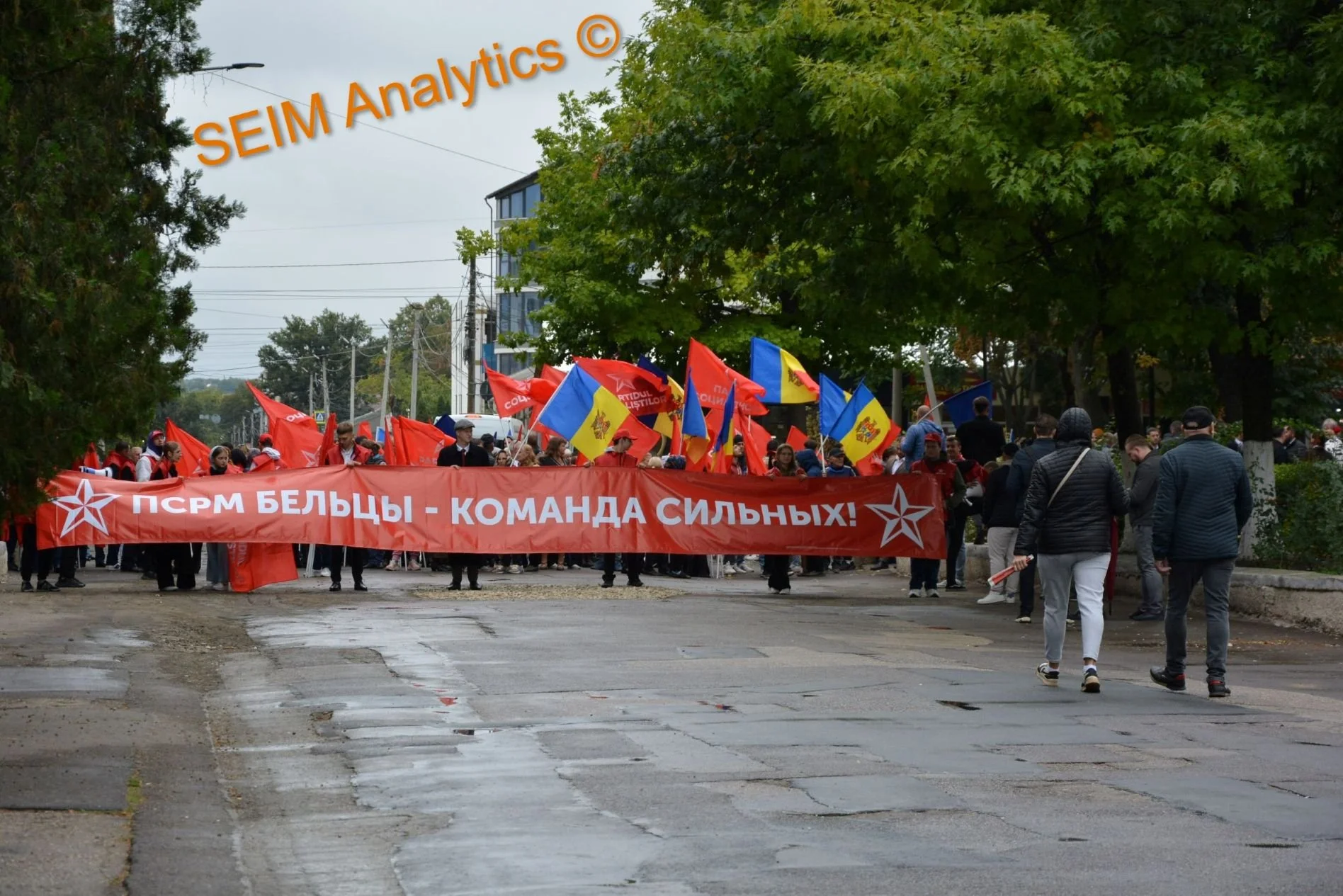
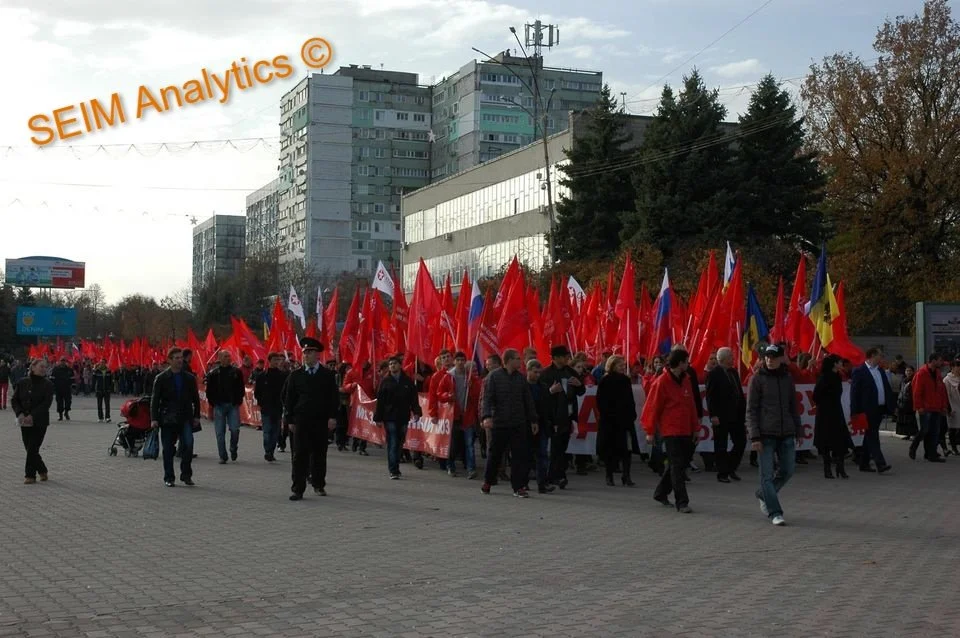
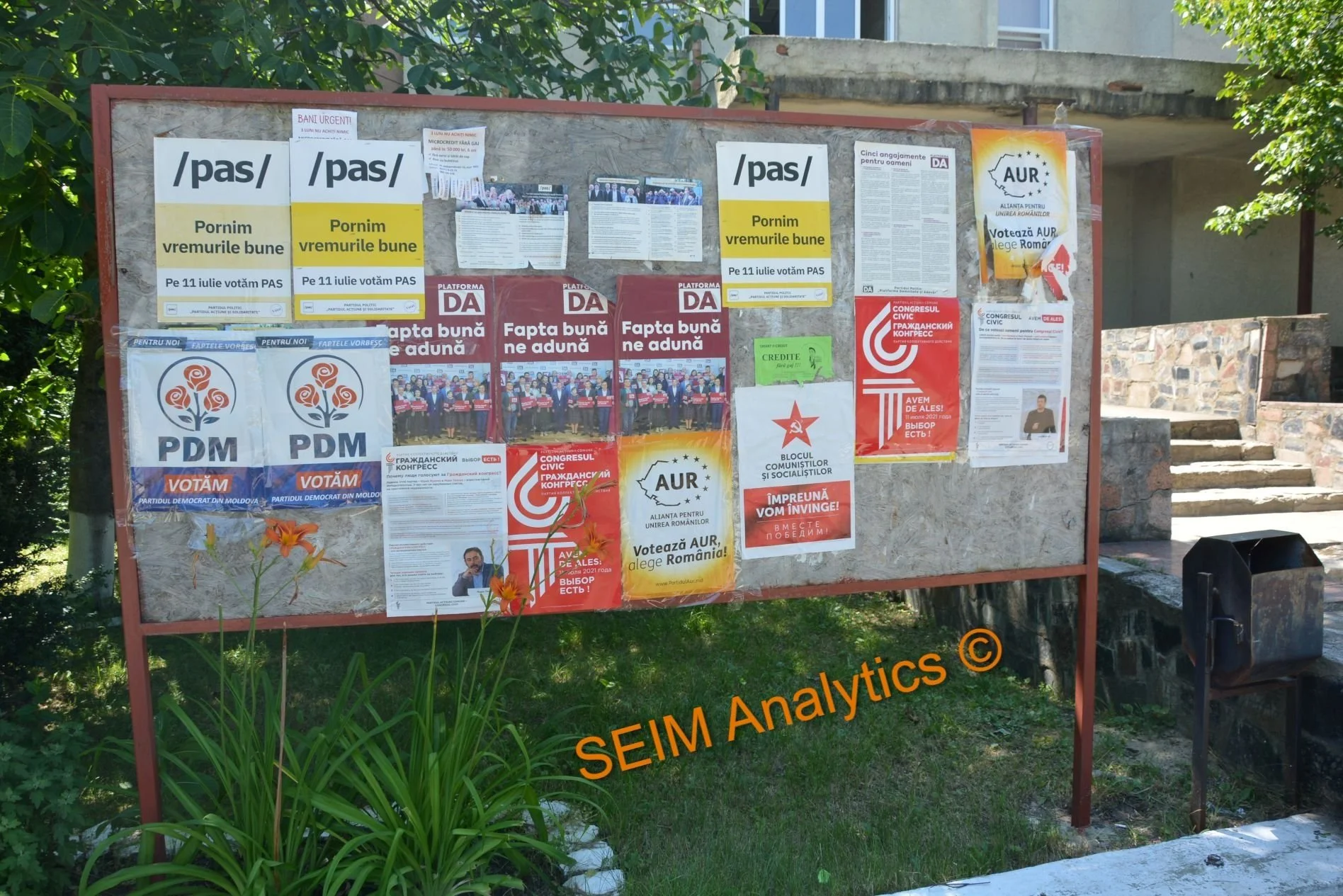
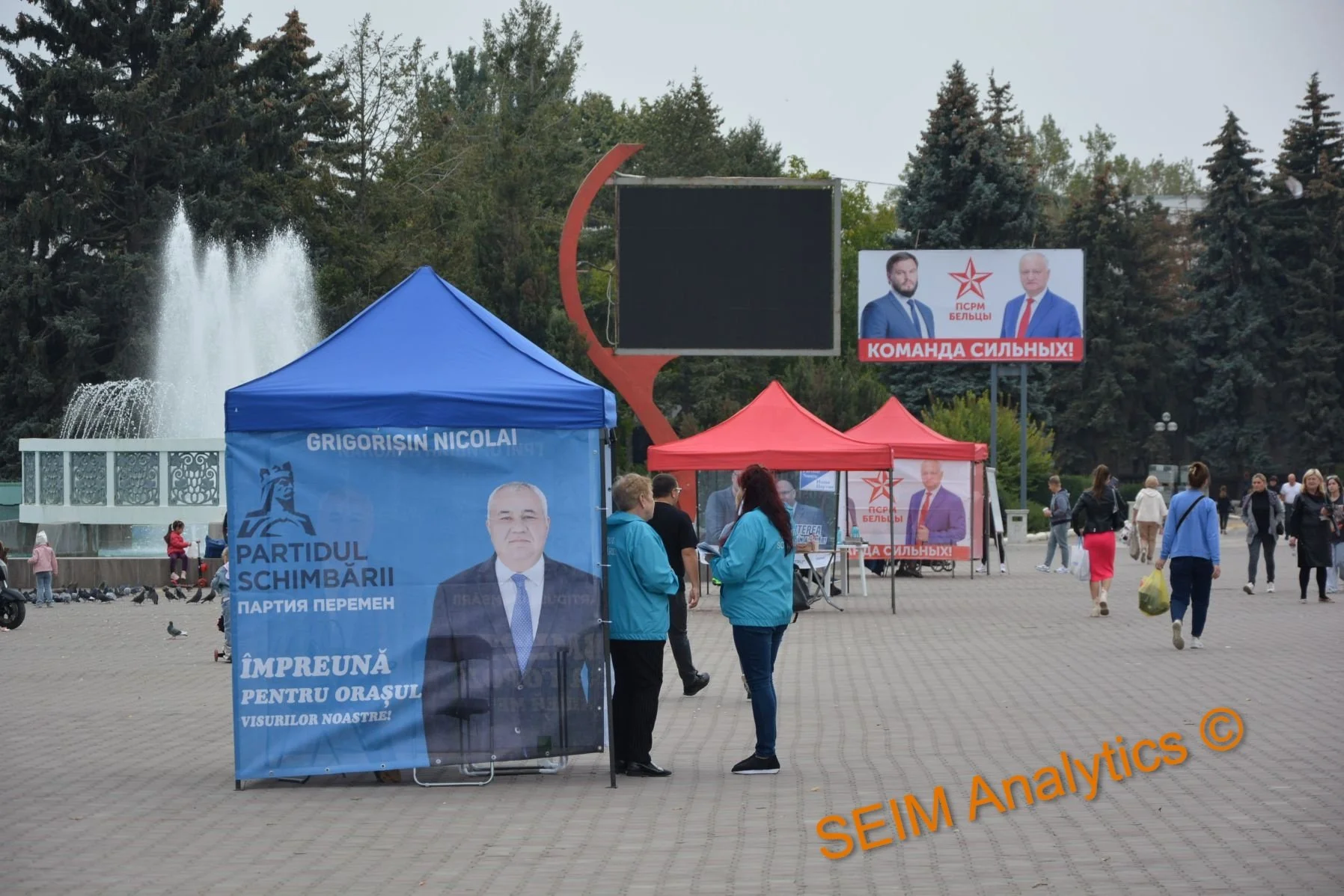
The campaign for the 2023 local elections was active in Bălți, but not overwhelmingly. It was less visible in the districts of Rîșcani and Glodeni. Candidates and parties were mostly reaching out to voters with smaller yard meetings and direct talks in the streets (around party’s tents). In Bălți, social media and phone calls were important to reach voters. Chance party and Renaissance Party in Bălți faced police surveillance, police searches, and impediments that restricted their campaign.
Allegations about exclusion of candidates overshadowed candidates’ suggested policies for development. Instead, the election also became a vote about the right to stand for election. Excluded parties played the victimization card which generated support among some voters.
Election turnout: Turnout in Bălți was 37% and the national average 41%. The actual turnout among people residing in Moldova is much higher, but due to the many citizens abroad, the statistical turnout is low.
Election results and disqualification impacts: After the success of the ruling party PAS in the parliamentary elections in 2021, these local elections were a set-back for PAS with voters again fragmenting towards a range of political options. Although elections were competitive, they were sharply restricted due to the ban on and forced dissolution of the Sor Party based upon allegations about money from Russia or illegal money from criminal groups. A ban was enforced that prevented 102 mostly Sor-related persons to run for election. In addition, three days ahead of E-day, all candidates of the Chance Party, Sor Party’s de facto substitute, were de-registered. With this measure, the prospective Chance Party candidate Viktoria Sapa was disqualified for the mayoral race in Bălți. (Sapa substituted Sor party-related Marina Tauber, who was disqualified in the mayoral contest in 2021 after winning with 47% in the first round). Before E-day, Sapa and Tauber gave endorsements to the independent unknown candidate Arina Corsicova who with help of phone calls and messages achieved 21.5% and second place in the mayoral race, in close range of Aleksandr Petkov from Renato Usatii’s Our Party with 22.7%, and ahead of Maxim Moroshan from the socialist party (PSRM) with 19.7%.
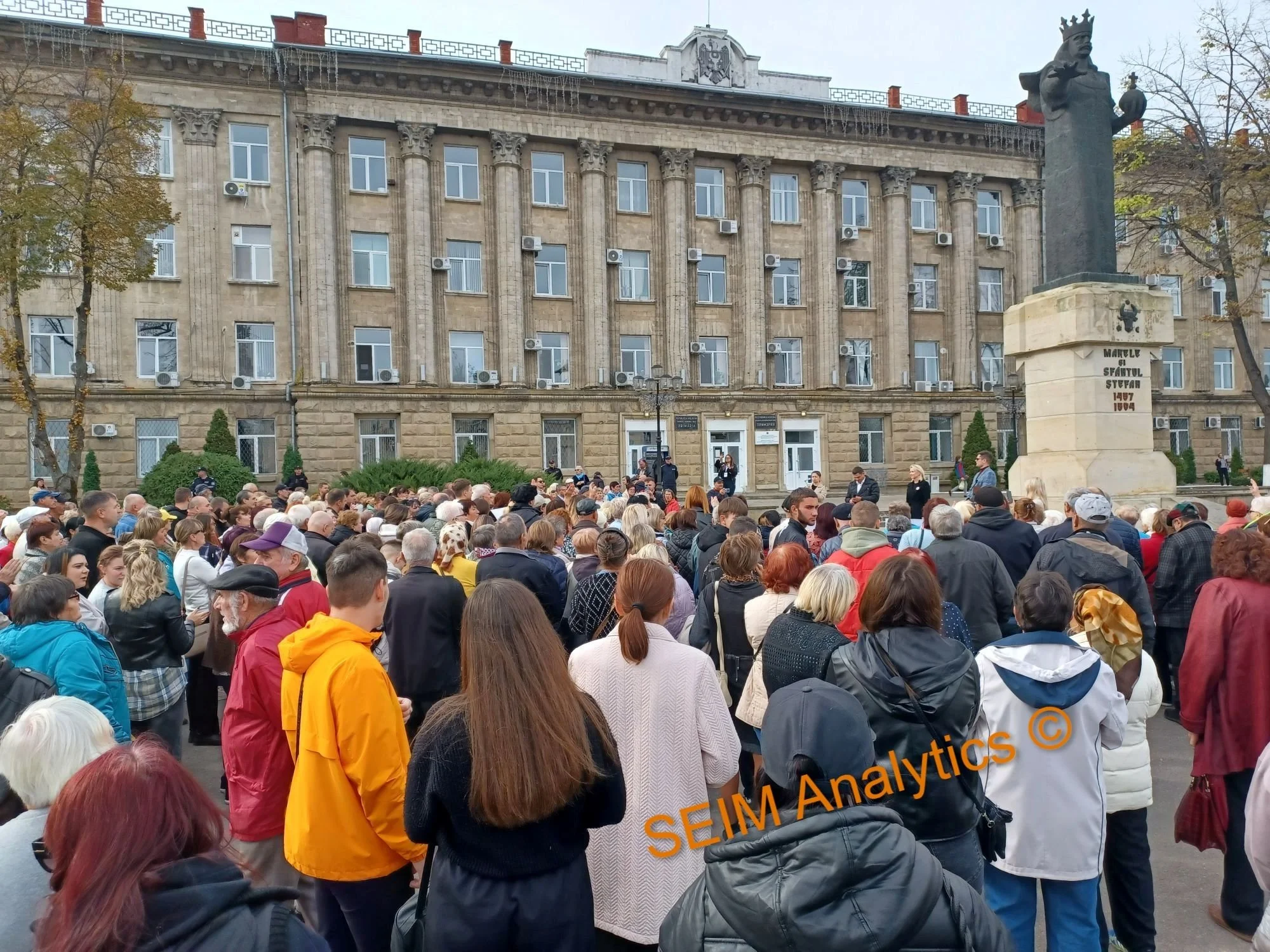
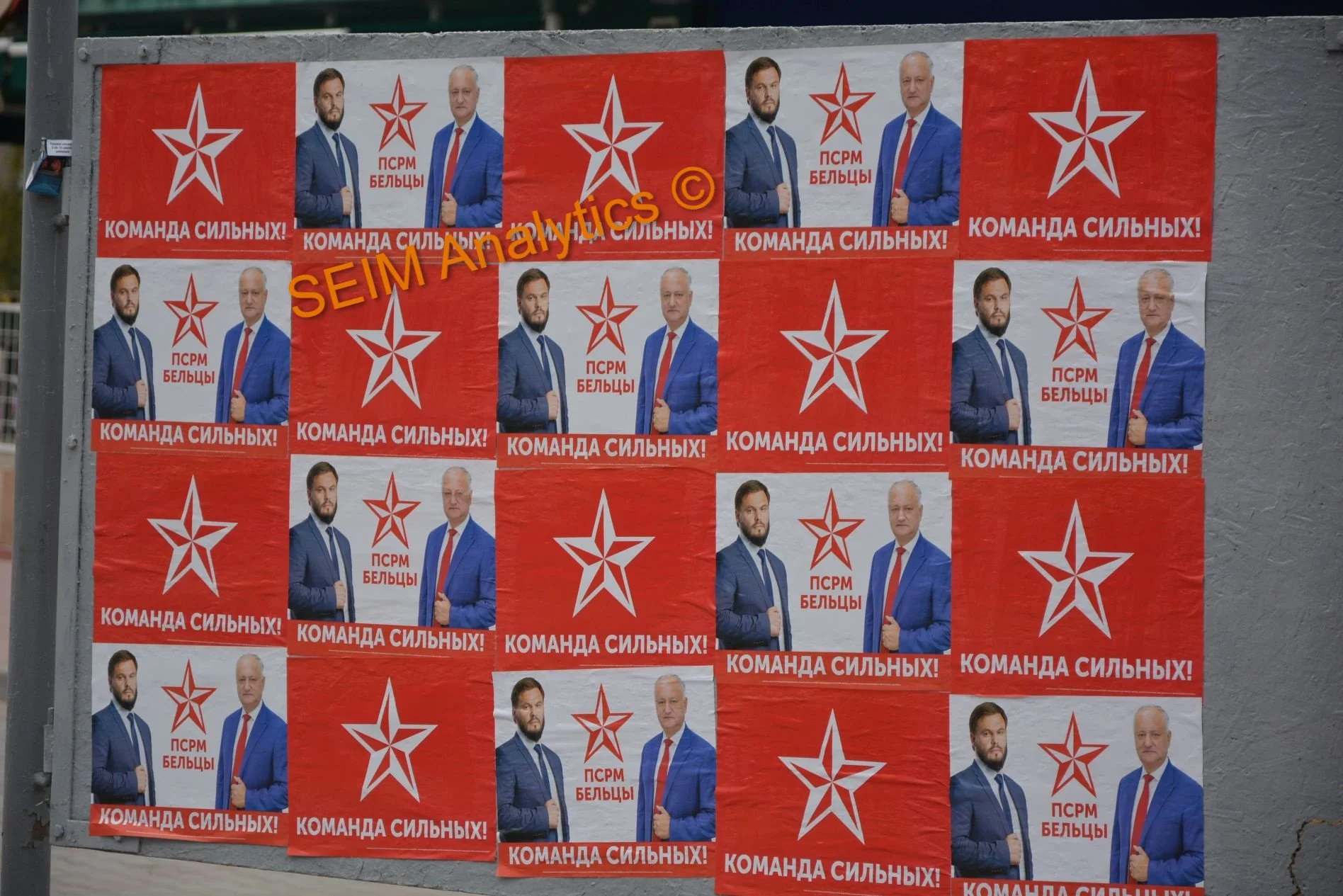
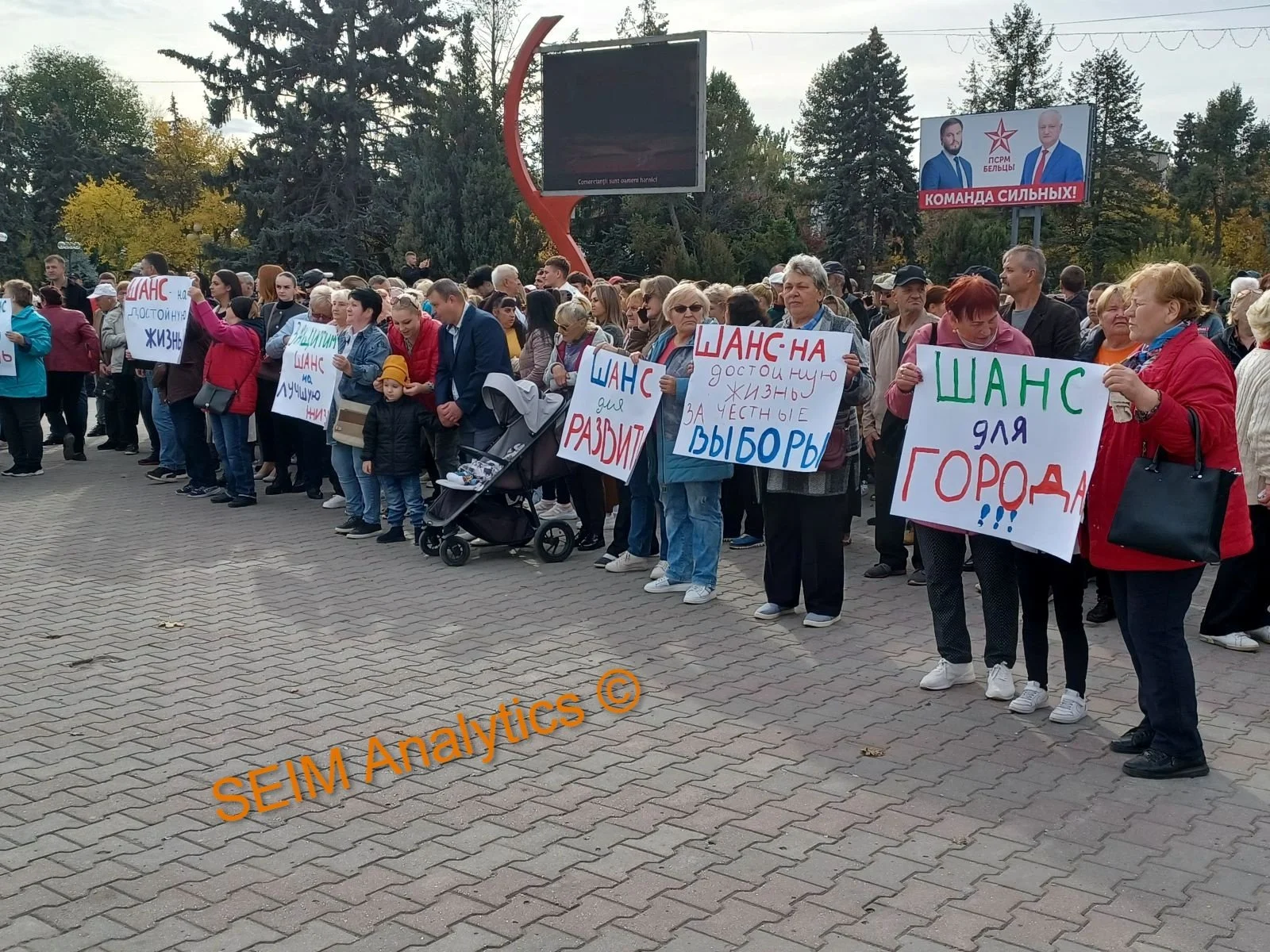
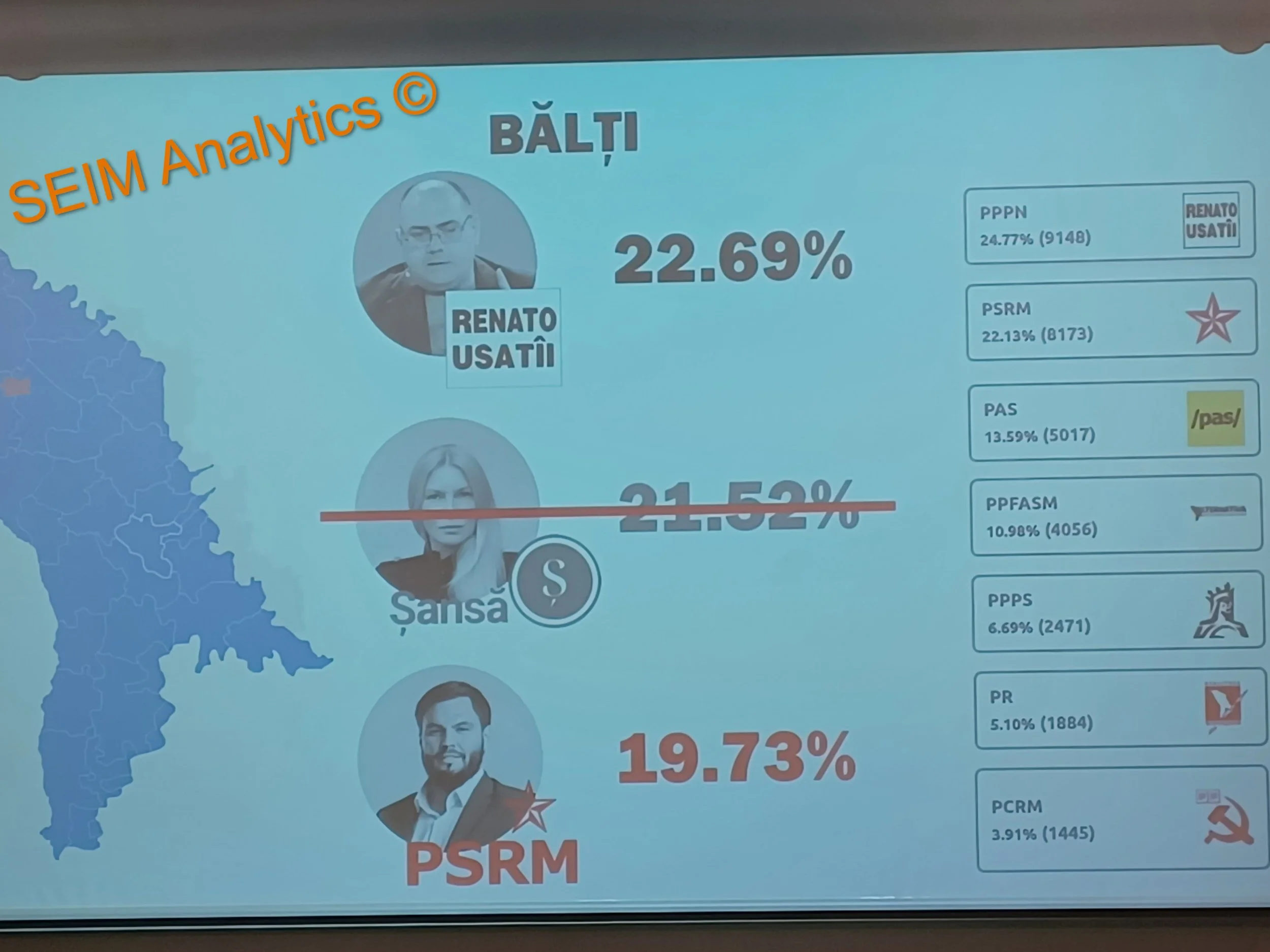
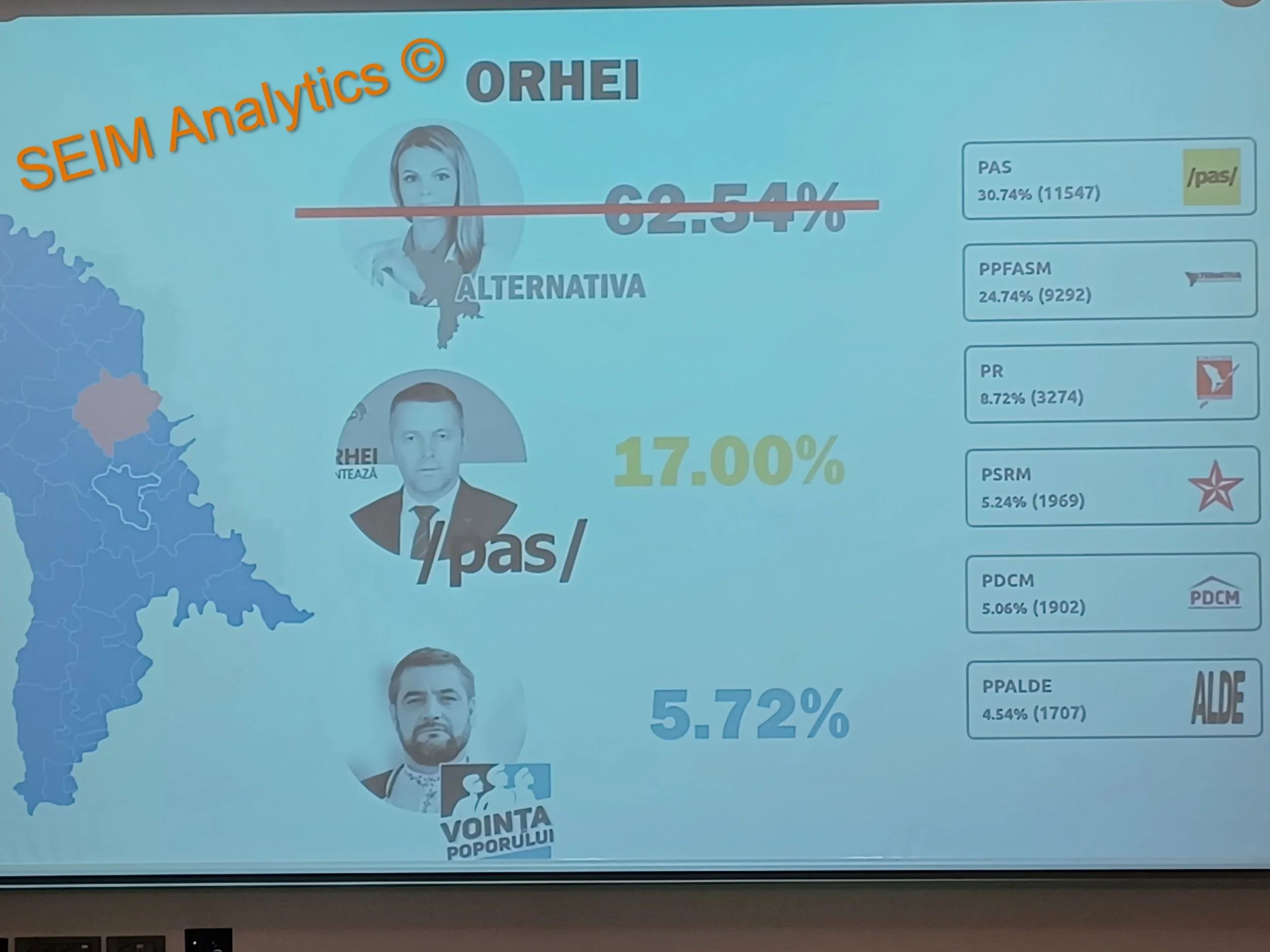
Yet, 7 November DEC Bălți disqualified Corsicova, so Moroshan went for the re-run on 19 November instead. The DEC-decision was motivated by two complaints to the CEC from political competitors (incumbent mayor Grigorishin and PAS-friendly Stefan Gligor of the minor Party of Change). The first complaint was that Coriscova was affiliated with Sor being an administrator of System TV, so she should not have been allowed to take part in the elections. Secondly, the complaint alleged that she had exceeded the ceiling on campaign spending allowed for candidates that do not open a bank account (although she had not had any visible campaign). Also, in Glodeni district Sansa party candidates from the list of 102 that were banned were denied registration. After this disqualification, Aleksandr Petkov won with some 60% of the votes over Moroshan in Round 2.
In the race for the Bălți city council Our Party (of Petkov and Usatii) became biggest with 24.8%.
In Rîșcani PSRM won 37.5% of votes for the district council ahead of PAS (18%), and PSDE (15%), while also here a second round of the mayoral election took place on 19 November.
In Glodeni, the incumbent mayor from Our Party won in the first round, while PDCM won the biggest share (30.5%) in the district council, followed by PAS and PSRM (both 21%).
The second round took place in 265 localities in Moldova.
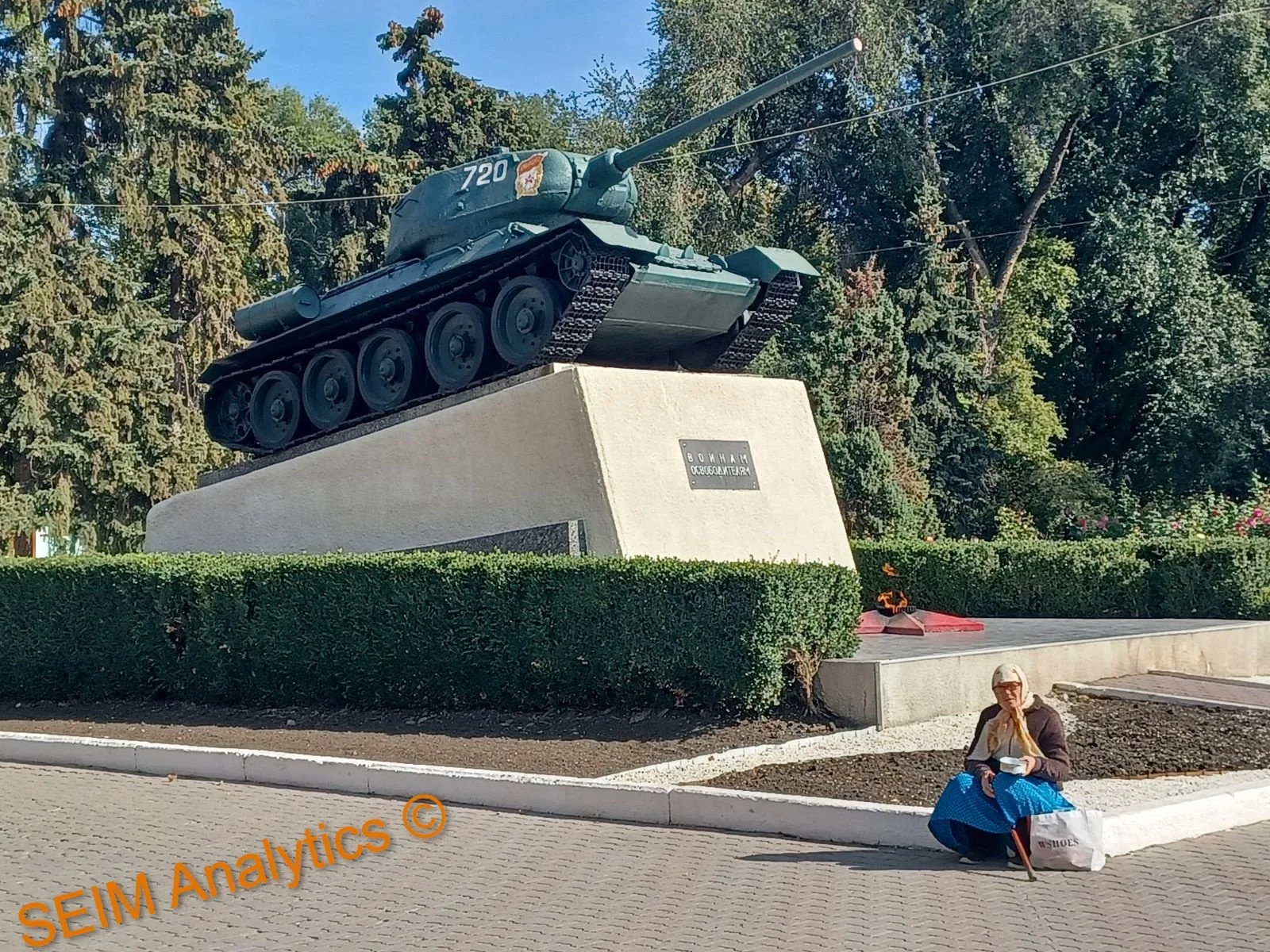
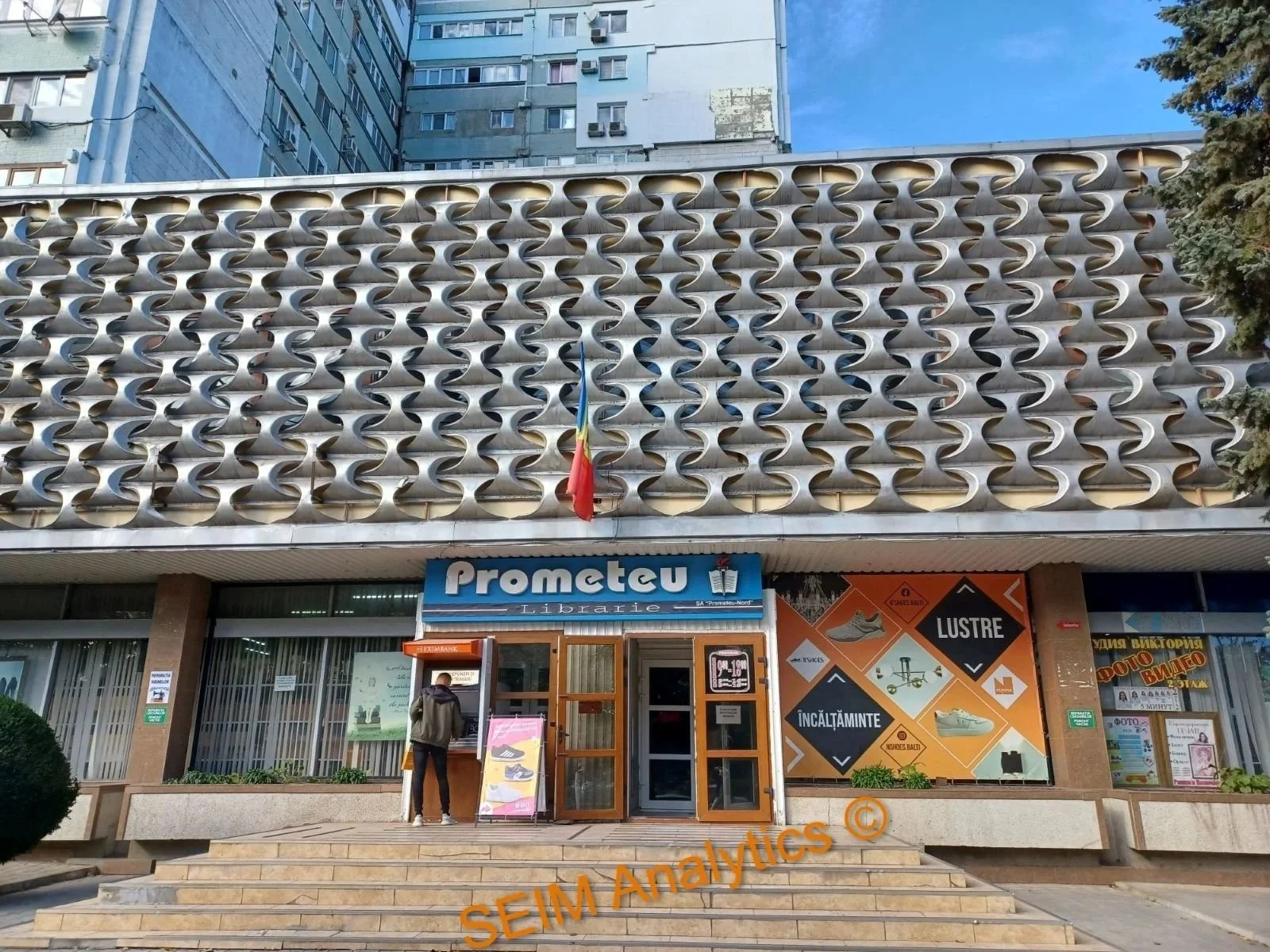
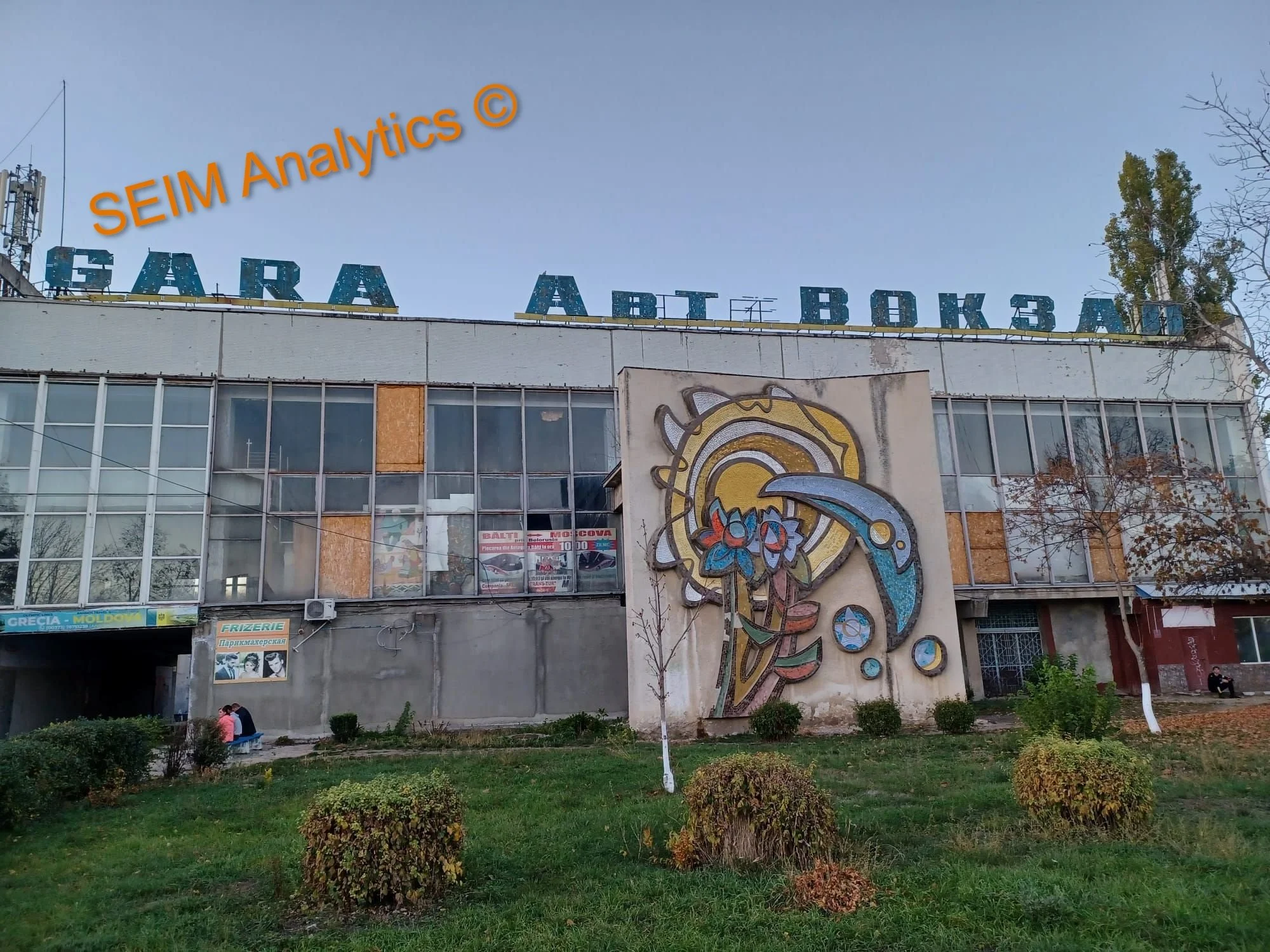
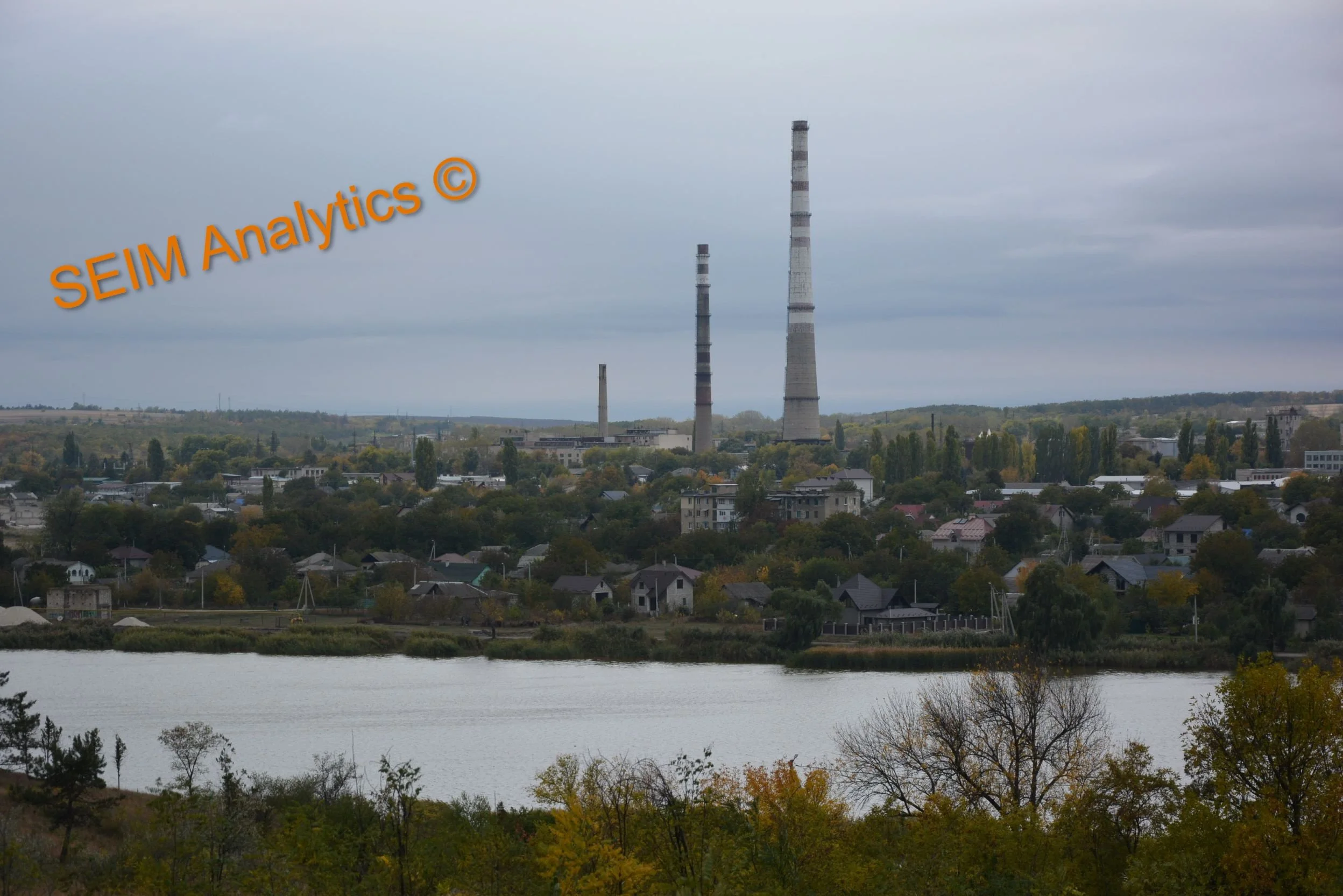
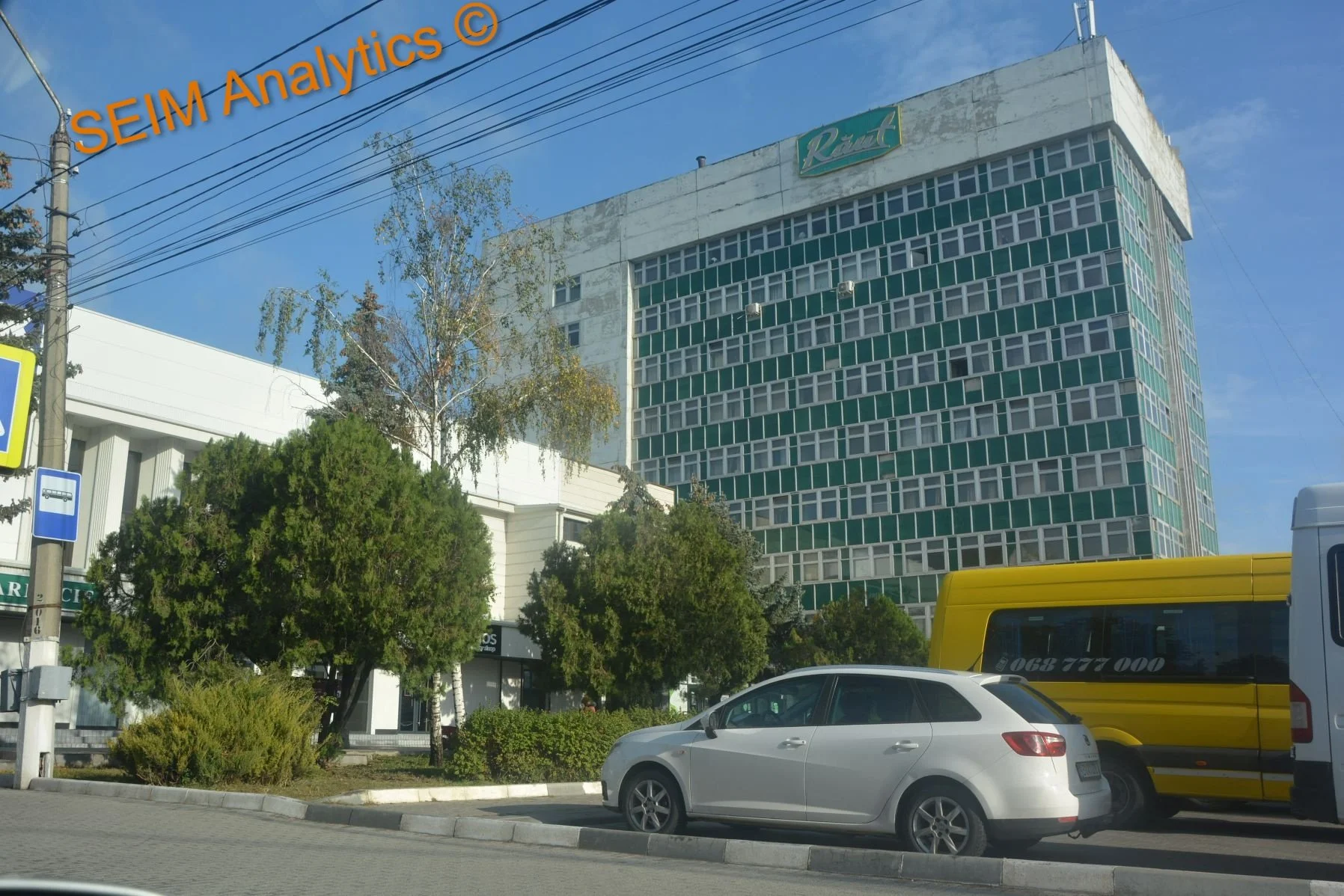
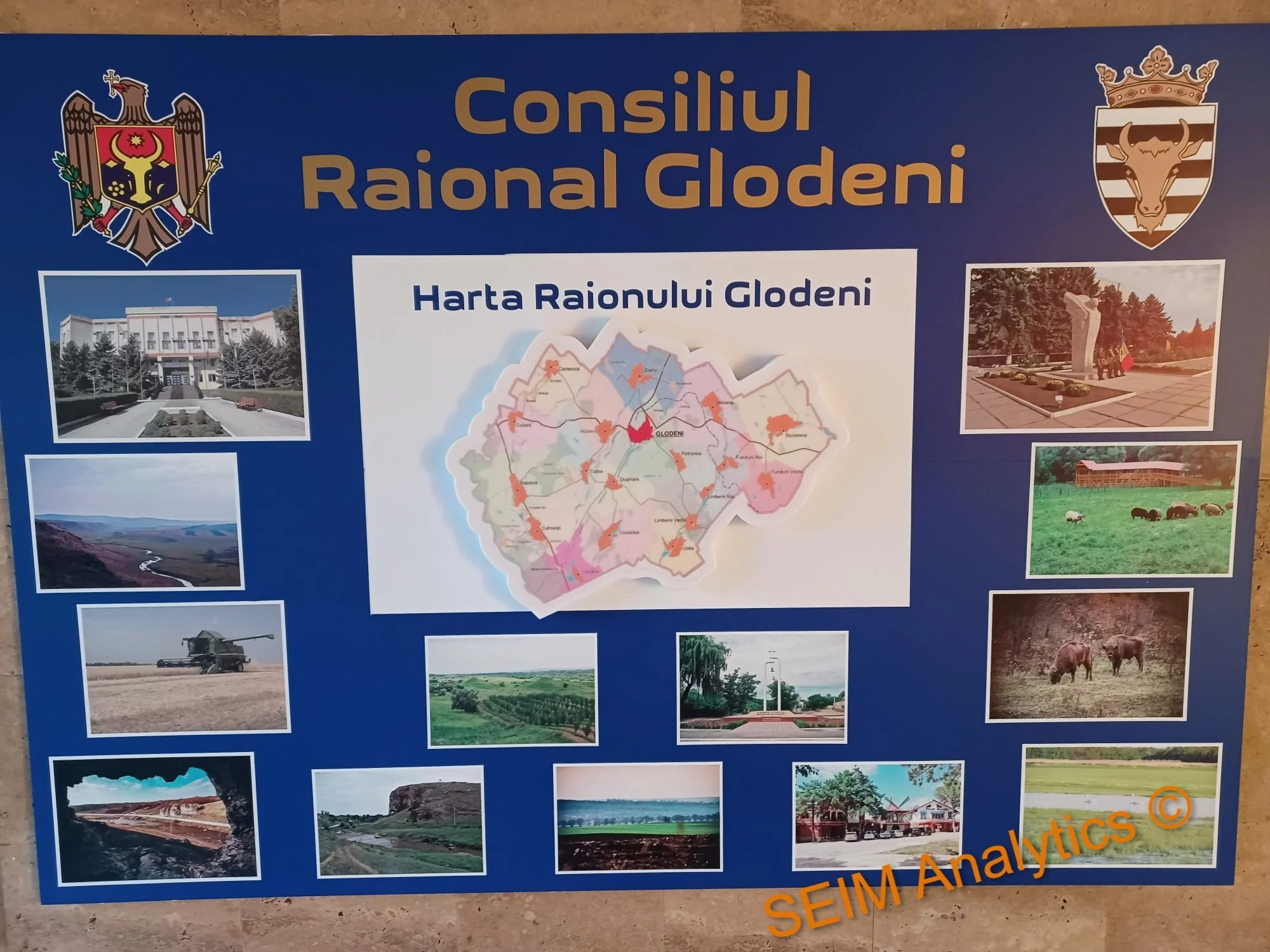
Photos from the post-industrial City of Bălți and from Glodeni region below:

SEIM Analytics assesses the OSCE-ODIHR Preliminary Statement on 6 November 2023 of the local elections in Moldova to be brave and concise. It has good formulations about the need for a re-examination of the powers granted to the Commission for Extraordinary Situations, the importance of more parliamentary oversight, and the need for more elaborate justification of decisions on exclusion of candidates. The statement mentioned that executive decisions were lacking remedy, blanket bans were lacking individual assessment, and suspension of media was disproportionate and lacking proper justification. The statement properly highlighted the infringement on the right to stand for election, on the freedom of association, and on freedom of speech. The statement could potentially get abused by certain politicians. Yet, the context for the questionable practices that led to the need for such a critical statement was put into the context of the security/geopolitical concerns facing Moldova in this election year.
More information about the 2023 OSCE-ODIHR mission to Moldova and the collaborate EOM findings HERE.
Improvements from previous elections? SEIM Analytics finds the 2023 election to have been a set-back compared to the 2021 parliamentary elections. Media space was sharply restricted. The restrictions of the right to stand for election that were followed by deregistration of accepted candidates first limited voter’s choice and then altered the election result (e.g., in Bălți). Observing the 2023 local elections was a déjà vu of the malpractice of deregistration shortly before E-day also observed in Bălți in 2014, a case that Renato Usatii took to ECHR where the allegation about selective justice and arbitrariness in 2014 was later found verified. Yet, the exclusion case in 2023 might be better founded than in 2014. The amended electoral code is an improvement, but it seems not sufficiently to have included consultations with the opposition.
Some described these local elections in Moldova as “dirty.” Contact SEIM Analytics to get Seim’s key recommendations for important aspects of the electoral process such as the need for revision of the legal framework for candidate registration (as a more robust registration process is needed with effective verification of the right to stand for elections to ensure candidates are not deregistered during the actual race), simplification of campaign finance regulation, better training for election staff, the need to recruit more men staff, and about the role of the political-nominated/impacted Commission for Extraordinary Situations and the Security and Intelligence Services.
Read/buy a more detailed assessment of the campaign, the transparency of the election administration, election day procedures, the disqualifications and deregistration impact, complaints procedures and the legal system, and the role of national observers in Bălți City, and Glodeni and Rîșcani municipalities during this local election in Moldova. Among impressions is that the ban of many Russia-related or orientated TV channels and web pages was poorly grounded and disproportionate. Neither are such bans effective in the age of social media. Candidate registration was not “inclusive”, as stated by ODIHR: The late deregistration of all Chance Party candidates, a blanket ban that went beyond the list of 102 candidates barred from standing for office), clearly limited voters’ choice and impacted the election result. After deregistration three days before E-day, all Chance Party attempts to challenge the ban and the Commission for Extraordinary Situations were dragged out in the court, so no effective legal remedies were provided, neither in Bălți for Sapa nor elsewhere. Tauber/Sapa filed complaints to European Court of Human Rights (ECHR).
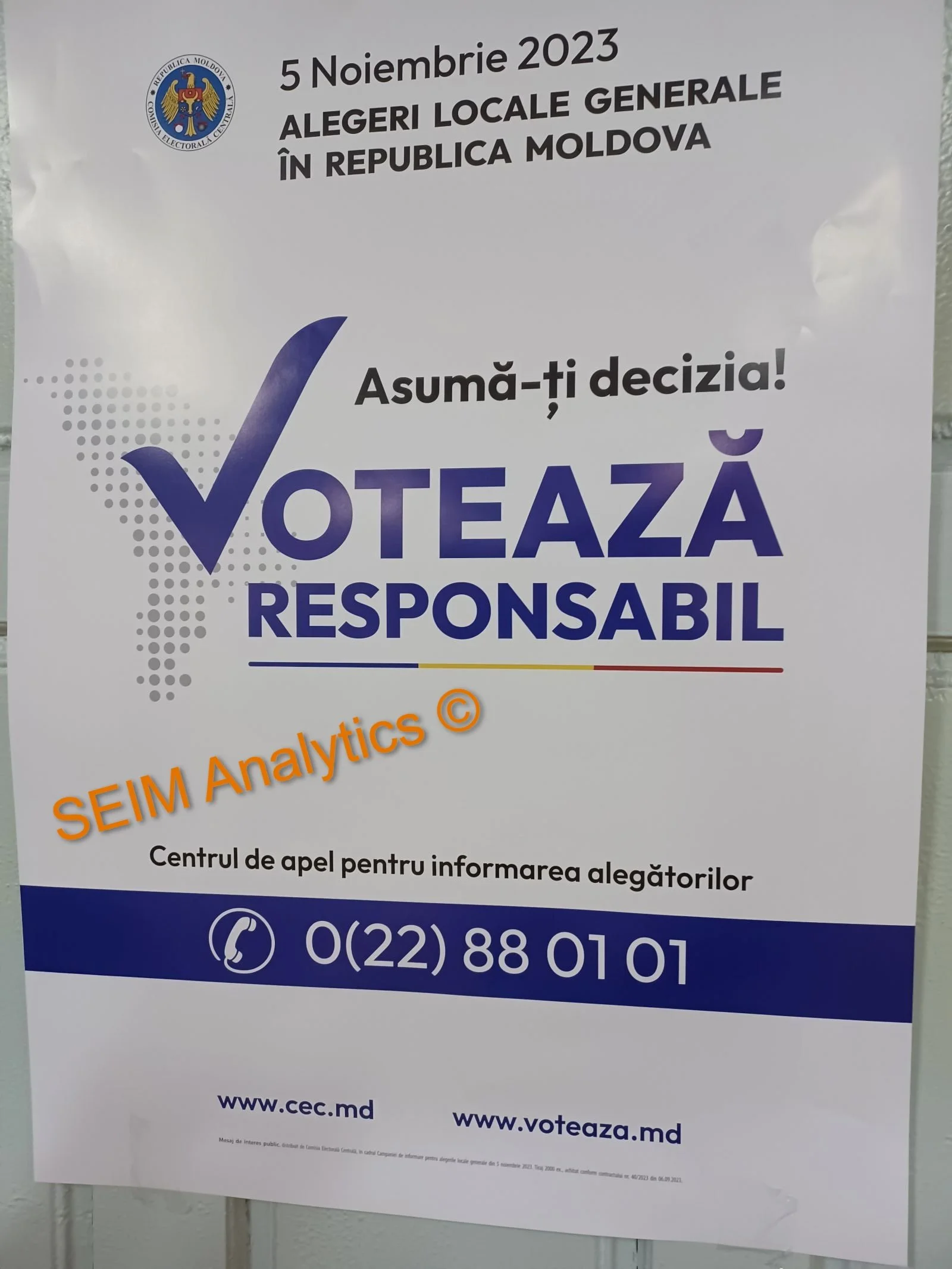
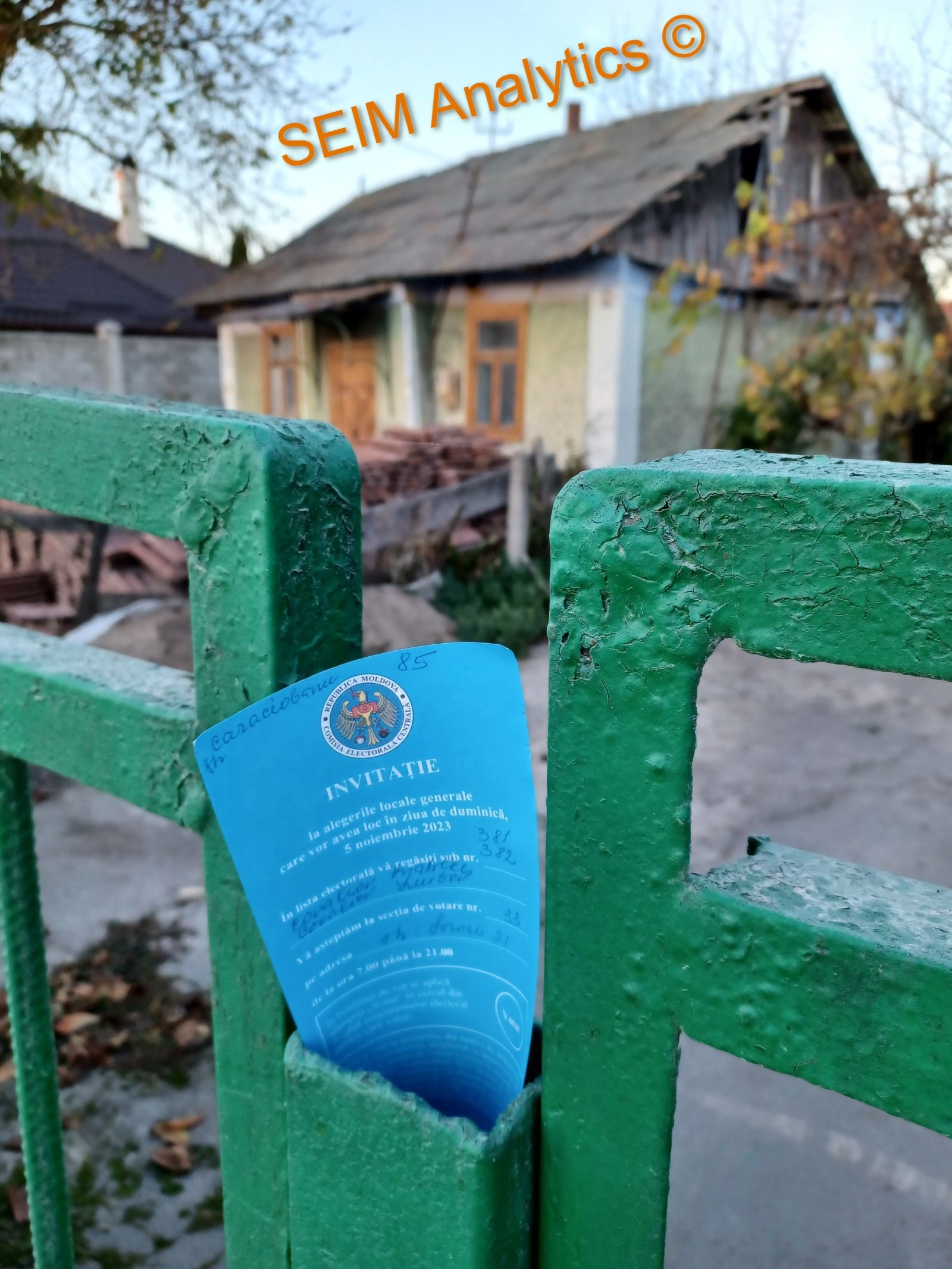
This was the third time Seim observed elections in Moldova. First time was for 6 weeks for the parliamentary elections in 2014, also in Bălți City and Glodeni municipality. Second time was to collect statistics in Rîșcani Municipality as a short-term observer for a week during the parliamentary elections in July 2021.
Earlier visits to Moldova have taken place in 2005 to Tiraspol in Transnistria, Comrat in the Autonomous Territorial Unit of Gagauzia, and to Cahul and the capital Chisinau. Photo material is available. Go to Photo Sale - Moldova!
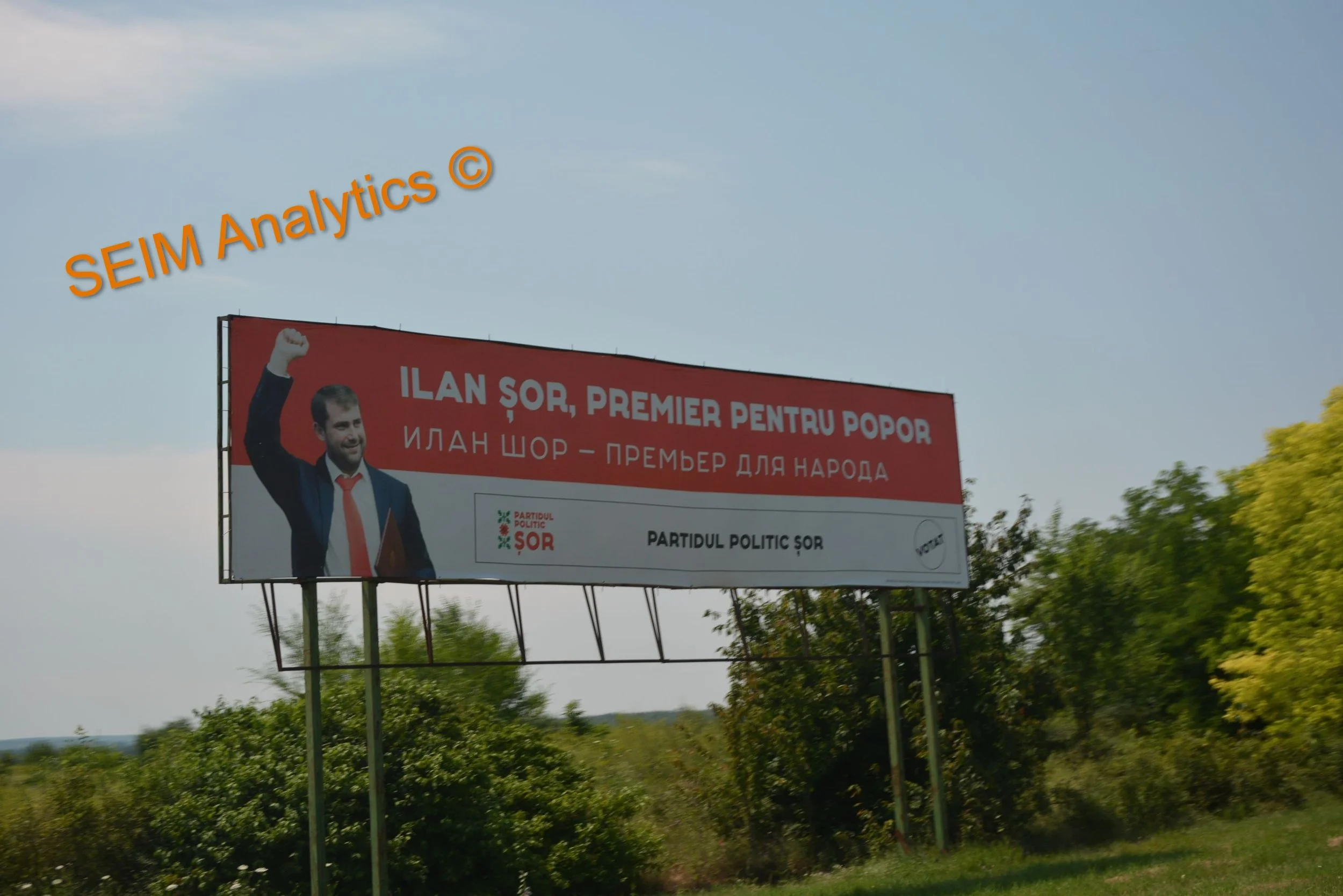
Controversial Moldovan businessman and politician Ilan Șor. His pro-Russian party, the Șor Party, was banned by the Constitutional Court of Moldova on 19 June 2023 after it had fronted months of protests.