
A Rising Global Power: The AIES-Organized Public Event India’s Global Role
3 December 2024
SEIM Analytics is widening and further developing its South Asian footprint and analytical portfolio by attending the AIES-organized public event India’s Global Role at the Diplomatic Academy in Vienna on 2 December 2024.
The keynote speaker was Dr. Richard Ghiasy from Leiden University Asia Centre. For the full event, see India’s Global Role | AIES Wien
This comes on top of Dr. Seim recently successfully finishing a consultancy project with European Union (EEAS) as seconded analyst of elections and politics in the Eastern Province of Sri Lanka in October 2024. Moreover, Dr. Seim worked for six months as Political & Campaign & Inclusion Analyst for The Carter Center in/on Myanmar in 2020-21 before the military coup.
India is another key focus for SEIM Analytics Asia that also includes Central Asia, and the super powers China and Japan. To get an overview of the main and most recent engagements of SEIM Analytics with ASIA, click here!
Go to seim-analytics.com/middle-east for analyses of and engagements with the Middle East and Türkiye.
INDIA - THE RISING GLOBAL POWER:
India overtook China in 2023 as the most populous country in the world, and is set to double China’s population by 2100. India´s GDP is set to rise substantially in the decades to come, which offers unlimited commercial and investments opportunities.
SEIM Analytics offers businesses, organizations, and foreign ministries analytical guidance on South Asian geopolitics, risk and conflict analysis, and assessments of electoral/political developments.
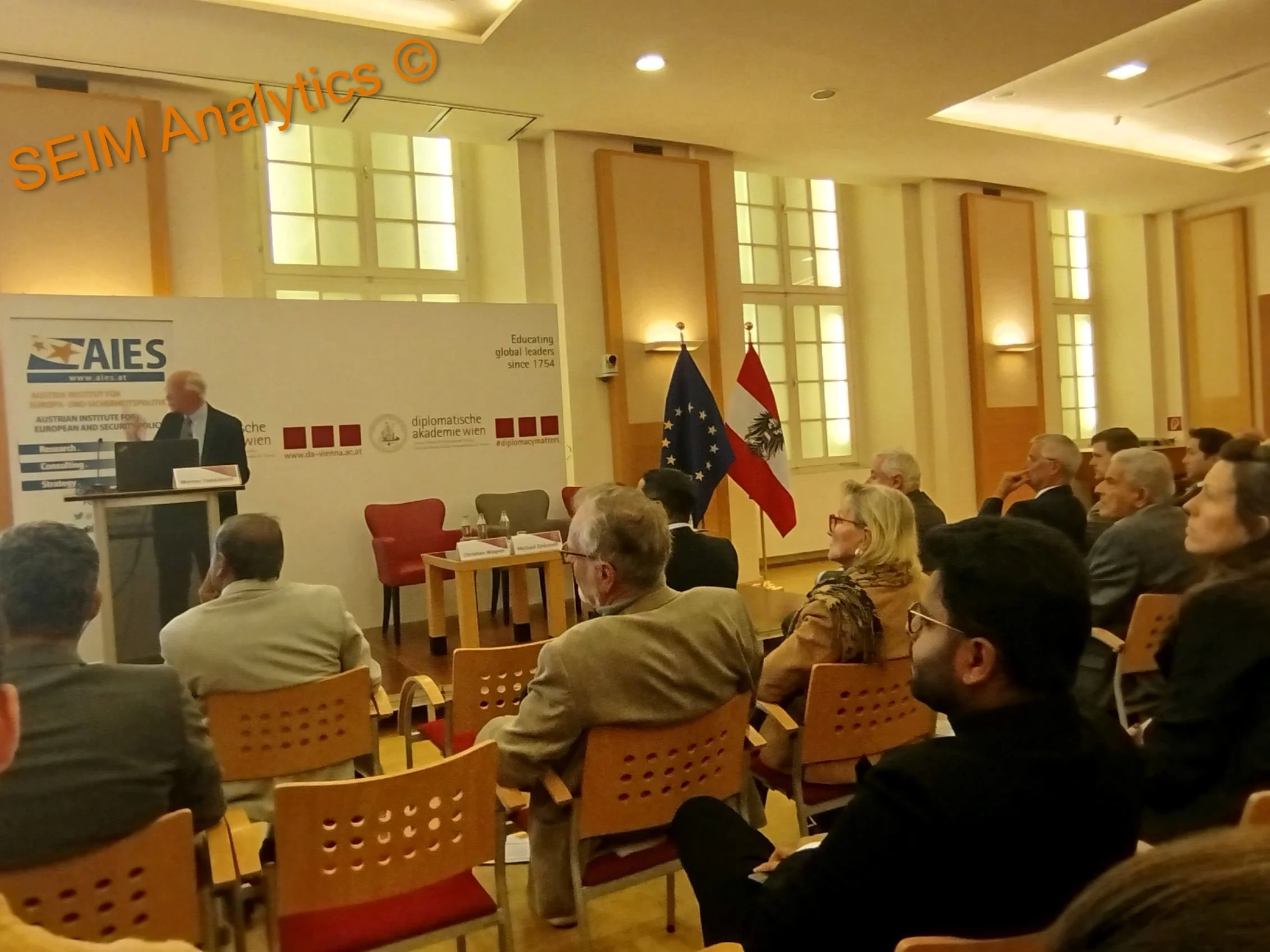
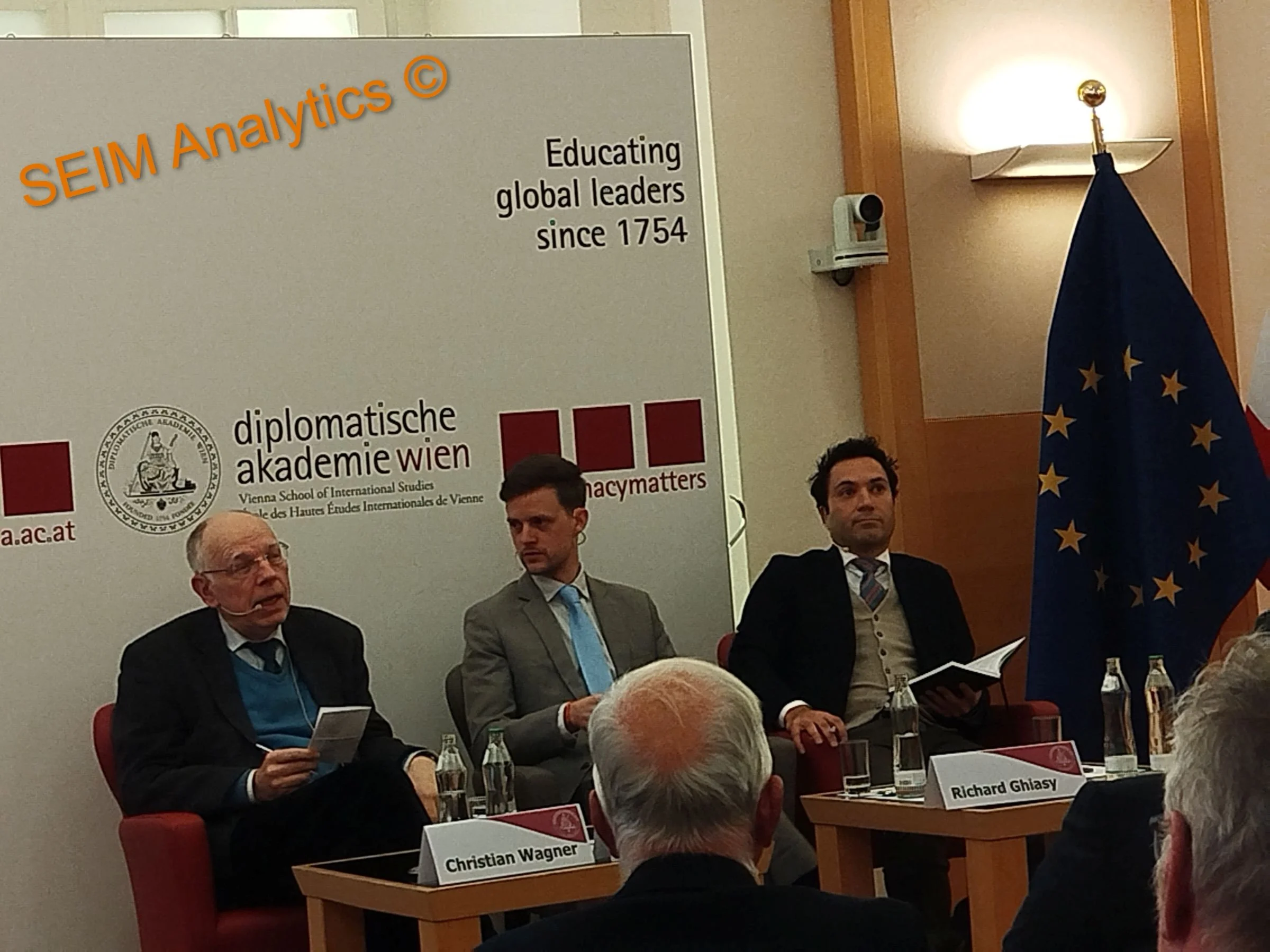
Key take-aways from this interesting and well-visited AIES event:
INDIA’s current rise can be looked upon as corelated to 5 D’s: Demography (the worlds most populous), Democracy (the world’s largest), Demand (growing also internally, as India’s economy is not so export-driven as the Chinese), Digitalization (its services and IT sector is leading its development), and Durability in it’s growth and development.
20% of global growth is set to come in India.
INDIA is also part of the geopolitics of southeastern Asia and the trade routes through the Malakka Strait due to its Nicobar and Andaman Islands, bordering Myanmar, Indonesia, Malaysia, and Thailand.
Two key trade routes of great importance to China is circumventing India: To the South around Sri Lanka and potentially from the deep-water Kyaukphyu Port and Special Economic Zone in the volatile Rakhine province of Myanmar. Another key trade route is the railway from China’s tense Xinjiang region to Pakistan’s Gwadar deep-water port in the conflict-exposed Balochistan on the Arabian Sea.
The relationship to China remains a key for India. It is potentially contentious, due to border conflicts, but also inter-related due to Indian imports and inter-dependencies.
India’s current fruitful relationship to Russia is related to geographical factors, India’s traditional non-alignment, and it comes in extension of a previously good relation to the Soviet Union. Prime-Minister Modi in October participated at the major BRICS event in Kazan, Russia. Indian political leadership is emphasizing its ability and wish to speak to and have relations to all countries and global factors.
SEIM Analytics would emphasis that India’s rise showcases that Europe’s problems, e.g. the war in Ukraine, are not always the world’s problems, although Europe in its Eurocentric worldview tend to think so, and demand all other countries to follow its trade sanctions and other policies that are not necessarily beneficial to them or in their interest. Yet, India’s rise shows that a multipolar global order has taken a firm footing. In Asia, a multi-polar regional order with India, China, and Russia has established itself, but with the US and Japan as additional factors. In this game, as SEIM Analytics witnessed in Sri Lanka recently, the European Union is less important and even often quite invisible, as a senior diplomat from an EU country remarked to Seim in Colombo recently.
Among India’s challenges are: to also build up the manufacturing sector, as job creation is a key. It remains to be seen if growth can only be facilitated by India’s service sector. Moreover, road and railway infrastructure must be improved, and still a huge part of the population is dependent upon the less developed agricultural sector.
India’s strength is its favourable structural trends symbolized by the 5 Ds (described above), as well as the mobility of its population, and its educated youth and specialists that find roles with European and US companies.
Yet, the panel concluded that in general, there is still a lack of interest in Europe towards India, and even a lack of expertise.
SEIM Analytics hopes to continue building its India and South Asia portfolio and to take on engagements for clients! Read more about the Asia portfolio at SEIM-Analytics.com/asia