Cornerstones…
and building blocks
CONCEPTUAL UNDERPINNINGS AND WORLDVIEW:

(Transparency statement)
SEIM Analytics advisory cornerstones is based on the belief that to achieve and contribute to conflict resolution, peace, democratization, and socioeconomic progress in the Western Balkans and Eastern Europe some of the following policies and interpretative frameworks are helpful:
A just approach towards the EU candidate countries in the Western Balkans to promote and accelerate their accession to the European Union (which was promised at the Thessaloniki Summit in June 2003, but has since seen major delays, not only because of unconsolidated democracies and weak economies of the candidate countries, but also due to internal EU restraints, double standards, and ever-changing accession conditionality). See a blog post on this topic here!
EU to refocus on its core economic mission instead of drifting into an ideological project and sliding into centralization at the expense of smaller member states and dissenting perspectives. EU to remain a voluntary cooperation among sovereign nations.
A competitive advantages of Europe is its quality of life that should be utilized upon to attract talented individuals but also to stop its demographic decline. The current abrupt growth in military spending in Europe due to Ukraine is threatening this social model that helps provide that quality.
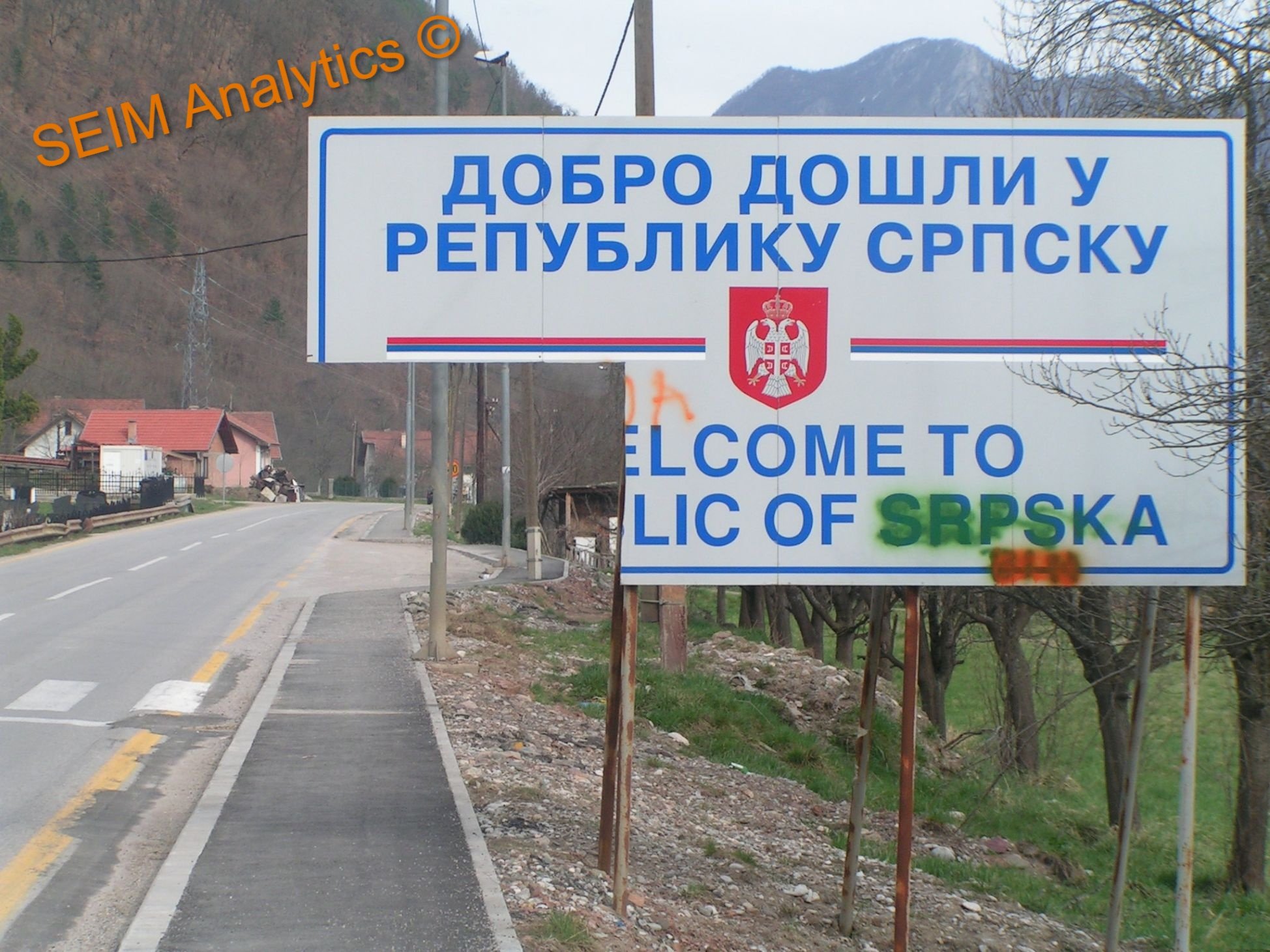
Republika Srpska as an entity equal with the Federation of BiH that both are placed under the common roof called Bosnia and Herzegovina (as established in 1995 with the Dayton Agreement). Without equality and the Dayton-prescribed strong institutional autonomy of Republika Srpska there is no Dayton Bosnia. During the latest decade(s), Republika Srpska is put under constant pressures from institutions in Sarajevo with questionable legitimacy and functioning, like the High Judicial and Prosecutorial Council, Constitutional Court of BiH (the issue about foreign judges), State Court of BiH, State Prosecutor’s Office (politicized indictments), the Indirect Taxation Authority (distribution mechanism), and is pressured by the current dictatorship of the unelected German OHR High Representative, Christian Schmidt, who lacks legitimacy as he is not confirmed by the UN Security Council. That makes Schmidt resemble an “illegal migrant and tourist” in Bosnia.
Bosnia’s future: It is high time to start searching for a better voluntary political-administrative model for the dysfunctional state of Bosnia. The pressures for its centralization are destroying this state, and the Dayton Accord. Only a voluntary Bosnia can override the current dysfunctional one, and pave the way for achieving EU membership and greater prosperity. The best way forward could be to let Republika Srpska free to leave this forced marriage, as a way to disarm politics in Bosnia, but simultaneously to enable and support Srpska’s voluntary cooperation with the Federation-BiH entity after both have secured own sovereignty and security. Yet, here a solution needs also to be found for Brčko District, respecting its internal subdivision along the 1995 IEBD. This would be a democratic model of two confederal entities choosing necessary cooperation themselves, and it would imply the dictatorial OHR’s exit.
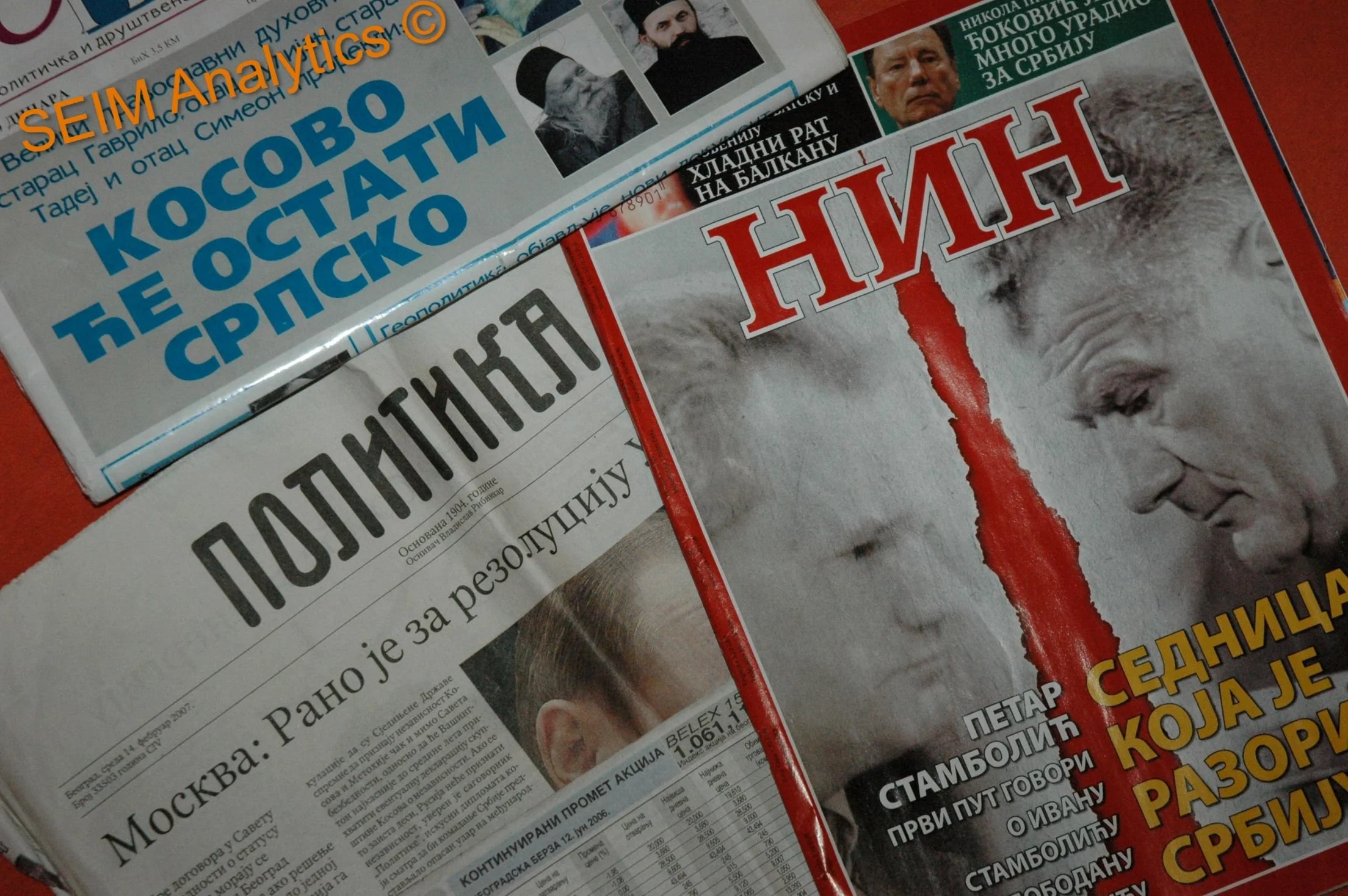
Kosovo-Metohija remains a part of Serbia, as prescribed in UN-resolution 1244 and according to international law, but should be granted extensive autonomy. This autonomy must also be extended internally to the local Serbian communities and enclaves through implementation of the 2013-deal in Brussels to establish the Association/Community of Serb-majority Municipalities (ASM/CSM) which needs robust powers to safeguard the discriminated and pressured Serbian minority in Kosovo.
As a conscientious objector in Norway, Dr. Seim was always sceptical of the NATO expansion into Eastern Europe after the end of the Cold War. It was unnecessary and triggered Russian responses and indirectly led to costly militarization instead of strengthening Europe as a whole against pressures from China and the U.S. Read a blog post on this topic here! Agreeing on new borders in Ukraine are now unavoidable to achieve a lasting peaceful settlement that can end the war and hinder the loss of additional Ukrainian and Russian soldiers’ lives. Also parts of Ukraine and Moldova should get integrated into EU.
Assessing that the NATO-bombing of Federal Republic of Yugoslavia and the occupation of Kosovo-Metohija in 1999 was a misguided Western intervention with greater negative geopolitical repercussions for international law and security in Eastern Europe, SEIM in protest when returning to Belgrade to reconvene language and Balkan studies in July 1999, as a humanitarian act donated his 9-month student scholarship to three students who had lost their father due to this bombing. One of them, whose father was killed in the NATO-attack on Kuršumlija in late March, SEIM visited in Kuršumlija afterwards upon invitation. In 2000, SEIM repeated this gesture, this time by donating to the Sremčica institution for children with developmental difficulties.
To continue research, this time SEIM Analytics accepts donations.
(This transparency statement consists of excerpts from other blog articles on this webpage. It represents an ongoing Socratic flow of ideas, open for constant revision and debate: Last update 18 December 2025)