
SEIM Analytics in Samarkand & Uzbekistan: Widening its Central Asian Footprint with Election Contract
19 July 2024, in retrospect
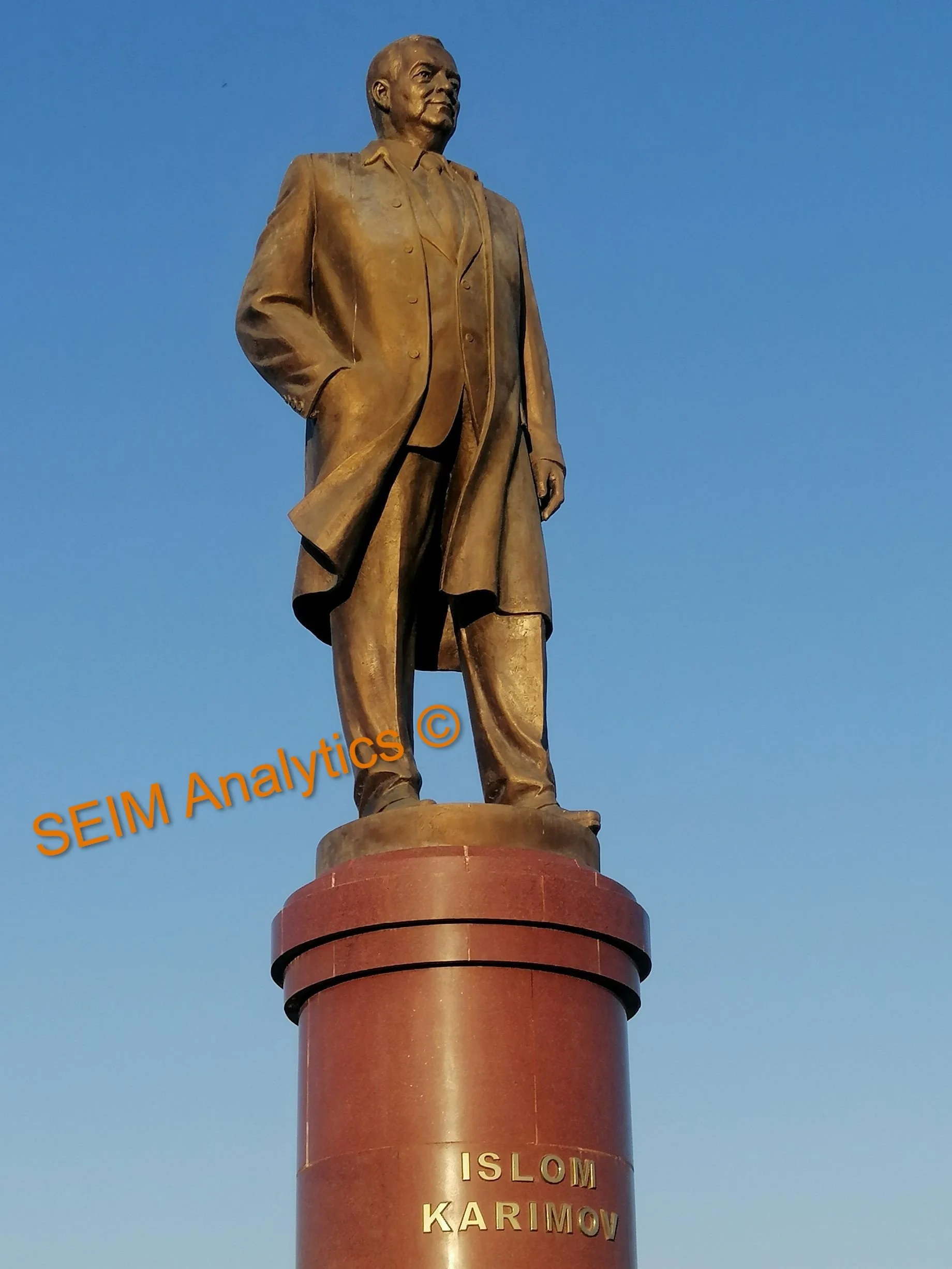
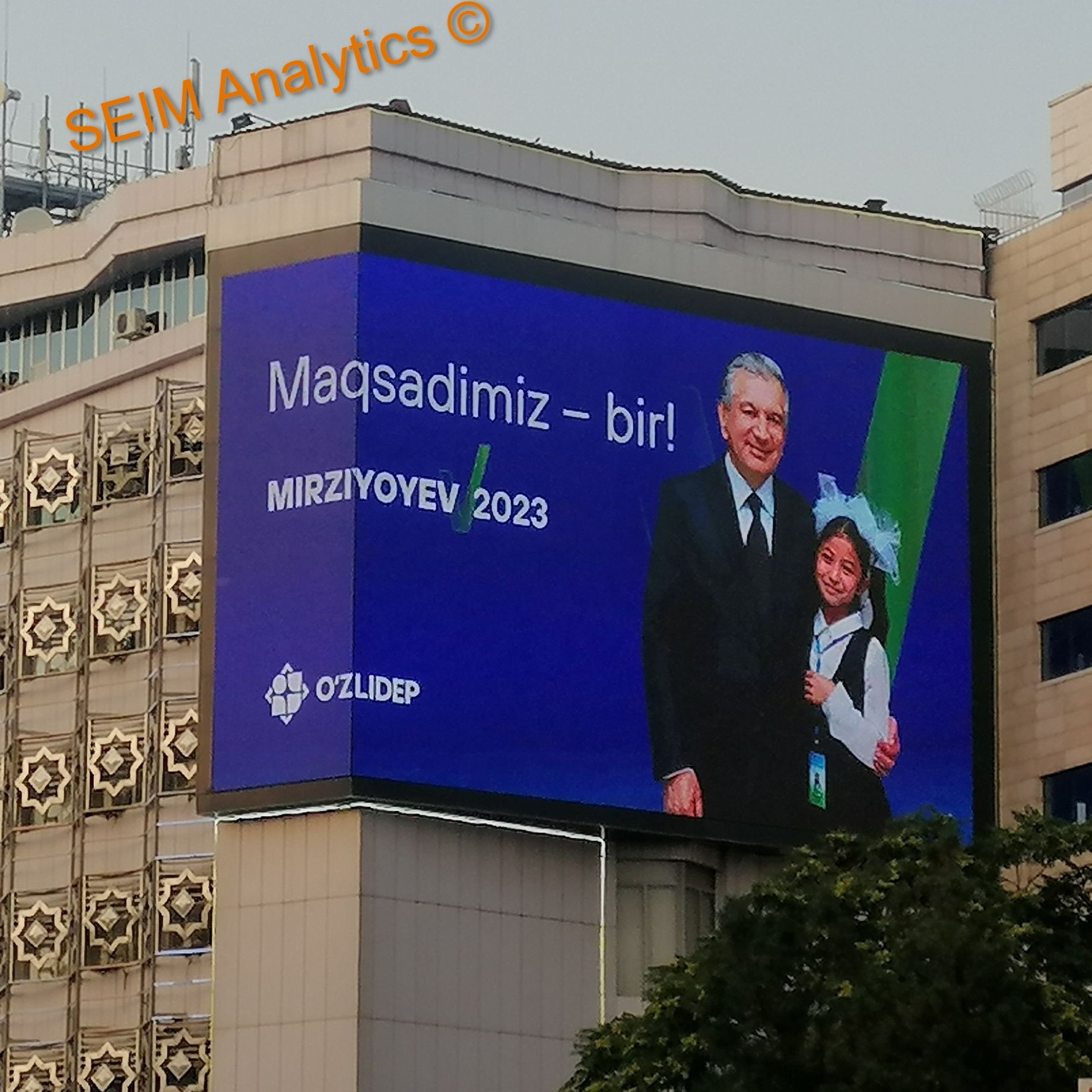
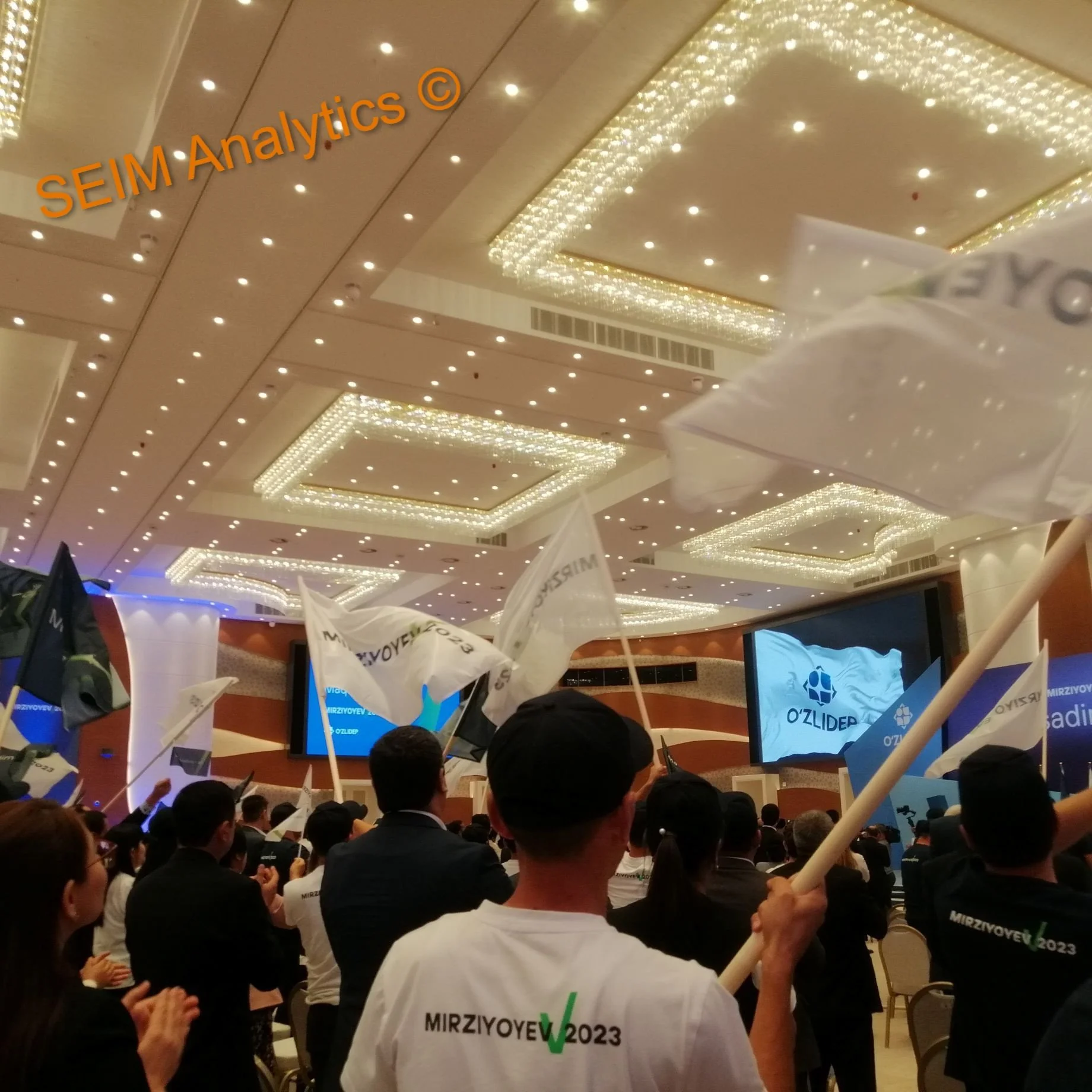
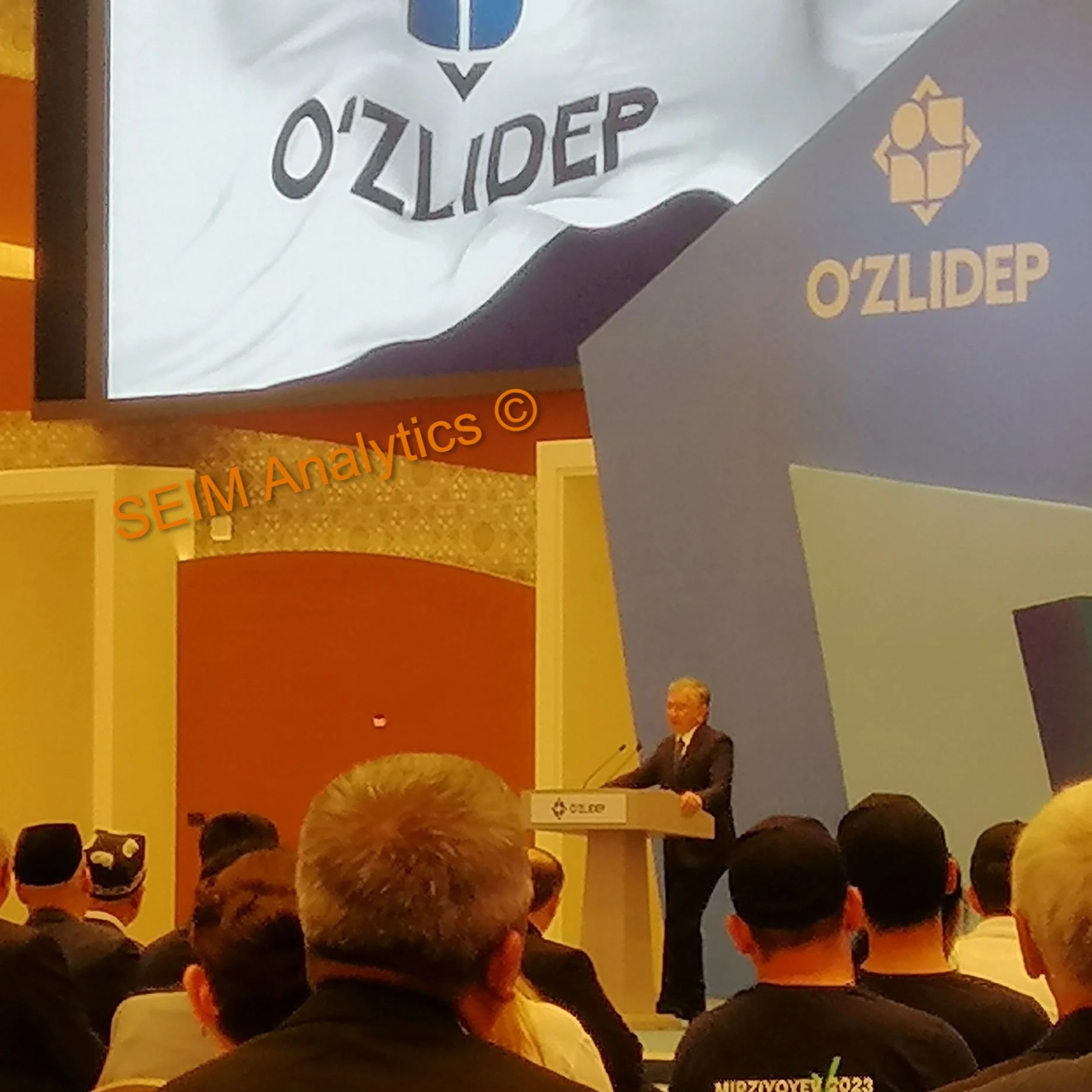
From early June to mid-July 2023, Seim participated in the observation mission of the OSCE/ODIHR in Uzbekistan for the presidential elections. Seconded from Norway to OSCE through the NORCAP expert roster, Seim was meeting election stakeholders, the Samarkand governor, and attending campaign events, like that of president Mirziyoyev. With base in Samarkand City, Seim was organizing ten teams of short-term OSCE/ODIHR observers in the Samarkand region.
Samarkand is an important historical city (capital of the Timurid Empire from 1370) and the second biggest city in Uzbekistan today. The former president, Islam Karimov (left photo), is buried there. President Mirziyoyev was governor of Samarkand 2001-03.
Disclaimer: The reflections in this blog post of the political analyst and historian Dr. Seim do not reflect any official OSCE/ODIHR position. They are exclusively found in the linked-to OSCE reports.
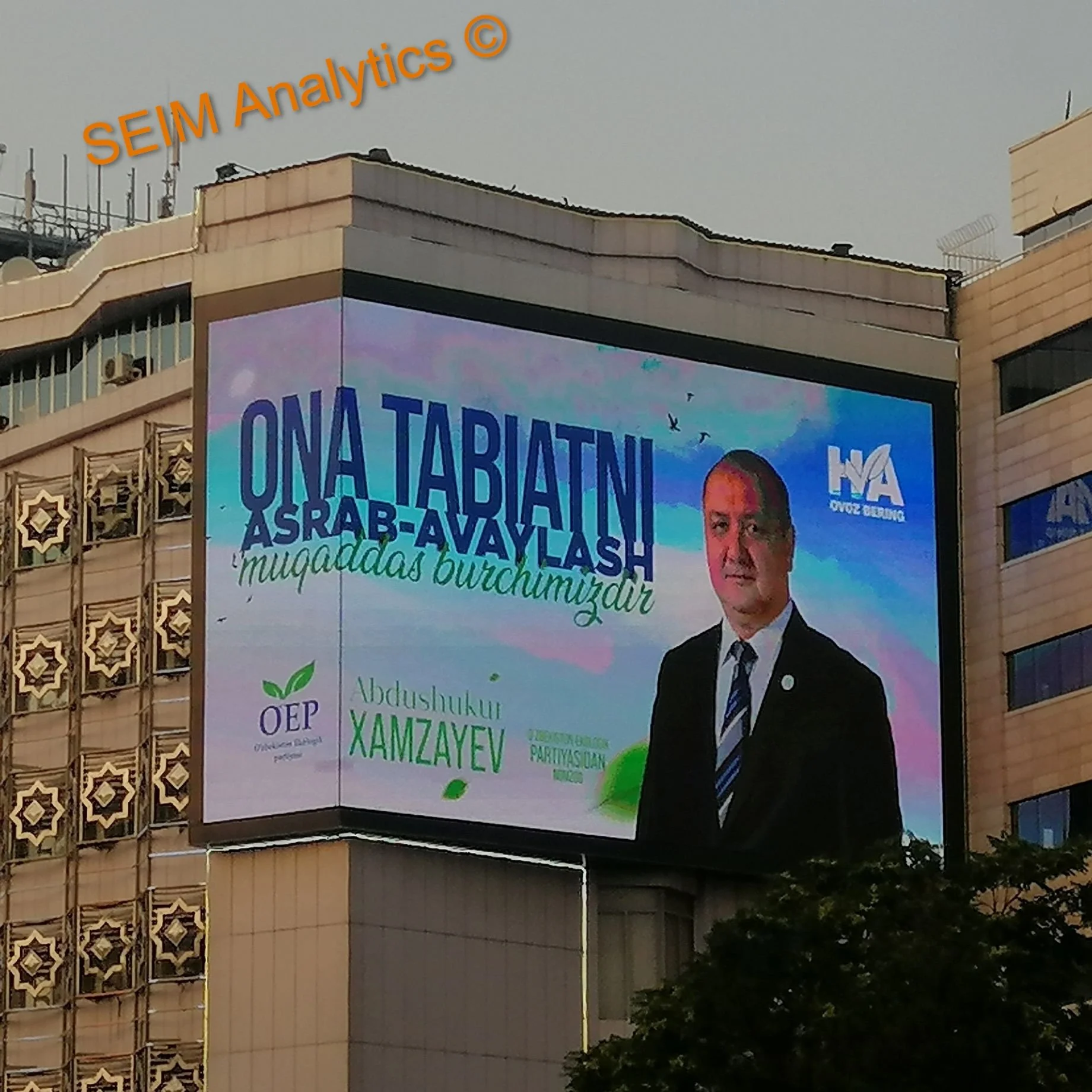
Election results and turnout (national level and in Samarkand region): The presidential election lacked a competitive field of candidates to face the incumbent president Shavkat Mirziyoyev, who won the elections with 87% nationwide, and with a similar percentage in Samarkand. Three other candidates (Khamzaev, Inoyatov, Makhmudova) were successful in registering based upon nominations from already registered political parties. The (National Revival) Democratic Party in Uzbekistan gave Mirziyoyev endorsements instead of fronting its own candidate. Mirziyoyev’s re-election came after the new constitution’s adoption (after the 30 April referendum) that reset his term limit and extended the presidential term to seven years.
The political context: As the incumbent won the presidential elections as late as in 2021, and the country had a constitutional referendum in 2023, there were signs of election fatigue with Mirziyoyev’s 2023 re-election being seen as unnecessary by some voters. The lack of opposition to the incumbent president probably reflects the political culture of consensus, respectfulness, and courteousness in Uzbekistan, where critique is voiced in very subtle way, and no problems or challenges are admitted. After decades of communism followed by semi-autocratic rule under Islam Karimov, Uzbekistan is still a young democracy where the population is still being prepared for a real multi-party system with an authentic and critical political discourse. It will take time for political culture to change and for genuine party pluralism to evolve, but here its young population will make a difference in the future, SEIM Analytics assesses. Meanwhile OSCE/ODIHR should continue the dialogue with the Central Election Commission and its advisory board to assist in necessary reforms.
The official turn-out in Samarkand was 83%, but the OSCE/ODIHR EOM found indications and violations that put this figure in question, among other malpractices, like ballot stuffing. As part of a collaborative effort, Seim is not in a position to provide further detail here, but refers to the official OSCE/ODIHR preliminary statement on the 9 July 2023 presidential election. Find all relevant EOM documents including the final report on this LINK (click).
Key topics and challenges OSCE looks at in Uzbekistan are limitations to freedom of speech, freedom of association, and to some degree freedom of assembly.
Contact SEIM Analytics for an election briefing or further information and SEIM Analytics’ assessments about the election as an engineered event between pseudo candidates to give it a flavour of political pluralism despite excellent technical preparations with knowledgeable polling station commission members. Yet, despite the character of the election, citizens do vote for the incumbent president, and his popularity is considerable. Mirziyoyev was in this 2023 presidential election given the mandate to continue reforms initiated in 2016-17.
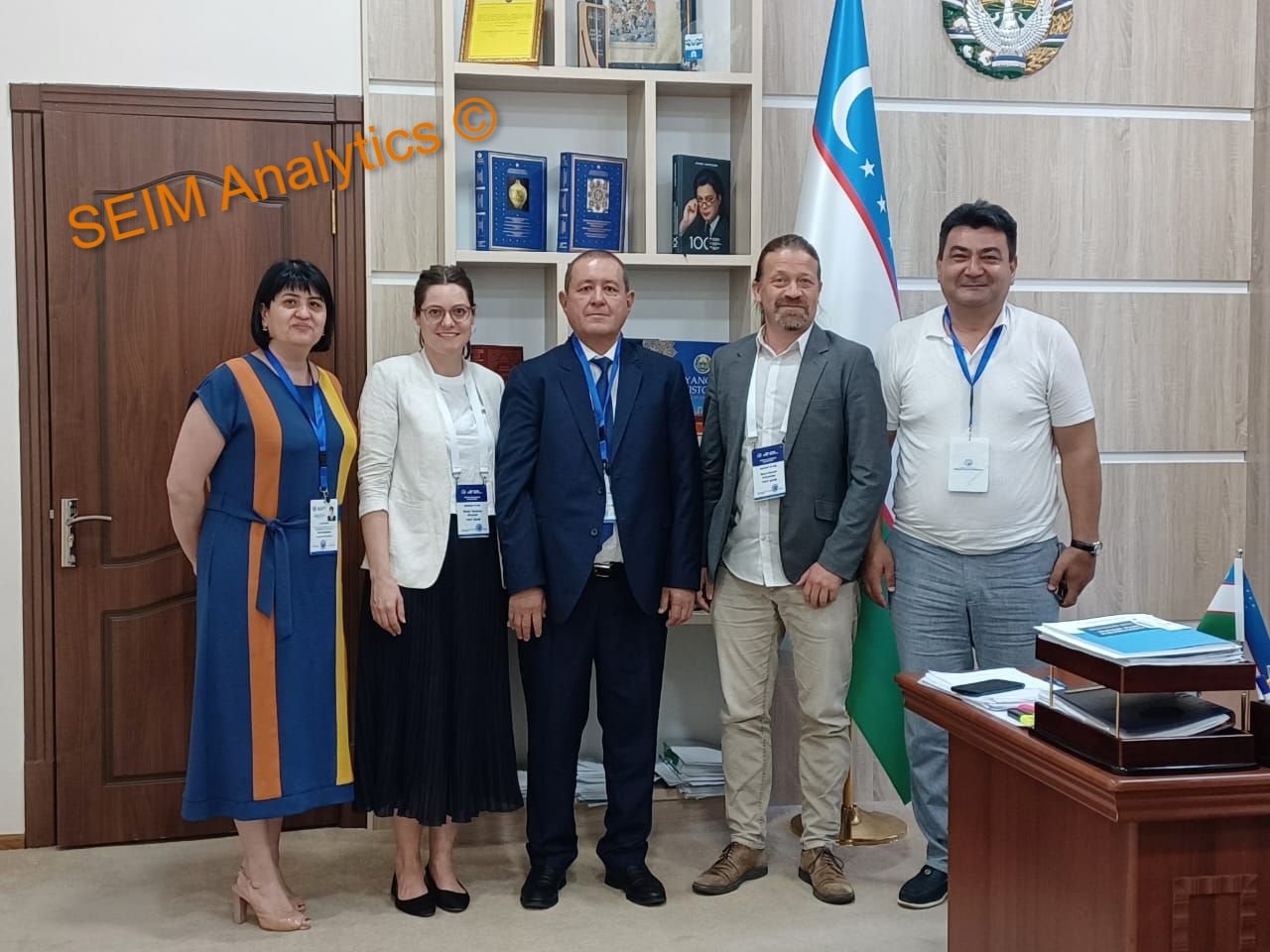
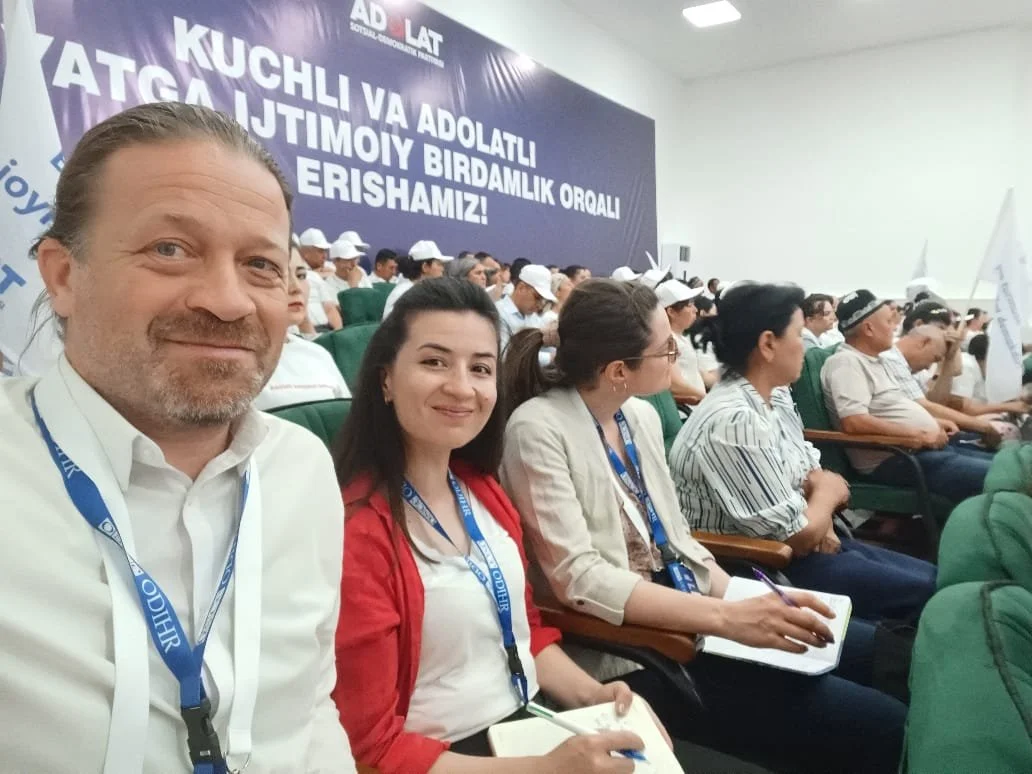
Post-Soviet Central Asia is a prioritized focus of SEIM Analytics. In 2015 and 2017 Seim worked for up to four months for OSCE in Kyrgyzstan too, in the western Jalal-Abad province (Kerben, Ala-Buka, Chatgal) on the Uzbek border in 2015, and in the capital Bishkek and the Chui Province in 2017, while also visiting Issyk-Kul lake, Tash-Kumyr, Kara-Kul, and Kara-Balty.
A rich collection of own photography is available for purchase or as a photo-lecture presentation from up to half a year spent in scenic mountainous terrain and in ethnographically rich environments.
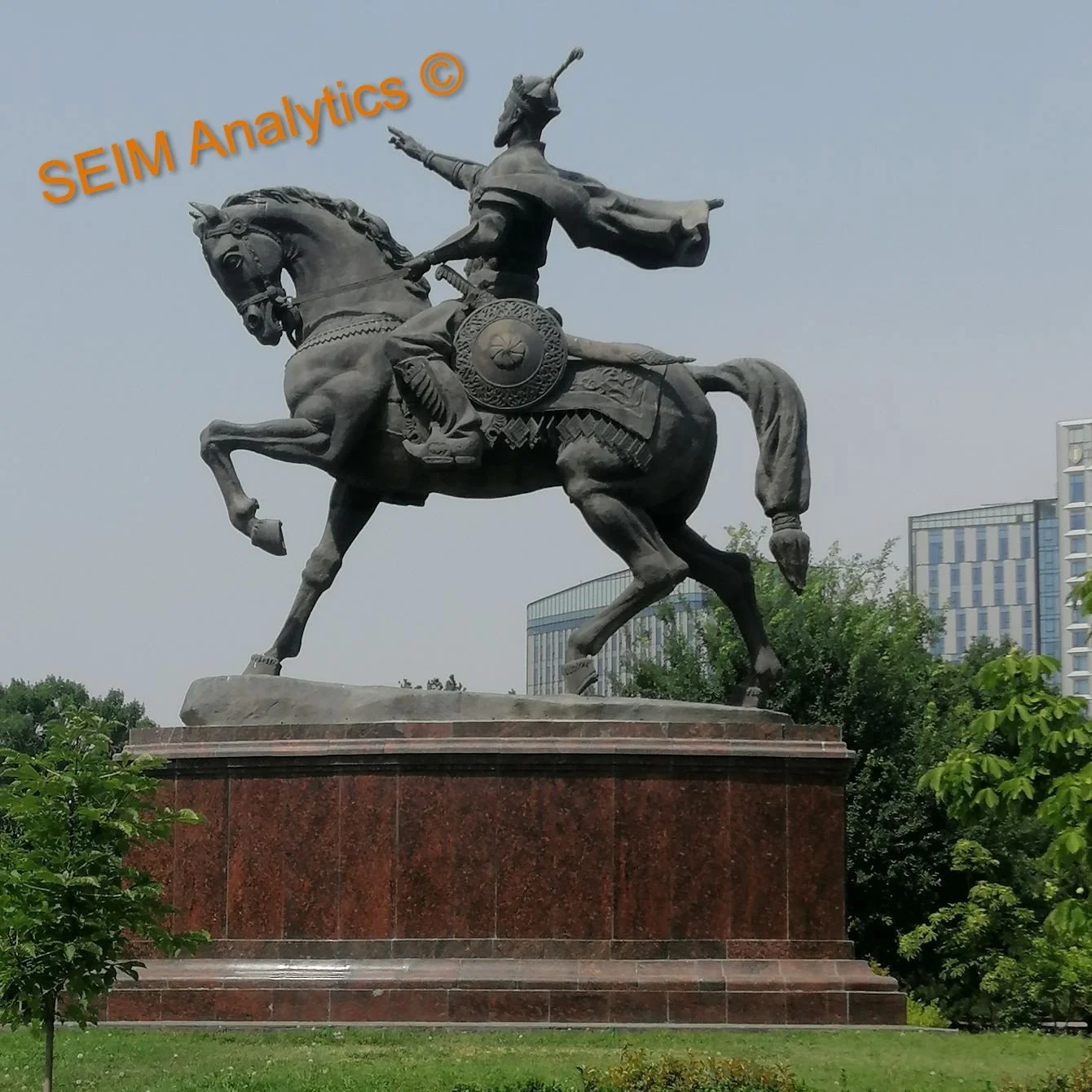

See Seim-analytics/asia for further information about lectures, engagements, and professional assignments in Central Asia, South Asia, and East Asia (Japan, China).
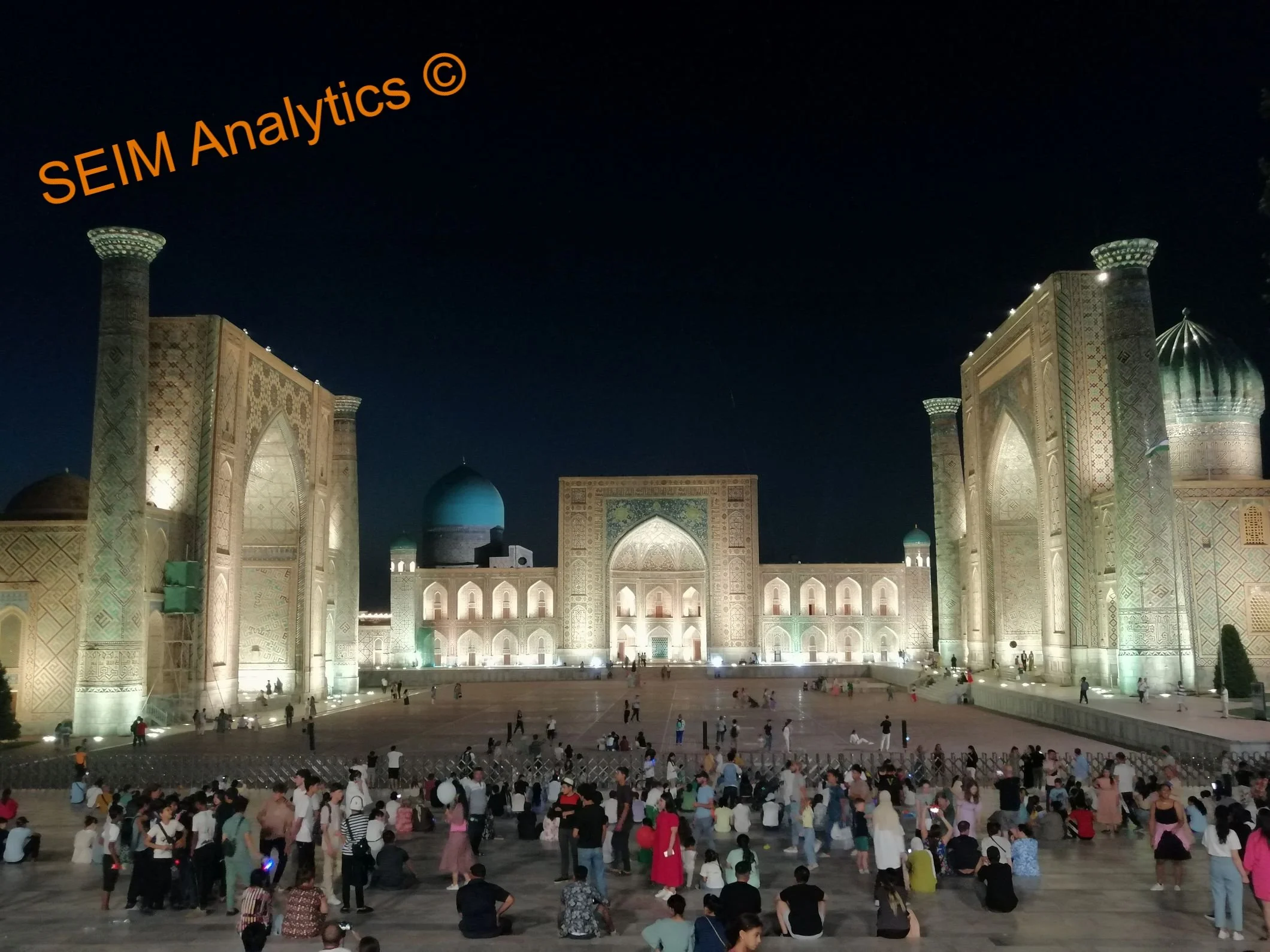
The Registan is the most foremost symbol of Samarkand's rich history and cultural heritage from the Timurid era.